
In the first Battle of Armageddon, the enemy commander was killed with camping equipment. Speculation about the next round has been the stuff of bestselling books and blockbuster movies, replete with speculation about a world government, flying locust-scorpion warships, bar codes, conspiracies, the EU, nuclear weapons, and a giant meteor steaming toward earth with Bruce Willis on board.
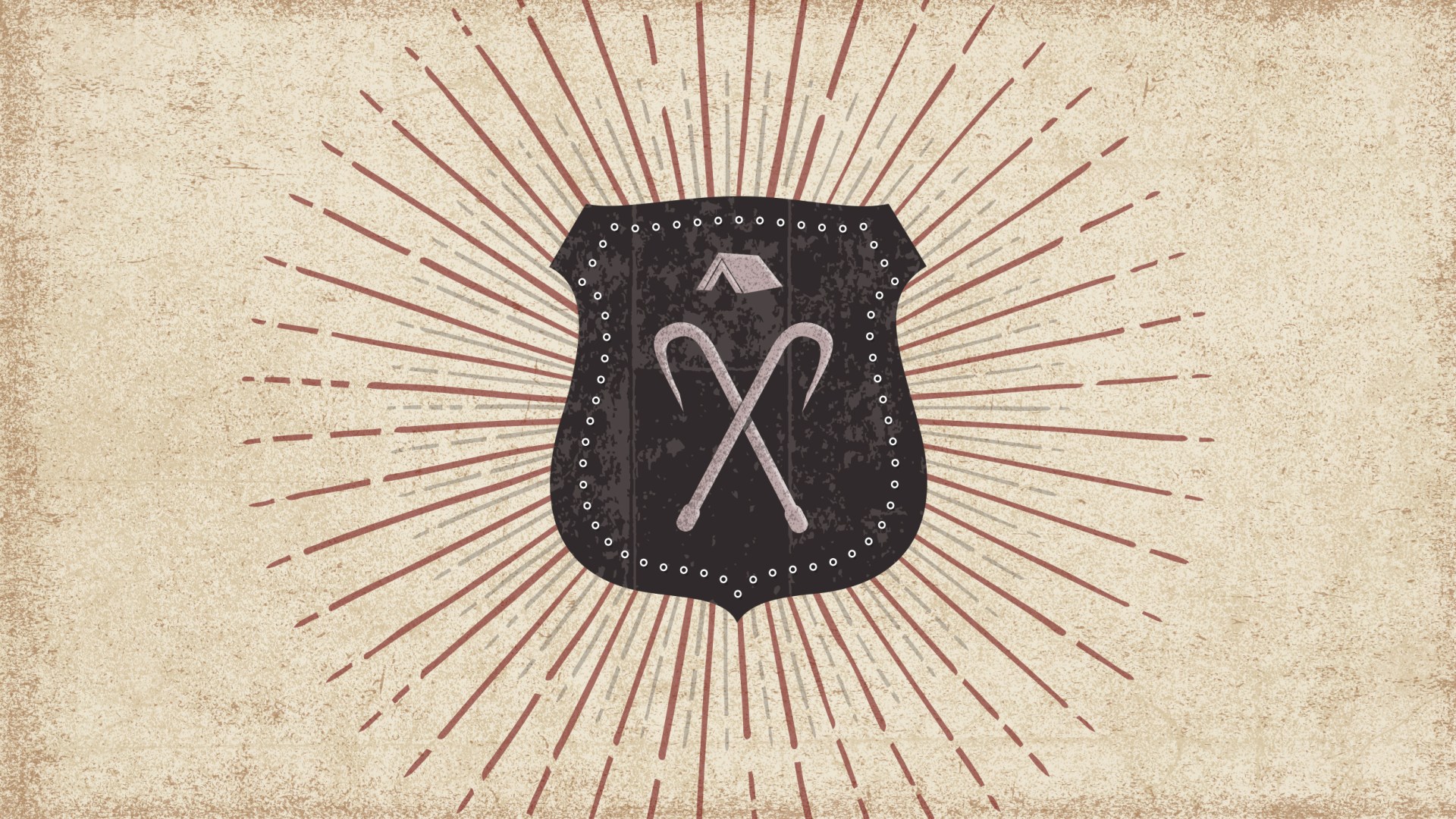
But the first time a war was fought at Har-Magedon (the hill of Megiddo), the decisive blow was struck with the most everyday objects imaginable. Sisera, commander of the mighty Canaanite armies, had his head crushed by Jael, a tent-dwelling woman wielding a mallet and a tent peg (Judges 4:17–22).
It’s a striking story in many ways. A woman, Deborah, is judging Israel, which is unusual in itself. The man charged with leading the Israelite army, Barak, refuses to fight unless she goes with him. Israel wins the battle despite overwhelming odds. When the victory is celebrated in song (Judges 5), the main characters are (again) three women: Deborah, described as “a mother in Israel,” the mallet-wielding Jael, and Sisera’s luridly vile mother. And the peg through the temple is pretty unforgettable.
Yet this story also forms part of a recurring pattern in Scripture, in which Israel defeats her enemies with tools instead of weapons. In this case, Israel has no shields or spears but conquers, instead, with a peg and a “workman’s hammer” (5:26). Another judge, Shamgar, defeats the Philistines with a cattle prod (3:31). Gideon wins with jars and trumpets (7:19–23). The Philistine king Abimelek is killed by a millstone being thrown over the wall (9:53), the second time in five chapters that an obscure woman has crushed the head of a powerful man with a domestic implement. Jericho’s walls were brought down by a musical instrument (Josh. 6). Moses brought the Israelites from Egypt using a staff designed for steering sheep. God, it seems, likes commonplace tools—the stuff of cooking, building, farming, and culture-making. But why?
The most obvious purpose is reminding Israel, over and over again, that its military security does not come from strength, numbers, weaponry, or ability but from the power of God fighting on its behalf. In that sense, the victory of tools over weapons speaks to a larger biblical pattern, in which strong armies worshiping false gods are overcome by weak armies worshiping the true God. The very strangeness of the weapon is the whole point: Nobody could win with that unless God was with them. It could a tent peg or a cattle prod. It could be an angel. It could be a jawbone, a pebble, a song, or an altar soaked in water that suddenly catches fire. Whatever the means of victory, it rams home the point that Israel’s success comes “‘not by might nor by power, but by my Spirit,’ says the Lord Almighty” (Zech. 4:6).
There is also a hopeful, eschatological contrast here. The triumph of tools over weapons, work over warfare, is itself a prophetic statement of the peace that God will ultimately bring to the world. Mallets and millstones defeat shields and chariots because, in the end, the world will be filled with farmers and millers rather than generals and armies. The future, as Isaiah saw, is one in which the trappings of war are redundant: “Every warrior’s boot used in battle and every garment rolled in blood will be destined for burning, will be fuel for the fire” (Isa. 9:5). The cosmic war will be over. All of Christ’s enemies will be under his feet. Swords and spears will be obsolete, so they will get hammered into plowshares and pruning hooks, the better to harvest the fields and vineyards of God’s new world, turning grain and grapes into bread and wine.
The ultimate contrast, however, comes at the cross. Rome, the most powerful military force the world has yet seen, gathers a battalion of soldiers to inspect Israel’s king. They are armed; he is stripped. They come with swords and spears; he comes in nothing but the name of the Lord God. They carry the most advanced weapons available. He is carrying the ordinary carpenter’s tools of his upbringing: nails, hammers, and planks of wood.
Yet when the dust settles, the warriors are no match for the carpenter. And the head of the Enemy is crushed, right through the temple.
Andrew Wilson is teaching pastor at King’s Church London and author of Spirit and Sacrament (Zondervan). Follow him on Twitter @AJWTheology.
Have something to say about this topic? Let us know here.