My friends spent the last few weeks wiping the slate clean, burning relics of 2021, and setting goals for 2022 in anticipation of the new year. And while social media makes these rituals look picture-perfect, many of them involved frustrated, last-minute adaptations prompted by the omicron variant of COVID-19, which keeps rearing its persistent head just when it seems like we’ve collectively passed the worst of the pandemic.
In short, rituals aside, we all seem to be limping into 2022 already weary and worn ragged. My own plans for an efficient denouement to 2021 and reflective, peaceful start to 2022 have been upended thoroughly.
Here’s what I hoped would happen: I would finish book revisions on December 15, delivering a beautiful manuscript to my editor in time to take a holiday break and prepare for the arrival of my first child, due in late January. My husband and I would rearrange the house, turn my office into the baby room, and clean everything thoroughly. I would finish a baby quilt while considering the ways my life will change in the coming year. I would drink hot chocolate and eat Christmas cookies.
Here’s how things are really going: After realizing that finishing book edits during end-of-semester responsibilities was a pipe dream, I got an extension with plans to submit in early January. After I revised this book plan, the baby revised his plan as well: The doctor informed me he wanted to induce three weeks early (which, if you’re counting, places baby’s arrival also in early January).
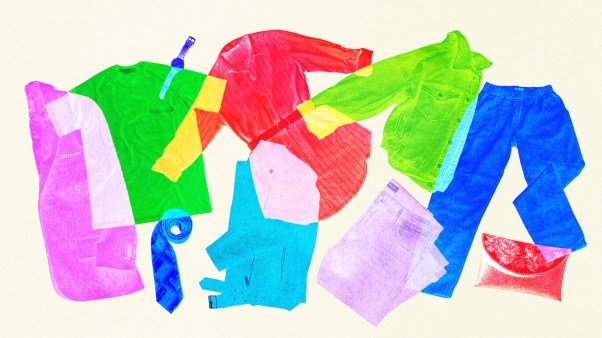
The baby’s room is also my office, and thus a mess of books, papers, and baby gear. I did finish the baby quilt, and it is lovely—but then I washed it and learned that blue dye bleeds everywhere, so I am currently undertaking a rescue mission. Oh, and hot chocolate and Christmas cookies? Out of the question, thanks to gestational diabetes.
In short, nothing about the end of 2021 went smoothly, and the blank slate of 2022 is at best a fantasy. I am not ready to welcome a new year with reflection and peace. Instead, I am heralding 2022 with a chaotic cacophony of old and new, restoration and triage.
My stress is minor compared to that faced by many. My pregnancy follows years of infertility and fertility treatments, but I have friends with similar experiences whose stories have not closed with a baby. The book manuscript currently causing me woe is born from a job in a field I love that grants me time to think and write regularly.
And yet, I am still stressed, and I am fairly confident that God—being God—has a lesson for me somewhere in this mess.
On her blog, Lore Ferguson Wilbert wrote about learning to “enter into the joy God has for me and my house” by embracing “the gift he has given instead of the gift he hasn’t.” The same thing goes, I think, for our trials: What can I learn from my own disruptions, when life isn’t going the way I planned?
The orderly, compartmentalized life I had imagined—where I finish one project, clean up, and prepare for the next—is being disrupted before the baby even arrives. The illusions of orderliness and control I hold close are just that: illusion. And as the illusion fades, I find grace on my mind.
I am especially captivated by the way Frederick Buechner talks about grace in his book Wishful Thinking: “Grace is something you can never get but can only be given. There’s no way to earn it or deserve it or bring it about. … The grace of God means something like … ‘Here is the world. Beautiful and terrible things will happen. Don’t be afraid. I am with you.’”
This whole process—of preparing for a baby and welcoming the new year while the tasks of the old one are not yet done—reveals grace: a gift I am given, but not on my timeline. I have waited and hoped for these things and am eager for their arrival, but they are also inconvenient. They don’t arrive on my schedule and are constant reminders that I have no control.
This parallels the way I am learning to listen to God. The poet Mary Karr imagines the voice of God as one that
… never
panders, offers no five-year plan,
no long-term solution, no edicts from a cloudy
white beard hooked over ears.
Instead, this voice—in Karr’s imagination—whispers up from the ground, coming through the unexpected spaces of manholes. It suggests that grace—a cure for “what’s wrong with you” — can be found, not in magic, winning the lottery, or even a clear five-year plan, but through the mundane: a hot bath and a sandwich, for instance.
As I close out 2021 and enter 2022, I am taking a cue from Karr. I am learning to look for grace in the blue stain slowly leaching out of my quilt and into the bathtub water where it’s soaking. I look for grace in the ability to turn two mediocre passages of my book draft into one good paragraph. I practice remembering that, while the tiny human we await will almost certainly not arrive on my timeline and we are not prepared, he is God’s grace nonetheless.
Ruth Moon Mari is an assistant professor of media and public affairs at Louisiana State University. Her first book, Authoritarian Journalism: Controlling the Press in Post-Genocide Rwanda, is under contract with Oxford University Press.