The Prince of Shalom

An Advent reading for December 5.

Stephen Crotts

Week 2: The Prince of Peace


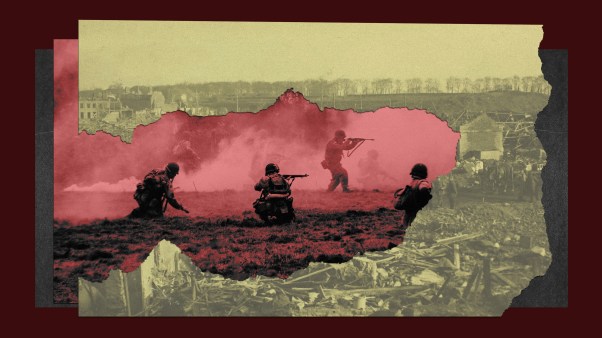
Amid the pain and violence of our world, we hold fast to this hope: One day Jesus will usher in true and ultimate peace. He also brings us spiritual peace in the here and now as we experience redemption and live by the values of his kingdom. Jesus is the Prince of Peace.

Read Isaiah 35

The Hebrew word that Isaiah uses to describe the peace that the Promised One will bring is shalom. It’s a beautiful word that conveys wholeness, harmony, and health. Where we might settle for uneasy truces and Band-Aid fixes as proxies for peace, shalom represents something much more robust. Beyond the cessation of war, shalom is a transformation of the conditions that lead to war in the first place.

When there is shalom, everything gets to function the way it was created to. Shalom rejects the idea of life as a zero-sum game and dares to imagine the comprehensive flourishing of every person and every thing, all at the same time. Theologian Darrell Johnson teaches that shalom describes “a psycho-somatic-relational-racial-economic-spiritual wholeness.” In chapter 35, Isaiah depicts that wholeness in beautifully poetic language.

Let’s start with the psychological wholeness the Prince of Shalom can offer us. According to Isaiah, there is a peace on offer that says, “Be strong, do not fear” to our “fearful hearts” (v. 4) until “gladness and joy” overtake us and “sorrow and sighing … flee away” (v. 10).

And what of somatic (or bodily) wholeness? In one vivid image after an another, Isaiah describes physical healing: The blind see, the deaf hear, the lame “leap like a deer” and the mute “shout for joy” (vv. 5–6). Even the creation itself is healed, as “water will gush forth in the wilderness” (v. 6) and “the wilderness will rejoice and blossom” like a crocus flower bursting into bloom (vv. 1–2).

As Isaiah 35 builds to its culmination, we are offered a vibrant vision of relational, economic, and spiritual wholeness in the depiction of a redeemed people walking and singing together on a highway of holiness. There are no lions there, Isaiah tells us, and we can safely assume the way is free from all other predatory or opportunistic foes. The people enter Zion together, where “everlasting joy will crown their heads” (v. 10).

This ultimate shalom, Isaiah tells us, is our future. But there’s even more to it than that. Author Jonathan Martin suggests in Prototype that, because the Prince of Peace gives us his Spirit, we are called to be “people from the future”—people who practice shalom here and now.

This Advent, when you face a situation in which peace is sorely needed, ask the Lord: What action or attitude would most move this situation toward the comprehensive flourishing of everyone and everything involved? You may find that the Prince of Shalom makes you a stream in the desert and fills you with gladness and joy.

Carolyn Arends is a recording artist, an author, and the director of education for Renovaré. Her most recent album is In the Morning.

Contemplate Isaiah 35.


What words or phrases would you use to describe the peace envisioned here? How does it speak to our future hope? How does it speak to the work of the Prince of Peace in our lives today?

Also in this issue

As we worship at the manger, may we marvel that this very child is the Mighty God, he is the Prince of Peace, and he is the Light of the World. He is the one who came to die. He is the one who rose triumphant, who ascended, and who will keep his promise to come again in glory. He will enact justice and bring to culmination his kingdom of peace. He is Immanuel, God with us.

The Beautiful Paradox

Kelly M. Kapic

Jesus Is Our Peace

Kelly M. Kapic

Born to Be Bruised

Alicia Akins

Our Jubilean Hope

Sarah Shin

The Healing Peace of Jesus

Beth Stovell

Peaceful Rest

Adriel Sanchez

A Vision of Peace

Carolyn Arends

The Greatest Hope of All

Glenn Packiam

The Judge Who Is Faithful & True

Glenn Packiam

Jesus Will Reign

Craig L. Blomberg

Jesus Deserves All the Attention

Craig L. Blomberg

Christ, the Everlasting Lord

For to Us a Child Is Born...

Kelli B. Trujillo

God of Mercy and Power

Madison N. Pierce

The Invitation of Incarnation

Rasool Berry

Unfather Christmas

J. D. Peabody

Waiting On a Promise

Dorena Williamson

He Shines in the Darkness

Carolyn Arends

Christ in Ten Thousand Places

Marlena Graves

Delivered from Darkness

Kristie Anyabwile

A Frightening and Freeing Light

Jay Y. Kim

The Light Leading Us Home

Jay Y. Kim

Salvation and Love

Beth Stovell

A Light Has Dawned

Jeremy Treat

True Cleansing

Madison N. Pierce

A Path Through the Wilderness

Marlena Graves

Light of the World, Hope of the Nations

Rasool Berry

Christmas Day

Seeing Jesus, They Knew

Kristie Anyabwile

A Flock of Shepherds

J. D. Peabody

View issue

Our Latest

News

Died: John M. Perkins, Who Lived and Preached Racial Reconciliation

The civil rights leader believed in a gospel bigger than race or self-interest.

The Year of the Evangelical

America prepared for a bicentennial, and religious identity dominated the presidential campaign.

Review

Decoding the Supreme Court

Three books to read this month on politics and public life.

The Bulletin

Cost of Iran War, Quiet Southern Border, and Anglican Church Split

Mike Cosper, Clarissa Moll, Russell Moore

The financial and moral toll of war, immigration slows but ministry continues, and why denominations split.

Review

‘The Secret Agent’ Explores Memory and Authoritarianism in Brazil

Mariana Albuquerque

The Oscar-nominated film reminds viewers to learn from the past—and to share our stories with the next generation.

Q&A: Eric Mason on Ministering to Men and Witnessing in Politics

Interview by Benjamin Watson

The Philadelphia-based pastor discusses how the church can engage Black men and have a biblical approach to government.

Jan Karon Looks Back on 89 Years of God’s Faithfulness

The author of the Mitford Years series married at 14, protested segregation, and wrote her first book at 57.

The Just Life with Benjamin Watson

Michel Lusakueno: Why the World Can’t Ignore Congo

Exploring the sobering connection between modern convenience and human suffering.

Apple PodcastsDown ArrowDown ArrowDown Arrowarrow_left_altLeft ArrowLeft ArrowRight ArrowRight ArrowRight Arrowarrow_up_altUp ArrowUp ArrowAvailable at Amazoncaret-downCloseCloseEmailEmailExpandExpandExternalExternalFacebookfacebook-squareGiftGiftGooglegoogleGoogle KeephamburgerInstagraminstagram-squareLinkLinklinkedin-squareListenListenListenChristianity TodayCT Creative Studio Logologo_orgMegaphoneMenuMenupausePinterestPlayPlayPocketPodcastprintRSSRSSSaveSaveSaveSearchSearchsearchSpotifyStitcherTelegramTable of ContentsTable of Contentstwitter-squareWhatsAppXYouTubeYouTube