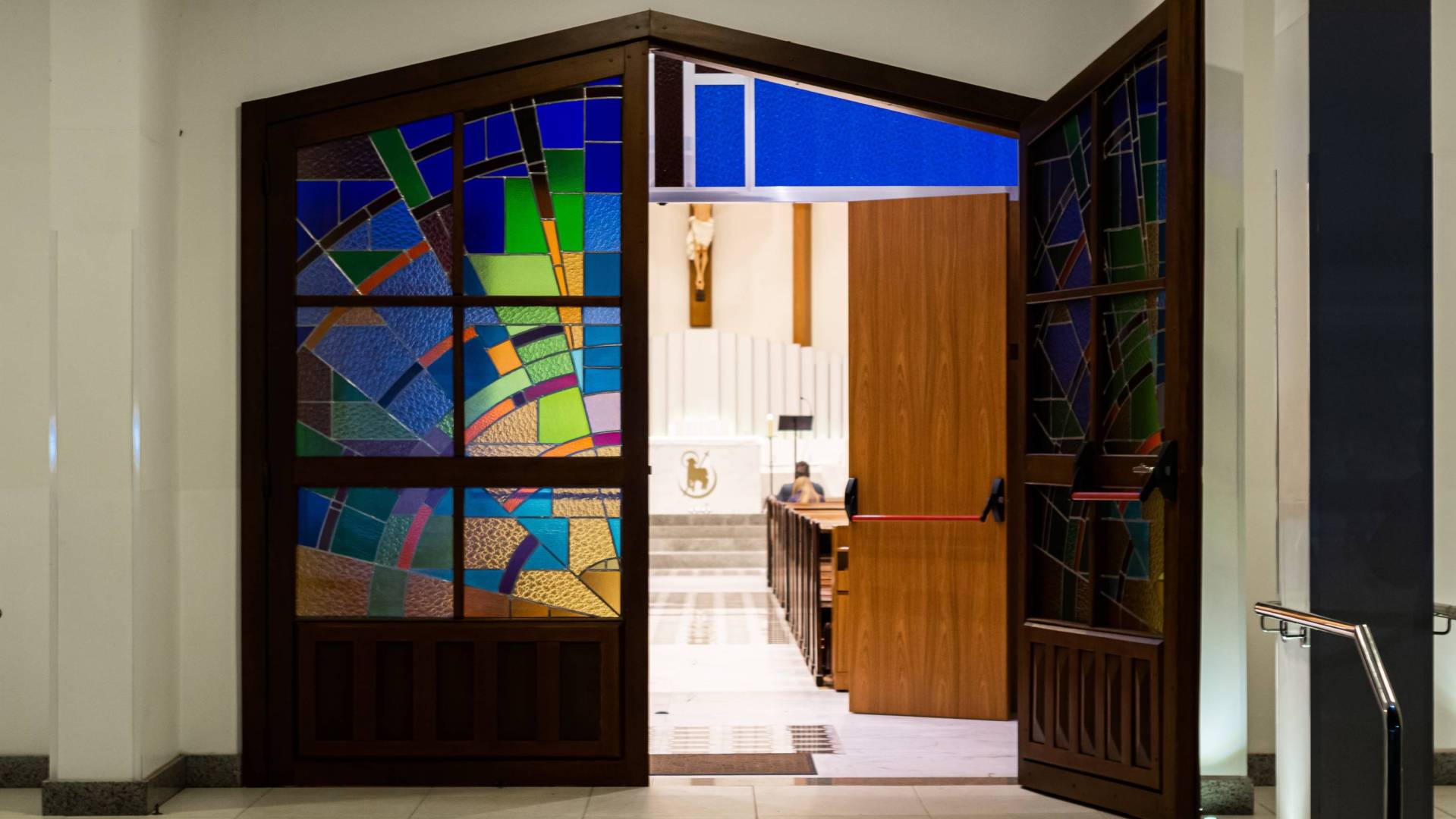
Enid Almanzar was shocked the first time she walked into an evangelical church. She had been raised Catholic and was used to stained-glass windows, ornate crosses, portraits of saints, and statues of Christ and the Virgin Mary.
But the nondenominational church she visited had no such things. On the contrary, it seemed quite lax on religious decor or decorum; the pastor, she remembers, had tattoos and rode a motorcycle. “I thought it was sacrilege.”
But looking back, Almanzar believes that visit was the beginning of a process that led her back to faith after wandering away in college. She received her first Bible, joined a study group, and got baptized.
“I felt like I was walking in my mother's faith and my family's faith, and when I took that step into evangelicalism, now it became my faith; it became my Jesus,” said Almanzar, who now works at the American Bible Society (ABS).
She is one of millions of Americans who have switched faiths. While most who switch today are leaving church behind as agnostics, atheists, or nones (those who claim no religious affiliation), many Christians are switching denominations, and ABS research suggests that doing so may strengthen their faith.
People who switch religious traditions are more likely to read Scripture, according to a recent ABS poll in partnership with the National Opinion Research Center (NORC) at the University of Chicago. Those leaving mainline Protestant traditions reported the highest boost in engagement.
“We easily assume that rejecting the faith of one’s youth is a bad thing, but it doesn’t have to be. In fact, the State of the Bible data suggest otherwise,” the ABS report said. “Christians who have changed their faith are more Scripture Engaged than those who haven’t.”
ABS also found that those who switch traditions expressed deeper interest in the Bible and Jesus. For example, about two-thirds (64%) of religious switchers said they believe the Bible is accurate in “all of the principles it presents,” compared to about half (47%) of those who remained in their religious tradition.
About three-fourths also expressed curiosity in learning more about Jesus and the Bible, compared to roughly two-thirds of those who stayed.
“More often than not, you have, like, some sort of spiritual awakening or something happened where you want to get more engaged in the Scriptures, the Bible, and that’s why you switch—because you may have found a church that made more sense to you and opened the Bible to you in a different way,” said Ryan Burge, a political scientist who tracks religious trends in America. Burge himself grew up Southern Baptist but is now the pastor of an American Baptist church.
The Public Religion Research Institute (PRRI) also released a survey this week indicating that almost a quarter of Americans have changed religious affiliations, and half said they did so because they no longer believed in the religion’s teachings. The research showed that Catholics and nonevangelical Protestants were the most likely to switch.
Switching traditions can present challenges to both those arriving at new churches and those receiving them. Newcomers may bring with them different theological beliefs about the Bible and church practices. Catholics, for example, have a high regard for the Virgin Mary, and some believe in transubstantiation, the belief that the bread and wine consumed during Communion turn into the blood and body of Christ.
Eloy Rodriguez, Spanish pastor of Idlewild Baptist Church in Florida, warns that Protestants who show disrespect to the Virgin Mary may put off Catholics who still revere her as the mother of Jesus.
Lisette Grillo, who is on the pastoral staff of an Assemblies of God church in California, has noticed converts from Catholicism still going to Mass after attending Protestant services. She also sees them bringing the values from their Catholic backgrounds, such as a deep care for the poor.
Overall, Grillo has found that secondary issues in faith and practice often resolve over time.
“Above all the doctrinal points and above all the topics we can have a conversation [about] … the main thing is to show them who Jesus is,” Grillo said.
Almanzar says her exit from the Catholic church was not intentional. But now she sees beauty in the things she learned while she attended Mass—such as the sacredness of Communion and reverence for Scripture—and she brings those experiences to the New York church where she is now an elder and associate pastor.
“It's not like you throw the baby out with the bath water. … What are those things that were good that you can keep while making this faith your own?” said Almanzar.

Angel Mann, who works with ABS’s research team, shares a similar experience. Having grown up in the Southern Black church tradition, she says her rearing instilled in her an appreciation for community. This is what led her to a charismatic nondenominational church in Philadelphia, where she found community as she mourned her mother’s death.
Religious switching has worried church leaders who have seen steep drops in membership numbers. Nondenominational churches have added millions, while declines among Southern Baptists, United Methodists, Presbyterians, and other major bodies show no signs of slowing.
Despite the losses, not all news about religious switching is bleak. Americans are moving toward faith as well: Nearly a third of those who grew up in a religiously unaffiliated home—that is, agnostic, atheist, or none—now identify as Christian.
ABS also highlighted some of the factors in keeping the faith. One of them was the influence of mothers: “Among those who now identify as Christians, three out of four (77%) are following their mother’s faith.”