



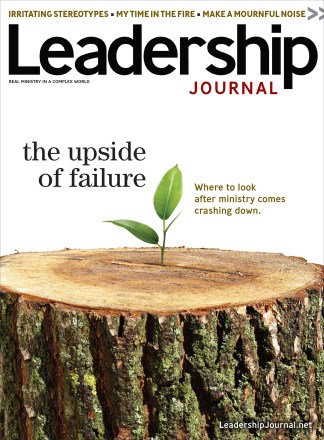
If done properly, yes, says a recent BBC article, “Is It Good for People to Fail?” The piece is part of a larger project, “The Value of Failure,” and contains personal reflections on what failure has taught five people from different walks of life.
“You’re not born with fear of failure, it’s not an instinct, it’s something that grows and develops in you as you get older. Very young children have no fear of failure at all,” said Heather Hanbury, headmistress of Wimbledon High School. The school recently held a “failure week” in order to “to teach its pupils how to become more resilient and learn from their mistakes.”
“This [perfectionism] is not only a danger at home, but it happens in school at a very young age as well. So as the girls get older, they recognize that the way to keep adults happy is to get things right, and getting things right means avoiding failure at all costs.”
Hanbury stresses the role of failure in teaching student: “Our focus here is on failing well, on being good at failure.”
What are the benefits of failing well? Among other things, the article observes that failing well can increase our honesty, develop courage, “conquer a sense of entitlement,” “relieve the pressure we place on ourselves,” and “encourage a greater sense of empathy and understanding.”
The Minimum Bible
Pastor and artist Joseph Novak combined his dual love for exegesis and design in an ambitious recent project. “The Minimum Bible” (minimumbible.com) features a single, simple image for each book of the Bible. PARSE editor Paul Pastor asked Novak what the church stands to gain from viewing Scripture as art.
“Far too often, preachers stand not as grateful benefactors of the art of Scripture, but as the art critic anxious to show every problematic brushstroke or the lines of redaction where another artist took over for a while. If real transformation is to occur, then congregations need an encounter with the living Word who speaks to the church whenever the Bible is read and proclaimed.
“The images in my series are really invitations back into what Karl Barth called the ‘strange world of the Bible.’ My images make no claims of being exhaustive or comprehensive; they are but one interpretation of the biblical books. I’ve heard from several folks on Twitter things like, ‘Not what I would have done’ or ‘I would have chosen something else to emphasize.’ My reply? ‘Great.’ I’m really beginning a conversation about themes and symbols in the text. Scripture, like good art, requires interpretation. And the beauty of our post-enlightenment era is that we tend to understand that the texts of Scripture are themselves multivalent, possessing layers of meaning, and we need multiple modes of retrieval to understand their complexity. Perhaps art is one underutilized mode.”
—Read the full interview at christianitytoday.com/parse
Need More Interactive Sermons? Try WikiWorship
Need to make your church service more interactive? Well, one pastor in North Carolina did just that… Wikipedia style. United Methodist (and Duke Divinity School student) Reverend Philip Chryst has set up WikiWorship—a website to source questions from the public for more interactive sermons.
Chryst tells The Christian Post: “The reason I decided on WikiWorship was based in Wikipedia. Anyone can edit the content of Wikipedia, so we decided to take on this post-modern posture of turning the microphone around and allowing anyone to edit the content of a worship service. Of course there is always singing, scripture reading, and prayers. But this allows everyone to have a voice, not just the one person who is pontificating from the pulpit …. By having the patience to listen we then embody hope to the world.”
Redeeming Language
“We began to ask questions about what cultural icons, what cultural language, what cultural cultivation did we need to do differently? … Our preaching changed, not in its commitment to the exposition of the text, but in the language we used. … A lot of times we would use the word work to describe what someone did when they got a paycheck for it. We realized: what are we saying? We are saying that work is remuneration not contribution.”
—Tom Nelson (via video), on the need to refine how churches approach the topic of work, at Leadership Journal’s “Redeeming Work” live event.
Painful Closings
By some estimates, every day in the United States, nine churches shut their doors forever. On January 26, 2014, my church—the Reformed Church in Plano (RCP)—was one of them …
“No one wants to be the one or be on the leadership team who decides to close the church,” said John Weymer, an elder and vice-president of our church’s leadership board. “You fear killing the church, and you feel the weight of the congregation heavy upon you. There is a natural desire to survive, I think, and death feels like failure.”
—Angie Mabry-Nauta in “Mourning the Death of a Church,” in Christianity Today.
Copyright © 2014 by the author or Christianity Today/Leadership Journal.Click here for reprint information on Leadership Journal.