



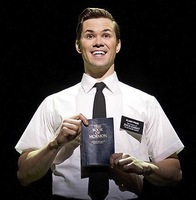
Newsweek dubbed it “the Mormon Moment” in June. There’s a Broadway musical about Mormon missionaries, two potential Mormon presidential candidates, Warren Jeffs in the media, and TV shows like Big Love and Sister Wives. It seems America is fascinated with–or, at least, can no longer avoid–the Church of Jesus Christ of Latter-Day Saints.
To those trying to decide what to think of Mormonism and its followers, the LDS Church is eager to lend a hand. In 2010 they launched major public relations campaign that is gradually going nationwide in print and on billboards. Online, the “I’m a Mormon” campaign has already reached the masses.
In an article in Church News, the official online source for LDS news, about the campaign, Elder L. Tom Perry summarizes the rationale behind the program. “A person’s view of the Church is the sum of personal experiences they have had which relate in any way to the Church organization.” And so, in the words of the article’s author, “the best way for a person to change his or her mind about the Mormons is to meet one.” Thus the video campaign features testimonials from your average, everyday LDS members from every gender, ethnicity, class, and profession, the short videos introduce us to a folks we’re likely to resonate with.
And they are compelling. There’s Nnamdi, the Nigerian sculptor. There’s Rob, the former NFL player. There’s Jarem, “the founder and president of SymBiotechs USA, a prosthetics design and manufacturing company…a cancer survivor and an AKA (Above Knee Amputee).” The subtitle of Jarem’s video is “I built my own leg, I make the impossible, possible, and I’m a Mormon.” This is good stuff. I spent much longer than I meant to watching video after engaging video about extraordinary people.
But this post isn’t really about Mormons. The campaign has me thinking about my own religious affiliation, American evangelicals, and how we look to the American public at large. And whether it matters. And what to do about.
I hail from a nearly fundamentalist background, so in the back of my mind is Paul’s exhortation to “come out from among them, and be ye separate” (2 Cor. 6:17). I was reared to accept public distrust and disdain as a sign we were doing something right. When you serve the Lord, it annoys the world. Right? On the other hand, I’m young and educated and people-pleasing enough that there’s another voice in my head that says I should try to live in such a way “that your daily life may win the respect of outsiders” (1 Thess. 4:12). We’re to be winsome witnesses, draw folks irresistibly to the Lord with our good natures and good deeds. Right?
I read again recently about the early church’s serious PR problem. The Romans thought they were cannibalistic, incestuous atheists because they regularly consumed the body and blood of Christ, married their “brothers” and “sisters,” and didn’t worship the Roman gods. The first Christian apologists made it their goal to clarify these sorts of misconceptions. It wasn’t just image control. They weren’t trying to get anyone elected. But their interest wasn’t purely academic and theological, either. They hoped clearing things up might keep some of them out of the arena or the fires of martyrdom.
Books like UnChristian remind us we have a public relations problem. I take the point. But I wonder what to do about it. What can we learn from the “I’m a Mormon” campaign?
They do one thing very well. They provide an opportunity for testimony. If you watch the videos at Mormon.org, each one is followed by written responses to set prompts, including “Why I am a Mormon,” and “Please share your feelings/testimony of the Restoration of the Gospel” and “How I live my faith.” In these responses you get a sense of the diversity among the LDS, explanations of Mormon doctrine in layman’s terms, and a sense of what commitment looks like in everyday life.
One lesson they teach by negative example. In official communications, LDS leadership indicates that they want to lead people to Christ. But the people they highlight are so attractive and interesting that the videos make me want to know more about them, not the LDS in general, or Jesus. They do, indeed, alleviate suspicions that all Mormons are weirdos, or something like that. But the videos themselves don’t make Jesus more compelling. They don’t point beyond themselves.
Our concern, by contrast, shouldn’t be to make a better name for our ourselves, but for Christ. Often those things go hand in hand. When we earn a bad reputation for being jerks, we shame ourselves and our Savior. But sometimes, as the example of the early church indicates, we can develop a bad public image for serving the Lord faithfully. It’s important that we recognize the difference.
In any case, I suspect a good place to start is not with repairing outsiders perceptions of us but with repairing our internal relationships. After all, didn’t Jesus say, “By this everyone will know that you are my disciples, if you love one another” (John 13:35)?