

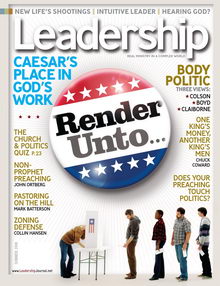
Article

Fessing Up

Restoring confession and repentance as part of discipleship in the church.

Confession and repentance are increasingly disappearing from the church, despite the clear witness of both Scripture and our spiritual heritage. What has contributed to this trend? Although there are many factors, I've identified three factors. One of these, no doubt, is the influence of the so-called "seeker-sensitive" movement, with the notable influence of those who insist that references to sin and confession are not positive and affirming.

Others contend that confession is a violation of the gospel; they argue that Christians no longer need to confess our sins because they have been forgiven—past, present, and future. One radio personality declares that every time we confess our sins after we become Christians, we "nail Christ to the cross again."

Finally, some therapists suggest that confession is not consistent with our experience being victims. They observe that every time we sin, we are acting out the ways in which we have been wronged or wounded. Confessing our sins only legitimizes those who have wronged us.

Yet neglecting confession has serious consequences and distorts both the gospel and our real capacity for transformation. One of the great longings of our generation is for someone to explain how we can be forgiven of the guilt we feel. We simply do not know the gospel unless we come to terms with our sin; even though we are "in Christ" and no longer under condemnation, real spiritual growth demands that we learn what it means to be healed. Both the Puritan and Wesleyan heritage, for example, demonstrate that confession is integral to genuine spiritual growth. And, while we are certainly victims, through confession we learn to take personal responsibility for our lives and insist that we will not wrong others as we have been wronged.

Confession is a means of appropriating the grace of God that enables us to live in the freedom of God's forgiveness as we grow in faith, hope, and love. We need to know that we are forgiven—and here the church becomes the sacramental embodiment of God's mercy as we forgive one another.

We urgently need to rediscover the power of confession as a vital element of our worship, spiritual friendship, and pastoral care. As Dietrich Bonhoeffer observes in Life Together, our sins are too great for us to bear alone. When we confess our sin to another, we break its power by bringing it out into the light. Such a conversation might take place with a peer, with a mentor, or in a small group. Through confession—both corporately within the rhythms of our prayer and worship and in private, through our confession through a trusted friend or small group—we confront sin with the power of the gospel and the grace of the Spirit, and we turn, in humility, from darkness to light.

Consequently, we need to teach how to practice confession. Doing so involves introducing them to the basic elements of this practice, which would include: (1) acknowledge sin—that in thought, word or deed, we have acted in a way contrary to God; (2) take personal responsibility for what has happened, claiming no excuse or extenuating circumstances; (3) plead for the mercy of Christ—the ancient prayer, historically known as the kyrie eleison (Lord have mercy); (4) claim the mercy and forgiveness of God; and (5) turn from sin and renounce it.

Through confession we come again to live under the mercy of God. We live as forgiven people who in the grace of the Spirit continue to grow—never assuming we have arrived, but always attentive to the prompting of the Spirit and the call to grow yet deeper in our faith.

Gordon T. Smith is the president of reSource Leadership Int. and a professor at Regent College, Vancouver.

Copyright © 2008 by the author or Christianity Today/Leadership Journal.Click here for reprint information on Leadership Journal.

Posted August 15, 2008

Also in this issue

At the end of the day, this is not a Republican or Democratic issue. This is a kingdom issue. —Efrem Smith

Diverse by Design

Establishing a multi-ethnic ministry takes patience, persistence, and prayer.

Getting Men into Church

Insight from “How Women Can Help Men Find God”

A Losing Proposition

Is there ever an easy way to talk about controversial issues in the church?

The Coaching Approach to Care

Rather than giving answers, try teaching skills.

Loving Salinas

Putting church members to work to rejuvenate a community.

Non-prophet Preaching

In an election year, is “Don’t talk about politics” good advice?

Backward or Forward?

The New Christians by Tony Jones, and Vintage Jesus by Mark Driscoll and Gerry Breshears.

Body Politic

Three leaders, three generations, debate whether political involvement is a duty or distraction for the church.

30-Day Sex Challenge

This sermon series had unexpected benefits.

Does Your Preaching Touch Politics?

Four pastors on how, and if, politics should enter the pulpit.

A City Upon "The Hill"

Maintaining church unity is challenging when politics is involved, but one pastor in Washington, D.C. is learning what it takes to reach across the aisle.

Betty's Secret Ingredient

Is magnanimity the reputation of your church?

One King's Money, Another King's Men

How churches can collaborate with local government agencies to serve the purposes of God’s Kingdom.

From "Have To" to "Want To" Sermons

Visionary preaching that taps into people’s innate longings.

The Church & Politics Quiz

Where is the “wall of separation” exactly? Uncover the assumptions you carry into your ministry.

Reaching Imprisoned Dads

Malachi Dads helps inmates get back on track.

I Have This Feeling ...

Even non-intuitives can hone leadership instincts.

What the Unchurched See in a Building

New research says people are looking for “sacred” buildings.

On the Verge

His understanding of the gospel led him to build a multi-ethnic megachurch. And now it’s leading him to build smaller churches he calls “verges.”

New Life After the Shootings

On December 9, 2007, a gunman entered New Life Church in Colorado Springs and started shooting. Here’s what happened that day and in the days since.

Preparing a Table

Celebrating communion every week led one church to a new idea for outreach.

The Best Zoning Defense ...?

Battles between cities and churches over zoning are increasing. One congregation decided to sue preemptively.

Top 10 Things Churches Need to Know About Zoning

A zoning attorney gives advice before you buy or build your next church facility.

Can You Hear God Now?

Your most important leadership role: discerning and obeying God’s voice. Together.

Making the Secular Sacred

Should the church use secular songs in worship?

Bringing Church Problems Home

Debating the Apocrypha

Speaking Wisdom to Sleeping Preacher

Man from Church Across the Street Collecting Offering

Idolizing Earthly Leaders

Make Me Sound Like Chuck Swindoll

Hide and Watch Leadership Style

View issue


Our Latest

Apple PodcastsDown ArrowDown ArrowDown Arrowarrow_left_altLeft ArrowLeft ArrowRight ArrowRight ArrowRight Arrowarrow_up_altUp ArrowUp ArrowAvailable at Amazoncaret-downCloseCloseEmailEmailExpandExpandExternalExternalFacebookfacebook-squareGiftGiftGooglegoogleGoogle KeephamburgerInstagraminstagram-squareLinkLinklinkedin-squareListenListenListenChristianity TodayCT Creative Studio Logologo_orgMegaphoneMenuMenupausePinterestPlayPlayPocketPodcastRSSRSSSaveSaveSaveSearchSearchsearchSpotifyStitcherTelegramTable of ContentsTable of Contentstwitter-squareWhatsAppXYouTubeYouTube
Down ArrowbookCloseExpandExternalsearch