



In December 2014, my wife and I sat in on the final church gathering for Mars Hill Church in Bellevue, Washington. It was a great sermon from Pastor Rick Warren about how many trees can grow out of one large tree. This was appropriate for Mars Hill, given that one massive church was toppling in the forest and many smaller churches would be birthed from it.
But if I’m honest, what we attended that day was a funeral disguised as a Sunday service. People were weeping, faces were crestfallen, and the usual smiling greeters were replaced with circles of friends huddled together in sorrow.
My wife and I began attending Mars Hill Bellevue when I was playing for the Seattle Seahawks down the 405 freeway, and even when I moved to Cleveland to play for the Browns, we came back to it every off-season. This was our church. Although by then we had moved to Salt Lake City to begin our ministry careers, hearing of Mars Hill shutting its doors hurt us so badly we knew we needed to pay our respects by going back for the last gathering.
As we exited the space that December Sunday, one final slide flashed on the screens. It read, “Thank you, Mars Hill.” I snapped a photo.
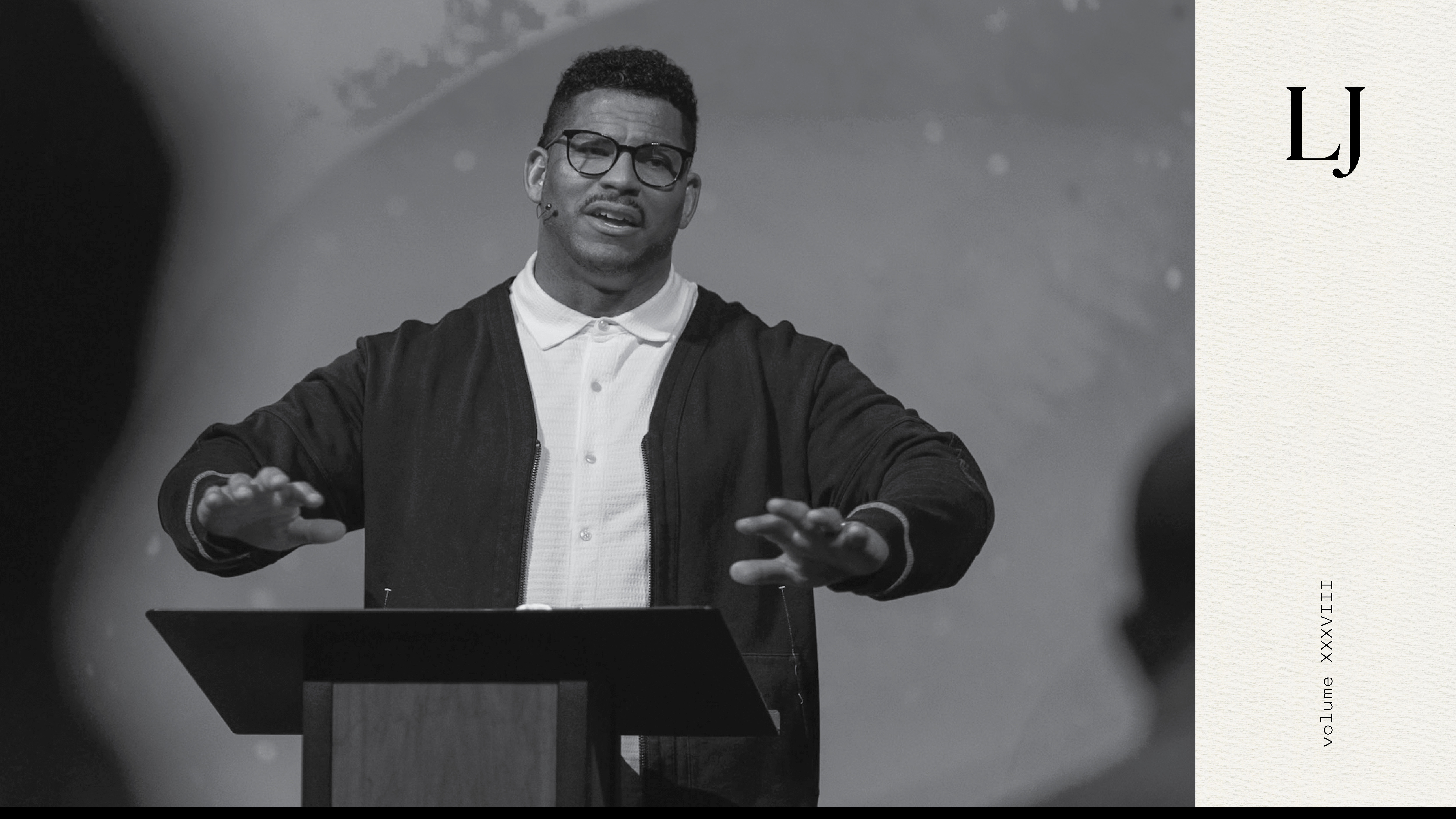
I thought I had walked in and out of that building for the last time. Boy, was I wrong. On August 15, 2021, I’d preach my first sermon as lead pastor of Doxa Church, the congregation formed from what was left of Mars Hill Bellevue. It was surreal to see the big, open space from the stage instead of from the seats.
As I wrapped up that message, I noted how short the pulpit was. It had been custom-built for Mark Driscoll. It was a small detail, but it was a clue revealing the specificity that went into building an empire like Mars Hill. It made me second-guess my decision to take on the role. Was this place still like Mars Hill? Was Doxa fully healed from what had happened here? Was I sure I was the guy for a job like this?
From the Ashes
At first, Jeff Vanderstelt replaced Mark and was one of the founding pastors of Doxa. Jeff was a needed temperature change from Mark, bringing a warm, calming presence to a lot of frazzled and weary people. The year 2015 was all about healing for the church. People needed to properly grieve what Mars Hill had been to them. Some saw it as the place where they came to know Jesus and met their future spouses. Others saw it as a battering ram that collapsed their faith altogether. Along with the holdover staff and some new faces, Jeff helped buoy what was, truthfully, a sinking ship destined for the abyss.
That early iteration of Doxa’s leadership brought stabilization to a shaken congregation. The time they took to meet with the wounded and counsel the broken was crucial, and it’s why Doxa exists today. They didn’t rush past the hurt to get to a new mission and vision for the organization. Talk of growth, expansion, and strategy had been dizzying toward the end of Mars Hill. What people needed now was a Spirit-led pastoral touch.
Soon, it became clear who had attended Mars Hill only for the celebrity preaching; many eventually left when it was no longer acceptable to stay on the fringes and catch a world-class sermon with no participation or buy-in. And sadly, many others left because their faith was shaken. They could no longer trust the church. Some prominent leaders from the early days are no longer in church and no longer claim to be Christians.
Yet Doxa pressed on, despite attendance being cut in half. The resilience of those who stayed was remarkable. The theme went from healing to rest, from rest to health, and from health to rebuilding. Before long, Doxa looked like a church poised to stick around and be a force for the gospel.
Culture Change
The staff and elders had always sensed that Jeff’s time at Doxa was temporary. As he was involved with other ministry endeavors, his attention was pulled in many directions. The leadership acknowledged the great healing work he had helped guide but knew he would likely decide to move on at some point. Then, of course, COVID-19 happened and sped up the whole process. Amid lay-offs and worldwide confusion, Jeff stepped down as lead pastor and into a lay elder role, and Doxa began its search for a new leader. This is where I come in.
I felt like my role as incoming lead pastor was not just to be the primary communicator but also to represent something new and grounded for the people. While I wanted to honor the good parts of the past, I needed to be a stable, positive presence for a church that had grown accustomed to putting out large fires and was trying to put the pandemic in the rearview mirror. Despite the healing that had transpired, there was still a sense of people burning the candle at both ends for the sake of the mission and experiencing background anxiety as a result. I felt like I needed to cool the atmosphere a bit more and let everyone relax.
One of my first messages to the staff and the elders was “We’re not launching nuclear weapons here. This isn’t even the Super Bowl. This is a church. We don’t need to be so on edge.”
Getting to work for and serve with a church is a privilege, to be sure. But we did not need to operate like there were guns to our heads. The fear and excitement of constantly reacting to urgent problems began at Mars Hill but was continuing to a lesser degree at Doxa. The Driscollian phrase “Charge hell with a squirt gun” still echoed throughout the church. While its sentiments are well-meaning, it is a suicidal mission. I encouraged, “Let’s take it down a few notches and let the Holy Spirit guide this process. I think we are still answering the questions ‘Can we live with ourselves if our foot isn’t constantly on the gas pedal? Can we just . . . be?’ ”
Some might blame Mark Driscoll or Acts 29 or whomever, but the truth is that people liked the chaos. They needed the adrenaline of a new thing to chase down. The church and people all around the country (myself included) willingly embraced this hurricane. We needed to begin asking the question “Why are we drawn to this level of dynamic and chaotic leadership?”
- Can't finish right now?
In my message, I acknowledged that a deeper level of healing needed to take place at Doxa and for everyone who had been affected by Mars Hill. “We say we want peace, but the moment we get peace, we need to kick a lantern into a bushel of hay so we have a new fire to put out. Or we need to go find ourselves a new leader who is willing to do that for us.
“No church is perfect, but Doxa’s challenges are unique,” I continued. “How do we survive the trauma of being within the blast radius of such a colossal explosion long-term? We have to realize that all of this happened, and it happened to us, but it is over. We can just take our lives one day at a time and find contentment in the everyday rhythms God gifts us. We cannot ignore our history, but we must move forward into our future.”
Fruit Still Grows Here
In January 2025, Doxa celebrated its 10-year anniversary, and we threw a massive party. We invited old friends back; we had balloons, a cake, and food; and we even sang “Happy Birthday.” How is Doxa still standing? How did this congregation rise from the ashes to become the beautiful, mature, yet seasoned church it is?
One of the biggest reasons is the people. They are resilient and refined. They deeply love Jesus in ways that have taught me about the lack of depth in my own faith. Many were blessed with strong spirits of their own and have faithfully served for a decade. Why? Because God has not abandoned them, and they live like it. The people of Doxa make it easy for me to be their pastor. People are getting baptized, being discipled, and courageously proclaiming the name of Christ on the Eastside of Seattle. And we have fun doing it. No one is looking over our shoulders to point out our insufficiencies or shortcomings.
Mars Hill made its name proclaiming, “It’s all about Jesus.” If that is true of Doxa, the Spirit will continue to work through us. All we must do is make sure that phrase stays true in our hearts as we fight against our own desires to build platforms.
The giant 60-foot screen on which Mark preached many sermons and Rick Warren preached the final sermon at Mars Hill now sits outside in the rain against Doxa’s new building. It’s wrapped in plastic, too big to sell or dispose of. It is a symbol of our ego, and if Jesus is to be made famous, it should stay right where it is.
Eddie Williams is lead pastor at Doxa Church on the east side of Seattle, Washington. Before entering full-time ministry he spent several years in the NFL.