



My mom tells me I used to cry at bath time. She also tells me I used to cry every time we went to the ocean. Although I grew up thinking I was just another kid who didn't like to take baths or go to the beach, I've come to realize those were the early signs of what would become a lifelong battle with fear and anxiety.
Changing the conversation
I am convinced we need to rebrand the way we talk about anxiety. We need to stop using the term "mental health" and start using different ways to discuss this topic. Maybe we could use Instagram and Twitter hashtags. For example, instead of using the hashtag #bff we can use #ibmfoo for "I Blame My Family of Origin." Or instead of the hashtag #throwbackthursday we can use the hashtag #tmfcslt "Throw my Front Cortex Some Love Thursday." It could change everything.
I'm joking of course, but my dream is that instead of words such as unstable and weak, we will use words such as intuitive, creative, and productive when describing people who deal with fear and anxiety. I am one of the over 18 million Americans who deal with fear, anxiety, and issues of mental health.
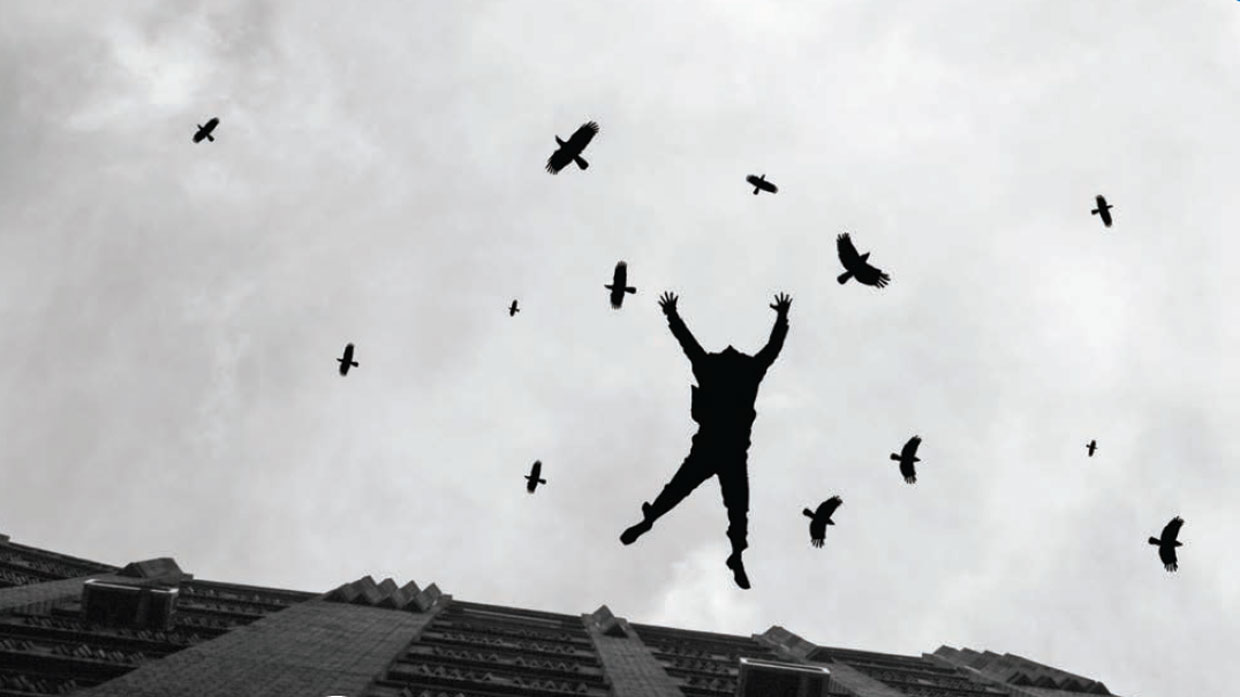
When I get anxious I feel it in my shoulders. My breathing gets shallow and I get what my therapist calls "brain lock." During these times, I seem to be in a state of both rational and irrational consciousness. I know what's going around me yet I'm telling myself messages that make no sense.
"You're going to die. You're not going make it. You're going to lose it all."
Anxiety triggers
A few years ago, I went for a run in Palm Springs in 110 degree weather and suffered a severe panic attack. I grabbed the nearest palm tree while my mind raced with thoughts of catastrophe. I was convinced I was having a heart attack. I began to panic, wondering who would find me dead by the side of the road.
As cars drove by I tried to wave a few of them down. But being Palm Springs, most were retirees. I wondered if any of the drivers would have the strength to put my body in the car. I eventually calmed myself down, worked my plan, and made it home. I can now laugh at that experience.
My anxiety is triggered by a fear of death and disaster. It's an irrational worry that our children or those I love are dying or that I will one day lose it all. These triggers stem from a variety of factors: the trauma associated with growing up in the middle of a war in my native Nicaragua, issues related to moving to the United States when I was 12 years old, and experiencing what I call the "invisible immigrant syndrome."
But in the last 10 years, with the help of counselors, mentors, medication, and most of all the support of my wife and family, I've learned a lot about my anxiety. I've learned how to quiet my emotions. I've educated myself about diet and exercise. I've learned about the importance of truth-telling and learning new narratives that calm my irrational feelings. I've learned how to lead from a place of being not doing, how to live out of being the beloved versus being afraid. Things were going quite well—then I hit bottom.
A tough test
I remember the day I got fired from my job as if it was yesterday. It was a beautiful Southern California afternoon on the University of Southern California campus and I was sitting in my office working on QuickBooks. My boss and the chairman of the board came into my office and I was informed my job was gone.
For the next three months my anxiety went through the roof. I scrambled to take control of my life. All my tools seemed to go out the window as I experienced panic attacks day and night. Still I kept praying, trusting God would provide for me and my family. There were many hard days along the way, which included getting swine flu, going to the clinic for the uninsured, and being asked if I was an undocumented worker. But the hardest day was when I waited in line at the Marriott in L.A. alongside 200 other men and women trying to land a $10/hour, 20-hour-a-week job—that I did not get.
That's when it all changed.
As I left the ballroom I felt God say to me, "You will get up from here, and just keep giving to others." On my way out, a man at a bus stop approached me. He told me that what I said during the group interview was something he really needed to hear (I talked about hope amidst adversity). Then a young pastor from Boston who was starting a church plant in L.A. told me how good it was to see another pastor at the meeting. He asked if he could get my information so we could talk. Then a friend of mine told me, "David, you've been living in the past way too long, it's time for you to move on."
As these interactions took place, I thought of the passage from Isaiah. "See, I am doing a new thing! Now it springs up; do you not perceive it? I am making a way in the desert and streams in the wasteland" (43:19).
Over the past year or so I've finally begun to find some freedom from anxiety and live from a place of vulnerability. I know I have a new name. I am no longer useless or weak. I don't think of myself as a fearful freak. I am now Fearless Trig.
I know I have a new name. I am no longer useless or weak. I don't think of myself as a fearful freak. I am now Fearless Trig.
Last month I hosted and spoke at a conference at 7th Street Church in Long Beach, California called, "The Finding Grace Through Anxiety Conference." Our focus was joy, grace, and what we called #GOZO! (joy). We expected 8-10 people to come and sit in a circle. After all, who wants to talk about anxiety? But to our delight almost 80 people showed up. Some even left the conference because they were having panic attacks due to the crowded room.
God is doing a new thing in my life. He is teaching me to work together with others. He's teaching me to integrate mind, body, and soul. He's reminding me to lead from a place of vulnerability and to always remember my new name.
I've always loved the ocean and thankfully I now enjoy it without fear. My anxiety may be with me for the rest of my life, but God has given me a new purpose and a hope. I know that my weakness is his strength. My story is God's story and it's one I'm living out for him and for the sake of others. If you suffer with anxiety I hope you know it isn't the end. May you discover that there is still peace, grace, purpose, and joy at the end of each day.
- Can't finish right now?
Someday it may even feel like a day at the beach.
David Trig is the founder of Living a Life of GOZO!, an organization that helps people find hope and joy in everyday life. He lives in Long Beach, California.
Copyright © 2014 by the author or Christianity Today/Leadership Journal. Click here for reprint information on Leadership Journal.