



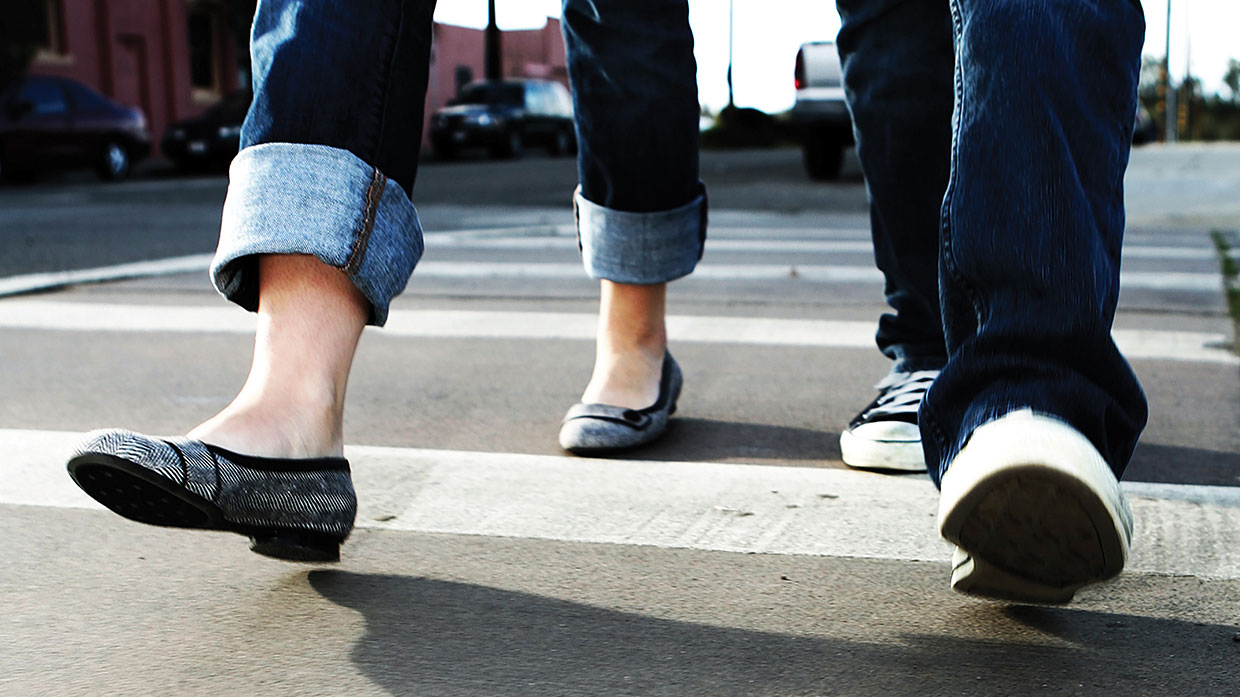

My first new members’ class as the new pastor of First Baptist Church of Grand Cayman concluded with a little buzz. To my relief, people enjoyed the church-wide orientation. That morning the class covered the history of the Christian church, with a considerable section on the history of Christianity in the Caribbean. An always-cheerful Mrs. Winsome—Jamaican born and raised—approached me with her trademark wide smile. She eagerly thanked me for the class and I’ll likely not forget what she said with lovely Caribbean lilt: “It’s like you’re teaching us to walk our own land.”
That was high praise from a proud Jamaican woman who’d likely forgotten more about Caribbean life and history than I’d ever hope to learn. The comment stuck with me during my eight years as pastor in Grand Cayman. It was a good way of framing what my ministry was supposed to be there—learn to walk the land and teach others to do so as well. But later, that comment rose in my soul while sitting on a beach reviewing my life and ministry in Cayman. Had I learned to walk the land? I had the nagging sense that I hadn’t in my eight years. I no doubt loved the people. I loved our ministry together. And who could not love the beauty of the island with its crystal emerald seas and colorful
Caribbean culture? As I sat on a picnic table with my feet, in shoes, dangling above the cool white sand, I asked myself, Who wears shoes to the beach? Who goes to the beach when they don’t like sand?
I asked myself, ‘Who wears shoes to the beach? Who doesn’t like sand? Me.’
Me.I realized I had not learned to walk the land. Thus began my transition back to the United States, to plant a new church in Washington, D.C., in a corner of the city that could use another congregation of God’s people committed to spreading the gospel and living like Good Samaritans among its residents.
The potholed streets and uneven sidewalks of southeast D.C. bear little resemblance to the white sands of Grand Cayman. Shaking his head in disbelief, one neighbor told me I was crazy and “missed God’s calling” when I left the islands to come “here.” His voice went up when he said “here,” but when I heard the word, my heart gladly burrowed down, into the concrete, into the place, into the people, into the land.
Now, life and ministry for me are about loving and being with a particular people in this particular place with a particular purpose. I’m trying to learn to walk the land of southeast D.C. and love the people who live here. Here’s the conviction I now share with a good number of people before me: You can’t reach a community you don’t live in. You can’t learn a land you don’t walk. The gospel and Christian love require proximity, presence.
Anacostia River Church exists “to glorify God by making disciples from the four corners of the block to the four corners of the globe.” The geography of our mission statement matters a great deal. We love the block. We walk the block. We talk with people on the block. We sometimes fear the block. But still we walk, talk, learn and love the block. We’re not heroes for doing it—as some well-meaning Christians seem to assume. We’re not heroes; we’re neighbors.
To become something like the good Samaritan who proves himself to be a neighbor by serving the brokenness of those left in the street for dead, that’s our great ambition. Life for us right now is about learning to be a neighbor, rooted in a place, loving and serving our neighbors in the company of the church family.
For me, one of a number who have moved into the community and chosen to love the block, this means traveling less so I can be home more. It means speaking less often to conferences, but having conference at the mailbox with Mrs. Carol and Jason. It means writing and reading less so I can hang out and listen more. It means a certain kind of rootedness. We are, after all, a church plant. Roots are vital for our growing and blooming.
I hope our roots get more tightly tangled with the roots of other churches in our neighborhood and serving nearby neighborhoods like our own. I hope we find common cause with others laboring to bring gospel life to the block and the world long before us.
We want to contribute to the health and zeal of other congregations, just as we hope they’ll stir us up to love and good deeds. It feels critically important to do this in neighborhoods like ours—predominantly African American and Latino, largely poor and working class, facing economic and social challenges, filled with people made in God’s image.
Sometimes other people don’t notice our neighborhood or God’s image in us. We do. We want to. We want to serve in a way that honors that truth.
Learning to walk the land also means simply enjoying my family and the chapters we are closing or opening. Our young Caribbean-born son is learning to play American football after growing up playing real football in the Caribbean. What a joy throwing the ball with him or teaching him some strategy as we play Madden ’16. Our oldest daughter is learning to drive on American highways after traveling for years on the lazy roads of a small island. She’s also applying to colleges and universities. She won’t be home long, so I want to be home all the time. A year behind her, our middle child will also be headed to college. I want to enjoy her senior year with her next year, a senior year without the constant companionship and mild rivalry of her older sister. She’ll be all on her own—except I’ll be there.
A “wider ministry” can wait—if it’s ever picked up again. Learning to walk the land means I’ll walk with everyone I love. What could be better than that?
Thabiti Anyabwile is a pastor of Anacostia River Church in Washington, D.C.
Copyright © 2016 by the author or Christianity Today/Leadership Journal.Click here for reprint information on Leadership Journal.