

Article

A More Beautiful Bible

And other items of interest from ministry and culture.

The typical Bible may be beautiful in its contents, but lacks a certain literary aesthetic. Margins (when they exist) are skimpy, the typical justified double columns lose the reader’s eye, notes distract, rarely-used numbers are everywhere, and the butterfly-thin pages seem to flutter away from the mind like the locusts of the prophet Joel. Little about the design or layout of our modern Scriptures inspires us as much as the contents do.

But a wildly successful crowdfunding campaign is changing that. “Bibliotheca,” from California designer Adam Lewis Greene, is a sleek modern 4-volume design (in the 1901 ASV) free of notes or visual distractions, and boasting a simple, original typeface. Design elements have been selected both for beauty and for symbolic meaning—for example, the pages measure according to the proportions of the Ark of the Covenant. As of the time of this writing, Greene’s project has smashed his original $37,000 goal with almost $580,000 raised—speaking both to the enduring power of Scripture to inspire, and to the longing for more literary beauty in how we approach the Book of Books.

Why Don’t We Preach About Body Image?

“I can only speculate about why church leaders are largely silent about body image. Perhaps it’s seen as a “women’s issue,” whereas the majority of pastors are men. Perhaps the topic is just too sensitive. Perhaps it speaks to a theology more concerned with the spirit than the body. Or perhaps it is an idol so entwined in Christian culture that we hardly even notice it … .

Since most pastors are men, and body image primarily impacts women, this can be tricky territory. Body image is a delicate issue fraught with shame, so it’s important to avoid framing the message as a rebuke. Instead, I would advise male pastors to consult with women before addressing the topic from the pulpit. Then, rather than issue a reprimand, consider offering them the biblical and theological tools they need to think Christianly about their bodies.”

—Sharon Hodde Miller, “Why Pastors Should Preach About Body Image,” via Christianity Today’s Her.meneutics site.

Servanthood or Codependency?

People like church staff and volunteers often confuse codependency with servanthood. A description of codependency can sound a lot like serving others. And service-oriented professions attract people who may not understand the difference.

But sometimes serving others is really about serving ourselves—and that’s when codependency enters the picture. People who are codependent serve to meet their own emotional needs and desires. They serve in ways that keep the people around them from growing, changing, and thriving. They serve and serve and serve, long past the point of health and true effectiveness, because they are addicted to what serving gives them: a sense of value, preservation of the status quo, dependency in others.

Serving others differs from serving others’ dysfunction. And sometimes true servanthood means refusing to participate in another person’s process of destroying self or others.”

Leadership Journal senior editor Amy Simpson, in “When Service is Selfish,” on PARSE.

Three Organizations that Serve Persecuted Christians

Want to partner with persecuted Christians around the globe? Here are three organizations making a difference for brothers and sisters in violent or repressive regions. Find how you fit into this global story by visiting their websites, hearing the stories of suffering sisters and brothers, and considering how your church can support the persecuted:

Open Doors – Founded almost 60 years ago by “God’s Smuggler,” Brother Andrew, Open Doors is an international ministry serving persecuted Christians through Christian resources, advocacy, and practical/financial assistance. Offices worldwide. (opendoors.org)

International Christian Concern – Based in Washington, D.C., the ICC website is a great resource for breaking news related to the persecution of Christians. The organization is dedicated to advocacy, awareness, and assistance for suffering believers. (persecution.org)

Voice of the Martyrs – Also offering opportunities to learn about, support, and encourage suffering Christians, Voice of the Martyrs offers the opportunity to “Adopt a Front Line Worker,” by committing to pray or financially support a worker in a difficult region of the globe. (persecution.com)

“Christians are the most persecuted religious group worldwide. An average of at least 180 Christians around the world are killed each month for their faith.”
—Open Doors

Top 14 Countries for Extreme Persecution of Christians

  1. North Korea
  2. Somalia
  3. Syria
  4. Iraq
  5. Afghanistan
  6. Saudi Arabia
  7. Maldives
  8. Pakistan
  9. Iran
  10. Yemen
  11. Sudan
  12. Eritrea
  13. Libya
  14. Nigeria

Tracing Decline: Attendance, or Frequency?

Has the trend of declining attendance hit your church yet? Thom Rainer surmises that the drop in average attendance numbers might not be a simple as “they left.”

The number one reason for the decline in attendance is that members attend with less frequency than they did just a few years ago … If the frequency of attendance changes, then attendance will respond accordingly. For example, if 200 members attend every week, average attendance is 200. But if one-half of those members miss one out of four weeks, the attendance drops to 175.

Did you catch that? No members left the church. Everyone is still relatively active. But attendance declined more than 12 percent because half the members slightly changed their pattern.

This phenomenon can take place rather quickly, leaving leaders scratching their heads because the behavioral change is so slight it is almost imperceptible. We rarely notice when someone who attends four times a month fades to three times. Nor do we typically catch it when the twice-a-month attendee becomes a once-a-month attendee … . The heart of the problem is not declining numbers but waning commitment.

— Adapted from “The #1 reason for decline in church attendance,” posted at ChurchCentral.com

Thom Rainer’s 5 ways churches can respond to the trend:

1. Raise the expectations of membership

2. Require an entry class for membership

3. Encourage ministry involvement

4. Offer more options for worship times

5. Monitor the attendance of each member

Have you responded to declining attendance frequency?

We want to hear about what worked … or what didn’t.
Email us: ljeditor@christianitytoday.com.

Thom Rainer’s 5 ways churches can respond to the trend:

1. Raise the expectations of membership

2. Require an entry class for membership

3. Encourage ministry involvement

4. Offer more options for worship times

5. Monitor the attendance of each member

Have you responded to declining attendance frequency?

We want to hear about what worked … or what didn’t.
Email us: ljeditor@christianitytoday.com.

Copyright © 2014 by the author or Christianity Today/Leadership Journal.Click here for reprint information on Leadership Journal.

Posted July 29, 2014

Also in this issue

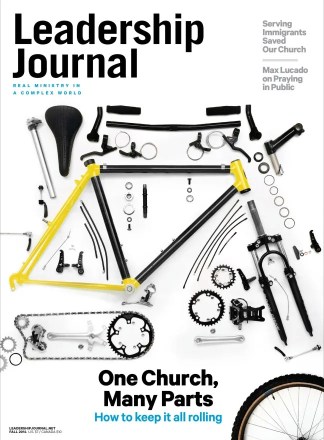
How to keep it all rolling

Doing Community Behind Bars

Prison ministry demands really practical theology.

High Anxiety

Leaders have lots of reasons to worry … and one overriding reason not to.

Finding Time for Study

7 tips to make the most of your time

Facing Fears

Serving Immigrants Saved Our Church

How welcoming in the stranger revived a declining congregation.

For the Love of Fierce Variety

Host a Red Carpet Event For Special Needs People

Give them the “Best Night Ever.”

Hold a "Gas Buy Down"

Give the gift of cheaper gas.

Split The Tithe

Give half to the church and half to missions.

Host "Midnight Basketball"

Give kids a safe place to play.

Fix Cars For Single Moms

Serve your community through basic car maintanence

Shoot a Two-Minute Message

An easy way to connect with your audience

What to Do When Your Church is Declining

Merging with another church may be your only option, but handle with care.

Make Room for Me

New research reveals what Millennials like—and don’t like—about churches, and what we can do to reach them.

Chasing Rabbits

Squirrelly Motives

First Pastor on the Moon

Getting to 'Aha'

Kyle Idleman discusses three phases of transformation.

My Calling

From restaurant manager to pastor

When Smaller Is Better

Effective small church ministry starts with a clearer view of success.

Within One, Many Many Many ...

One church, one journal, innumerable parts.

Reaching Churchless America

Examining the unchurched

It Takes a Church

Adopting five foster children is impossible unless you have the right support.

Leading in Prayer

Max Lucado talks about how good prayers shake the heavens and shape community.

Leadership Shorts

Summaries of books you need to know.

Disaster Training

Sunday Morning Football

Pastoral Oversight

One Hamburger, Hold the Depression, Please

And other items of interest from ministry and culture.

'Nones' Are Your Business

A review of ‘The Rise of the Nones’ by James Emery White

Men and Women Working Together

And more helpful tools from Christianity Today

The Mars and Venus Church Staff

A field guide to navigating gender sensitivities.

Missed the Memo

Male Bonding

Be Yourself?

PK Confidential

A review of ‘The Pastor’s Kid’ by Barnabas Piper

Pastor, Church, & Law Volume 2

And more helpful tools from Christianity Today

View issue


Our Latest

Apple PodcastsDown ArrowDown ArrowDown Arrowarrow_left_altLeft ArrowLeft ArrowRight ArrowRight ArrowRight Arrowarrow_up_altUp ArrowUp ArrowAvailable at Amazoncaret-downCloseCloseEmailEmailExpandExpandExternalExternalFacebookfacebook-squareGiftGiftGooglegoogleGoogle KeephamburgerInstagraminstagram-squareLinkLinklinkedin-squareListenListenListenChristianity TodayCT Creative Studio Logologo_orgMegaphoneMenuMenupausePinterestPlayPlayPocketPodcastRSSRSSSaveSaveSaveSearchSearchsearchSpotifyStitcherTelegramTable of ContentsTable of Contentstwitter-squareWhatsAppXYouTubeYouTube
Down ArrowbookCloseExpandExternalsearch