

Article

Of Mountains & Mars Hills

How can faithful pastors lead when trust is broken, power is abused, and cynicism is everywhere?

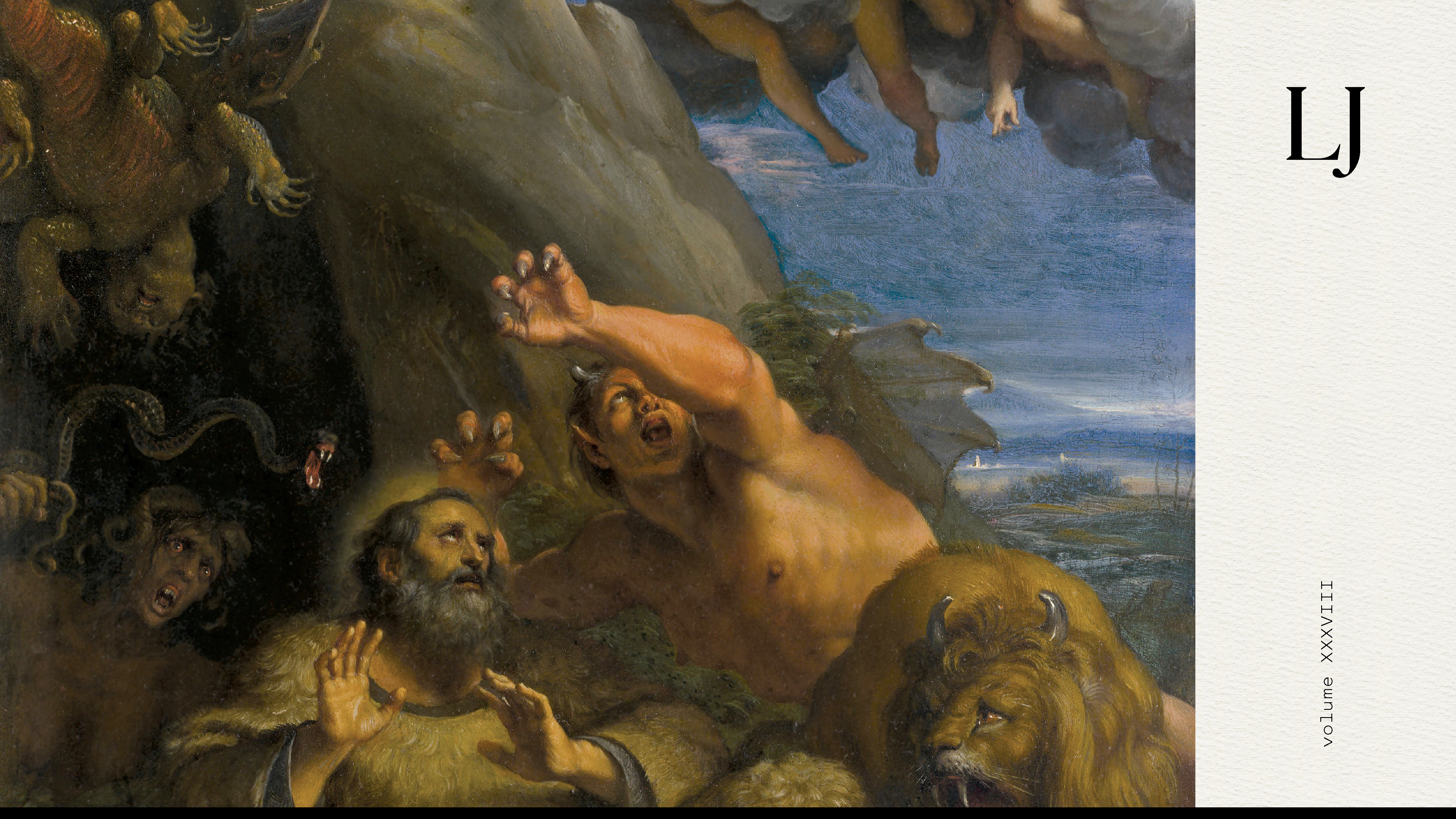
Painting of Christ Appearing to Saint Anthony Abbot During His Temptation by Annibale Carracci

Heritage Images / Getty

Some people thought we were making a mountain out of a Mars Hill.

When CT launched the documentary podcast series The Rise and Fall of Mars Hill, a few resented having the story told. Some of them, to be sure, defended the kind of behavior narrated in the series—of misuses of pastoral authority and power that ended with spiritual carnage all over the place. But many of those made queasy by the telling of this story didn’t dispute the harm done. They just said, “Things are hard enough for pastors and other leaders, and most of us are nothing like Mark Driscoll.”

The millions who resonated with the series—including those who had never heard of Mars Hill Church—are themselves testimonies as to why the story had to be told. Many encountered similar traumas, some in other mega-churches, some in small congregations. Wishful thinking or willed ignorance will not make those realities go away and will not help rebuild the trust many need.

At the same time, there are hills other than Mars. Pastors frustrated by yet another revelation of scandal and toxicity are correct that, in fact, the majority of leaders are not like the worst actors out there. A documentary series about most church leaders would be boring. That’s because most are in it for all the right reasons—and are facing with grit and grace the age-old problem of discipling people so they can live, and die, conformed to Christ.

One of the insanities of this upside-down age is that those who misuse the authority God gave his shepherds seem to pay little cost. They pack up and find greener pastures elsewhere, with new lambs to shear. Meanwhile, leaders who do model the way of Jesus face the consequences of a culture that doesn’t trust institutions because of the awful behavior of some institutions. They often find their best efforts stymied by communities who, magnetized by the narcissists and grifters, look at the wholesome leaders and ask, “Who the hell do you think you are?”

So how do ministry leaders actually minister in times like these? The most obvious answer is to refrain from conforming our own leadership to the bad models we have experienced. That’s true and right, but we must go beyond avoiding the wrong use of authority to find the right kind of authority—the kind Jesus embodied, which was startlingly different from that of the scribes (Mark 1:22)?

In a time of mistrust, how do the trustworthy gain enough trust to do all those right things to which they are called: to see lives changed, churches grow, people heal, communities form, and the gospel advance?

One of the biggest crises facing the church is that many have given up on the idea of such a good and cruciform model of authority and leadership even being possible. Yet this would mean giving up on the church, on the Spirit, on the kingdom. It’s counterproductive
and unnecessary.

We are confident that the good leaders who make up the majority—those interested not in building empires of their own but in seeking the kingdom of Christ—are not helpless in the face of burnout, discouragement, or confusion that comes with cultural forces moving at a breakneck pace. We can see these challenges, but we can also see beyond them, just around the hill in front of us to a future filled with life and hope and joy and peace.

Where are the leaders we need? They’re everywhere. They know why they’re called to do what they do. And they know who called them to it. What they need is the practical wisdom—much of it old, some of it contextually new—to know what to do in a moment like this. We believe these leaders are primed to forge a future worthy of news as good as the gospel. That’s what this first issue of the new, relaunched Leadership Journal is about.

That first band of disciples heard with their own ears Jesus say, “All authority in heaven and on earth has been given to me. Therefore go and make disciples of all nations, baptizing them in the name of the Father and of the Son and of the Holy Spirit, and teaching them to obey everything I have commanded you” (Matt. 28:18–20). What we sometimes miss is where this happened. Matthew tells us the disciples “went to Galilee, to the mountain where Jesus had told them to go” (v. 16).

Elevated places were commonly the sites of power misuses. The high places were spots of idolatry to the gods of power and prosperity. Even leaders who knew better would often leave these high places intact, in hopes of channeling whatever authority they found there.

But spots of elevation are also where God sometimes met with his people. Mount Sinai shook with fire and thunder as God delivered his covenant Word. On that mountain, Elijah encountered the same God, but this time in the sound of a low whisper. The sermon Jesus delivered from a mount was as far removed from the authoritarian ethos of human power grasping as possible. And, of course, the hill known as the Place of the Skull is where Jesus offered up his life.

A cross-shaped authority is genuine authority. Jesus led his people to and from the cross—when even those closest to him refused to see it. If a new generation glimpsed that kind of cruciform authority, it could change everything—as it has many times. That’s a hill on which to die—and live again.

Russell Moore, Editor in Chief, Christianity Today

Posted September 1, 2025

Also in this issue

One of the great crises in the church today isn’t just the fallout of leadership failures—it’s the growing disbelief that pastors can still embody Jesus’ good and cruciform authority. Most pastors aren’t building empires. They’re proclaiming the Word, seeking the kingdom, and quietly laboring for lives to change and the gospel to advance. In this issue, Michael Keller encourages and equips those who pastor and preach to the institutional skeptic. Matthew Z. Capps makes a case for a healthy vision of church membership wherein shepherds can actually shepherd their people. Pastors Hannah Miller King (ACNA), Jonathan Leeman (9Marks), Gabriel Saguero (Assemblies of God) and Hershael W. York (SBC) talk about what makes their church governance models work. Walter R. Strickland II writes on the current state of Black evangelicalism and the institutional tensions of discipleship. Tailored mental and emotional health insights—for the pastor and the congregation—come from Dan Allender, Carey Nieuwhof, James Sells, and Curt Thompson. The theme of this issue is anchored with an essay from Taylor Combs on why we venerate and vilify leaders, written through the lens of Acts 14, along with a conversation between Rich Villodas and Richard Foster on the role of the pastor’s own discipleship in the health of a ministry. A pastor shares his account of how, by God’s grace, something beautiful was replanted out of the ashes of Mars Hill Church. Last, there is a robust books section, complete with a practical excerpt and a roundup of pastors sharing the must-haves in their personal libraries. This issue of Leadership Journal will strengthen weary hands, offer timely wisdom, and cast a vision for ministry that is both grounded and hopeful—one that reaches the disillusioned and points to the ultimate authority worth trusting: the crucified and risen Christ.

The Safeguard of Good Church Governance

Strong ecclesiology is more important than ever. Four church leaders weigh in on the function of their church governments.

The Scars of Spiritual Formation

In Nailing It, Nicole Massie Martin offers personal, poetic reflections that invite pastors to embrace their wounds—and the God who heals through them.

I’m Grateful for My Bishop

Episcopal governance structure provides both discipline and care for its ministers.

When They Trust Jesus but Not His Church

Preaching and pastoring in an age of skepticism.

Why We Venerate and Vilify Christian Leaders

One moment we’re singing their praises; the next we’re questioning everything. Maybe we’re asking the wrong things of them.

When a Single Institution Isn't Enough

Why Black evangelicals often look beyond any one institution—even beloved ones—to meet their full needs of discipleship.

There’s Safety in Meaningful Church Membership

Churches have misused it and culture hates commitment. But don’t throw out the body with the bathwater.

Spiritual Formation Has a Local Address

Richard Foster discusses healthy pastoral leadership, his daily routine, and how to practice solitude in an age of distraction.

Proudly Independent. Humbly Collaborative.

Individual cooperation makes the Southern Baptist Convention a reckoning force.

Leadership That Doesn’t Flinch

Friedman’s classic The Failure of Nerve reveals how self-differentiated leaders resist the pull of anxiety and lead with clarity.

Curious Questions to Engage Skeptics

From the files of Tim Keller

It Is Never Good to Be Alone

In an anxious age, pastoral health requires more than better systems. It requires being known.

The Necessity of the Trauma-Informed Pastor

Spiritual leadership requires us to know the stories of our people.

Formation That Transforms

Ken Boa’s Conformed to His Image lays out twelve distinct pathways toward holistic discipleship rooted in God’s character.

Reclaiming the Church's Role in Mental Health

We have a holy opportunity to return to our roots—a chance to recover the kind of care that once marked every aspect of the early church.

Teaching Tough Passages with Authority

How should Bible teachers and preachers handle Scripture that seems morally problematic?

Shepherding at Home

In Managing Your Household Well, Chap Bettis calls pastors to lead their families with the same intentionality they bring to their churches.

Who Holds the Keys to the Kingdom?

A case for elder-led congregationalism.

Honest Prayers for a Hurried Life

With pastoral warmth, Paul E. Miller’s A Praying Life helps leaders bring their messy lives to a Father who listens, understands, and stays.

Not Because You’re Strong, But Because He Is

A benediction for the pastor who feels too fragile for the task—but stays anyway.

A Marriage of Independence and Authority

A hybrid model of governance helps Assemblies of God churches succeed.

From Mars Hill’s Rubble to a Church at Rest

Out of the ground once shaken by the collapse of Mars Hill Church, something steady is growing.

Timeless Questions, Timely Answers

Founder Billy Graham’s vision for pastoral leadership finds new life in an age of institutional distrust.

View issue


Our Latest

Apple PodcastsDown ArrowDown ArrowDown Arrowarrow_left_altLeft ArrowLeft ArrowRight ArrowRight ArrowRight Arrowarrow_up_altUp ArrowUp ArrowAvailable at Amazoncaret-downCloseCloseEmailEmailExpandExpandExternalExternalFacebookfacebook-squareGiftGiftGooglegoogleGoogle KeephamburgerInstagraminstagram-squareLinkLinklinkedin-squareListenListenListenChristianity TodayCT Creative Studio Logologo_orgMegaphoneMenuMenupausePinterestPlayPlayPocketPodcastRSSRSSSaveSaveSaveSearchSearchsearchSpotifyStitcherTelegramTable of ContentsTable of Contentstwitter-squareWhatsAppXYouTubeYouTube
Down ArrowbookCloseExpandExternalsearch