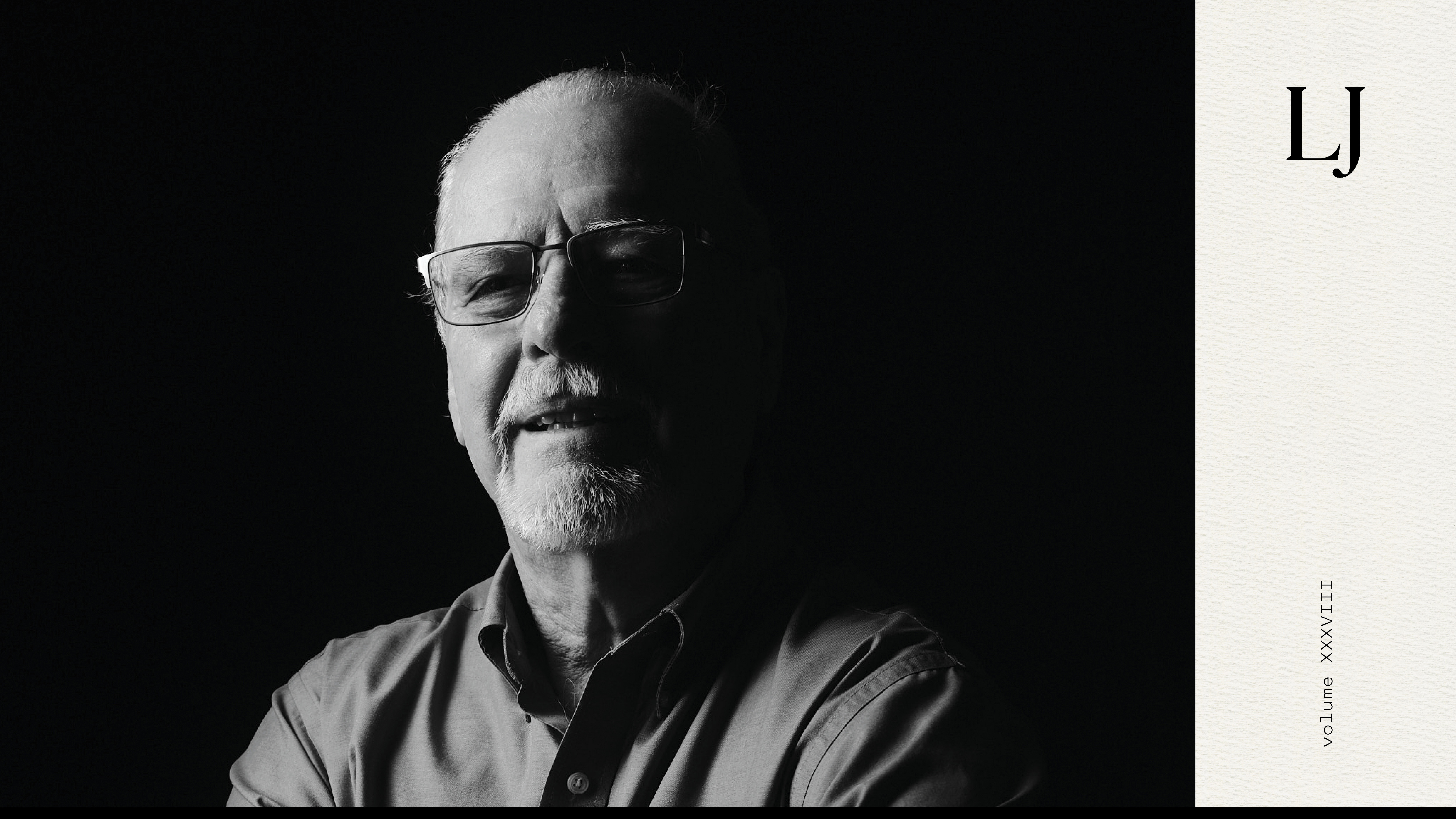
When Richard Foster was a pastor, he would often spend Saturdays walking around the empty sanctuary and sitting in different pews to pray. “I’d think about the family that would sit there and pray into them the sermon that I’d be preaching on Sunday,” Foster said.
Many things have changed since the theologian’s best-selling book Celebration of Discipline was first published in 1978. What hasn’t changed is the call for pastors and church leaders to follow Jesus and disciple their flocks.
In an interview with pastor and author Rich Villodas, Foster reminds us of what healthy pastoral leadership should look like in an age of distraction and superficiality. This interview has been edited and condensed.
Rich Villodas: As pastors and church leaders, how do we listen to and follow in the way of Jesus and create environments within local church communities where others can do the same?
Richard Foster: The ABCs of church “success” today are attendance, buildings, and cash. I had to learn to give up on those things until I could see a human being in those I ministered to. I had to learn to simply come alongside another person and listen to their heart.
There’s a story of a lady in Russia who had some turkeys. As Paul Pearson, in an article about Thomas Merton, tells the story, the woman’s spiritual director was giving a lot of time to listening about her turkeys, and he got criticized for it. He replied with something like, “Don’t you understand that this lady’s whole life is in those turkeys?”
I want to say to pastors and leaders: Try out the spiritual disciplines personally, maybe for three years. See what you learn. And then begin to find others who long for God and invest in listening to them and what they care about—their turkeys, if you will—and walk with them.
I remember a dear fellow in our congregation who worked at a research institute. I asked if I could come to the place where he did his work. On the day I visited, he had learned that his research was going into the military complex. He’d spent half his life getting a PhD, and what he was researching was being used to kill people. You learn to weep with people in times like that and to just sit with them, deeply invested in their turkeys.
Pastors don’t have to be the center of attention. As pastors, we take the focus off of ourselves and point to Christ. Jesus has not contracted laryngitis. His voice is not hard to hear. His vocabulary is not difficult to understand. He will speak to us.
Villodas: I think it’s true every generation has its own “turkeys”—a particular emphasis based on what’s happening in the world, in a local community. When you think about the American church and its leaders today, what’s most urgently needed in terms of the spiritual disciplines?
Foster: The first sentence in Celebration of Discipline is “Superficiality is the curse of our age.” At that time in the 1970s, there was this superficial way of living, even in the religious community—maybe especially in the religious community. Celebration was an effort to work with that.
But you were asking about today. Today, the great issue of superficiality is still there. But the other issue is distraction, which has come as a kind of massive thing on people’s heads. They’re constantly distracted. We’ve got to work on that somehow.
Scripture says, “Be still and know that I am God” (Ps. 46:10). So today, solitude is one of the most essential disciplines. Let me tell you why.
When I would take my regular seasonal retreats, the first thing I’d start to wonder is, What’s going on with the family? Are the kids fighting? The church—what’s gonna happen there?
And here’s what I learned: People actually did quite well without me. When we practice solitude, we learn how to resign as CEO of the universe. We learn that things can go on without us. We learn that it’s okay to say no.
Villodas: For a pastor or a ministry leader who might be intimidated by the idea of solitude, how would you coach them in their initial steps of pushing back against a culture of distraction?
Foster: You take it as you can take it. Don’t try to do stuff you can’t do—pray as you can, not as you can’t.
In the early days, I tried to be heroic about all this stuff. I tried to pray in ways that I can’t. I heard that John Wesley would get up at 4 a.m. to pray. So I got up at 4 a.m. too, but I always fell asleep. I would end up standing against a wall to try to stay awake and pray—but I learned that you can fall asleep standing against a wall. I had to learn that 4 a.m. wasn’t a good thing for me.
Villodas: Whenever I try to work out, my wife will say, “Go at your pace. Don’t overdo it.” I think that’s a good way of thinking about prayer and solitude, as you say: Go as far as you can, and that’s okay. You’ll build up the muscle and continue to go further.
Foster: Exactly. Your wife is very wise. Remember the passage that says to not “despise the day of small things” (Zech. 4:10). What we learn is the hidden preparation through which God puts his ministers.
Villodas: I love that—despise not the day of small beginnings with the spiritual life. What a liberating truth that is.
It seems to me that having a breakdown of formation and discipleship has often led to particular church structures that are marked by abuse and unhealth. What does healthy pastoral authority look like in an age where we’ve seen lots of abuses within the church?
Foster: As leaders, we have to take people off of us and put them on Christ. Discipleship is helping people see how to walk with Christ. And you know, it doesn’t take so many words: You’re with someone. You listen.
Spiritual formation always has a local address. In a larger church setting where we had a staff and so on, I got assigned to do hospital visitations. I was trying to learn about prayer in those days, and I was kind of frustrated, saying, “God, I’m having to go to this hospital all the time. But I want to learn how to pray.” This was one of the first times where I felt God’s loving but firm response: The hospital is where you’re going to learn to pray.
- Can't finish right now?
There was a little fellow, Davey, about 5 years old, who had Down syndrome and a pretty severe illness. One night I stayed all night long with Davey’s mom and dad, waiting to see if he would live or die. He had tubes coming out of his brain, draining fluid.
Davey was in the hospital I think six months. And I’ll tell you, there was a bond that was built between Davey and me in those six months. When Davey got out of the hospital and we saw each other across the room, we just made a beeline for one another. And that Sunday, I preached my heart out. Why? Because Davey was listening.
Villodas: That’s beautiful—that’s the pastoral work that we’re doing. What I also recognize in the pastoral call, though, is that we are up against a culture of division and polarization that is really intense. The world has always had division and polarization, but there is a new level of it today because of technology and a 24-7 news cycle that’s always before us. What’s your encouragement to pastors who are trying to lead faithfully in this particular social and cultural moment?
Foster: Boy, Rich, that is the question today. I look at what’s going on and how often pastors are just torn apart. I mean, what should they say? I don’t know. You just try to be faithful and love people. You’re giving Communion on Sunday for people who love you and care for you, alongside people who hate you and are trying to get rid of you.
Villodas: That sounds like something Jesus would be familiar with.
Foster: Exactly, Rich, you’ve got it. Now, you remember the old circus tents where you’d have a great center pole and then around the edge are a lot of smaller poles holding up the tent. Any number of the poles around the edge can fall down, and the tent stays up. The center pole, though, if that falls, it’s over.
So I’ve tried to stress, when I’m working with people, that the great center pole is Christ: his birth, his life, his teachings, his death, his resurrection. We can have differences about a lot of other things. They can even be pretty important things. But we don’t have to agree on everything.
Villodas: One last question: Are there one or two specific practices that are helping you order your life in God today, that are keeping you anchored to his presence in this season of your life?
Foster: Well, I get up and try to write a little bit, until my brain is fried—that doesn’t take too long. And then I’ll go out. I live in a sort of woodsy area, and there’s a little canyon nearby, a state park. And then I come back.
Not every day, but many days, I go to a little restaurant called Adriana’s. It’s just a house that’s been converted into a restaurant. And Adriana points me to a table and keeps the coffee coming while I go over what I wrote that morning. I’m the kind that’ll spend all morning taking out a comma and all afternoon putting it back in.
Now when I’m on the little hike, I’m getting acquainted with the trees and the animals, and that’s good, but I’m also trying to listen to God. If there’s a meeting that day, I ask, “Is there anything that I need to say? Or mostly, is there anything I don’t need to say?”
I pray for all of us that we can learn to walk cheerfully over the earth. The joy of the Lord is our strength. May he give us a great sense, an expansive sense, of his joy.
Richard Foster is an author, teacher, former pastor, and founder of Renovaré.
Rich Villodas is an author and the lead pastor of New Life Fellowship in Queens, New York.
recommended