

Sorry, something went wrong. Please try again.
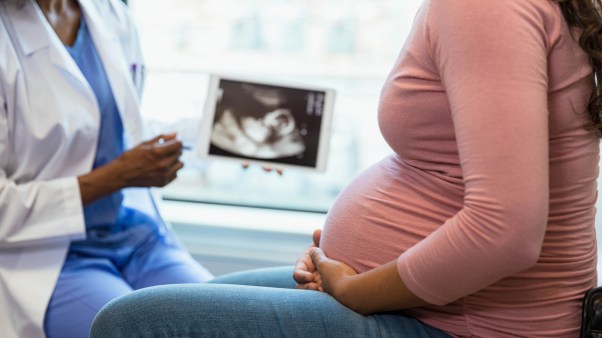
The scientist Ali Binazir wrote a paper explaining the probability that you exist. It turns out that when taking into account the astonishing number of possibilities of parents meeting, grandparents meeting before them, and so on going back generations, and then adding the vast number of sperm and ova in possible combinations over decades of the marital act in all those generations, the odds of me existing just as I do are about 1 in 102,685,000. That’s a number so huge it hurts to think about it.
For example, the probability of your father meeting your mother is 1 in 20,000. The chances of them talking to one another is 1 in 10. The chances of that turning into another meeting is about 1 in 10. The chances of that turning into a long-term relationship is about 1 in 10. The chances of that lasting long enough to result in offspring is 1 in 2. So, the combined probability is already only about 1 in 40 million.
Now let’s get down to some of the biological details: each sperm and each egg is genetically unique because of the process of meiosis; you are the result of the fusion of one particular egg with one particular sperm. So, the probability of that one sperm with half your name on it fertilizing that one egg with the other half of your name on it is 1 in (100,000) (4 x 10¹²) = 1 in 4 x 10¹⁷, or 1 in 400 quadrillion.
Getting complicated! You bet! But the probability just keeps getting more unlikely. You are highly improbable!
But, according to the Bible, you are not here by chance. God created and knit you together in your mother’s womb (Ps. 139:13-16). You’re not just one in a million, you’re one in a 102,685,000.
Source: Charles Pope, “The Probability of You Existing at All Is Unbelievably Low,” The Church in Mission, https://blog.adw.org/2018/08/probability-existing-unbelievably-low-yet-lets-look-numbers/
Societies that do not value human life, especially at its most vulnerable moments in the mother’s womb or in the last days, are dying (often quite literally) political entities that have lost their purpose. Destroy the family, and you don’t have much of a society.
That’s why the following stats are so concerning: The E.U.’s fertility rate in 2022 was 1.49, well below replacement. And when compared to close to five in Africa and 3.14 in the Arab world, Europe is dying. Many European allies eliminate around three hundred human lives for every one thousand live births. The U.K. has about 330 abortions per one thousand live births; France just above three hundred, which incidentally is the same as Russia. (The U.S. is not far behind, with about two hundred abortions per one thousand live births.)
No wonder an article in First Things concludes, “The West is killing itself.”
Source: Jakup Grygiel, “A Pro-Life and Pro-Family U.S. Foreign Aid Strategy,” First Things (3-7-25)
Over the past few years, Christians have often been warned that we're "on the wrong side of history" in regards to same-sex marriage. Robert P. George, a law professor from Princeton and co-author of What Is Marriage, said:
I do not believe in historical inevitability …. No good cause is permanently lost. So, my advice to supporters of marriage is to stay the course. Do not be discouraged. Do what the pro-life movement did when, in the 1970s, critics said, 'The game is over; you lost; in a few years abortion will be socially accepted and fully integrated into American life ….' Speak the truth in season and out of season …. Keep challenging the arguments of your opponents, always with civility, always in a gracious and loving spirit, but firmly.
If you are told that you are on 'the wrong side of history,' remember that there is no such thing. History is not a deity that sits in judgment. It has no power to determine what is true or false, good or bad, right or wrong. History doesn't have 'wrong' and 'right' sides. Truth does. So, my message to everyone is that our overriding concern should be to be on the right side of truth.
Source: Ryan Anderson, “Robert P. George on the Struggle Over Marriage,” Public Discourse (7-3-09)
Seeing abortion through the lens of Creation, Fall, and Redemption.
Top three winners for sermons on abortion.
After celebrating his national championship as the head football coach for the Michigan Wolverines, Jim Harbaugh made a surprise appearance at the March for Life in Washington D.C. Harbaugh truly lives out his pro-life convictions. In 2022, he told ESPN about encouraging his players to come to him if they ever dealt with an unplanned and unwanted pregnancy with a partner. He said he wanted them to know that he’d be happy to raise the baby with his wife.
I’ve told (them) the same thing I tell my kids, boys, the girls, same thing I tell our players, our staff members. I encourage them — if they have a pregnancy that wasn’t planned, to go through with it, go through with it. Let that unborn child be born, and if at that time, you don’t feel like you can care for it, you don’t have the means or the wherewithal, then Sarah and I will take that baby. … We got a big house. We’ll raise that baby.
When asked by the media if it was appropriate for him to share his views on the issue, Harbaugh replied:
We need to talk about it. It’s too big an issue to not give real serious consideration to. What kind of person would you be if you didn’t stand up for what you believe in and didn’t fight tooth and nail for it? I believe in letting the unborn be born.
Source: Kelsey Dallas, “What Jim Harbaugh said at the March for Life,” Desert News (1-19-24)
How many times have you heard expectant couples say, "Well, as long as our baby is healthy"? John Knight from Desiring God ministries cautions, "'Healthy' exists on a spectrum of possibilities just like disability. And that spectrum is becoming narrower with every passing year." He points to an article about University of Washington scientists who were able to identify the DNA sequence of a fetus with 98 percent accuracy, and with safer techniques.
The article noted, "The accomplishment heralds an era in which parents might find it easier to know the complete DNA blueprint of a child months before it is born. That would allow thousands of genetic diseases to be detected prenatally." That means that more children with disabilities will be aborted.
But Knight also argues that many people will be tempted to order up "designer babies"—all fueled by "an increasingly idolatrous mindset that says I have the right and the responsibility to determine what is best for me — including the physical and/or developmental makeup of my children, or somebody else's children."
Source: Jennifer Couzin-Frankel, “Scientists say they can read nearly the whole genome of an IVF-created embryo,” Science (3-21-22); Andrew Pollack, “DNA Blueprint for Fetus Built Using Tests of Parents,” New York Times (6-6-12); John Knight, ““Just As Long As It's Healthy...” Desiring God (6-12-12)
God created people to steward over his creation, but sin divided people against one another.
Former abortion doctor Patti Giebenk tells the following story about the woman who prayed her into a lifechanging encounter with Jesus:
During my lengthy conversion from pro-choice to pro-life, there was a person who prayed for me repeatedly. She was a prayer warrior I’d never met, but God heard her special prayer for me. It was the prayer of Sister Josita. Throughout her life, Sister Josita advocated for the poor, the refugee, and the vulnerable.
After Sister Josita heard that Dr. Giebink did abortions, she started praying for her—for over ten years. Then Dr. Giebink met Christ and stopped doing abortions. She joined a local church in South Dakota, and started treating poor women around the globe, but no longer doing abortions. After returning from one of her many trips to, she received the following letter:
Dear Doctor Giebink,
May your Christmas be blessed and the New Year filled with joy.
You don’t know me ... I want to thank you for your courage to speak out for life, and ... to bring an end to abortion. When I saw you on television, I was so proud of you to publicly state that you used to perform abortions for Planned Parenthood in Sioux Falls and now you support life instead. When I first heard that you were performing abortions, I began lifting you up in prayer. I do not believe abortion is right, or a solution to an unwanted pregnancy. I have prayed for you, by name, that one day your heart would be touched, and you would discontinue performing abortions. I thank God for you, and I continue to pray for you.
Patti Giebink concludes this story with the following words:
Sister Josita still prays for me. We write regularly, and I’ve visited her twice. She turned ninety this year, and she’s still a vibrant and dynamic warrior. Her initial intervention for me—just a name and a face—moved celestial mountains, making way for my future legacy of life. May we all stay on our knees until the answer comes, just as Sister Josita did.
Source: Patti Giebink, Unexpected Choice: An Abortion Doctor’s Journey to Pro-Life (Focus on the Family, 2021), page 96ff.
Cicero said, “The thing itself cannot be praised. Only its potential.” He was talking about young children. Such was the view in the Empire where Jesus arrived as an infant. Plutarch said, “The child, is more like a plant” than a human, or even than an animal.
But Jesus and his followers had a different view of the moral status of children. To follow him, Jesus said, you had to become like a child. Even babies, Christians said, are fully human and fully bear the image of God. As the African bishop Cyprian wrote, “God himself does not make such distinction of person or of age, since he offers himself as a Father to all.” And if that’s God’s view, then “Every sex and age should be held in honor among you.”
The church even extended that honor and protection to the unborn. The Didache, one of the earliest Christian documents says, “Thou shalt not murder a child by abortion nor kill them when born.”
Throughout the Roe regime, contemporary Christians have similarly demonstrated their “contempt of death,” their pursuit of justice for the unborn, and their love of children and pregnant women. The church has more than mere potential to better bear witness to life. It is the house of the Life himself.
Source: Ted Olsen, “Where the Unborn Are People,” Christianity Today (October, 2022) pp. 27-28
Betty Hodge knows what it’s like to have an unplanned pregnancy. And she knows what it’s like to have the father of the unborn child push for an abortion. She’s been there. But she didn’t seriously consider terminating her pregnancy, because she didn’t feel alone. Hodge said, “Thankfully I had a family that was supportive.” She now works at a pregnancy resource center in Jackson, Mississippi, so she can provide that same support for other mothers in need.
These days, she sees a lot of them. The U.S. Supreme Court overturned Roe v. Wade (in 2022), allowing the state of Mississippi to pass a law banning all abortions except to save the life of the mother or in cases of rape or incest that have been reported to police. The clinic that gave its name to the Dobbs v. Jackson Women’s Health Organization case shut down in July. It was the state’s only abortion provider. So, while women may still travel to Florida, New York, or Illinois to terminate a pregnancy, abortion has effectively ended in the Magnolia State.
The state health office estimates this will result in an additional 5,000 babies being born in Mississippi in 2023. The pro-life movement there is eager to celebrate each of these precious lives, but they’re also aware of other upsetting statistics: Mississippi has the highest rate of preterm births—over 30 percent more than the national average. The state has the highest infant mortality rate in the US, with nearly nine of every 1,000 babies dying. And for the infants who live to be toddlers, 28 percent will live in poverty.
Hodge doesn’t shy away from these hard facts. For her, this is part of the work of being pro-life. ... And with the state expecting 5,000 more babies in 2023, she sees an opportunity to put pro-life beliefs into practice and show that Christians care. She said, “If we’re going to say we stand for life, then it’s pertinent for us to stand up and say we don’t just care about the unborn child. As a church, we have an opportunity to make a difference.”
Source: Adam MacInnis, “Let the Little Children,” CT magazine (March, 2023), pp. 19-21
Can fetuses (or unborn children) really feel pain and experience a human connection with other humans? New scientific research provides a mass of evidence that they can. Here are some of the facts from the latest research:
• There is now strong evidence that fetuses as early as twelve weeks exhibit conscious, intentional behavior and that they actively discriminate among similar sensory experiences.
• At 12 weeks the baby demonstrates intentional “social” movements—behavior that isn’t accidental nor reflexive but demonstrates conscious awareness of the environment, and intentional—even social—planning of physical actions.
• As early as 14 weeks, fetuses distinguish between music and mere vibrational noise that stimulates the same auditory pathways.
• At 19–23 weeks unborn babies electively respond to and distinguish between different types of external stimulation, displaying more intentional movement to their mother’s belly touch than to maternal speaking.
• As early as 20 weeks, fetal hand movements toward the mouth and eyes are straighter and less jerky, revealing a surprisingly advanced level of motor planning.
Stuart Derbyshire, a researcher and former pro-choice consultant, was considered “a leading voice against the likelihood of fetal pain.” Yet, faced with mounting scientific evidence to the contrary, Derbyshire changed his mind and wrote, “The evidence, and a balanced reading of that evidence, points toward an immediate and unreflective pain experience mediated by the developing function of the nervous system from as early as 12 weeks.”
Source: Maureen Condic, “The Suffering of the Unborn,” National Review (11-11-21)
Newly-released figures (June, 2022) show that one-fifth of all US pregnancies were aborted in 2020, with 930,160 terminations taking place over the course of that year. The statistics showed that the number of terminations rocketed by eight percent between 2017 and 2020.
An exact breakdown on how advanced each of the terminated pregnancies has not been released. But researchers did determine that 54 percent of all terminations which took place in 2020 were the result of the so-called “abortion pill.” It sees women take two doses of a drug which induces miscarriage during the first 10 weeks of a pregnancy.
The statistics were released almost two months after a leaked Supreme Court draft judgement indicated plans to scrap the 1973 Roe v Wade law. It guarantees American women the right to an abortion. Multiple states are now poised to impose an outright ban on terminations as the conservative majority court prepares to publish its completed opinion.
The number of abortions carried out in 1973--the first year the procedure became legal--sat at around 750,000. That number rose to more than one million by the late 70s, and stayed there throughout the 1980s, reaching an all-time high of more than 1.5 million abortions in 1990.
The figure dropped below one million for the first time in 2011, and now faces decreasing further as tough new laws come into place across conservative states.
Advances in medical technology since Roe was published have further complicated the issue. Roe allows women to have abortions up until the point a fetus can survive outside the womb. That is currently defined as between 23 and 28 weeks of pregnancy.
But in 2021, an Alabama baby born at just 21 weeks went on to survive thanks to modern medicine that would not have been available in 1973, sparking further discussion about abortion time limits.
Source: Jimmy McCloskey, “One in FIVE pregnancies was aborted in 2020, new research shows, with 930,160 terminations carried out,” Daily Mail (6-15-22)
In what has been called “the greatest pro-life speech of all time,” the now-deceased Christian leader Richard John Neuhaus shared the turning point on abortion. He was a pastor of what he described as a “very poor, very black, inner-city parish in Brooklyn, New York.” Neuhaus had just read an article by a distinguished professor at Princeton named Ashley Montagu. Montagu listed the following qualifications for “a life worth living”—good health, a stable family, economic security, educational opportunity, the prospect of a satisfying career to realize the fullness of one’s potential.
Neuhaus wrote:
And I remember vividly looking out the next Sunday morning at [my congregation] and seeing all those older faces creased by hardship endured and injustice afflicted, and yet radiating hope undimmed and love unconquered. And I saw the younger faces of children deprived of most, if not all, of those qualifications on Prof. Montagu’s list. And it struck me then, like a bolt of lightning … that Prof. Montagu believed that the people of [our church]—people of faith and kindness and endurance and, by the grace of God, hope unvanquished—that, by (his) criteria, none of these my people had a life worth living. In that moment, I knew that a great evil was afoot. The culture of death is an idea before it is a deed. In that moment, I knew that I had been recruited to the cause of the culture of life.
Source: Ricard John Neuhaus, “We Shall Not Weary, We Shall Not Rest,” First Things (7-11-08)
In late 2021, a young man by the name of Kaivan Shroff published an article entitled, “Men like me benefit from safe abortion access.” By “men like me,” Shroff clearly means successful men, men who are too busy to care about any aspect of their sexual activity other than enjoyment, let alone take responsibility for it. Thanks to abortion, neither the needs and desires of the woman involved nor the life of the child who might come into being must enter his calculation.
According to his lengthy bio, Shroff is very important. He’s a senior adviser to D.C. non-profit and a former staffer for Hillary Clinton campaign’s digital team. Not to mention he has an MBA from Yale and a BA from Brown—and, he is about to graduate from law school. He certainly doesn’t need a child to complicate all of that success.
Shroff tells us, “In many ways, it feels like my life is just about to begin. It would be a terrible time to have a baby.” He wants to have kids someday. But he’s not in a relationship and after suffering through the pandemic, he’s ready “to eke out and enjoy every last minute of my 20s.” So, while he’s busy sowing his wild oats, any children he happens to father will just have to meet their untimely end, at least until the time is right for him.
Legal scholar Erika Bachiochi writes, “While pregnant, a woman is carrying a new and vulnerable human being within her. Unlike a biological father, a pregnant woman cannot just walk away; a pregnant woman must engage in a life-destroying act.”
Abortion, in other words, facilitates the sexual desires of cowardly, irresponsible men to abandon their unborn child and their child’s mother—while encouraging women to “free” themselves from the tyranny of their biology by committing an act of violence against their unborn child.
But what Shroff doesn’t acknowledge is that abortion isn’t cost-free. While it enables him to walk away from sex with nary a consequence, it requires much of women, much that doesn’t set them “free” at all.
Source: Alexandra DeSanctis, “Cowardly Men Love Abortion,” National Review (12-17-21)
Official estimates are that approximately 30,000 Canadians died from COVID over the last 18 months (Editor’s Note: article was written in 10/21.). To combat the illness, provincial governments locked down businesses for weeks going on months, and also kept people from church, from funerals, and from seeing their aged relatives or anyone else. Masks were mandated in most public settings, and vaccines went from being offered to being required to travel on trains or planes. And at the federal level, the government was spending almost $1 billion a day on Covid.
The point here isn’t to question these impositions and costs, but to contrast them with what’s being done for the unborn. We don’t even know how many unborn babies were murdered over the same 18-month period because that toll isn’t being printed in our daily newspaper. Their deaths aren’t thought important enough for figures to be kept current, so we have to go back to 2019 to get any statistics.
The Abortion Rights Coalition of Canada reports 83,576 unborn children were killed that year though this number only includes hospital and clinic abortions, which means the overall toll could be much higher. So, over the same time period that we’ve been dealing with COVID, a conservative estimate would put the abortion death toll at well over 120,000 Canadians. We can be grateful that there are signs COVID may be abating, but the same isn’t true of abortion: long before COVID hit our shores, abortion was already ending the lives of one in five Canadian babies and it continues to do so.
Christians should pray for our governments to take action to protect the unborn, but the contrast presented here is one for God’s people to consider too. If the deaths of 30,000 concerned us enough to shut down the country, and got even the Liberal Prime Minister arguing that when there are other lives at risk then “My body, my choice” shouldn’t apply, how should we respond when we learn that another plague is killing four times that number? What sort of attention should we give, and what sort of time, energy, and money should we devote, to fighting abortion?
Source: John Dykstra, “4 times as many Canadians died from abortion as Covid,” Reformed Perspective (10-19-21)
Roland Warren has led the National Fatherhood Initiative for 11 years. In 2012 he became president and CEO of Care Net, the nation’s largest network of pregnancy resource centers. Roland contends that one of the keys to stopping abortion involves getting men to step up as fathers. Roland says,
If I were to have a heart attack at this moment, the most important person is the first responder whose action affects the life trajectory of the person in a crisis. With pregnancy, the guy is typically the first responder. We did a national survey of women who had had abortions and asked them who they talked with about it. The No. 1 person—ahead of medical professionals, abortion providers, pregnancy centers, their mother, their best friend, their father, anybody—was the guy who got her pregnant. He’s the first responder and the most influential person in her decision to abort.
Roe v. Wade delinked fatherhood and motherhood. When we talk to clients, the mother often says, “I can’t give birth to this child.” She understands she’s already a mother: Her body is changing. Often when we talk to the men, they say, “I don’t want to be a father.” [But] he already is a father. The question on the table is “What kind of father will you be?”
Source: Marvin Olasky, “Love Them All,” World Magazine (12-10-20)
Margaret Boemer went for a routine ultrasound 16 weeks into her pregnancy with her third child. She quickly found out that things were far from routine. "The doctor came in and told us that there was something seriously wrong with our baby and that she had a sacrococcygeal teratoma (tumor) . . . And it was very shocking and scary, because we didn't know what that long word meant or what diagnosis that would bring."
Although other doctors had advised her to terminate the pregnancy, her doctor told her about another possibility: fetal surgery. This option, though, would not be an easy road. Boemer said, “LynLee didn't have much of a chance. At 23 weeks, the tumor was shutting her heart down and causing her to go into cardiac failure, so it was a choice of allowing the tumor to take over her body or giving her a chance at life. It was an easy decision for us: We wanted to give her life.”
She was 23 weeks and 5 days pregnant, when the doctor performed the emergency fetal surgery. By this time, the tumor was nearly larger than her baby. Surgeons operated for about five hours removed the bulk of the tumor and then placed LynLee back inside the womb. Boemer was on bed rest for the remainder of her pregnancy. Despite her pain, she marshaled her strength and made it another 12 weeks to nearly 36 weeks--full term--when LynLee Hope was born, for the second time via C-section.
Boemer said, "It was very difficult.” But seeing her toddler smiling with her sisters, she added: "It was worth every pain." A year after LynLee had been born for a second time, Boemer said, “We’re amazed at how well she is doing. We know that God has great plans for her in the future to do something big.” She explained how little LynLee loved to sing, one of her favorites, “Jesus Loves Me."
Source: Caitlin Keating, "Miracle Baby 'Born Twice' Celebrates First Birthday,” People, (6-12-17); Susan Scutti, “Meet the Baby Who Was Born Twice,” CNN (10-20-16)