

Sorry, something went wrong. Please try again.
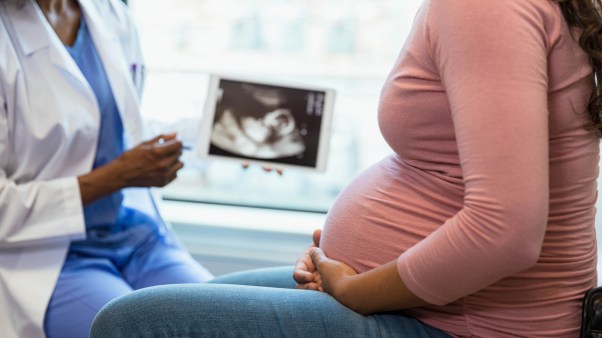
A father's alcohol consumption has long been overshadowed by the focus on what a mother drinks. But that could be about to change following more research.
For more than 50 years, scientists have warned about the risks of drinking alcohol in pregnancy. Recent research has found that a mother's consumption of as little as one drink a week may affect a child's brain development, cognitive function and behavior, and facial shape. For decades, public health campaigns have repeatedly said that there's no safe amount of alcohol for moms to drink while pregnant.
But as the risks of maternal alcohol consumption have become better documented, another potential contributing factor to FASD (fetal alcohol spectrum disorder) has remained largely overlooked: how much the father drinks.
Researcher Michael Golding at Texas A&M University studies alcohol exposure and fetal development. He said, "For years now, we've been hearing stories from women who said, 'I never drank during pregnancy, but now I have an FAS kid – and my male partner was a chronic alcohol abuser." But such stories often were dismissed as mothers being forgetful, if not outright lying.
However, recent research raises an intriguing possibility: these mothers were right all along. The idea that a father's alcohol consumption before conception could have an impact on the offspring may seem far-fetched. But recent population studies have found that babies whose fathers drank are at a higher risk for various poor health outcomes.
Based on the research so far, how much alcohol is "safe" for a father to drink if he knows his partner may conceive? We don't have that data. Still, he says, "If it were my sons, I would tell them to stop drinking altogether."
While the exact impact of paternal drinking has yet to be teased out, researchers agree on one thing. “There's this enormous burden that's been placed on women. But male health is important to fetal development. There is a responsibility of both parties here to support and provide for the health of the baby.”
Source: Amanda Ruggeri, “Foetal alcohol syndrome: Why fathers need to watch what they drink too,” BBC (8-1-24)
The vast majority of American Christians were raised in the faith—and most can point to the influence of their moms. In a 2023 study, the American Bible Society found that a majority of believers remain in the same religious tradition as their mothers.
This agrees with a large body of mainstream social science research dating back to the 1970s that says the active faith of mothers is a strong predictor of religious transmission. Some of this may be attributed to the natural bond children have with their mothers. But there is also research that shows that moms take a more active role in faith formation in America.
For every 100 Americans raised by Protestant mothers:
99% of Christian teenagers talk about God with their mothers
71% of Christian teenagers read the Bible with their mothers
70% of Christian teenagers pray with their mothers
63% of Christian teenagers say their mothers encourage them to go to church
62% share the same faith tradition as adults
19% have no religion
11% joined another Christian tradition
4% are now Catholic
4% are other
Source: Editor, “Mothers Of the Faith,” CT magazine (May/June, 2024), p. 17
Now Hiring! Work From Home! Position requires strong ability to multitask. The successful applicant will be able to plan and prepare nutritious meals, while maintaining mountains of clean laundry. She can provide tutoring, nursing, counseling, and therapy sessions on an as-needed basis. In addition, applicants should be available for various event-planning activities, including birthday parties. The position involves staying up-to-date on all recommended practices of child development, including, but not limited to temper tantrums and adolescent awkwardness. Sleeping and eating not guaranteed for employees. Applicant must expect to work an average of 97 hours per week for 52 weeks per year. Pay range: $0 to $0 DOQ (Depending on Qualifications). Fringe benefits: priceless.
Sound familiar? Welcome to the life of a modern American mom.
Yes, motherhood entails a list of responsibilities that could go on and on. According to a survey of 2,000 mothers raising school-aged children (ages 5 to 18), moms spend nearly 100 hours a week on parenting tasks — even if it means sacrificing sleep and “me time.” The poll found no fewer than 15 different hats a mom wears, from chef to financial advisor. It’s no wonder the job goes well beyond a 40-hour workweek!
Where do moms carve out the extra time for this massive job? 53% of those surveyed reported sacrificing sleep for their children, while 47% regularly give up date nights, hobbies, and time with friends.
The survey also found that mothers often zero in on their children’s needs more than on their own. 62% of mothers say they often eat on the run, 53% admit they struggle to eat nutritious foods because of the demands of their schedule.
Researchers found such a job would pay a handsome six-figure salary: a whopping $100,460 per year if moms were paid for their work as parents. And that’s despite the fact that 70% of the mothers surveyed still work a full- or part-time job to boot.
After the immeasurable amount of selflessness shown by the typical mom, the survey found she’s left with less than an hour a day of “me time.” For 88% of moms surveyed, this time is often stolen from hours of shuteye, be it getting up early, staying up late, or both.
And yet despite the number of sacrifices they make, more than two-thirds (69%) of mothers say they want to spend even more time tending to their children.
But it is an impossible job that mothers somehow pull off. After all, how many jobs can claim to have fringe benefits that include cuddles, hugs, and the sense of satisfaction that comes from raising a healthy, happy human?
Source: Terra Marquette, “Mothers spend 97 hours weekly on parenting tasks — equivalent to six-figure job!” Study Finds (5-12-24)
In an issue of CT magazine, author Jen Wilkin writes:
Individualism says that I should do what’s best for me regardless of what’s best for others. Instant gratification assures me that waiting is an enemy to eliminate. At every turn, I am told that I can and should have what I want when I want it.
Earlier this year, my husband and I spent two weeks with an apparent narcissist named Charlotte. From the moment we stepped into her space, it was all about her. She demanded our full attention day and night. Forget rational arguments or the needs of others; it was The Charlotte Show 24/7. She thought only of herself and demanded loudly and often that her needs be met. Our schedules bowed to her every whim. She uttered not a word of gratitude during the entire 14 days.
And we didn’t mind one bit. Because all 7 pounds and 15 ounces of her was doing exactly what she should. Our newest grandchild’s age-appropriate focus is to declare, Me, right now! Any time she is tired, hungry, or needs a clean diaper. Babies self-advocate as a survival instinct. They understand only the immediate need.
But what is appropriate in an infant is appalling in an adult. In its obsession with “me, right now,” our culture doesn’t just worship youthfulness; it worships childishness, legitimizing it into adulthood. An adult who demands what he wants when he wants it is a costly presence in any community, prioritizing his own needs above those of others and of the group. He has not learned to “put away childish things,” as the Bible says (1 Cor. 13:11, KJV); he has managed to grow physically from a baby to an adult without shedding the childish mantra of “me, right now.”
As parents, our first challenge is to meet the needs of babies crying out, “Me, right now.” But our greater task over the years is to train our children to mature and outgrow their entitlement, to resist the narcissistic norms of our age. It is our job as Christian parents to move our children from the immaturity of individualism and instant gratification to the maturity of sacrificial service and delayed gratification.
Source: Jen Wilkin, “Train Up a Child to Serve and Wait,” CT magazine (December, 2023) p. 28
Need some perspective on the brevity of life? Here's a God's-eye view of the earth: Check out this real-time map of births and deaths around the world.
In 1950, there were 2.5 billion humans. As of January 2025, there are nearly 8.1 billion people. In another 30 years, according to U.S. Census Bureau projections, there will be more than 9 billion.
Brad Lyon has a doctoral degree in mathematics and does software development. He wanted to make those numbers visual. So, he and designer Bill Snebold made a hugely popular interactive simulation map of births and deaths in the U.S. alone (as of 2024, population 337 million)—the population of which is on pace to increase 44 percent by 2050.
Birth; Death; Life, short - How many people will die in the next minute? How many will be born? How should these numbers motivate us? Think of each of them as a story, as a unique soul loved infinitely by God. This is an excellent starting point for a sermon on Easter, resurrection, and our mortality. Consider projecting the real-time map as a stunning visual illustration.
Source: “World Births and Deaths, Simulated in Real-Time,” Worldbirthsanddeaths.com (Accessed 1/27/25); “Measuring America's People, Places, and Economy,” Census.gov (Accessed 1/27/25).
The influence of Christianity has declined in the United States. Yet in maternity wards across the country, when newborns scrunch up their tiny faces and fill their lungs with their first breaths of air, parents regularly turn to Scripture. They give their children biblical names.
Some Bible names are more popular than ever. One hundred years ago, for example, Noah was the 400th most common newborn name in America. But in the early 1990s, the number of babies named after the ark-building patriarch rose rapidly. By 1996, Noah was the 50th most popular baby name for boys, and by 2009, it was in the top 10. For the past decade, Noah has been the No. 1 or No. 2 name for boys.
A few names, such as Mary and Martha, have become less popular, but other Bible names appear resistant to cultural change. A girl born in America today is about as likely to be named Elizabeth as she would have been a century ago. David was the 28th most popular boy name in 1920. It was 25th in 2020. Other popular names include Eden, Grace, Elijah, and John.
America has changed a lot in 100 years. But when it comes to naming babies, plenty of people still go back to the Bible.
Source: Daniel Silliman, “The Good Book for Baby Names,” CT magazine (Jan/Feb, 2025)
Top three winners for sermons on abortion.
Pro-life advocates saw the 2022 Supreme Court’s decision on Dobbs v. Jackson Women’s Health Organization as a turning point in the fight against abortion in the United States. After the court overturned Roe v. Wade and removed federal protection for the procedure, some conservative states began introducing fetal personhood laws, granting the unborn the same rights as full-born children.
But Hannah Strege watched it all unfold with another vulnerable group in mind: frozen embryos. In this new era, would they have rights? If they did, would anyone respect them?
Strege, 24, was conceived through in vitro fertilization (IVF) in 1996 and frozen for two years. In 1997, she and 19 of her siblings were adopted in embryo form by John and Marlene Strege. They were shipped by FedEx to a local fertility clinic. Hannah was the only embryo to survive thawing and to successfully implant in Marlene’s uterus. She was born in December 1998.
Since Hannah was born, the number of frozen embryos sitting in storage in the United States has risen from roughly 100,000 to an estimated 1.5 million. Many of these embryos remain from IVF treatments, indefinitely chilled in canisters of liquid nitrogen with no plans for their future.
Some clinics feel overwhelmed by the growing volume of embryos sitting in storage and doctors may create dozens of embryos per patient. One doctor told NBC News in 2019 that some patients have 40–60 eggs retrieved in a cycle, and “the embryologist gets the orders from her doctor to inseminate all of them—and the question isn’t asked if the patient even wants that many inseminated. … Nobody’s going to have 30 kids.”
One Florida reproductive endocrinologist said, “We were not prepared for any of this. Twenty-one percent of our embryos have been abandoned.”
Source: Kara Bettis Carvalho, “The Invisible Orphanage,” CT magazine (December, 2023), pp. 48-58
After celebrating his national championship as the head football coach for the Michigan Wolverines, Jim Harbaugh made a surprise appearance at the March for Life in Washington D.C. Harbaugh truly lives out his pro-life convictions. In 2022, he told ESPN about encouraging his players to come to him if they ever dealt with an unplanned and unwanted pregnancy with a partner. He said he wanted them to know that he’d be happy to raise the baby with his wife.
I’ve told (them) the same thing I tell my kids, boys, the girls, same thing I tell our players, our staff members. I encourage them — if they have a pregnancy that wasn’t planned, to go through with it, go through with it. Let that unborn child be born, and if at that time, you don’t feel like you can care for it, you don’t have the means or the wherewithal, then Sarah and I will take that baby. … We got a big house. We’ll raise that baby.
When asked by the media if it was appropriate for him to share his views on the issue, Harbaugh replied:
We need to talk about it. It’s too big an issue to not give real serious consideration to. What kind of person would you be if you didn’t stand up for what you believe in and didn’t fight tooth and nail for it? I believe in letting the unborn be born.
Source: Kelsey Dallas, “What Jim Harbaugh said at the March for Life,” Desert News (1-19-24)
How many times have you heard expectant couples say, "Well, as long as our baby is healthy"? John Knight from Desiring God ministries cautions, "'Healthy' exists on a spectrum of possibilities just like disability. And that spectrum is becoming narrower with every passing year." He points to an article about University of Washington scientists who were able to identify the DNA sequence of a fetus with 98 percent accuracy, and with safer techniques.
The article noted, "The accomplishment heralds an era in which parents might find it easier to know the complete DNA blueprint of a child months before it is born. That would allow thousands of genetic diseases to be detected prenatally." That means that more children with disabilities will be aborted.
But Knight also argues that many people will be tempted to order up "designer babies"—all fueled by "an increasingly idolatrous mindset that says I have the right and the responsibility to determine what is best for me — including the physical and/or developmental makeup of my children, or somebody else's children."
Source: Jennifer Couzin-Frankel, “Scientists say they can read nearly the whole genome of an IVF-created embryo,” Science (3-21-22); Andrew Pollack, “DNA Blueprint for Fetus Built Using Tests of Parents,” New York Times (6-6-12); John Knight, ““Just As Long As It's Healthy...” Desiring God (6-12-12)
In a nod to the adage about family life that parenting is the hardest job in the world, most parents (62%) say being a parent has been at least somewhat harder than they expected, with about a quarter (26%) saying it’s been a lot harder. This is especially true of mothers, 30% of whom say being a parent has been a lot harder than they expected (compared with 20% of fathers).
Source: Rachel Minkin and Juliana Menasche Horowits, “Parenting in America Today,” PEW Research Center (1-24-23)
When Jake and Kelly Levine boarded their flight, they were hoping their five-month-old daughter Romey would be able to behave appropriately. Kelly said, “Before the flight I was very anxious. You never know if the people around you are going to be bothered by a baby.” It was only Romey’s second flight; the family was returning to their home from a vacation in Cabo San Lucas, Mexico.
According to Kelly, however, Romey was transfixed for the majority of the five-hour flight by the passenger sitting next to her who was crocheting a sweater. Kelly said, “Entranced is the perfect word. Romey is a very curious baby; she loves to just watch people and observe.”
Meegan Rubin was Romey’s seatmate, and enjoyed the attention from Romey. Rubin said, “She started staring at me so inquisitively.”
Once Rubin finished her sweater, she looked at the curious baby and she decided she had just enough time—and just enough yarn—to pivot to a new project: a beanie for the baby. She was hopeful she could pull it together in about an hour. “I just had to,” she said, adding that she makes an effort to surprise strangers with handmade gifts whenever she can.
A few minutes after the plane landed, Rubin turned to the couple, handed them a tiny cream-colored hat, and declared: “Okay, it’s done!”
“We were totally shocked, as were the other passengers around us,” said Kelly. “I was near tears.” Kelly placed the hat on Romey’s head, and it fit perfectly. Everyone in the vicinity smiled and applauded. She was so overwhelmed with joy that afterward she shared the video on TikTok, where it was viewed over seven million times.
Kelly said, “I will make sure Romey knows for the rest of her life that people can be nice to each other for no reason, and that this story inspired others to do so. She add that she and Rubin are staying in touch and hope to get together soon. “We want her to be a part of our life forever.”
God also loves it when his people use their gifts to bless each other, especially innocent children.
Source: Sydney Page, “‘Okay, it’s done!’ Stranger floors parents, crochets their baby a hat mid-flight.,” The Washington Post (1-12-24)
In early January, the Portland area suffered from a winter storm that not only blanketed the area with several layers of snow and ice, but buffeted the area with high winds, resulting in many downed trees and power lines.
Eighteen-year-old Majiah Washington saw a flash from her window in Northeast Portland on Wednesday morning. She opened the blinds to find a collapsed power line on top of a neighbor’s car and a tree branch on the ground. She watched as members of the neighboring family, who appeared to have been getting into their SUV, tried suddenly to escape it. A small fire grew under the car.
A man holding a baby slipped down a driveway on the ice and the man’s foot touched the live wire, Washington said. Twenty-one-year-old Tajaliayh Briggs, then rushed towards the man to get the child, slipping on the ice, and hit the live power line as well.
Washington said she watched a teenager approach the SUV while she called 911. The teen—identified as High School sophomore Ta’Ron Briggs—would also die in the accident.
Majiah Washington saw all this, and disregarding her fear of death, decide to intervene as well. She later said at a press conference, “The baby moved his head ... and that’s how I knew he was still here. I wasn’t thinking ‘Oh, I can be electrocuted.’ I was thinking, ‘I need to grab this baby.’”
Portland Fire & Rescue spokesperson Rick Graves said the agency was thankful for Washington’s brave actions and that she later told officials, “I just did what any sane person would do.”
When we sacrifice our own health and safety to rescue children in danger, we model the love of Jesus for all children.
Source: Author, “Portland woman, 18, rushes to save 9-month-old after collapsed power line kills 3,” Oregon Live (1-23-24)
Cicero said, “The thing itself cannot be praised. Only its potential.” He was talking about young children. Such was the view in the Empire where Jesus arrived as an infant. Plutarch said, “The child, is more like a plant” than a human, or even than an animal.
But Jesus and his followers had a different view of the moral status of children. To follow him, Jesus said, you had to become like a child. Even babies, Christians said, are fully human and fully bear the image of God. As the African bishop Cyprian wrote, “God himself does not make such distinction of person or of age, since he offers himself as a Father to all.” And if that’s God’s view, then “Every sex and age should be held in honor among you.”
The church even extended that honor and protection to the unborn. The Didache, one of the earliest Christian documents says, “Thou shalt not murder a child by abortion nor kill them when born.”
Throughout the Roe regime, contemporary Christians have similarly demonstrated their “contempt of death,” their pursuit of justice for the unborn, and their love of children and pregnant women. The church has more than mere potential to better bear witness to life. It is the house of the Life himself.
Source: Ted Olsen, “Where the Unborn Are People,” Christianity Today (October, 2022) pp. 27-28
Betty Hodge knows what it’s like to have an unplanned pregnancy. And she knows what it’s like to have the father of the unborn child push for an abortion. She’s been there. But she didn’t seriously consider terminating her pregnancy, because she didn’t feel alone. Hodge said, “Thankfully I had a family that was supportive.” She now works at a pregnancy resource center in Jackson, Mississippi, so she can provide that same support for other mothers in need.
These days, she sees a lot of them. The U.S. Supreme Court overturned Roe v. Wade (in 2022), allowing the state of Mississippi to pass a law banning all abortions except to save the life of the mother or in cases of rape or incest that have been reported to police. The clinic that gave its name to the Dobbs v. Jackson Women’s Health Organization case shut down in July. It was the state’s only abortion provider. So, while women may still travel to Florida, New York, or Illinois to terminate a pregnancy, abortion has effectively ended in the Magnolia State.
The state health office estimates this will result in an additional 5,000 babies being born in Mississippi in 2023. The pro-life movement there is eager to celebrate each of these precious lives, but they’re also aware of other upsetting statistics: Mississippi has the highest rate of preterm births—over 30 percent more than the national average. The state has the highest infant mortality rate in the US, with nearly nine of every 1,000 babies dying. And for the infants who live to be toddlers, 28 percent will live in poverty.
Hodge doesn’t shy away from these hard facts. For her, this is part of the work of being pro-life. ... And with the state expecting 5,000 more babies in 2023, she sees an opportunity to put pro-life beliefs into practice and show that Christians care. She said, “If we’re going to say we stand for life, then it’s pertinent for us to stand up and say we don’t just care about the unborn child. As a church, we have an opportunity to make a difference.”
Source: Adam MacInnis, “Let the Little Children,” CT magazine (March, 2023), pp. 19-21
Writing in the New Yorker, Lucy Huber and Joanna Davis have some advice for new mothers:
Hello! I see you are a young mother caring for your young children, and for some reason you seem a little stressed. Perhaps it’s because your three-year-old just shattered a jar of enchilada sauce. Now you are now kneeling on the floor of Aisle 3, frantically trying to pick up the shards of glass before your toddler puts glass shards in his mouth, all while wearing your three-month-old.
Well, I am here to tell you, as a parent of adult children, that I was like you once. Worried about every tiny thing that happened with my children, be it missing a violin lesson, omitting half the white sequins on my daughter’s homemade “Swan Lake” ballet costume, or letting my kids go in the ocean before teaching them to swim. But I want to impart to you the most important lesson that I learned in motherhood: just relax.
Relax, instead of calling for a grocery-store employee to help you wipe up this oozing green liquid which your child is licking off the floor while screaming, “Too spicy!” Relax, and just let it go. Let it all go. The fact that school is once again cancelled because Lucas R. got COVID and you have no child care and have to attend a meeting this afternoon seated next to your child who will be watching “Bubble Guppies” on the couch. But you’ll pretend that you are alone in your home office so that you don’t get fired. Cherish this moment! Cherish it now! These moments are fleeting, so you must enjoy them all. Also, while you’re at it, you should really take a moment to enjoy people telling you to relax and enjoy these moments.
Mama, don’t listen to other people’s parenting advice. Ignore them! Except me. I’m correct in saying that you’re a good parent only if you’re putting in absolutely no effort but standing in silent awe as your three-year-old turns on the stove burners, using a Barbie camper van as a stool, because what creativity he has! Life is too short to stress about these things.
Source: Lucy Huber and Joanna Davis, “Hey, New Mom, Have You Considered Relaxing? New Yorker (1-11-23); Bryan J., “Another Week Ends,” Mockingbird (1-13-23) January 11, 2023
Pastor Bryan Chapell writes in his recent book Grace at Work:
My musician wife, Kathy, talks about a time that she was changing a particularly yucky diaper of one of our children. She said to a friend standing beside her, "These hands have played Mozart." The friend replied, "Maybe these hands are diapering the next Mozart!"
Undeniably, what those hands were doing was nurturing an eternal soul. When we are working to fulfill responsibilities God gives us, no matter how difficult or onerous the task, the Bible helps us to avoid thinking, “I'm just not doing something very important.”
Source: Bryan Chapell, Grace at Work, (Crossway, 2022), pp. 32
Did you drop the ball this Mother’s Day and forget to pick up a gift for your mom? You’re not alone. A new survey has found that one in six Americans hasn’t sent their mother a single present in over a year. A survey found that 67 percent know their mom’s favorite flower. However, 37 percent admit they haven’t bought their mother flowers of any kind over the last year.
Another 57 percent know exactly what movie their mom would love to watch. But one in three people haven’t sat down to watch a movie with her in more than a year. Another 81 percent know their mom’s favorite hobby, but only half the poll say they’ve joined their mother to do that activity within the last six months. Even though 81% know their mom’s favorite way to pamper herself, 51% haven’t treated their mom in the last month.
A study found that mothers spend a staggering 97 hours a week doing something related to parenting—the same amount of time most people with a six-figure salary spend on their job.
Celebrating Mother’s Day is an easy way to show appreciation to the hard work, dedication, and care moms provide. They may not be sending flowers or taking mom out to dinner, but at least Americans are picking up the phone. More than 80 percent of the poll say they speak to their mother at least once a month.
So, if there’s a lesson coming out of this survey, maybe it’s that Americans need to spend a little quality time with their mom. With Mother’s Day being a day to do whatever our mother’s love to do, this day in May allows many kids a chance to play “catch-up.” After all, everyday can be Mother’s Day if you try.
Source: Chris Melore, “Forgot Mother’s Day? 1 in 6 Americans haven’t sent their mom a gift in over a year!” Study Finds (5-9-22)
Can fetuses (or unborn children) really feel pain and experience a human connection with other humans? New scientific research provides a mass of evidence that they can. Here are some of the facts from the latest research:
• There is now strong evidence that fetuses as early as twelve weeks exhibit conscious, intentional behavior and that they actively discriminate among similar sensory experiences.
• At 12 weeks the baby demonstrates intentional “social” movements—behavior that isn’t accidental nor reflexive but demonstrates conscious awareness of the environment, and intentional—even social—planning of physical actions.
• As early as 14 weeks, fetuses distinguish between music and mere vibrational noise that stimulates the same auditory pathways.
• At 19–23 weeks unborn babies electively respond to and distinguish between different types of external stimulation, displaying more intentional movement to their mother’s belly touch than to maternal speaking.
• As early as 20 weeks, fetal hand movements toward the mouth and eyes are straighter and less jerky, revealing a surprisingly advanced level of motor planning.
Stuart Derbyshire, a researcher and former pro-choice consultant, was considered “a leading voice against the likelihood of fetal pain.” Yet, faced with mounting scientific evidence to the contrary, Derbyshire changed his mind and wrote, “The evidence, and a balanced reading of that evidence, points toward an immediate and unreflective pain experience mediated by the developing function of the nervous system from as early as 12 weeks.”
Source: Maureen Condic, “The Suffering of the Unborn,” National Review (11-11-21)