

Sorry, something went wrong. Please try again.
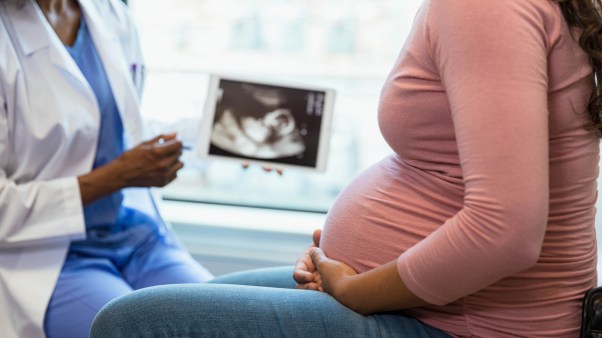
The scientist Ali Binazir wrote a paper explaining the probability that you exist. It turns out that when taking into account the astonishing number of possibilities of parents meeting, grandparents meeting before them, and so on going back generations, and then adding the vast number of sperm and ova in possible combinations over decades of the marital act in all those generations, the odds of me existing just as I do are about 1 in 102,685,000. That’s a number so huge it hurts to think about it.
For example, the probability of your father meeting your mother is 1 in 20,000. The chances of them talking to one another is 1 in 10. The chances of that turning into another meeting is about 1 in 10. The chances of that turning into a long-term relationship is about 1 in 10. The chances of that lasting long enough to result in offspring is 1 in 2. So, the combined probability is already only about 1 in 40 million.
Now let’s get down to some of the biological details: each sperm and each egg is genetically unique because of the process of meiosis; you are the result of the fusion of one particular egg with one particular sperm. So, the probability of that one sperm with half your name on it fertilizing that one egg with the other half of your name on it is 1 in (100,000) (4 x 10¹²) = 1 in 4 x 10¹⁷, or 1 in 400 quadrillion.
Getting complicated! You bet! But the probability just keeps getting more unlikely. You are highly improbable!
But, according to the Bible, you are not here by chance. God created and knit you together in your mother’s womb (Ps. 139:13-16). You’re not just one in a million, you’re one in a 102,685,000.
Source: Charles Pope, “The Probability of You Existing at All Is Unbelievably Low,” The Church in Mission, https://blog.adw.org/2018/08/probability-existing-unbelievably-low-yet-lets-look-numbers/
Societies that do not value human life, especially at its most vulnerable moments in the mother’s womb or in the last days, are dying (often quite literally) political entities that have lost their purpose. Destroy the family, and you don’t have much of a society.
That’s why the following stats are so concerning: The E.U.’s fertility rate in 2022 was 1.49, well below replacement. And when compared to close to five in Africa and 3.14 in the Arab world, Europe is dying. Many European allies eliminate around three hundred human lives for every one thousand live births. The U.K. has about 330 abortions per one thousand live births; France just above three hundred, which incidentally is the same as Russia. (The U.S. is not far behind, with about two hundred abortions per one thousand live births.)
No wonder an article in First Things concludes, “The West is killing itself.”
Source: Jakup Grygiel, “A Pro-Life and Pro-Family U.S. Foreign Aid Strategy,” First Things (3-7-25)
A father's alcohol consumption has long been overshadowed by the focus on what a mother drinks. But that could be about to change following more research.
For more than 50 years, scientists have warned about the risks of drinking alcohol in pregnancy. Recent research has found that a mother's consumption of as little as one drink a week may affect a child's brain development, cognitive function and behavior, and facial shape. For decades, public health campaigns have repeatedly said that there's no safe amount of alcohol for moms to drink while pregnant.
But as the risks of maternal alcohol consumption have become better documented, another potential contributing factor to FASD (fetal alcohol spectrum disorder) has remained largely overlooked: how much the father drinks.
Researcher Michael Golding at Texas A&M University studies alcohol exposure and fetal development. He said, "For years now, we've been hearing stories from women who said, 'I never drank during pregnancy, but now I have an FAS kid – and my male partner was a chronic alcohol abuser." But such stories often were dismissed as mothers being forgetful, if not outright lying.
However, recent research raises an intriguing possibility: these mothers were right all along. The idea that a father's alcohol consumption before conception could have an impact on the offspring may seem far-fetched. But recent population studies have found that babies whose fathers drank are at a higher risk for various poor health outcomes.
Based on the research so far, how much alcohol is "safe" for a father to drink if he knows his partner may conceive? We don't have that data. Still, he says, "If it were my sons, I would tell them to stop drinking altogether."
While the exact impact of paternal drinking has yet to be teased out, researchers agree on one thing. “There's this enormous burden that's been placed on women. But male health is important to fetal development. There is a responsibility of both parties here to support and provide for the health of the baby.”
Source: Amanda Ruggeri, “Foetal alcohol syndrome: Why fathers need to watch what they drink too,” BBC (8-1-24)
Need some perspective on the brevity of life? Here's a God's-eye view of the earth: Check out this real-time map of births and deaths around the world.
In 1950, there were 2.5 billion humans. As of January 2025, there are nearly 8.1 billion people. In another 30 years, according to U.S. Census Bureau projections, there will be more than 9 billion.
Brad Lyon has a doctoral degree in mathematics and does software development. He wanted to make those numbers visual. So, he and designer Bill Snebold made a hugely popular interactive simulation map of births and deaths in the U.S. alone (as of 2024, population 337 million)—the population of which is on pace to increase 44 percent by 2050.
Birth; Death; Life, short - How many people will die in the next minute? How many will be born? How should these numbers motivate us? Think of each of them as a story, as a unique soul loved infinitely by God. This is an excellent starting point for a sermon on Easter, resurrection, and our mortality. Consider projecting the real-time map as a stunning visual illustration.
Source: “World Births and Deaths, Simulated in Real-Time,” Worldbirthsanddeaths.com (Accessed 1/27/25); “Measuring America's People, Places, and Economy,” Census.gov (Accessed 1/27/25).
Governments around the developing world are worried that the birth rate is declining at a troubling rate. Birth rates in the United States have been trending down for nearly two decades, and other wealthy countries are experiencing the same. Among those proposing solutions to reverse the trend, the conventional wisdom goes that if only the government were to offer more financial support to parents, birth rates would start ticking up again.
But writing in The Atlantic, writer Christine Emba notices the need for something deeper, something governments cannot provide—meaning. Emba writes:
That need is for meaning. In trying to solve the fertility puzzle, thinkers have cited people’s concerns over finances, climate change, political instability, or even potential war. But in listening closely to people’s stories, I’ve detected a broader thread of uncertainty—about the value of life and a reason for being. Many in the current generation of young adults don’t seem totally convinced of their own purpose or the purpose of humanity at large, let alone that of a child. It may be that for many people, absent a clear sense of meaning, the perceived challenges of having children outweigh any subsidy the government might offer.
Source: Christine Emba, “The Real Reason People Aren’t Having Kids,” The Atlantic (8-1-24)
The influence of Christianity has declined in the United States. Yet in maternity wards across the country, when newborns scrunch up their tiny faces and fill their lungs with their first breaths of air, parents regularly turn to Scripture. They give their children biblical names.
Some Bible names are more popular than ever. One hundred years ago, for example, Noah was the 400th most common newborn name in America. But in the early 1990s, the number of babies named after the ark-building patriarch rose rapidly. By 1996, Noah was the 50th most popular baby name for boys, and by 2009, it was in the top 10. For the past decade, Noah has been the No. 1 or No. 2 name for boys.
A few names, such as Mary and Martha, have become less popular, but other Bible names appear resistant to cultural change. A girl born in America today is about as likely to be named Elizabeth as she would have been a century ago. David was the 28th most popular boy name in 1920. It was 25th in 2020. Other popular names include Eden, Grace, Elijah, and John.
America has changed a lot in 100 years. But when it comes to naming babies, plenty of people still go back to the Bible.
Source: Daniel Silliman, “The Good Book for Baby Names,” CT magazine (Jan/Feb, 2025)
Top three winners for sermons on abortion.
Pro-life advocates saw the 2022 Supreme Court’s decision on Dobbs v. Jackson Women’s Health Organization as a turning point in the fight against abortion in the United States. After the court overturned Roe v. Wade and removed federal protection for the procedure, some conservative states began introducing fetal personhood laws, granting the unborn the same rights as full-born children.
But Hannah Strege watched it all unfold with another vulnerable group in mind: frozen embryos. In this new era, would they have rights? If they did, would anyone respect them?
Strege, 24, was conceived through in vitro fertilization (IVF) in 1996 and frozen for two years. In 1997, she and 19 of her siblings were adopted in embryo form by John and Marlene Strege. They were shipped by FedEx to a local fertility clinic. Hannah was the only embryo to survive thawing and to successfully implant in Marlene’s uterus. She was born in December 1998.
Since Hannah was born, the number of frozen embryos sitting in storage in the United States has risen from roughly 100,000 to an estimated 1.5 million. Many of these embryos remain from IVF treatments, indefinitely chilled in canisters of liquid nitrogen with no plans for their future.
Some clinics feel overwhelmed by the growing volume of embryos sitting in storage and doctors may create dozens of embryos per patient. One doctor told NBC News in 2019 that some patients have 40–60 eggs retrieved in a cycle, and “the embryologist gets the orders from her doctor to inseminate all of them—and the question isn’t asked if the patient even wants that many inseminated. … Nobody’s going to have 30 kids.”
One Florida reproductive endocrinologist said, “We were not prepared for any of this. Twenty-one percent of our embryos have been abandoned.”
Source: Kara Bettis Carvalho, “The Invisible Orphanage,” CT magazine (December, 2023), pp. 48-58
How many times have you heard expectant couples say, "Well, as long as our baby is healthy"? John Knight from Desiring God ministries cautions, "'Healthy' exists on a spectrum of possibilities just like disability. And that spectrum is becoming narrower with every passing year." He points to an article about University of Washington scientists who were able to identify the DNA sequence of a fetus with 98 percent accuracy, and with safer techniques.
The article noted, "The accomplishment heralds an era in which parents might find it easier to know the complete DNA blueprint of a child months before it is born. That would allow thousands of genetic diseases to be detected prenatally." That means that more children with disabilities will be aborted.
But Knight also argues that many people will be tempted to order up "designer babies"—all fueled by "an increasingly idolatrous mindset that says I have the right and the responsibility to determine what is best for me — including the physical and/or developmental makeup of my children, or somebody else's children."
Source: Jennifer Couzin-Frankel, “Scientists say they can read nearly the whole genome of an IVF-created embryo,” Science (3-21-22); Andrew Pollack, “DNA Blueprint for Fetus Built Using Tests of Parents,” New York Times (6-6-12); John Knight, ““Just As Long As It's Healthy...” Desiring God (6-12-12)
The following 10 things will happen around the world every 60 seconds of this new year:
• Births: Approximately 250 babies are born worldwide every minute. (Source: Worldometers)
• Deaths: Approximately 105 people die worldwide every minute. (Source: Worldometers)
• Marriages: Around 116 people get married worldwide every minute. (Source: The World Bank)
• YouTube Uploads: Approximately 500 hours of video content are uploaded to YouTube every minute. (Source: YouTube)
• Packages Delivered: Amazon delivers approximately 1,200 packages per minute. (Source: Amazon)
• Emails Sent: Approximately 200 million emails are sent worldwide every minute. (Source: Statista)
• Google Searches: Approximately 40,000 Google searches are conducted every minute. (Source: Google)
• Social Media Posts: Approximately 1.5 million social media posts are made every minute. (Source: Statista)
• Netflix Streams: Approximately 100 million minutes of content are streamed on Netflix every minute. (Source: Netflix)
• Twitter Tweets: Approximately 500,000 tweets are sent every minute. (Source: Twitter)
Note: These statistics are approximate and can vary based on various factors.
Possible Preaching Angles:
1) Divine Knowledge; Omniscience of God – The multiplied billions of events around the world each minute are no match for the infinite knowledge of God. With him, a day is like a thousand years (2 Peter 3:8), he has an infinite amount of attention for each person’s hopes, pain, thoughts, and prayers (Matt. 10:30; Luke 12:7). (2) Redeeming the Time—Ephesians 5:16 reminds us to make the most of the time because the days are evil. (3) Accepting Christ; Conversion—This can also be the moment when you turn from sin and give your life to Christ.
Source: Editor, “World Births and Deaths, Simulated in Real Time,” WorldbirthsandDeaths.com (Accessed 11/5/24); Editor, “World Population,” Worldometer.info (Accessed 11/5/24); Laura Ceci, “E-mail Usage in the United States,” Statista (9-18-24)
“Life will not be contained, life breaks free, it expands to new territories, it crashes into barriers, painfully, maybe even dangerously,” said Jeff Goldblum, playing the role of chaos theory mathematician Dr. Ian Malcolm in the iconic 1993 film Jurassic Park. “I’m simply saying that, well, life finds a way.”
That line was part of a fictional exchange, but it might have just as easily been uttered by real life scientists, baffled by a recent discovery at a storefront aquarium in North Carolina.
Charlotte the stingray lives at the Aquarium and Shark Lab in Henderson, North Carolina. She’s more than two thousand miles away from her natural habitat, off the coast of southern California. And it’s been more than eight years since she shared a tank with a male of her species, instead sharing a tank with five small sharks. But somehow, Charlotte has become pregnant.
Marine biologists call the process parthenogenesis, where a mammal can reproduce offspring from unfertilized eggs. It’s a rare phenomenon, but similar behaviors have been observed in other animals like California condors, Komodo dragons, and yellow-bellied water snakes. According to Katy Lyons, a research scientist at the Georgia Aquarium in Atlanta, Charlotte’s pregnancy is the first occurrence of her species, the round stingray.
“I’m not surprised,” said Lyons. “Because nature finds a way of having this happen.”
Editor’s Note: Unsurprisingly, the casual temptation for a skeptic may be to suggest that, even if there were a Jesus of Nazareth born of a virgin, it could have been through a parthenogenetic process. But given that parthenogenesis results in a near clone of the parent—and hence, all offspring are female—no one can suggest that a virgin conception of Christ could have been anything but miraculous. For further information, follow this link to Answers in Genesis.
God is sovereign and will not be constrained by any earthly obstacles, whether from biology or technology. Miracles do happen and they testify to God’s power. If we continue to submit our lives to God’s will, we might very well witness an unexpected blessing.
Source: Ben Finley, “Charlotte, a stingray with no male companion, is pregnant in her mountain aquarium,” Associated Press News (2-14-24)
Our Lord delights in you and one day we will get to share in that delight completely, together as brothers and sisters, for eternity.
A survey asked highly committed evangelicals what they thought of using gene editing to:
Treat disease at birth
An appropriate use of medical technology 52%
Taking medical technology too far 43%
Reduce disease over a lifetime
An appropriate use of medical technology 40%
Taking medical technology too far 58%
Make a baby more intelligent
An appropriate use of medical technology 5%
Taking medical technology too far 93%
Source: Editor, “Intelligent Designer Babies,” CT magazine (September, 2018), p. 18
Jeff Peabody writes in a Christmas issue of CT magazine:
Several years ago, I decided to write a daily Christmas blog post on our church blog. So, I decided to tackle the theology of Christmas wrapping. I vaguely recalled that some cultures use cloth instead of paper to wrap gifts, which sounded intriguing.
That’s when I first learned about the ancient Japanese art of furoshiki. Feudal lords needed a practical way to bundle their belongings while using the bathhouse, and they displayed their family crests on the outer cloth to identify whose was whose.
Over the centuries, people adapted furoshiki into a beautiful means of presenting gifts. I realized that Jesus came to us in furoshiki, wrapped in cloths. The practice of swaddling crosses cultural lines and can be traced to the earliest civilizations.
For centuries, parents believed that wrapping infants tightly in place helped their limbs to grow straighter. Swaddling fell out of fashion in the 18th century, when physicians largely believed the tightness of the binding was not healthy. Babies need to be able to move somewhat freely for natural development.
It was new for me to consider this less pleasant side of swaddling. I can imagine Jesus in that manger, arms and legs straining against the unyielding bonds. What must it be like for a baby—particularly this baby, God incarnate—to be unable to move in any direction? What must it have been like to have your world shrunk and narrowed so severely?
The conditions of his advent were a small metaphor for his entire life. As the Son of God became flesh and bones, he experienced an unfathomable limitation of himself. The universe closed in around him, restricting him with time and space (see Phil. 2:6–8). Having a human body was like being swaddled, as it contained Almighty God in unnaturally small dimensions.
At some point, each of us meets the limits of being human. We all suffer the inescapable reality of sin and its fallout in this broken world. The simple image of Jesus, God’s gift to us, being wrapped up in cloths comforts me with the powerful truth: He understands the bindings on my mind and soul as only someone who has a shared experience can. The concept of Immanuel, God with us, takes on a new and profound clarity.
Source: Jeff Peabody, “The Gift of Wrapping,” CT magazine (December, 2018), p. 43-44
God blessed actor Matthew McConaughey and his wife, Camila Alves, with a little boy. As his son’s birthday approached, the star opened up about how the Bible inspired him to choose the name Levi.
Matthew is pretty outspoken about his Christian faith. But it wasn’t always that way. The star admits he drifted away from faith when he first became famous. He stopped going to church all together, caught up in life as a Hollywood superstar.
But Camila’s devotion to Christ reminded him of what really matters. He was inspired to return to his faith, and even had his favorite Bible verse (Matt. 6:22) engraved on his wedding band as a way of honoring the person who brought him back to Christ. “The light of the body is the eye; if then your eye is true, all your body will be full of light.”
That same verse played a huge role in Matthew’s life while he and Camila were expecting. The couple decided against finding out the gender of their baby. So, they had a list of seven names to choose from. He said, "Levi’s another name for Matthew in the Bible. We had talked about possibly Matthew, Jr. if he was a boy.”
But soon after the doctor announced to the couple they’d had a boy it became clear Levi was the perfect fit. After spending some time cuddling with their precious baby boy, the doctor handed them a card to fill out with the boy’s chosen name. Listed on the card was their son’s birth time—exactly 6:22pm. And with the time perfectly matching his favorite verse, the Bible inspired Matthew McConaughey to decide on Levi!
Source: Mel Johnson, “Matthew McConaughey Shares How His Son Received Biblical Name Levi,” God Updates (8-7-17)
Even when God seems silent or unresponsive, he is working out his plan and will be faithful.
In his book Unbelievable, Justin Brierly shares the story of Jennifer Fulwiler who grew up in a loving family, but one in which religion was painted as clearly false. Jennifer says that she never remembers a time when she believed in God as a child. Raised on a diet of "science, reason, and evidence-based rational thought," her bedtime reading was Carl Sagan's astronomy book Cosmos. From a young age, she knew that the world ran according to a well-established set of natural laws, and science was the de facto way of understanding everything. Jennifer remained a happy atheist as an adult and into the early years of her marriage.
However, shortly after the birth of her first child, she experienced a dramatic shift in her thinking. Jennifer describes it this way:
I looked down and thought: "What is this baby?" And I thought "Well, from a pure atheist, materialist perspective he is a randomly evolved collection of chemical reactions." And I realized if that's true then all the love that I feel for him is nothing more than chemical reactions in our brain. And I looked down at him and I thought: "That's not true. It's not the truth."
This moment was a turning point for the young mother, one which would eventually lead her to Christian faith as described in her book Something Other Than God. Something had clicked for Jennifer. The scientific explanations she had grown up with weren't enough to explain the totality of what she was experiencing in the bond with her child. All of her knowledge of science couldn't explain the actual experience of fully fledged love.
Source: Justin Brierly, Unbelievable (SPCK Publishing, 2017), page 71
Alexander Tsiaras, a mathematician and visual artist, uses special visualization software to explore the unseen human body. In a TED lecture, he explained how his technology has enabled him to scan the development of the fetus from conception to birth. Although we hear nothing about his faith or his views on abortion, throughout the lecture Tsiaras refers to what he calls the "marvel" and the "miracle" of an unborn baby's development. Tsiaras highlights the miracle of life with the following examples:
Tsiaras summarizes his talk by saying,
The complexity of these [facts about human development], the mathematic models of how these are indeed done are beyond human comprehension. Even though I am a mathematician, I look at this with marvel: How do these instruction sets not make mistakes as they build what is us? It's a mystery; it's magic; it's divinity …. [It's] beyond any comprehension of any existing mathematics today.
Source: Alexander Tsiaris, "Conception to Birth—Visualized," TED.com (12-10)
We need to be informed about the embryonic stem cell debate to be effective advocates for this tiniest form of human life.