

Sorry, something went wrong. Please try again.
More than a century ago, 110 Black soldiers were convicted of murder, mutiny, and other crimes at three military trials held at Fort Sam Houston in San Antonio. Nineteen were hanged, including 13 on a single day, December 11, 1917, in the largest mass execution of American soldiers by the Army.
The soldiers’ families spent decades fighting to show that the men had been betrayed by the military. In November of 2023, they won a measure of justice when the Army secretary, Christine E. Wormuth, overturned the convictions and acknowledged that the soldiers “were wrongly treated because of their race and were not given fair trials.”
In January 2024, several descendants of the soldiers gathered at Fort Sam Houston National Cemetery as the Department of Veterans Affairs dedicated new headstones for 17 of the executed servicemen.
The new headstones acknowledge each soldier’s rank, unit, and home state—a simple honor accorded to every other veteran buried in the cemetery. They replaced the previous headstones that noted only their name and date of death.
Jason Holt, whose uncle, Pfc. Thomas C. Hawkins, was among the first 13 soldiers hanged in 1917, said at the ceremony, “Can you balance the scales by what we’re doing? I don’t know. But it’s an attempt. It’s an attempt to make things right.”
We all long for justice, for the day when things will finally be made right. In this life, justice happens slowly, haphazardly, and sometimes not at all. But when Jesus returns, all things will be made right.
Source: Michael Levenson, “A Century Later, 17 Wrongly Executed Black Soldiers Are Honored at Gravesites,” The New York Times (2-22-24)
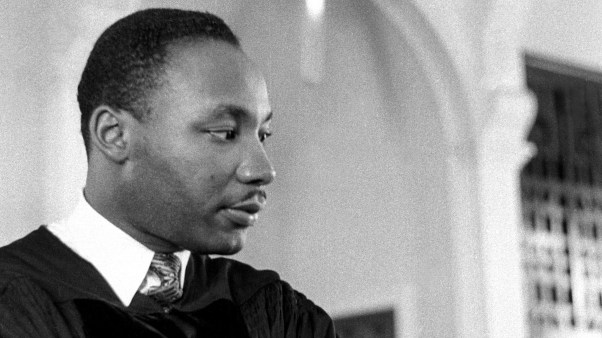
In Raymond Arsenault’s biography of John Lewis, he recounts Lewis’s mentors and their shared vision of “the Beloved Community.” Howard Thurman, Martin Luther King Jr., and John Lewis often spoke of “the Beloved Community,” which was “a philosophical theory and a call to service.”
At the successful conclusion of the yearlong boycott in December 1956, King quoted the Book of Matthew and urged the boycotters to “inject a new dimension of love into the veins of our civilization.” “Love your enemies,” he recited, “bless them that curse you, pray for them who despitefully use you, that you may be the children of your Father which is in Heaven.” “We must remember,” King continued, “… that a boycott is not an end within itself; it is merely a means to awaken a sense of shame within the oppressor and challenge his false sense of superiority. But the end is reconciliation; the end is redemption; the end is the creation of the beloved community.”
Placing the goals of nonviolent direct action on such a high moral plane could be inspiring, drawing Lewis and many people of faith into the movement. But as the historian Mills Thornton has noted, King’s frequent allusions to the “beloved community” as a reachable promised land sometimes had the opposite effect, prompting more practical listeners to “dismiss it as a pipe dream.”
Source: Raymond Arsenault, John Lewis: In Search of the Beloved Community, (Yale University Press, 2024), pp. 4-5
A popular pizza chain known for its snarky ad campaigns has been forced to apologize after a sustained public outcry over its latest special. In early October, D.C.-based &Pizza (pronounced “And Pizza”) announced the addition of “Marion Berry Knots” to its dessert menu, referencing the late former mayor of the District of Columbia Marion Barry. The ads for the new product made extensive references to Barry’s drug use and public drug arrests (“so good, it’s almost a felony”).
Marion Barry was arrested in a drug sting in 1990 and was eventually convicted of a misdemeanor drug charge. After six months in prison, Barry was elected to the city council in 1992, and re-elected mayor in 1994. Despite his death in 2014, the memory of Barry, the district’s first African American mayor, still looms large over residents of Washington, a city with a sizable African American population.
The local chapter of the National Association for the Advancement of Colored People (NAACP), called the ad campaign “inflammatory, and culturally-insensitive,” calling for its removal. The organization also challenged &Pizza to donate to organizations doing substance abuse prevention as a way to rectify the wrong.
“Candidly, we made a mistake," said &pizza CEO Mike Burns in a statement. “And for that, we sincerely apologize.”
Legal representatives for Barry’s widow Cora Masters Barry and the Barry estate called the apology insufficient, issuing a cease-and-desist notice request that &Pizza refrain from profiting from Barry’s name, image, or likeness.
D.C. restaurant owner Peyton Sherwood said:
Barry’s life was about opportunity, dignity, and equality for everyone in Washington, D.C. To reduce that legacy to a crass ad about his darkest moments is not only offensive it’s cruel. It disregards the immense good Barry did for this city and the battles he fought on behalf of all its people.
A person is more than their failures. Every person is a mixture of good and bad, failures, and successes. We should always look to remove anything in our own eye before we try to remove the speck in other’s eyes (Matt. 7:1-5), even if done in jest.
Source: Taylor Edwards, “Marion Barry's widow, estate demand apology from &pizza over controversial dessert,” NBC Washington (10-28-24)
It would surprise many Americans, regardless of their race, to know that 2.5 million American Black men are in the financial upper class, according to an exhaustive report produced by the Institute for Family Studies (IFS):
Our new report, Black Men Making It in America, finds that despite the burdens they face—from residential segregation to workplace discrimination to over incarceration—more than one-half of Black men have made it into the middle or upper class as adults. This means that millions of Black men are flourishing financially in America. We find that slightly more than one-in-five (or about 2.5 million) Black men ages 18 to 64 have made it into the upper-third of the income distribution.
In fact, Black men have made marked progress over the last half-century in reaching the upper ranks of the income ladder. The share of Black men who are in the upper-income bracket rose from 13% in 1960 to 23% in 2016. Moreover, poverty among Black men has dropped dramatically over the same time, with the share of Black men in poverty falling from 41% to 18% since 1960. A majority of upper-income Black men in their fifties today were from low-income homes. Half grew up in one-parent families. How did they succeed?
We identified three major factors that are linked to the financial success of Black men in midlife today: education, work, and marriage. Black men who have a college degree, a full-time job, or a spouse are much more likely than their peers to end up in the upper-income bracket as fifty-something men. Included in this group are Black men who attended church regularly as young adults or served in the military. Having a sense of "personal agency" and believing they are responsible for their lives were also major indicators of success.
When the media only focuses on the negative, rather than revealing the facts and stories of accomplishments and prosperity, real harm is done. "First, it renders millions of successful Black men, and the paths they have taken to the American Dream, invisible. Second, it can lead to a sense of hopelessness for young Black men. With so much talk of 'Black failure' today, Black boys may start to feel 'why even bother when the odds are stacked against you?'”
Source: Brad Wilcox, “2.5 Million Black Men Are in the Upper Class,” Institute for Family Studies (7-23-18)
“What happens to a dream deferred?” That opening line from Harlem renaissance poet Langston Hughes has resonated with generations of African Americans over many decades because of the legacy of racism in America, and its soul-crushing propensity to dangle the specter of opportunity while keeping it perpetually out of reach.
Ed Dwight knew this reality firsthand. In 1962, Dwight was the first black man to be selected for an American astronaut training program. He spent years preparing, training, and running experiments at Edwards Air Force Base in California. Nevertheless, because of internal resistance to his inclusion into the program, Dwight was never selected for a NASA mission.
“Just like every other Black kid, you don’t get something, and you convince yourself it wasn’t that important anyway,” said Charles Bolden Jr., one of Dwight’s friends and a former NASA administrator.
After his military career concluded, Dwight eventually put it all behind him. He earned a Master of Fine Arts degree from the University of Denver and eventually became an accomplished artist, with 129 memorial sculptures and over 18,000 pieces in gallery exhibits across the United States.
So, when he was invited to participate in a commercial space flight earlier this year, Dwight initially demurred. “I’m a really busy guy,” said Dwight. “It didn’t make a lot of difference to me at the time.”
But a group of current and former black astronauts intervened, and reminded him of the years he spent training to fill a role he was never allowed to consummate. Because of them, Dwight changed his mind.
And by the time Dwight achieved spaceflight on the Blue Origin vessel, he broke another historic barrier. At 90 years old, Ed Dwight became the oldest person to fly in space, surpassing the previous record holder, former Star Trek star William Shatner.
One of the men who convinced Dwight to take the flight was Victor Glover, Jr. “While he was off the planet, I was weeping. It was tears of joy and resolution,” said Glover. He’d met Dwight in 2007, after receiving one of Dwight’s sculptures at an award presentation. Only later did Glover learn Dwight’s own personal history of unfulfilled longing within NASA.
“I was in the presence of greatness and didn’t even know it,” Glover said. “Sixty years he sat with this and navigated it with dignity and grace and class, and that is impactful to me.”
Blue Origin honored Dwight by naming his seat on the mission after his NASA call sign: Justice.
God does not forget about the sacrifices that his servants make in the process of living faithfully. Do not lose heart, for God is in the business of making wrong things right again.
Source: Ben Brasch, “Chosen to be the first Black astronaut, he got to space six decades later,” The Washington Post (5-29-24)
In 1939, Lloyd Dong and his family were having difficulty finding a place to live. The Chinese Exclusion Act of 1884 and the Johnson-Reed Act of 1924 were part of a series of racially exclusive laws and ordinances designed to prevent Chinese immigrants like the Dongs from being able to successfully settle down. But the Dongs did eventually find a place, thanks to Emma and Gus Thompson, two Black entrepreneurs who first rented and then eventually sold a house in Coronado, California to the family.
That act of kindness helped the Dongs become a part of American society. Now, generations later, the Dongs want to honor the Thompsons by donating $5 million of the proceeds of the sale of that property to a scholarship fund for Black students. Lloyd Dong, Jr. said, “Without them, we would not have the education and everything else.”
Ron and his wife Janice are both retired educators who understand the value of education, which is why they’re also working to have the Black Resource Center at San Diego State University named after the Thompsons. Janice said, “It may enable some kids to go and flourish in college that might not have been able to otherwise.”
The Thompsons initial gesture of hospitality seems even more miraculous when you consider the context. Emma and Gus Thompson originally traveled to Coronado from Kentucky to work at a local hotel, and built their house in 1895, before many of the restrictive racial housing covenants were enacted. The Thompson’s property in Coronado originally featured a residence and a small boarding house on the upper floor of a barn, intentionally created to house vulnerable people with no other place to go.
Jo Von McCalester, a professor at Howard University, said, “It was just something understood that marginalized people in San Diego had to rely very heavily on one another. One family’s sacrifice can shape the lives of so many.”
When we pass on the generosity that we’ve received from others, we model the generous love of God who lavishes on all without regard for status, heritage, or bloodline.
Source: Lynda Grigsby, “Black couple rented to a Chinese American family when nobody would,” NBC News (3-6-24)
In his book Forgive, Tim Keller tells the story of a friend of his who was a PhD student at Yale. Keller’s friend once told him that modern people think about slavery and say, “How could people have ever accepted such a monstrosity?” Keller continues:
My friend said, “That’s not the way historians think. They ask: considering the fact it was universally believed by all societies that we had the right to attack an enslaved, weaker people, and since everybody had always done it, the real historical question is, why did it occur to anybody that it was wrong? Whoever first had that idea?”
My friend then answered his own question, pointing out that the first voices in the fourth, 17th, 18th, and 19th centuries who called for the abolition of slavery were all Christians. And the Christian, who called for this justice, believed there was a God of love, who demanded that we love our neighbors—all our neighbors—as ourselves.
Source: Tim Keller, Forgive (Viking, 2022), page 77
Abraham Lincoln biographer Jon Meacham notes, “There was no evident political gain to be had for Lincoln [to be anti-slavery]; quite the opposite. So why did he … state so clearly that slavery was unjust?”
Someone close to Lincoln pointed to the following story:
One morning in … the city [Lincoln] passed a slave auction. A vigorous and comely [young woman] was being sold. She underwent a thorough examination at the hands of the bidders; they pinched her flesh and made her trot up and down the room like a horse, to show how she moved, and in order, as the auctioneer said, that “bidders might satisfy themselves” whether the article they were offering to buy was sound or not.
The whole thing was so revolting that Lincoln moved away from the scene with a deep feeling of “unconquerable hate.” Bidding his companions follow him he said, “By God, boys, let's get away from this.”
Meacham concludes, “That experience formed one element of Lincoln's reaction, if not the main one. ‘The slavery question offered bothered me as far back as 1836 to 1840’, Lincoln said in 1858. ‘I was troubled and grieved over it.’”
In the same way, are we today troubled and grieved by the injustice of the world?
Source: Jon Meacham, And There Was Light (Random House, 2022), p. 61
When George Liele set sail for Jamaica in 1782, he didn’t know he was about to become America’s first overseas missionary. And when Rebecca Protten shared the gospel with slaves in the 1730s, she had no idea some scholars would someday call her the mother of modern missions.
These two people of color were too busy surviving—and avoiding jail—to worry about making history. But today they are revising it. Their stories are helping people rethink a missionary color line. As National African American Missions Council (NAAMC) president Adrian Reeves said at a Missio Nexus conference in 2021, challenging the idea that “missions is for other people and not for us.” African Americans today account for less than one percent of missionaries sent overseas from the US. But they were there at the beginning.
British missionary William Carey is often called the father of modern missions. Adoniram Judson has been titled the first American missionary to travel overseas. But both Liele and Protten predated them.
Former missionary Brent Burdick now believes African Americans are a “sleeping giant” with an important part to play in the proclamation of the gospel. “They have a lot to offer to the world.”
Source: Noel Erskine, “Writing Black Missionaries Back Into The Story,” CT magazine (Jan/Feb, 2022), p. 23
The Rev. Fred Shuttlesworth, a pastor in Birmingham, Ala., in the 1950s, was called by the historian Andrew Manis “one of the least known but most impactful figures in the civil rights movement.” He was, by his own estimate, arrested in peaceful protests some 30 to 40 times. His house was bombed with his whole family inside one Christmas Eve. His church was subjected to three different bombing attempts
On September 9, 1957, President Eisenhower signed the Civil Rights Act and lawyers sought injunctive relief to force Arkansas to integrate Central High in Little Rock. On that very day, Shuttlesworth organized the integration of Phillips High School in Birmingham, driving his own two children to the school to enroll them.
He was met by a white mob that beat him with baseball bats, chains, and brass knuckles. As he was beginning to lose consciousness, Shuttlesworth recounts that “something” said to him: “You can’t die here. Get up. I have a job for you to do.” In the hospital later that day, a reporter asked Shuttlesworth what he was working for in Birmingham. He responded: “For the day when the man who beat me and my family with chains at Phillips High School can sit down with us as a friend.”
Source: Tish Harrison Warren, “Loving your enemies has always been a radical act,” New York Times (2-5-23)
When Bernard Robins saw the three officers eyeing him from their department cruiser, it was a familiar look. He’d been stopped by police multiple times before as a teen and young adult, but previously chalked up those encounters to being in the wrong place at the wrong time. It was also familiar because he’d logged plenty of time in a cruiser himself, as a member of the LA Police Department.
So, he conducted himself as he always does in these scenarios – he kept things polite, kept his hands in plain view, and informed the officers that he also wore the badge. None of that mattered to these officers, who still handcuffed Robins, despite no wrongdoing on his part.
Off duty that day, Robins had been spending time in pursuit of his passion, filmmaking. Having just come from a shoot for a film he’d written, Robins was chatting with a lighting tech that he knew. Police eventually detained Robins because they suspected the tech of criminal activity, but failed to release him even after he supplied them with identification confirming his status as an officer.
Robins says that after returning to work, his supervisor and many of his colleagues were generally supportive. Nevertheless, he wondered if his fellow officers would have his back out in the field, particularly after he discovered rumors that he was gang affiliated, a charge he vehemently denies. Robins eventually sued the department, accusing members of a gang unit of racially profiling him.
Robins said the incident shook his faith in policing, causing him to reconsider whether he could still participate in the organization he’d been so excited to join just three years prior. During his mandated sessions with a police psychologist before his return, Robins had been encouraged to just put on the uniform and see how it felt. It was the same unform that he’d previously been proud to wear. Robins said, “All I did was put the uniform on, but it just felt too uncomfortable.” And after that, he told his supervisor that he was done.
Sometimes taking a stand for what is right involves relinquishing power and position. It also means telling the truth, even when it comes at a cost to one's career prospects.
Source: Libor Jany & Richard Winton, “A Black LAPD officer wanted to make a difference. Then, he says, he was racially profiled by his own department,” Los Angeles Times (7-5-23)
Condoleezza Rice, the former diplomat and Secretary of State, was a sophomore in college majoring in piano performance, working toward a professional musical career. That summer, she went to study and perform at the Aspen Musical Festival, a prestigious and competitively sought honor.
While there, she came into contact with, as she put it, “11-year-olds who could play from sight what had taken me all year to learn.” She knew that she could not compete with people of such innate talent. She knew she would never be the best, and that meant this wasn't the path she wanted to pursue.
At the start of her junior year, she changed her major from music to international relations. And the rest is history.
Rice earned graduate degrees in political science from Notre Dame and would go on to become an expert on the Soviet Union and eventually foreign policy. She served as the National Security advisor and then US Secretary of State, as the first woman of color to do so.
Her life, and the future lives of countless others, was changed that fateful day when 19-year-old “Condi” decided she would not be a pianist. She didn't waste time staring at a door that was closing, but instead, while the opportunity was still ripe, pushed a new one open.
Source: D. Michael Lindsay, Hinge Moments (IVP, 2021), pages 137
Thomas A. Dorsey’s song “Take My Hand, Precious Lord” is one of the most beloved gospel songs of all time. The song’s power comes from profound personal tragedy. In August 1932, Dorsey, a Black band leader and accompanist, was on top of the world. He had recently been hired as director of the gospel chorus at Pilgrim Baptist Church in Chicago, and he was about to become a father for the first time.
Dorsey was nervous about traveling to a gospel music convention so close to his wife’s due date, but she gave her blessing. While he was in St. Louis, Dorsey received word that there had been complications with Nettie’s childbirth. He raced back to Chicago, but both mother and child died.
The double funeral took place at Pilgrim Baptist Church. Dorsey later said, “I looked down that long aisle which led to the altar where my wife and baby lay in the same casket. My legs got weak, my knees would not work right, my eyes became blind with a flood of tears.” Dorsey fell into a deep depression. He questioned his faith and thought of giving up gospel music.
Dorsey’s friend and fellow chorus director Theodore Frye persuaded him to accept a dinner invitation. After dinner, Dorsey meandered over to the grand piano and began to play the hymn “Must Jesus Bear the Cross Alone,” with its lyric “There’s a cross for everyone, and there’s a cross for me.” Dorsey began to play variations on the hymn’s melody, adding new lyrics. He called Frye over and began to sing, “Blessed Lord, take my hand.” Frye stopped him: “No man, no. Call him ‘precious Lord.’” Dorsey tried it again, replacing blessed with precious. “That does sound better!” he told Frye. “That’s it!”
Dorsey returned home and finished the song “in the next day or two.” Dorsey debuted “Take My Hand, Precious Lord” for the Pilgrim congregation at a Sunday worship service. The lyrics filled the sanctuary that morning: “Precious Lord, take my hand / Lead me on, let me stand / I am tired, I am weak / I am worn.” Dorsey was shocked to find congregants out of their seats and in the aisles, crying out in prayer. His song of deliverance from unbearable pain touched the heart of a congregation of Black Americans with testimonies of their own—of illness, death, poverty, or the daily indignities of discrimination.
Source: Robert Marovich, “The Origins of a Gospel Classic,” The Wall Street Journal (9-10-22)
In what has been called “the greatest pro-life speech of all time,” the now-deceased Christian leader Richard John Neuhaus shared the turning point on abortion. He was a pastor of what he described as a “very poor, very black, inner-city parish in Brooklyn, New York.” Neuhaus had just read an article by a distinguished professor at Princeton named Ashley Montagu. Montagu listed the following qualifications for “a life worth living”—good health, a stable family, economic security, educational opportunity, the prospect of a satisfying career to realize the fullness of one’s potential.
Neuhaus wrote:
And I remember vividly looking out the next Sunday morning at [my congregation] and seeing all those older faces creased by hardship endured and injustice afflicted, and yet radiating hope undimmed and love unconquered. And I saw the younger faces of children deprived of most, if not all, of those qualifications on Prof. Montagu’s list. And it struck me then, like a bolt of lightning … that Prof. Montagu believed that the people of [our church]—people of faith and kindness and endurance and, by the grace of God, hope unvanquished—that, by (his) criteria, none of these my people had a life worth living. In that moment, I knew that a great evil was afoot. The culture of death is an idea before it is a deed. In that moment, I knew that I had been recruited to the cause of the culture of life.
Source: Ricard John Neuhaus, “We Shall Not Weary, We Shall Not Rest,” First Things (7-11-08)
Viola Davis has been hailed as one of the greatest actresses of her generation. According to one film critic, watching her act is to watch someone draw on “private hardship” and then “witness a deep-sea plunge into a feeling.” Davis claims that there is one memory that defines her “private hardship.”
When she was in third grade, a group of boys made a game out of chasing her home at the end of the school day. They would taunt her, yelling insults and slurs, throwing stones and bricks at her, while she ducked and dodged and wept.
One day, the boys caught her. Her shoes were worn through to the bottom, which slowed her down. The boys pinned her arms back and took her to their ringleader, who would decide what to do with her next. They were all white, except for the ringleader. He identified as Portuguese to differentiate himself from African Americans, despite being nearly the same shade as Davis. Unlike her, he could use his foreign birth to distance himself from the town’s racism: He wasn’t like those Black people.
“She’s ugly!” he said.
“I don’t know why you’re saying that to me,” she said. “You’re Black, too!”
The ringleader screamed that he wasn’t Black at all. He punched her, and the rest of the boys threw her onto the ground and kicked snow on her.
Davis went on to be nominated for two Oscars. But she realized that not only had she remained that terrified little girl, tormented for the color of her skin, but that she also defined herself by that fear. All these years later, she was still running. … Davis’ early life is dark and unnerving, full of bruises, loss, grief, death, trauma. But that day after school was perhaps her most wounding memory: It was the first time her spirit and heart were broken.
Source: Jazmine Hughes, “Viola Davis, Inside Out,” New York Times Magazine (4-17-22)
Football scout Chris Prescott was let go from his scouting position for the Chicago Bears after a quote from one of his media appearances went viral. "He’s a – what would we call it? – Ph.D.? Poor, hungry and desperate. Football is his life. This is this kid’s life. There’s a lot to like about that when you see a guy who’s so passionate about football.”
Prescott was referring to Bears draft pick Jaquan Brisker, a defensive back out of Penn State. Prescott meant it as a compliment, saying afterwards, "it’s how he communicates … you feel a tough, hard-nosed kid."
After his words were quoted on Twitter, an outcry of criticism welled up from people who felt that Prescott’s words were unnecessarily insensitive, bordering on dehumanizing. Mike Freeman of USA Today said, “If Prescott talks about players like this publicly, imagine what he says when out of view.” Freeman, who is African American, says that Prescott and other white NFL staffers and media members often communicate in ways that unintentionally devalue the humanity NFL football players, most of whom are Black.
Freeman said, “There's still a significant swath of the league that sees players as cattle, or worse, as things. What I'm about to say isn't specifically about Prescott. It's more of a general statement. Parts of the NFL see players as things that may have some elements of humanity, but not quite; somewhere between a robot and a shell of a man.”
Many current and former NFL players agree. Seattle Seahawks receiver Doug Baldwin says there are times when he feels like “a zoo animal”:
I don’t know how to put this, but to some people, the NFL is basically modern-day slavery. Don’t get me wrong, we get paid a lot of money. There’s a sense of “shut up and play,” that this is entertainment for other people. Then, when we go out in public, we’re like zoo animals. We’re not human beings. I can’t go to the grocery store and just buy groceries like a normal person. It becomes an issue, a burden and so . . . I haven’t checked my mail in a while.
When we recognize the inherent dignity in everyone, we show them the respect that God intends for everyone.
Source: Mike Freeman, “'Poor, hungry and desperate': The alarming way NFL teams still talk about players,” USA Today (5-2-22)
In 1951, Henrietta Lacks visited John Hopkins Hospital complaining of bleeding. Doctors discovered a large, malignant tumor on her cervix. Lacks began undergoing radium treatment for cervical cancer and later underwent a biopsy to determine the progress of the treatment. Doctors were shocked to find that Lacks’ cells were unlike any others they had ever seen. Whereas other cells that they used for research would die, Lacks’ cells doubled every 20-24 hours.
Today, these cells, nicknamed “HeLa” cells, are replicated worldwide and have been used to study the human genome; the effects of toxins, drugs, hormones, and viruses on the growth of cancer cells; and played a crucial role in the development of polio and COVID-19 vaccines. Lacks’ cells were the first immortalized human cell line and one of the most important cells in medical research.
Henrietta Lacks died more than seventy years ago at the age of thirty-one. History would have long since forgotten her if not for that special something drawn from her blood. Today, scores of polio survivors and the billions who've been vaccinated for COVID-19 owe a great debt to this woman of whom most people have never heard. Only as her story is retold each February as part of Black History Month is she remembered.
Jesus' story bears many similarities to Henrietta's. He, too, died around the age of thirty. He, too, might have long since been forgotten if his story wasn't regularly retold and at Easter especially. Like Lacks, Jesus is honored for that special something about his blood. As Isaiah puts it, "He was wounded for our transgressions, he was bruised for our iniquities: the chastisement of our peace was upon him; and with his stripes we are healed."
Source: Editor, “The Legacy of Henrietta Lacks,” HopkinsMedicine.org (Accessed 4/1/22)
99-year-old Osceola "Ozzie" Fletcher finally received his Purple Heart. It was awarded in a ceremony at the Fort Hamilton Army base in June of 2021 for wounds he suffered in the Battle of Normandy in 1944. Army officials said that Fletcher was “overlooked” for the medal previously because of racial inequalities. Fletcher said that he was “exhilarated,” when he received the award.
The allied invasion of Normandy, France, also known as D-Day, began on June 6, 1944 and lasted until August. The operation led to the successful invasion of German-occupied Western Europe, and marked the beginning of the end of the European theater in World War II.
According to The New York Post, Fletcher was a 22-year-old private with the 254th Port Battalion during the military operation. He was working as a crane operator when he was hit by a German missile that left him with leg injuries and a head gash, causing a permanent scar.
Gen. James McConville said during the ceremony, “He has spent his entire life giving to those around him whether they were brothers in arms, families, or his community. Well, today it’s Ozzie’s turn to receive.”
The Army conducted a fact-finding mission regarding Fletcher’s overlooked medal and found that he deserved the award after his daughter, Jacqueline Streets, contacted the chairman of the Joint Chiefs of Staff. Streets said,
My father has a gash in his head that we can still see. And obviously he was doing the job of an American soldier. I do believe he was overlooked. We’re finally looking at all of our soldiers in the same way, America is trying to shift its thinking about culture and about race and I appreciate that. I think we’re acknowledging things that happened in the past and trying to correct them moving forward.
1) Race; Race Relations – Every person who serves their country deserves to be honored, regardless of race or ethnicity (Acts 10:34-35, Rom. 10:12); 2) Reward; Service, reward for - God will never overlook any Christian for the service they have offered to him (Heb. 6:10).
Source: Quinci LeGardye, “Black World War II Vet Awarded Purple Heart at Age 99, Decades After Being Overlooked,” BET (6-22-21)
African Americans have held tight to their Bibles over the years. Amid cultural shifts in beliefs and reading habits, their demographic consistently outranks other racial groups for their reliance on the Word. In 2018 the American Bible Society (ABS) once again named African Americans “the most Bible engaged in the US.”
They are more likely to own a Bible—93 percent of African Americans do, versus 82 percent of Americans overall—and more than twice as likely to say Bible reading is crucial to their daily routine, according to the society’s State of the Bible report.
Mark Croston, national director of black church partnerships for LifeWay said, “Generally, African Americans are deeply spiritual people. In my generation, many of those that were not church attendees, or even Christian, still had a great respect for the Bible. Black people love to quote and tote the Bible.”
Source: Kate Shellnutt, “Black Bible Reading Endures,” CT magazine (Jan/Feb, 2019), p. 16