Sorry, something went wrong. Please try again.
“You won’t believe what I got from Shein for only $100!” The video opens with an influencer flashing perfectly manicured nails and a box bursting with clothes, accessories, and things no one actually needs.
Within minutes, thousands of comments flood in: “I need this!” “Adding to cart.” It’s consumerism served piping hot to millions of impressionable viewers who didn’t know they needed a $9 glitter bucket hat until five seconds ago.
Consumerism is the temptation we just can’t shake. Platforms like Instagram and TikTok have turned buying stuff into a sport. This “haul culture” isn’t just harmless fun. It feeds the idea that more is always better and that your worth is tied to what you own. Haul videos like this are the poster children for a culture of overconsumption.
But while the world’s social media feeds scream “More, more, more!” the Gospel quietly calls for something radically countercultural: stewardship.
Possible Preaching Angle: Stewardship isn’t just about protecting the planet. It’s about managing every resource—time, money, relationships, possessions—in ways that honor God (Gen. 2:15). When our shopping carts (digital or otherwise) are overflowing with things we don’t need and can’t afford, we’ve veered off course. And when our closets look like a Forever 21 warehouse but our tithing is nonexistent? It’s time for a heart check. The issue isn’t, “Can I afford this?” It’s about remembering that everything we have—our paycheck, our possessions, our very breath—is on loan from God. When we buy mindlessly or hoard resources, we’re not just being careless. We’re saying we trust in “stuff” to bring satisfaction instead of trusting in the One who provides all we need.
Source: Ellen Hayes, “How Amazon, Fast Fashion and ‘Haul Culture’ Are Breaking the Call to Stewardship,” Relevant Magazine (1-29-25)
Urban safety experts have long worried about the impact of distracted driving. However, a new study by researchers suggests we should be equally concerned about distracted walking.
Researchers have uncovered alarming differences in behavior between pedestrians engrossed in their mobile devices and those who remain alert to their surroundings. The study, conducted at two busy intersections in downtown Vancouver, used advanced video analysis techniques to examine the behavior of pedestrians and drivers during near-miss incidents.
Published in the journal Accident Analysis & Prevention, the findings paint a concerning picture of how our smartphone addiction is affecting our safety on city streets. Distracted pedestrians, those using their phones for texting, reading, or listening to music, tend to walk slower and maintain closer proximity to vehicles compared to their non-distracted counterparts. They also rarely yield to oncoming traffic and are less likely to change their walking direction, even when dangerously close to vehicles. This behavior suggests a significant decrease in awareness of their surroundings and reduced navigational efficiency. This creates a perfect storm for potential accidents.
The next time you find yourself reaching for your phone while walking, remember: the digital world can wait. Your safety, and the safety of those around you, depends on staying present in the physical world.
Source: Staff, “Your own phone might be your biggest threat on city streets,” Study Finds (10-14-24)
A black bear broke into the Knoxville Zoo in Tennessee. NBC News reported the following story: "A neighbor called the Knoxville Zoo late Monday night and alerted a ranger, saying there was a bear in a nearby park, according to a zoo official. A short while later, the ranger saw what he presumed to be the same bear climbing over a fence and into the zoo.
It was unclear where, exactly, the ursine interloper wound up. The ranger had to wake up the zoo's four resident bears on Monday to conduct a 'nose count.' “They weren't too happy with us." It's fairly common for zoos to encounter smaller animals like dogs, cats, or squirrels trying to break over or around or through the zoo's walls.
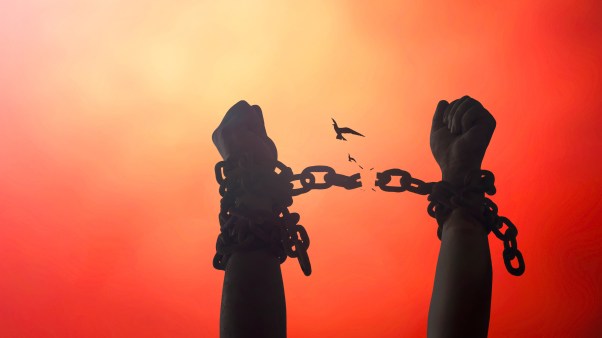
Apparently, the bear in this story couldn't handle all that freedom and wanted to return to comfort of captivity. Sound like a familiar story? How often do people attempt to turn away from the sin that has them in spiritual bondage, only to return to it again? (Prov. 26:11; 2 Pet. 2:22).
Source: Elisha Fieldstadt, “Black Bear Breaks into a Zoo,” NBC News (6-27-13)
49.6 million. According to the Global Slavery Index that's the latest estimate for the number of slaves in the world today. It could be just another number in a blur of facts that fly by our faces in a day, but this nearly 50 million number has a face. It includes women and men, boys and girls who are held in bondage as sex slaves, domestic servants, and child soldiers.
Of course, that is only an estimate since slavery thrives in darkness. But another news item gives this statistic an even more horrifying angle. A British paper shared a story about “Daniel” (not his real name) who was brought into the U.K. for what he had been told was a "life-changing opportunity.” He thought he was going to get a better job. Instead, it was then that he realized there was no job opportunity and he had been brought to the UK to give a kidney to a stranger.
"He was going to literally be cut up like a piece of meat, take what they wanted out of him and then stitch him back up," according to Cristina Huddleston, from the anti-modern slavery group Justice and Care.
Luckily for Daniel, the doctors had become suspicious that he didn't know what was going on and feared he was being coerced. So, they halted the process.
Daniel was not free of his traffickers though. Back in the flat where he was staying, two men came to examine him. It was then he overheard a conversation about sending him back to Nigeria to remove his kidney there.
He fled, and after two nights sleeping rough, he walked into a police station near Heathrow, triggering an investigation that would lead to the UK's first prosecution for human trafficking for organ removal.
Despite international and domestic efforts, about 10 percent of all transplants worldwide are believed to be illegal—approximately 12,000 organs per year. For example, according to the World Health Organization as many as 7,000 kidneys are illegally obtained by traffickers each year around the world. While there is a black market for organs such as hearts, lungs, and livers, kidneys are the most sought-after organs … The process involves a number of people including the recruiter who identifies the victim, the person who arranges their transport, the medical professionals who perform the operation, and the salesman who trades the organ.
Source: Editor, “Organ Trafficking and Migration,” Ncbi.Nlm.Nih.Gov (5/5/2020); Editor, “Global Slavery Index,” WalkFree.org (Accessed 9/2024); Mark Lobel, et al., “Organ Harvesting,” BBC (6-26-23)
On a June afternoon in 2018, a man named Mickey Barreto checked into the New Yorker Hotel. He was assigned Room 2565, a double-bed accommodation with a view of Midtown Manhattan almost entirely obscured by an exterior wall. For a one-night stay, he paid $200.57.
But he did not check out the next morning. Instead, he made the once-grand hotel his full-time residence for the next five years, without ever paying another cent.
In a city where every inch of real estate is picked over and priced out, and where affordable apartments are among the rarest of commodities, Mr. Barreto had perhaps the best housing deal in New York City history. Now, that deal could land him in prison.
The story of how Mr. Barreto, a California transplant with a taste for wild conspiracy theories and a sometimes tenuous grip on reality, gained and then lost the rights to Room 2565 might sound implausible. Just another tale from a man who claims without evidence to be the first cousin, 11 times removed, of Christopher Columbus’ oldest son. But it’s true.
In jail before he was released on his own recognizance, Mr. Barreto said he used his one phone call to dial the White House, leaving a message about his whereabouts. There was no reason to believe the White House had any interest in the case or any idea who Mickey Barreto was. But you could never quite tell with Mickey — he’d been right once before.
Whatever his far-fetched beliefs, Mr. Barreto, now 49, was right about one thing: an obscure New York City rent law that provided him with many a New Yorker’s dream.
(1) Satan; Temptation - Like a bad tenant who won’t leave an apartment, we allow sin to overstay it’s welcome in our lives; (2) Resentment or Anger—People in recovery often say, “Don’t let that person live rent free inside your head”—which means don’t hold on to your resentments over people who have hurt you. Let the hurt go.
Source: Matthew Haag, “The Hotel Guest Who Wouldn’t Leave,” The New York Times (3-24-24)
“It’s hijacking my brain.” Say young people addicted to social media and who are desperate for help. Many people have compared the addictive nature of social media to cigarettes. Checking your likes, they say, is the new smoke break. More than 75% of teens check their phone hourly, and half say they feel like they’re addicted to their devices.
Here are some of the things they’ve said:
“TikTok has me in a chokehold.”
“I would 1,000% say I am addicted.”
“I feel completely aware that it is hijacking my brain, but I can’t put it down. This leaves me feeling ashamed.”
Maybe you’ve had similar feelings yourself, no matter your age. Although it’s true social technologies offer some benefits, many people feel uncomfortable with how much time they spend online and often wonder if they’re addicted.
One approach is to view your media consumption as a diet. Just as there are many ways to have a healthy diet, there are also a variety of ways to develop healthy and personalized social media habits.
The researchers offered practical steps that you can take right now to reduce your dependence on social media. This includes turning off notifications, removing apps that you find harmful, curating your social media feed by unfollowing certain accounts, setting your phone to grayscale to reduce the appeal, and reserving phone-free time.
In addition to the practical steps listed above, the believer should add prayer (Heb. 4:14-16; Jam. 1:5), time in the Word (especially memorizing God’s promises for overcoming destructive habits, Ps. 119:11), and finding an accountability partner (Prov. 27:17).
Source: Annie Margaret & Nicholas Hunkins, “‘It is hijacking my brain’ – a team of experts found ways to help young people addicted to social media to cut the craving,” The Conversation (2-15-24)
Singer-songwriter and author Sandra McCracken writes in an issue of CT magazine:
Greek mythology may not be a guide to the Christian life, but I appreciate the clever commentary the ancient stories offer. I was recently reminded of Narcissus, the young man who neglected all other loves and physical needs so he could stare endlessly at his own reflection. Narcissus eventually dies while sitting by the reflection pool—the tragic and ironic conclusion to his selfish love.
The old, dark comedy still applies—maybe especially applies—to our modern ego and pride. We have more than just pools and mirrors to contend with. ... Aided by our phones and social media, many of us spend more time with our reflections than even Narcissus did. The overwhelming majority of Americans now own smartphones. And with billions of mobile devices in circulation around the world, the situation is the same in many other countries. We are a selfie society, encouraged to view and post about ourselves often, in hopes of attracting more likes and boosting our “brand.”
To see only ourselves and to spend life captivated by our own dim radiance is, in effect, to die. And death is always a tragedy. To see God, however, is to see resurrection and new life. When we look to Jesus to remember more fully our true worth, we gain freedom from vain self-reflection, knowing instead that we belong to the one Source of true delight.
Source: Sandra McCracken, “Dying to Our Selfies,” CT magazine (November, 2023), p. 22
The gaming industry, valued at around 257 billion US dollars as of 2024, is on a winning streak. As the pandemic ceased, the competition among gaming platforms and the abundance of game choices dominated the entertainment market.
Editor’s Note: You can read the original article which cites many more statistics from a large number of sources here.
Source: Marko Dimitrievski, “33 Evolutionary Gaming Statistics of 2024,” TrueList (2-17-24)
“The first duty of every soul is to find not its freedom but its Master” (P.T. Forsyth, 19th-century Scottish Theologian).
But who wants a master? The answer is: You do if you know what’s good for you. Canadian psychologist Jordan Peterson (not yet a Christian) has 40,000 hours of counseling under his belt, and here is what he says he learned from all that listening to people:
You don’t get away with anything. You might think you can bend the fabric of reality … and violate your conscience without cost. But that is just not the case; you will pay the piper. When you pay, you might not even notice the casual connection between the sin and the payment. People’s lives take a twist, and they go very badly wrong. And when you walk back though people’s lives with them, you come to these choice points where you meet the devil at the crossroads, and you find out that you went left, let’s say, and downhill, when you should have gone right and uphill. And now you’re paying the price for that.
Source: Andree Seu Peterson, “Like guardrails on mountain passes; What if less freedom makes us happier?” WORLD (5-26-23), p. 70
Bad news, your car is a spy. If your vehicle was made in the last few years, you’re probably driving around in a data-harvesting machine that may collect personal information as sensitive as your race, weight, and sexual activity. Volkswagen’s cars reportedly know if you’re fastening your seatbelt and how hard you hit the brakes.
That’s according to new findings from Mozilla’s *Privacy Not Included project. The nonprofit found that every major car brand fails to adhere to the most basic privacy and security standards in new internet-connected models. Mozilla found brands including BMW, Ford, Toyota, Tesla, and Subaru collect data about drivers including race, facial expressions, weight, health information, and where you drive. Some of the cars tested collected data you wouldn’t expect your car to know about, including details about sexual activity, race, and immigration status, according to Mozilla.
Jen Caltrider of the *Privacy Not Included project said,
Many people think of their car as a private space — somewhere to call your doctor, have a personal conversation with your kid on the way to school, cry your eyes out over a break-up, or drive places you might not want the world to know about. But that perception no longer matches reality. All new cars today are privacy nightmares on wheels that collect huge amounts of personal information.
Modern cars use a variety of data harvesting tools including microphones, cameras, and the phones drivers connect to their cars. Manufacturers also collect data through their apps and websites, and can then sell or share that data with data brokers, law enforcement, and other third parties.
If this causes concern for every car owner and passenger because of the constant observation of our actions, imagine how aware we should be of God’s attention to all of our words, thoughts, and actions.
Source: Thomas Germain, “If You’ve Got a New Car, It’s a Data Privacy Nightmare,” Gizmodo (9-7-23)
In his book Forgive, Tim Keller tells the story of a friend of his who was a PhD student at Yale. Keller’s friend once told him that modern people think about slavery and say, “How could people have ever accepted such a monstrosity?” Keller continues:
My friend said, “That’s not the way historians think. They ask: considering the fact it was universally believed by all societies that we had the right to attack an enslaved, weaker people, and since everybody had always done it, the real historical question is, why did it occur to anybody that it was wrong? Whoever first had that idea?”
My friend then answered his own question, pointing out that the first voices in the fourth, 17th, 18th, and 19th centuries who called for the abolition of slavery were all Christians. And the Christian, who called for this justice, believed there was a God of love, who demanded that we love our neighbors—all our neighbors—as ourselves.
Source: Tim Keller, Forgive (Viking, 2022), page 77
Abraham Lincoln biographer Jon Meacham notes, “There was no evident political gain to be had for Lincoln [to be anti-slavery]; quite the opposite. So why did he … state so clearly that slavery was unjust?”
Someone close to Lincoln pointed to the following story:
One morning in … the city [Lincoln] passed a slave auction. A vigorous and comely [young woman] was being sold. She underwent a thorough examination at the hands of the bidders; they pinched her flesh and made her trot up and down the room like a horse, to show how she moved, and in order, as the auctioneer said, that “bidders might satisfy themselves” whether the article they were offering to buy was sound or not.
The whole thing was so revolting that Lincoln moved away from the scene with a deep feeling of “unconquerable hate.” Bidding his companions follow him he said, “By God, boys, let's get away from this.”
Meacham concludes, “That experience formed one element of Lincoln's reaction, if not the main one. ‘The slavery question offered bothered me as far back as 1836 to 1840’, Lincoln said in 1858. ‘I was troubled and grieved over it.’”
In the same way, are we today troubled and grieved by the injustice of the world?
Source: Jon Meacham, And There Was Light (Random House, 2022), p. 61
In 2018, the World Health Organization (WHO) officially recognized "internet gaming disorder" (IGD). Addicts play pathologically. They can't stop—they play even after their mental health and careers have suffered great harm. The WHO estimates that at least 60 million people worldwide suffer this condition. Fortnite, a combat, survival and violent online video game is the most played of all time, boasting over 500 million registered users.
Today, games are less expensive, more accessible, and more technically advanced than ever before. Psychology professor Jeffrey Derevensky, who advised the WHO panel, said, "Kids are walking around with a mini-console in their pockets. Gaming is a hidden addiction. You can't smell it on their breath and you can't see it in their eyes. And so parents are often totally unaware of what their children are doing."
Maclean's magazine writer and former addict Luc Rinaldi describes how playing, and especially winning, can meet basic needs:
I replayed Resident Evil 4 a dozen times because there's something endlessly satisfying about blowing up a zombie's head. But my favorite games were the ones that offered something my real life lacked. Exploring the fantasy world of Skyrim, I wasn't just some kid in the suburbs of Toronto; I was a noble swordsman on an epic quest to save the realm. In a video game, even a loner can feel like a king … The high was intoxicating.
The obsession runs deep. One North Carolina boy kept playing as a tornado was leveling his town. A study published in Nature showed that gaming can more than double a player's baseline dopamine levels. Stanford neuroscientist Andrew Huberman claims that, for some players, “gaming can increase dopamine levels as much as having sex or snorting cocaine. Our brains are programmed to seek out more of these hits, which is what drives gamers to keep gaming.”
Like all addictions, there comes the inevitable crash. The trouble is that the euphoric feelings don't last. Gamers develop tolerances. They need to play more to achieve the same rush. After overloading their brains with happy signals, an equal and opposite reaction occurs. Their baseline dopamine level drops. They get angry, sad, and apathetic.
Source: Luc Rinaldi, "They Lost Their Kids to Fortnite," Maclean's (August, 2023)
Teen marijuana use has been soaring, and is up nearly 250% just since 2017. The common argument is that unlike “hard drugs,” marijuana is relatively harmless, certainly no worse than alcohol. But just because some people can get away with smoking it doesn’t mean everyone can. And the pot today’s teenagers are smoking is not the same as the pot their parents smoked back in college. The concentrations of THC, its psychoactive chemical, in today’s marijuana are much higher today than in the past. Many teens also consume refined products, which can have THC levels of 90% or more.
According to a new study from Columbia University researchers, recreational pot use in teens is associated with increased depression and increased suicidal thoughts. It’s also associated with higher levels of truancy and fighting, as well as lower grade point averages.
A new Danish study estimates that nearly a third of cases of schizophrenia in men in their 20s could be a result of pot use. The Washington Post recently ran a major story featuring stories of parents whose children started experiencing severe psychotic episodes as a result of pot, sometimes leading to suicide. The Post notes, “That sense of disbelief—pot wouldn’t do this—is prevalent among parents who have watched their teenagers become gripped by addiction.” And as Politico noted earlier this year, scientists are only beginning to do serious research on the health effects of pot.
Source: Aaron M. Renn, “The Price of Pot,” IFStudies.org (5-22-23)
U.S. Customs and Border Protection recently unveiled a comprehensive strategy to target the legal materials used by traffickers in the production of fentanyl and other synthetic drugs. The agency aims to use data-driven intelligence to disrupt the supply chain for the illegal contraband, including the postal service and air carriers, to identify and intercept suspicious goods along potential transit routes.
Troy Miller is the acting commissioner of Customs and Border Protection, and recently emphasized the evolving nature of the trade, which has recently included air cargo from Asia and sophisticated concealment methods. He said, “These criminals are sophisticated, innovative, and relentless. But so are our efforts to stop them.”
The initiative will target not only the drugs themselves, but any legal materials that can be used in their manufacture, distribution, or sales, such as necessary chemical elements and compounds, or the molds and presses used to create pills.
This is part of a larger strategy to intensify efforts to combat the ongoing drug crisis. This includes recent indictments and sanctions against Chinese companies implicated in the illicit importation of chemicals to produce fentanyl. Acknowledging China and Mexico as primary sources of fentanyl trafficking, the DEA continues to grapple with the challenge posed by these global supply chains, often masked by deceptive labeling and false return addresses.
Source: Julie Watson, “US government says it plans to go after legal goods tied to illegal fentanyl trade in new strategy,” Associated Press (10-26-23)
For decades television, and recently the internet and social media, have taken a strong foothold on people's minds, shaping perceptions, opinions, and effectively distracting people from reality. In 1961, Newton Minow, head of the Federal Communications Commission, gave a speech before TV-industry leaders. Television had become “a procession of game shows, formula comedies about totally unbelievable families, mayhem, violence, sadism, murder, Western bad men, Western good men, private eyes, gangsters, more violence, and cartoons.” He stated that they were turning TV into “a vast wasteland.”
Major tech companies, from Microsoft to Google and Facebook's Meta, have invested vast amounts in recent years in augmented and virtual reality. "Their approaches vary, but their goal is the same: to transform entertainment from something we choose, channel by channel or stream by stream, into something we inhabit. In the metaverse, the promise goes, we will finally be able to do what science fiction foretold: live within our illusions." Why just surf the net when we can live there?
Various science fiction writers such as George Orwell (1984), Ray Bradbury (Fahrenheit 451), and Aldous Huxley (Brave New World) have predicted people will simply give in to the deluge of compelling entertainment. "We will become so distracted and dazed by our fictions that we’ll lose our sense of what is real. We will make our escapes so comprehensive that we cannot free ourselves from them. The result will be a populace that forgets how to think, how to empathize with one another, even how to govern and be governed."
As one columnist recently observed, “It’s a place where people form communities and alliances, nurture friendships and sexual relationships, yell and flirt, cheer and pray.” It’s “a place people don’t just visit but inhabit.”
Source: Megan Garber, “We've Lost The Plot,” The Atlantic (1-30-23)
When Heather Kopp arrived at rehab, she was a 40-something mom of two and a veteran of Christian publishing. She had never been in jail or on the streets, she’d simply let a nightly glass of wine turn into two, which turned into a bottle, which eventually led to additional mini bottles hidden and secretly chugged in the bathroom. Soon enough, every moment of her life revolved around her next chance to sneak away for a drink.
Karen’s story opens a window into the mind of a burgeoning alcoholic. But as she moved through her rehab and recovery phases into her struggle to understand God’s presence amid her alcoholism, she arrives at a universal truth: Substance abuse is a physical manifestation of a spiritual addiction to sin. And everyone, it turns out, is an addict.
But this isn’t a story of how addiction led Karen to God, or how God pulled her out of addiction. Instead, Karen’s story is one of confronting the nature of sin and understanding more fully the necessity and beauty of God’s grace.
Karen now reflects on her sobriety, “(People) think I just resist temptation over and over because I’m a good person or because I have all this willpower. Can you imagine? How do you explain to people that it’s not anything like that?” Recovery is a living example of the miracle of grace. When addiction removes the illusion of self-sufficiency, the addict must reach a point of surrender from which to accept grace without conditions, and to have confidence that God really is in control, no matter what.
It’s tempting for the nonalcoholic to hear Karen’s story about alcoholism as a detached observer. We can marvel at the depths from which God can save a person from pursuits that bring only harm, pain, and grief—and thank him that we haven’t fallen as far. But Karen’s story reminds us that we are each living our own addiction story. And we can’t lose sight of the complete and total dependence on God’s sustaining grace that offers any hope of a way out. Whatever your addiction, God’s grace is the only hope for a way out.
Source: Heather Kopp, Sober Mercies: How Love Caught up With a Christian Drunk (Jericho Books, 2014) in a review by Laura Leonard, “Divine Rehab,” CT magazine (May, 2013), p. 71
During the late 18th century, Thomas Thetcher was a much-respected soldier by his fellow grenadiers in England. He was so revered that when he tragically died, his fellow soldiers commissioned a gravestone to memorialize his untimely demise. His death was not only untimely, but very bizarre, as it was not by sword, or gun, or cannon fire, but a drink that killed the soldier.
In a corner of the graveyard belonging to the Winchester Cathedral, Thetcher’s gravestone marks his final resting place. It also features this inscription:
In Memory of Thomas Thetcher a Grenadier in the North Reg. of Hants Militia, who died of a violent Fever contracted by drinking Small Beer when hot the 12 May 1764. Aged 26 Years.
Here sleeps in peace a Hampshire Grenadier,
Who caught his death by drinking cold small Beer,
Soldiers be wise from his untimely fall
And when ye’re hot drink Strong or none at all.
An Honest Soldier never is forgot
Whether he die by Musket or by Pot.
Many years later in 1918, an American soldier stationed in Winchester visited the cathedral and came across Thomas Thetcher’s grave. The soldier, Bill Wilson, was deeply affected by the inscription that even years after returning from the war, it may have saved his life.
Wilson became a successful businessman shortly after returning home, but within a few years his life was controlled by heavy drinking. His drinking was so detrimental to his health that it was believed the only way to save his life was to lock him away. Against all odds, Wilson along with a fellow group of alcoholics found a way to achieve and maintain sobriety. He eventually wrote a book about his experiences, a book that is world-renowned, Alcoholics Anonymous. Wilson would go on to co-found Alcoholics Anonymous. He considered the gravestone to be a major influence on his own recovery.
Editor’s Note: There is debate among medical professionals as to the cause of Thetcher’s death. Some medical professionals have proposed that Thetcher’s death was the result of fainting when a cold liquid is consumed on an extremely hot day. Others say that it is most likely that he passed from cholera or typhoid from a contaminated beer. Regardless of the cause, his death inspired the founding of Alcoholics Anonymous which has saved thousands of lives worldwide.
Source: Editor, “The Grave of Thomas Thetcher,” Atlas Obscura (2-11-20)
Marshall Brandon was raised by an alcoholic father and a mother who was filled with rage. Once, when Marshall told his father that he had seen his mother kissing another man, his father deserted the family and Marshal was beaten bloody by his mother and locked in a closet. So began many beatings throughout his adolescence.
Then at age 17 he joined the Army. He longed for someplace to be somebody, and was eager for a life of peace and order. He had to wait until his 18th birthday before being sent to Vietnam and this resulted in Marshall being assigned to a new unit. He was scared, lonely, and sick with feelings of abandonment. He wondered how he would survive.
Within a week, a guy introduced Marshall to marijuana. That started his long journey with drugs. Marijuana eased his worries about making it home, so he smoked every day.
My anger was kindled when I saw my Black brothers being abused by the authorities. I turned my rage against white commanding officers and even had thoughts of killing one. After serving about a year in Vietnam, I returned home, and I brought my anger at white people with me.
But he was soon also enslaved to morphine and his addiction was so great that he began stealing it. A group he was with was arrested for armed robbery and Marshall was sentenced to 10–25 years at the Ohio State Reformatory. He wondered anew, “How will I survive this?”
He decided to never use drugs again so he joined recovery groups in prison. With mostly good behavior, he was released to go to college on a furlough program. However, drugs soon found him again and the habit came back with a vengeance.
Then he met Katika, the woman who would change his life. There were married and for two years he managed to hide his addiction from her until she discovered the truth. Katika encouraged him to go into rehab but Marshall never did. She said, “I love you too much to watch you destroy yourself,” and she announced she was leaving me. Marshal said, “Our separation devastated me. I remember asking God, ‘Do you really exist? Make yourself real to me.’”
He occasionally saw his wife and after six months he noticed something different about her—peace. She was patient and showed genuine concern. He asked her what was different. She said, “I got saved.” Katika invited him to church where he “heard about a man who loved me just as I was.”
In June of 1977, as I sat and listened to the preacher say, “Come as you are,” I stopped questioning whether I could ask Jesus to save me. I knew he would. I ran so fast from my seat I knocked some hats off nice ladies in the pews. I will never forget that moment I was set free! Upon my profession of faith in Jesus Christ, God delivered me from my drug addiction on the spot.
After my reconciliation to God, he began the process of reconciliation in my other relationships, starting with my wife. This year, we will celebrate 48 years of marriage. During that time, I’ve had the privilege of serving God as a pastor and an evangelist. From childhood abuse and gangs, to Vietnam and drugs, to armed robbery and prison—through it all, God loved and protected me. Isn’t he a wonderful Father?
Editor’s Note: Today Marshall Brandon is an elder and visiting pastor at Citizens Akron Church in Akron, Ohio.
Source: Marshall Brandon with Lisa Loraine Baker, “My War Was Only Beginning,” Christianity Today (October, 2022), pp. 79-80