
Sorry, something went wrong. Please try again.
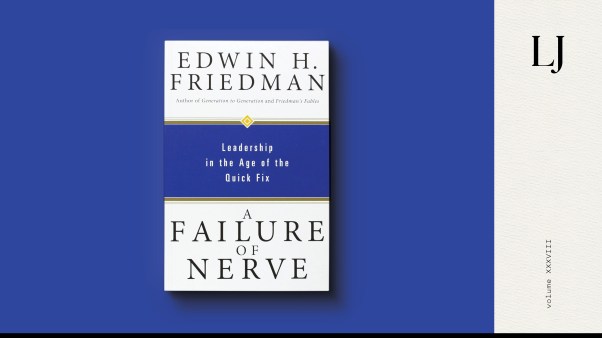
Friedman’s classic The Failure of Nerve reveals how self-differentiated leaders resist the pull of anxiety and lead with clarity.
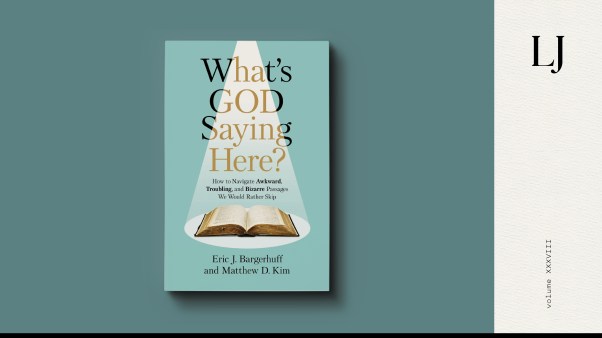
Eric J. Bargerhuff & Matthew D. Kim
How should Bible teachers and preachers handle Scripture that seems morally problematic?
To an outsider, the name Sam Bankman-Fried might seem like a pseudonym, too on-the-nose to be real. The 30-year-old entrepreneur and philanthropist, known by his initials SBF, became one of the youngest billionaires in the world after founding the cryptocurrency exchange FTX. In the 90s hip-hop parlance, one could say he made “bank, man.” But after FTX collapsed amidst solvency concerns and he lost approximately $16 billion in net worth, SBF now appears, rather appropriately, “fried.”
As proof of his lack of business savvy, Washington Post columnist Molly Roberts recently mentioned the fact that SBF once spurned the practice of reading books. Not certain books, but books, period. He said, “I would never read a book. I don’t want to say no book is ever worth reading, but I actually do believe something pretty close to that. ... If you wrote a book, you (failed), it should have been a six-paragraph blog post.”
Roberts says that such impatience is characteristic of his overall approach, a philosophy he identifies as “effective altruism.” This is defined as making as much money as possible, as quickly as possible, in order to give it all away. According to Roberts, SBF’s unwillingness to hoard the money is laudable, but he used it to justify a series of high-risk speculative bets that eventually proved to be his economic undoing.
Roberts explained:
SBF was also immersed in a type of effective altruism known as longtermism, where that ultimate outcome you’re seeking is hundreds of thousands or even millions of years away. So, instead of buying bed nets for children dying of malaria today, you’re trying to prevent the hypothetical next pandemic or the overheating of the earth. ... (This way of thinking is an) obsession with the future [that] disconnects you from the present.
Roberts concludes her analysis this way: “Why not scam a few bucks today to save a few billion lives in the 23rd century? That’s not just skipping to the end of the book—it’s skipping to the end of the entire series.”
Those who spurn instruction and consideration in favor of efficiency and haste, cut themselves off from needed wisdom and hasten their own destruction.
Source: Molly Roberts, “Sam Bankman-Fried doesn’t read. That tells us everything.” The Washington Post (11-29-22)
Despite the massive popularity of J.R.R. Tolkien’s The Hobbit in the Lord of the Rings in book and film versions, over the years, the books have received biting criticism from critics.
One early reviewer dismissed it as “an allegorical adventure story for very leisured boys.” This critic sarcastically said that we should all take to the streets proclaiming “Adults of all ages! Unite against the infantalist invasion.”
Another critic declared it “juvenile trash.”
In 1961, a third critic called it “ill-written” and “childish” and declared, not a little prematurely that it had already “passed into a merciful oblivion.”
Twenty years later, another critic, was hopeful that Tolkien’s “cult status is diminishing.” This critic also argued that Tolkien’s popularity is due to class distinctions. The intelligent “bookish class” doesn’t read Lord of the Rings. Instead, only lower-class people read it—those “to whom a long read does not come altogether easily.”
People did not see the value of Jesus, but criticized and rejected him but God made him King of Kings and Lord of Lords.
Source: Holly Ordway, Tolkien’s Modern Reading (Word on Fire, 2021), p. 105
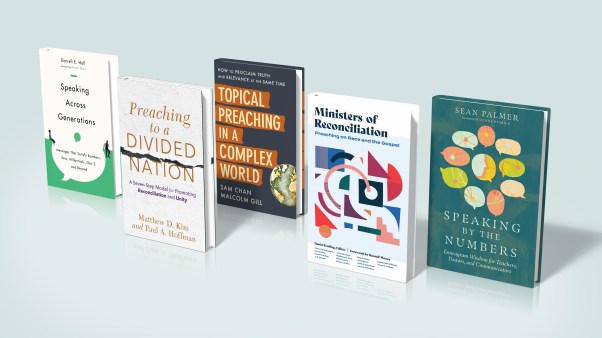
New and recent resources for your preaching library.
Residents of McFarland, a small town in California’s central valley, are upset over potential plans to replace the town’s only library with a police station. The Clara Jackson Branch Library is only open Thursdays and Fridays from noon to six, because that’s how much the county can afford to run it. Still, librarian Frank Cervantes said that demand was so high when it reopened after an extended pandemic-related closure that “as soon as I unlocked the doors, so many people came in that they nearly knocked me down.”
Many express their disapproval of the plan. 11-year-old, Analuz Hernandez said, “We’re surrounded by a bunch of land! They can’t build something new on all that land?”
City Manager Kenny Williams also serves as Police Chief. He says the need for a library is eclipsed by other public safety needs. “It does provide some service, but sometimes you have to judge what’s most important. When it comes to the library and public safety and comparing the use of the library building, [residents] recognize we have an issue with crime. We would use that building 24/7.”
Adult resident Angie Maldonado says the library has been a staple in the community since its opening back in 1994. “We have nothing else here for kids. We have no theater. You take this out, kids either stay home bored or go out on the streets.”
Local pastor Phil Corr agrees. “It’s an injustice to go after a vulnerable place. It’s logically and morally wrong. The police do need a larger place, and this building is ideally located. But it’s also ideally located for kids.”
It's important to keep the community safe, but we can't let the fear of evildoers prevent us from promoting communal flourishing. In uncertain times, communities should turn back to the old ways of trusting God for wisdom and guidance in decision making.
Source: Gustavo Arelland, “Cops, not books? This town’s library may become a police station,” Los Angeles Times (5-7-22)
When twenty-nine-year-old Edward Snowden fled to Hong Kong in June of 2013 with a plethora of top-secret NSA and CIA documents, he created a firestorm of controversy that still rages. He has many on his side who are convinced that what he did was heroic and much needed. Others have charged him with being a traitor. In fact, the United States government has charged him with three counts under the Espionage Act. He currently resides with his wife in Moscow where he has been given asylum.
What is of profound interest is Snowden's disclosure that virtually every digital communication made by US citizens—including text messages, Skype calls, emails, Facebook posts, phone calls, Google searches, credit card purchases, or the like—is part of what he calls a permanent record. Snowden brought to the attention of the American public that there was little in their lives that they might reasonably regard as private. This permanent record of their movements, purchases, internet activity, and virtually all forms of communication and digital interaction with other people will likely never disappear, at least not in our lifetime. It will always be there for the NSA and the CIA to see and make use of, if they so choose. It is frightening, to say the least.
But I worry far less about any record the government might permanently possess than I do about the fact that God has made a permanent record of my wicked choices, thoughts, fantasies, and failures. The mere thought that my sins are forever registered in the mind of God or written down in some celestial volume is far more unsettling and disturbing to me than knowing that my government knows as much as it does.
Here is the good news: God has erased every last trace of the condemning guilt of our transgressions if you know and trust Christ. This did not happen because God sovereignly destroyed the heavenly server on which this record was stored. Instead, he took the guilt of our sin and imputed it to Jesus. In the death of our Savior for our sins, all trace of anything that might otherwise be held against us is gone.
Source: Sam Storms, A Dozen Things God Did With Your Sin, (Crossway, 2022), pp. 134-136; Edward Snowden, Permanent Record (Metropolitan Books, 2019)
The hottest new book in the Lake Hazel branch of the Ada Community Library had a waiting list more than 50 people strong. But it wasn’t just word-of-mouth advertising that propelled the book into must-read territory. It was also its exclusivity. Unlike most mass-produced works on library shelves, The Adventures of Dillon Helbig’s Crismis is one-of-a-kind. And its author Dillon Helbig is eight-years-old.
Dillon made his authorial intent clear when, after writing and illustrating his 81-page creation by hand at home, he snuck it onto a library shelf during a recent visit with his grandmother. After returning home, he admitted the scheme to his mother, who immediately called the library to ask if anyone had seen it.
“It was a sneaky act,” said branch manager Alex Hartman. Dillon himself admitted this, calling his clandestine act “naughty-ish.” Nevertheless, Hartman was impressed, calling the book “far too obviously a special item for us to consider getting rid of it.” Hartman eventually read it to her six-year-old son, who loved it. She said:
Dillon is a confident guy and a generous guy. He wanted to share the story. I don’t think it’s a self-promotion thing. He just genuinely wanted other people to be able to enjoy his story. ... He’s been a lifelong library user, so he knows how books are shared.
The other librarians agreed that it met the criteria for inclusion onto its stacks. So, Hartman got Dillon’s permission to add a barcode to the back of The Adventures of Dillon Helbig’s Crismis, and officially added it to the collection. They also gave Dillon a Best Young Novelist award, which they created specifically for him.
Dillon’s mom said, “His imagination is just constantly going, and he is a very creative little boy. He just comes up with these amazing stories and adventures, and we just kind of follow along.”
Just like these librarians encouraged Dillon, we should also encourage the young people we encounter. We can promote their gifts and talents and prepare them to keep on serving others.
Source: Christina Zdanowicz, “An 8-year-old boy snuck a book he wrote onto a library shelf,” CNN (2-7-22)
Must-have resources for multifaceted ministry.
Recent books on culturally distinct preaching challenge misconceptions and equip diverse pastors to better address a multiethnic world.
The Bookseller magazine runs a competition to find the book with the oddest title of the year. Competition rules stipulate that the work had to be of serious intent and non-fiction. One year, the winner was “Highlights in the History of Concrete.” Runners up included “The Illustrated History of Metal Lunchboxes,” and “The Development of Brain and Behavior in the Chicken.” Special mention was given to “Soviet Bus Stops,” and “Butchering Livestock at Home.”
It is amazing what interests people enough to spend the time and energy to write a book! Why should people be passionate about metal lunchboxes? As Christians, we should be passionate about what God has done for us. Are we passionate enough to pass it on to others? The Apostle Peter says, “Always be prepared to give an answer to everyone who asks you to give the reason for the hope that you have. But do this with gentleness and respect” (1 Pet. 3:15)
Source: Natasha Onwuemezi, “Diagram Prize: Oddest Book Titles of the Year battle it out” The Bookseller (2-26-16); “Bookseller/Diagram Prize for Oddest Title of the Year,” Wikipedia (accessed August 2020)
Episode 48 | 21 min
The core principles of a Biblical sermon.
J. Todd Billings and Stephen Shaffer
How to find encouragement in this unique vision and calling.
Six recent books that will aid you in your ministry.
The New York Times recently ran an article "Turn the Page, Spur the Brain" that presented empirical findings showing that reading to children, even infants, was crucial for brain development. They found that exposing children to a video or a picture short-circuited the child's imagination. One expert said: "They're not having to imagine the story [for themselves]; it's just being fed to them." Another pointed out that children who were exposed to reading "showed significantly more activity in the areas of the brain that process visual association, even though the child was listening to a story and could not see any pictures." In short, verbal communication makes your mind and heart do the work of grasping and imagining the story for yourself. Images tend to feed you what some other person's imagination has created.
Possible Preaching Angles: Tim Keller comments: "I am not denigrating visual arts in general. But this simple article about reading to children supports an ancient Protestant understanding about the power of the Word to capture our hearts with the truth in a way nothing else can."
Source: Timothy Keller, “The Bible Is Alive and Active,” Timothy Keller blog (9-15-15)
William Falk, Editor-in-chief of The Week magazine, wrote the following short column:
A Yale study that tracked 3,635 people over 12 years found that book readers lived an average of two years longer than non-book readers; the more time spent reading books, the study found, the better. So, my friends, no matter what fresh madness the New Year brings, armor yourselves with a pile of good books. Our lives, and our sanity, may depend on it."
Possible Preaching Angles: When I read this, I thought of another book that extends life for all eternity and deepens life into abundance—the Bible. "Our lives and our sanity may depend on it—not just knowing it, but by trusting its Author and then living by it.
Source: William Falk, "Editor's Letter," The Week magazine (12-15-16)
Gerald Hiestand and Todd Wilson
…and other strategies for becoming a Pastor Theologian.
A seasoned shepherd selects those most helpful for ‘the cure of souls.’
We asked our contributors to name the new books that benefited their ministry the most. Here’s the list.