Sorry, something went wrong. Please try again.
Somewhere between the hustle culture sermons about “grinding for the Kingdom” and your boss passive-aggressively emailing you at 10 p.m. with a “quick question,” the idea of actual, soul-filling rest has been lost.
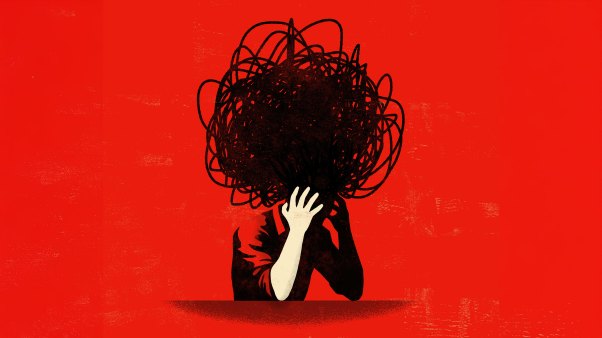
Rest isn’t just a luxury—it’s a necessity. A spiritual, emotional, and even physical game-changer that modern life is actively working against. We treat it like a reward for productivity, something we “earn” by checking enough boxes. But that’s not how it works. If you only allow yourself to rest when you’ve run out of energy, you’re not actually resting. You’re recovering from burnout.
For a generation that’s really into “self-care,” we sure are bad at resting. We schedule vacations that are more exhausting than our regular lives and take “Sabbath” as an excuse to binge entire seasons of prestige TV in one sitting.
The Bible starts with God creating the world in six days and resting on the seventh—not because he was tired but because he was setting the rhythm. Rest wasn’t an afterthought. It was built into creation itself.
Jesus followed that rhythm too. He regularly stepped away from crowds, left people hanging (yes, really) and took time alone to pray. If the literal Savior of the world wasn’t available 24/7, why do we think we need to be?
Here’s the thing: rest isn’t just good for your soul. It’s good for your brain. Studies show that chronic stress literally rewires your brain, making it harder to focus, regulate emotions, and be productive in the long run.
The world thrives on keeping you busy. Consumerism, capitalism, and even some versions of church culture—there’s always something else to achieve. But choosing rest? That’s countercultural.
So, take a real Sabbath. Put your phone in another room. Go outside. Breathe. Let yourself rest. Because you don’t need to “earn” it. In fact, you were created for it.

Source: Annie Eisner, “Why Rest Is More Powerful Than You Think,” Relevant Magazine (3-21-25)
Athletes will tell you that working out is not the most important part of training. Recovery is the number one cause of athletic injuries is the lack of recovery time between training sessions.
Let me repeat this because it’s so counterintuitive—recovery is more important to athletic performance than training is. Your body needs to rest and repair between periods of exertion. By not letting each of the muscle groups rest, a person will reduce their ability to repair. Insufficient rest also slows fitness progression and increases the risk of injury.
This a physical expression of a reality that applies to your heart and soul in serving Christ as well. We could probably predict who’s going to burn out and who’s not by looking at their recovery practices. But most people don’t take their recovery seriously. They’re simply shocked and heartbroken when their soul suddenly gives out. How will you build recovery into your life? What’s your plan?
Source: Jayne Leonard, “How to Build Muscle with Exercise,” Medical News Today (1-8-2020); John Eldredge, Resilient (Nelson Books, 2022), pp. 158-159
When ministry becomes mechanical, motivation dries up. But grace revives what guilt and grind never could.
Yuta Sakamoto was exhausted from selling home-improvement projects, including the boss’s demand that he help clean up at renovation sites on weekends. One day, he mustered his courage and announced he wanted to quit. But his boss warned him he would be ruining his future, and Sakamoto shrank back.
Then a friend proposed a solution. Sakamoto didn’t have to confront the boss again—he could hire someone to do it for him. After sending $200 and his case details to a quitting agency, he was finally a free man.
“I would have been mentally broken if I had continued,” says 24-year-old Sakamoto, who found a new job as a salesman at a printing firm.
A labor shortage in Japan means underpaid or overworked employees have other options nowadays. The problem: this famously polite country has a lot of people who hate confrontation. Some worry they’ll cause a disruption by leaving, or they dread the idea of co-workers gossiping about what just transpired in the boss’s office.
Enter a company called Exit. Toshiyuki Niino co-founded it to help people quit after experiencing his own difficulties in leaving jobs. “Americans may be surprised, but I was too shy or too scared to say what I think,” says Niino, 34. “Japanese are not educated to debate and express opinions.” Exit now handles more than 10,000 cases a year in which its staff quits on behalf of clients.
There are several approaches you might take with this story: 1) Fear and Courage – Learning how to overcome fear with faith and courage (2 Tim. 1:7); 2) Work Ethic – Finding a career that fits with our skills and well-being (Col. 3:23); Wisdom and Guidance – Sakamoto’s friend suggesting the use of a quitting agency illustrates seeking counsel from others when making decisions (Prov. 11:14).
Source: Miho Anada, “Too Timid to Tell the Boss You’re Quitting? There’s a Service for That.” The Wall Street Journal (9-2-24)
One pastor’s story of depression, breakdown, and the healing power of courage, community, and Christ.
Have you ever wondered what happens in your brain while you sleep? A good night's sleep does more than just help you feel rested; it might literally clear your mind.
A study published in the journal Cell shows how deep sleep may wash away waste buildup in the brain during waking hours, an essential process for maintaining brain health. According to one researcher, “It’s like turning on the dishwasher before you go to bed and waking up with a clean brain.”
Research sheds light on how deep sleep plays a crucial role in “cleaning” the brain by flushing out waste products that accumulate during waking hours. This process, known as glymphatic clearance, is driven by the brain’s glymphatic system to remove toxic proteins associated with neurological disorders such as Alzheimer’s disease.
The study identified norepinephrine, a molecule released during deep sleep, as a key player in this process. Researchers observed in mice that norepinephrine waves occur roughly every 50 seconds, causing blood vessels to contract and create rhythmic pulsations. These pulsations act as a pump, propelling brain fluid to wash away waste.
These findings, which likely apply to humans, highlight the importance of high-quality, natural sleep for maintaining cognitive health. Poor sleep may disrupt waste clearance, potentially increasing the risk of neurological disorders. Researchers noted that understanding these mechanisms can help people make informed decisions about their sleep and overall brain health.
Sleep is a precious gift from God, reminding us of the importance of rest in our lives. By modeling rest himself, God teaches us that taking time to recharge is necessary. Renewing our minds is crucial, and rest allows us to do just that—refreshing our thoughts and rejuvenating our spirit.
Source: Editor, “How deep sleep clears a mouse's mind, literally,” Science Daily (1-8-25)
Two days after the attempted assassination of former President Trump, The Wall Street Journal ran an article with the following title:
“‘I’m Tired. I’m Done.’ Nation Faces Exhaustion and Division After Trump Assassination Attempt, Americans express dismay about the state of the country: ‘The world has gone to Hades in a handbasket.’”
They spoke to four dozen Americans across the country and gave the following summary:
Nearly to a person, they expressed a sense of dread, saying there seems to be no good news on the horizon. Their list of concerns is endless: The lingering effects of a socially isolating pandemic; violent protests over disagreements about war; three election cycles of increasing polarization; and decades of escalating gun violence. That is not to mention economic turmoil and inflation. And unlike other times of crisis, after 9/11 or Sandy Hook or George Floyd, this event left few Americans hopeful that any good might come out of tragedy.
Towards the end of the article, they quoted Clement Villaseñor a 32-year-old electrical maintenance, who said, “There’s a hole in the country, and this is a part of that. We’re not sticking together,” he said. “There’s so much separation, it makes me feel far apart from people.”
Source: Valerie Bauerlein, “’I’m Tired. I’m Done.’ Nation Faces Exhaustion and Division After Trump Assassination Attempt,” The Wall Street Journal (7-15-24)
New York Times Columnist Ezra Klein notes his theory why the Internet feels “so crummy” these days. It puts us into “shame closets.” He explains:
A shame closet is that spot in your home where you cram the stuff that has nowhere else to go… It can be a garage or a room or a chest of drawers… as the shame closet grows, the task of excavation or organization becomes too daunting to contemplate.
The shame closet era of the internet had a beginning. It was 20 years ago that Google unveiled Gmail… Everyone wanted in. But you had to be invited. I remember jockeying for one of those early invites...I felt lucky. I felt chosen.
A few months ago, I euthanized that Gmail account. I have more than a million unread messages in my inbox. Most of what’s there is junk. But not all of it… According to iCloud, I have more than 23,000 photos and almost 2,000 videos resting somewhere on Apple’s servers. I have tens of thousands of songs liked somewhere on Spotify. How many conversations do I have stored in Messages, in WhatsApp, in Signal, in Twitter and Instagram and Facebook DMs? There is so much I loved in those archives... But I can’t find what matters in the morass. I’ve given up on trying.
The social networks made it easy for anyone we’ve ever met, and plenty of people we never met, to friend and follow us. We could communicate with them all at once without communing with them individually at all. Or so we were told. The idea that we could have so much community with so little effort was an illusion. We are digitally connected to more people than ever and terribly lonely nevertheless. Closeness requires time, and time has not fallen in cost or risen in quantity.
Source: Ezra Klein, “Happy 20th Anniversary, Gmail. I’m Sorry I’m Leaving You.” The New York Times (4-7-24)
There is a reason God gave us the Sabbath rest. We need it. We were not created to work seven days a week. Yet, that is where we are headed as a culture, especially since COVID-19, and this is not a good thing.
Technology tethers us to our work through smartphones and “productivity” apps such as Slack and Teams. The majority of workers regularly check their email on their smartphones, which never leave their side, even after work hours or on vacation. The rise in remote work means work and family spheres are no longer separate, blurring the boundaries between work and home. Or as Andrew Barnes, cofounder of 4 Day Week Global, said, “We’re not working from home, we’re sleeping in the office.” This is our new world of work.
Our relationship with work is becoming increasingly unhealthy. Levels of burnout and stress are at all-time highs. Even before the pandemic, the World Health Organization called stress the “health epidemic of the 21st century.” What is a major source of that stress? Our jobs.
COVID-19 exacerbated this problem. During the pandemic, workdays became longer—in the United States, the average workday is now three hours longer; and in the United Kingdom, France, Canada, and Spain, it’s two hours longer. But more than that, we have gotten used to working outside traditional work hours.
Source: Malissa Clark, Never Not Working, (Harvard Business Review Press, 2024), p. 3
Leadership can kill you. At least leadership in high stakes positions.
Nineteen chief executives died in office in 2023, the most since 2010, according to Challenger, Gray & Christmas, which tracks turnover at U.S. companies. The outplacement firm tallied a record 1,914 CEO exits in 2023, which Senior Vice President Andy Challenger partly attributes to the post-pandemic burnout that many execs feel. In a January survey of 600 C-suite executives by the professional network Chief, 37% said avoiding burnout would be a personal challenge this year.
A candid help-wanted ad might go something like this: Company seeks visionary leader to take business to the next level. Incumbent will be paid handsomely but may have fewer years to enjoy earnings because the stress of the role can reduce life expectancy.
Ivan Menezes was a few weeks shy of retiring as CEO when he died last June at age 63. The company said he was hospitalized for stomach ulcers and died after a brief illness. Notable CEOs who suffered fatal heart attacks on the job in the past 20 years include Jim Cantalupo of McDonald’s, Samuel “Skip” Ackerman of Panacos Pharmaceuticals, Jerald Fishman of Analog Devices, and Carolyn Reidy of Simon & Schuster. They ranged in age from 58 to 71.
Source: Callum Borchers, “How to Survive Being a 24/7 Boss,” The Wall Street Journal (2-1-24)
According to Business Insider, a big turn off for Gen-Z workers is what workplace experts call “a double bind.” Jeanie Chang is an expert on mental health in the workplace, and she defines it as “giving two or more contradictory messages at the same time.”
For example, claiming to value work-life balance by insisting workers are off their computers by 6pm, while at the same time supervisors routinely send messages after hours. Or when a job advertises unlimited paid time off, but workers are routinely denied PTO requests. Chang says that many Gen-Z workers use another name to describe the practice: “corporate gaslighting.”
As a member of Generation X, Chang doesn’t exactly blame managers for their double-bind habits. She thinks that many of them had the same practices modeled for them in their younger years, and just assumed that’s how work has to be. “People my age and up didn’t talk about mental health,” said Chang. She said that many of her coworkers adopted a survivalist mindset in order to battle burnout and fatigue, but they didn’t understand what was happening since they didn’t have the same common language to describe it.
By contrast, many Gen-Z workers adopt what Chang calls “a thriving mindset.” If they perceive that the company is an impediment to their happiness, many of them will quit, even without a backup plan in place.
“At the end of the day, you can't blame those older folks because they don't know what that is. So, it's a learning curve, but all sides have to be open. No one generation is better than the next.”
Business; Church Staff; Volunteer Recruitment; Volunteers - Whether managing people in an office, or working with volunteers in a church, leadership must be clear about their expectations and open about the amount of time and effort that is expected and not take advantage of workers.
Source: Lindsay Dodgson, “The 'double bind' is a big mistake employers make that's turning off Gen Z staff,” Business Insider (7-23-24)
In a nod to the adage about family life that parenting is the hardest job in the world, most parents (62%) say being a parent has been at least somewhat harder than they expected, with about a quarter (26%) saying it’s been a lot harder. This is especially true of mothers, 30% of whom say being a parent has been a lot harder than they expected (compared with 20% of fathers).
Source: Rachel Minkin and Juliana Menasche Horowits, “Parenting in America Today,” PEW Research Center (1-24-23)
Business consultants are calling it “The 85% rule.” An article in The Wall Street Journal explained how it works:
Are you giving it your all? Maybe that’s too much. So many of us were raised in the gospel of hard work and max effort, taught that what we put in was what we got out. Now, some coaches and corporate leaders have a new message. To be at your best, dial it back a bit.
Trying to run at top speed will actually lead to slower running times, they say, citing fitness research. Lifting heavy weights until you absolutely can’t anymore won’t spark more muscle gain than stopping a little sooner, said one exercise physiologist.
The trick—be it in exercise, or anything—is to try for 85%. Aiming for perfection often makes us feel awful, burns us out and backfires. Instead, count the fact that you hit eight out of 10 of your targets this quarter as a win. We don’t need to see our work, health, or hobbies as binary objectives, perfected or a total failure.
Interestingly, if you truly remember the Sabbath—one day out of seven—that equals 85.7% of your week devoted to work. So, the Sabbath was God’s original 85% rule.
Source: Rachel Feintzeig, “Try Hard, but Not That Hard. 85% Is the Magic Number for Productivity.” The Wall Street Journal (9-10-23)
Are we missing the life that is right in front of us, often found in interruptions?
Freelance writer Jason Heller describes how he and his wife made a pact a few years ago:
Every Sunday, we swore to each other, we will abstain from work. We start our morning and end our day by bingeing TV in bed. The door of our apartment is opened only for pizza to be slid inside. Chores go undone. Fitness is spurned. Job-related emails and texts are not read.
Lazy Sunday, as we like to call it, is hardly a revolutionary idea. A weekly time of rest is an ancient staple of several religions. And the five-day workweek has been the standard in the U.S., (but) spillover into non-workdays is common. A 2015 Rand survey found that about half of American employees do work in their free time in order to meet job demands. For many who started working from home during the pandemic, the boundary between labor and leisure has dissolved even further.
We shouldn’t need to actively protect our one day off—but sadly, we do. Rest time can feel indulgent or unnatural. ... The instinct to hustle—whether for success or just survival—is hard to shake. Still, we do need respite—not only from our jobs but from all of the many obligations that crop up in adult life.
Pre-pact, Angie and I often used Sundays to prep for the coming workweek. We thought we were buying time that we could spend later. The problem is that work is a bottomless pit—there’s always more to do. Sometimes, the people we’ve been close to for decades are the very people we tend to take for granted. Taking a break gives Angie and me the opportunity to really see each other again.
That might be the most important reason to pause work: not just to fuel up in preparation for more work later on, but for the sake of the pause itself. Although Angie and I aren’t religious, we really do think of our secular day of rest as sacred; that’s why we take pains to protect it. When you take away all the tasks you might feel pressed to do on a Sunday, what you’re left with isn’t an absence. It’s an opening.
1) Sabbath; Sunday; Rest - Although this article was admittedly written from a secular point of view, and includes excessive time with the TV, the central idea agrees wholeheartedly with Scripture (Exod. 20:8-11; Acts 20:7; 1 Cor. 16:2). Obviously, for the believer, Sunday rest would include gathering with the Lord’s people for worship (Heb. 10:24-25), but also taking the rest of the day for rest and recovery from the week. 2) Labor Day – This holiday is a good reminder to return to God’s guidance of taking one day a week off to rest, not just once a year.
Source: Jason Heller, “How My Wife and I Took Back Our Sundays,” The Atlantic (2-26-23)
Writing in the New Yorker, Lucy Huber and Joanna Davis have some advice for new mothers:
Hello! I see you are a young mother caring for your young children, and for some reason you seem a little stressed. Perhaps it’s because your three-year-old just shattered a jar of enchilada sauce. Now you are now kneeling on the floor of Aisle 3, frantically trying to pick up the shards of glass before your toddler puts glass shards in his mouth, all while wearing your three-month-old.
Well, I am here to tell you, as a parent of adult children, that I was like you once. Worried about every tiny thing that happened with my children, be it missing a violin lesson, omitting half the white sequins on my daughter’s homemade “Swan Lake” ballet costume, or letting my kids go in the ocean before teaching them to swim. But I want to impart to you the most important lesson that I learned in motherhood: just relax.
Relax, instead of calling for a grocery-store employee to help you wipe up this oozing green liquid which your child is licking off the floor while screaming, “Too spicy!” Relax, and just let it go. Let it all go. The fact that school is once again cancelled because Lucas R. got COVID and you have no child care and have to attend a meeting this afternoon seated next to your child who will be watching “Bubble Guppies” on the couch. But you’ll pretend that you are alone in your home office so that you don’t get fired. Cherish this moment! Cherish it now! These moments are fleeting, so you must enjoy them all. Also, while you’re at it, you should really take a moment to enjoy people telling you to relax and enjoy these moments.
Mama, don’t listen to other people’s parenting advice. Ignore them! Except me. I’m correct in saying that you’re a good parent only if you’re putting in absolutely no effort but standing in silent awe as your three-year-old turns on the stove burners, using a Barbie camper van as a stool, because what creativity he has! Life is too short to stress about these things.
Source: Lucy Huber and Joanna Davis, “Hey, New Mom, Have You Considered Relaxing? New Yorker (1-11-23); Bryan J., “Another Week Ends,” Mockingbird (1-13-23) January 11, 2023
A reporter at an alternative newsmagazine has been noticing a particular trend in the Portland, Oregon food scene. Many boutique restaurants, pop-ups, and food truck proprietors are intermittently closing their establishments to take needed times of rest.
According to reporter Jason Cohen, the pandemic has reset expectations in way that created space for such prioritizations of health and wellness. And unlike conventional wisdom, the customer isn’t always right. Cohen found several examples of owners making frank, impromptu social media posts or even posting physical signage explaining the need for sudden, unforeseen closings.
“CLOSED TODAY FOR CATERING. WE ARE NOT SORRY, WE GOTS TO GET THIS WORK WHEN WE CAN,” read a sign at Kim Jong Grillin. The food cart Poppyside said something similar last summer, “Closed August 3 to 6 to recharge and enjoy time with the people I love.”
Restaurant owner Maggie Irwin said, “I feel like post-pandemic, there’s been a much broader conversation around mental health in the workplace. We have so many repeat customers, and a lot of them that came in [after a closure] were like, ‘Hey, we saw your posts and like we’re so happy you guys did that. Like, it means a lot to us that you guys take care of yourself so you keep being in this neighborhood.’”
The article concluded with pensive note of positivity. “In the endless seesaw of work-life balance, consider this a win for life.”
Part of being diligent in our discipleship is taking time to rest our bodies, souls, and minds. As John Ortberg says, sometimes the most spiritual thing you can do is take a nap.
Source: Jason Cohen, “Restaurants Close for a Few Days Without Notice,” Willamette Week (2-8-23)