Sorry, something went wrong. Please try again.
For Mike Witmer, it began as a neighborly holiday game. Now it has become an enduring tribute. The Witmer’s Christmas lights were already up when Mike heard that his daughter’s friend from the swim team, Kevin, age 11, was coming home from the hospital, having been hospitalized with cancer. So, Mike decided to write “Get Well Kevin” in lights, and Mike’s wife told Kevin’s folks to swing through their court on their way home from the hospital.
Kevin loved the display, and he asked his mom, “Do you think Mr. Witmer will put my name in lights every year?” When Mike heard that his heart crushed and he thought, “Well, how can I not?” Kevin’s cancer went into remission, but every year Mike would hide the words “Hi” and “Kevin” in his display for Kevin to find it--like a Where’s Waldo? game between them.
Sadly, Kevin’s cancer returned, and he died at age 19. Mike spoke at Kevin’s funeral, telling the mourners he’d be making his “Hi Kevin” sign bigger that year, so Kevin would be able to see it from heaven. It has been on Mike’s garage roof every Christmas ever since.
“In the beginning,” Mike said, “my annual ‘Hi Kevin’ was just a silly gesture to a really nice kid who had been through some tough times. But it has been my honor to keep the salute going for his friends and family.”

Source: Robin Westen; “Keeping a Young Man’s Memory Alive,” AARP (December 2023-January 2024), p. 69
A pub has been reusing the same 77-year-old Christmas decorations in its public bar for more than 60 years. Landlord David Short, 84, first put up the crepe paper streamers and paper lanterns in the Queen's Head, Newton, Cambridgeshire, in 1962.
His son Rob Short, who took over the pub 10 years ago, said his father made the ribbons when he was about seven. He said, "It's amazing they survived as the pub has had some quite raucous evenings over the years. But the thing about them is you can mend them quite easily and put them back up again."
Short, 50, is the third generation of his family to run the Queen's Head. "At Christmas, we're known for our festivities and the decorations are a big part of that. I think people like them because they're traditional and I'm sure they wouldn't fit into a lot of places, but because the pub is very traditional, it fits into the whole ethos of the place."
Mr. Short's father puts the yellow, red and green ribbons up each year because he "is the only one to know how to put them up, it's a bit of a technique - I have been learning a little.” While it can take his regulars "a while to notice they're up, it's almost part of the pub," visitors do notice them because "you just don't get to see decorations like that anymore".
The streamers are carefully rolled up and stored away in a cupboard every year. Mr. Short said: "It's going back to the make-do-and-mend generation, I suppose, and that's what we should all be doing, reusing things - so it's quite relevant to these days as well."
You can see pictures of the decorations here.
1) Church - Leaders have discovered that their church congregations appreciate the “old” traditions of hymns, Nativity plays, candle ceremonies, the four-week observance of Advent, and others. 2) Family, Traditions - This is also true in the family home where celebrating Christmas with nostalgic tree ornaments, reading the Christmas story, and door-to-door caroling bring back warm family memories.
Source: Katy Prickett and John Devine, “Newton pub reuses 77-year-old Christmas decorations since 1962,” BBC (12-5-23
Many funerals today are not about mourning death but a “celebration of life.” As our culture discards all-black attire and other formalities of a traditional funeral, families create more personalized—and often more up-beat—experiences to honor the deceased.
The BBC has reported on the trend of “happy funerals,” noting that Monty Python’s “Always Look on the Bright Side of Life” had become the UK’s most popular song played at memorial services—replacing Verdi’s Requiem.
After celebratory memorial services, we are encouraged to “move on,” comforted by memories and knowing that the person we’ve lost is no longer in pain. But this positive focus can afflict and baffle people deep in grief.
As Daily Mail columnist Bel Mooney wrote, “Even though modern, cheerful funerals can be hugely touching and beautiful, a part of me wonders whether they show how petrified people are of death, and of the long agony of bereavement.”
Jesus, the One who sustains every life, was not immune to the ravages of death. In John 11, Jesus learns that his friend Lazarus has died. He goes to his grieving friends and does what anyone would do: he cries.
Jesus knew that while death is not the final word for the deceased believer, it brings a full range of heartache to those left behind. Jesus’ response shows us that the gospel promise does not exempt us from sadness over death. Death is real, it is sad, and Jesus himself felt it.
We can grieve over this, while also recognizing the hope of a resurrected body for all of us who cling to the Jesus who perfectly did both. This same Jesus who wept over the reality of death sent blood rushing back through the cold veins of his dead friend—and promises to give us new life too. Death is imminent, but Sunday is coming.
Source: Courtney Reissig, “The Problem with Happy Funerals,” CT magazine (April, 2016), p. 24
Debates about acceptable holiday greetings occasionally roil American retail stores and cable news shows. But when it comes to cards, most people prefer “Merry Christmas.” According to an industry survey, Americans send about 1.6 billion Christmas cards every year, and 53 percent carry the traditional religious greeting. “Happy Holidays” ranks second in card choice, and the more generic “Season’s Greetings” comes fourth after “other.”
The Christmas card tradition has proved surprisingly durable. It dates back to the Victorian era, when the celebration of Christmas was transformed into a family-centered commercial holiday. Queen Victoria started sending Christmas cards in the 1880s. Calvin Coolidge sent the first one from the White House about 40 years later.
The tradition sagged a little in the 21st century with the rise of social media; especially Facebook. But then Millennials revived the tradition as a way to add a personal connection to holiday celebrations. Card-sending households mail, on average, about 30 cards, and most people prefer pictures of kids and an old-fashioned “Merry Christmas.”
Preferred Christmas Card Greetings:
Merry Christmas 53%
Happy Holidays 21%
Season’s Greetings 12%
Other Messages 14%
Even amid today’s growing secularism, people are drawn to the joy and hope that the traditional “Merry Christmas” greeting brings. It is a constant witness to the birth of the hope of the world.
Source: Editor, “You’ve Got Christmas Mail,” CT magazine (December, 2022), p. 19
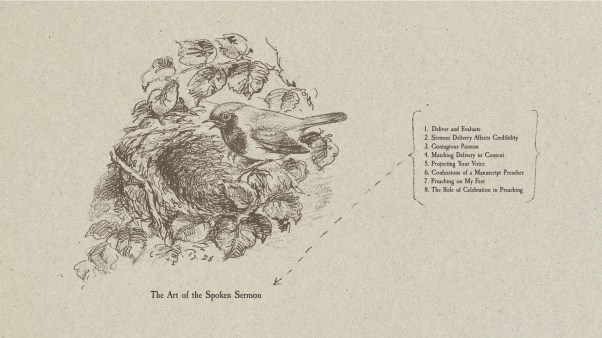
A roundtable discussion with Bri Johns, Susie Gamez, and Alison Gerber.
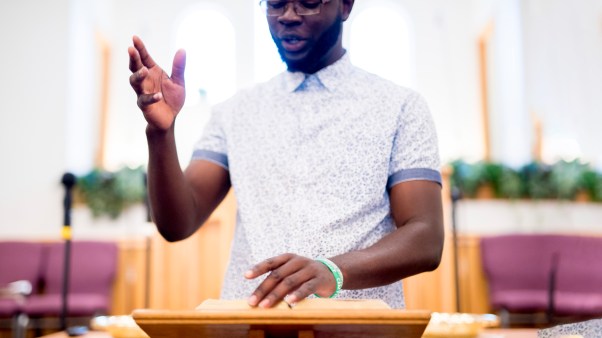
Defining African American preaching and 7 key characteristics of this tradition.
They may go overboard with their tidings of comfort and joy, but as it turns out, the early Christmas decorators among us may actually be doing themselves—and the rest of us—good.
Scientists at Temple University and the University of Utah published a study in the Journal of Environmental Psychology, and among its findings were the indication that people whose homes are decorated communicate a sense of friendliness and cohesiveness with neighbors.
Simply put, those people tend to happier. Psychoanalyst Steve McKeown elaborates:
“There could be a number of symptomatic reasons why someone would want to obsessively put up decorations early, most commonly for nostalgic reasons either to relive the magic or to compensate for past neglect. In a world full of stress and anxiety people like to associate things that make them happy, and Christmas decorations evoke those strong feelings of the childhood.”
McKeon continues, “Decorations are simply an anchor or pathway to those old childhood magical emotions of excitement. So putting up those Christmas decorations early extend the excitement!”
According to the authors of the study, those warm feelings of joy and excitement are transmitted not only within the home, but from neighbor to neighbor when the decorations are visible from outside the home.
The study did not elaborate, however, on how many holiday jingles it takes to wear down your resistance to impulse-buying chocolate while in line at the drugstore.
Like Mary when she heard the good news, we are blessed when we express our joy at God’s movement among us. Leaning into the spirit of the season helps make it possible to endure the difficult moments.
Source: “Scientists Say People Who Put Up Decorations Early Are Happier, So Break Out the Tinsel, Y’all” MSN Lifestyle (11-02-18)
The gospel is good news, our delivery should reflect that.
How do you prepare for the New Year? Here are some interesting New Year's traditions from around the globe:
Source: Daily Infographic, "New Year Traditions from Around the World" (12-31-14)
We're actually born smiling. 3-D ultrasound technology now shows that developing babies appear to smile even in the womb. After they're born, babies continue to smile (initially mostly in their sleep) and even blind babies smile in response to the sound of the human voice.
An intriguing UC Berkeley 30-year longitudinal study examined the smiles of students in an old yearbook, and measured their well-being and success throughout their lives. By measuring the smiles in the photographs the researchers were able to predict: how fulfilling and long lasting their marriages would be, how highly they would score on standardized tests of well-being and general happiness, and how inspiring they would be to others. The widest smilers consistently ranked highest in all of the above.
Even more surprising was a 2010 Wayne State University research project that examined the baseball cards photos of Major League players in 1952. The study found that the span of a player's smile could actually predict the span of his life! Players who didn't smile in their pictures lived an average of only 72.9 years, while players with beaming smiles lived an average of 79.9 years.
Possible Preaching Angles: Joy—Although smiling doesn't always stem from genuine joy, at times there is certainly a connection between the joy on our face and the joy in our heart.
Source: Eric Savitz, "The Untapped Power of Smiling," Forbes (3-22-11)
In his book The Kingdom of God Is a Party, Tony Campolo relates an experience he had late one night in Hawaii.
Up a side street I found a little place that was still open. I went in, took a seat on one of the stools at the counter, and waited to be served. This was one of those sleazy places that deserves the name, "greasy spoon." I did not even touch the menu. I was afraid that if I opened the thing something gruesome would crawl out. But it was the only place I could find.
The fat guy behind the counter came over and asked me, "What d'ya want?"
I said I wanted a cup of coffee and a donut.
He poured a cup of coffee, wiped his grimy hand on his smudged apron, and then he grabbed a donut off the shelf behind him. I'm a realist. I know that in the back room of that restaurant, donuts are probably dropped on the floor and kicked around. But when everything is out front where I could see it, I really would have appreciated it if he had used a pair of tongs and placed the donut on some wax paper.
As I sat there munching on my donut and sipping my coffee at 3:30 in the morning, the door of the diner suddenly swung open and, to my discomfort, in marched eight or nine provocative and boisterous prostitutes.
It was a small place, and they sat on either side of me. Their talk was loud and crude. I felt completely out of place and was just about to make my getaway when I overheard the woman beside me say, "Tomorrow's my birthday. I'm going to be 39."
Her "friend" responded in a nasty tone, "So what do you want from me? A birthday party? What do you want? Ya want me to get you a cake and sing 'Happy Birthday'?"
"Come on," said the woman sitting next to me. "Why do you have to be so mean? I was just telling you, that's all. Why do you have to put me down? I was just telling you it was my birthday. I don't want anything from you. I mean, why should you give me a birthday party? I've never had a birthday party in my whole life. Why should I have one now?"
When I heard that, I made a decision. I sat and waited until the women had left. Then I called over the fat guy behind the counter, and I asked him, "Do they come in here every night?"
"Yeah!" he answered.
"The one right next to me, does she come here every night?"
"Yeah!" he said. "That's Agnes. Yeah, she comes in here every night. Why d'ya wanta know?"
"Because I heard her say that tomorrow is her birthday," I told him. "What do you say you and I do something about that? What do you think about us throwing a birthday party for her—right here—tomorrow night?"
A cute smile slowly crossed his chubby cheeks, and he answered with measured delight, "That's great! I like it! That's a great idea!" Calling to his wife, who did the cooking in the back room, he shouted, "Hey! Come out here! This guy's got a great idea. Tomorrow's Agnes's birthday. This guy wants us to go in with him and throw a birthday party for her—right here—tomorrow night!"
His wife came out of the back room all bright and smiley. She said, "That's wonderful! You know Agnes is one of those people who is really nice and kind, and nobody does anything nice and kind for her."
"Look," I told them, "if it's okay with you, I'll get back here tomorrow morning about 2:30 and decorate the place. I'll even get a birthday cake!"
"No way," said Harry (that was his name). "The birthday cake's my thing. I'll make the cake."
At 2:30 the next morning, I was back at the diner. I had picked up some crepe-paper decorations at the store and had made a sign out of big pieces of cardboard that read, "Happy Birthday, Agnes!" I decorated the diner from one end to the other. I had that diner looking good.
The woman who did the cooking must have gotten the word out on the street, because by 3:15 every prostitute in Honolulu was in the place. It was wall-to-wall prostitutes and me!
At 3:30 on the dot, the door of the diner swung open, and in came Agnes and her friend. I had everybody ready (after all, I was kind of the M.C. of the affair) and when they came in we all screamed, "Happy birthday!"
Never have I seen a person so flabbergasted so stunned so shaken. Her mouth fell open. Her legs seemed to buckle a bit. Her friend grabbed her arm to steady her. As she was led to sit on one of the stools along the counter, we all sang "Happy Birthday"' to her. As we came to the end of our singing with "happy birthday, dear Agnes, happy birthday to you," her eyes moistened. Then, when the birthday cake with all the candles on it was carried out, she lost it and just openly cried.
Harry gruffly mumbled, "Blow out the candles, Agnes! Come on! Blow out the candles! If you don't blow out the candles, I'm gonna hafta blow out the candles." And, after an endless few seconds, he did. Then he handed her a knife and told her, "Cut the cake, Agnes. Yo, Agnes, we all want some cake."
Agnes looked down at the cake. Then without taking her eyes off it, she slowly and softly said, "Look, Harry, is it all right with you if I I mean is it okay if I kind of what I want to ask you is is it O.K. if I keep the cake a little while? I mean, is it all right if we don't eat it right away?"
Harry shrugged and answered, "Sure! It's O.K. If you want to keep the cake, keep the cake. Take it home, if you want to."
"Can I?" she asked. Then, looking at me, she said, "I live just down the street a couple of doors. I want to take the cake home, okay? I'll be right back. Honest!"
She got off the stool, picked up the cake, and carrying it like it was the Holy Grail, walked slowly toward the door. As we all just stood there motionless, she left.
When the door closed, there was a stunned silence in the place. Not knowing what else to do, I broke the silence by saying, "What do you say we pray?"
Looking back on it now, it seems more than strange for a sociologist to be leading a prayer meeting with a bunch of prostitutes in a diner in Honolulu at 3:30 in the morning. But then it just felt like the right thing to do. I prayed for Agnes. I prayed for her salvation. I prayed that her life would be changed and that God would be good to her.
When I finished, Harry leaned over the counter and with a trace of hostility in his voice, he said, "Hey! You never told me you were a preacher. What kind of church do you belong to?" In one of those moments when just the right words came, I answered, "I belong to a church that throws birthday parties for whores at 3:30 in the morning."
Harry waited a moment and then almost sneered as he answered, "No you don't. There's no church like that. If there was, I'd join it. I'd join a church like that!"
Wouldn't we all? Wouldn't we all like to join a church that throws birthday parties for whores at 3:30 in the morning?
Well, that's the kind of church that Jesus came to create!
Source: Tony Campolo, The Kingdom of God Is a Party (Word, 1990); used by permission from Thomas Nelson Publishing
Imagine the mystery and delight of not just hearing, but seeing the story of Jesus for the first time, almost as an eyewitness.
That's what happened to a tribe in the jungles of East Asia when missionaries showed them the Jesus film. Not only had these people never heard of Jesus, they had never seen a motion picture. Then, on one unforgettable evening, they saw it all—the gospel in their own language, visible and real.
Imagine again how it felt to see this good man, Jesus, who healed the sick and was adored by children, held without trial and beaten by jeering soldiers. As they watched this, the people came unglued. They stood up and began to shout at the cruel men on the screen, demanding that this outrage stop.
When nothing happened, they attacked the missionary running the projector. Perhaps he was responsible for this injustice! He was forced to stop the film and explain that the story wasn't over yet,; there was more. So they settled back onto the ground, holding their emotions in tenuous check.
Then came the crucifixion. Again, the people could not hold back. They began to weep and wail with such loud grief that, once again, the film had to be stopped. The missionary again tried to calm them, explaining that the story still wasn't over; there was more. So they composed themselves and sat down to see what happened next.
Then came the resurrection. Pandemonium broke out this time, but for a different reason. The gathering had spontaneously erupted into a party. The noise now was of jubilation, and it was deafening. The people were dancing and slapping each other on the back. Christ is risen, indeed!
Again the missionary had to shut off the projector; this time he didn't tell them to calm down and wait for what was next. All that was supposed to happen—in the story and in their lives—was happening.
Source: Ben Patterson, "Resurrection and Pandemonium," LeadershipJournal.net 4-13-04
One long-standing tradition of African-American churches occurs on December 31, as worshipers gather together between 7 and 10 p.m. for what is known as the Watch Night Service. The service goes on until midnight, when the New Year is welcomed in.
This tradition has two roots. The first root reaches back to the time before the Emancipation Proclamation was issued by President Lincoln in 1862. Slave owners looked over their business on the first day of the new year, tallying it up. Land, furnishings, and human property was then sold so that debts could be paid, and this meant family members and friends would be separated, perhaps never to see each other again on this earth. The slaves would come together to be with their loved ones for one more evening before being driven apart.
The other root can be traced back to gatherings of black churches on December 31, 1862, also known as Freedom's Eve. African-Americans met with each other in churches, homes, and other gathering places waiting for the good news that the Emancipation Proclamation had become law. When the clock struck midnight on January 1, 1863, every slave in the Confederacy was liberated.
Community leader and writer Charyn D. Sutton explains what happened next: "When the actual news of freedom was received later that day, there were prayers, shouts, and songs of joy as people fell to their knees and thanked God."
Source: Charyrn D. Sutton, "Watch Night," The Messenger (December 2005/January 2006), p. 3
Christian celebrations of Christmas are only set apart from the rest of the world when they focus on Jesus.
We can live in forgiveness and freedom, because Jesus took away our sin.
When Katie Hosking decided to break up with her fiancé, it was only 12 days before the wedding. Along with her parents, Katie had reserved a country club for the reception. With 150 invited guests, the cost was $6,200. Club policy required 60 days notice for any cancellation, meaning the Hoskings were required to pay the full amount.
The family decided to have a party anyway. In place of wedding guests, Katie and her parents invited the residents of the Interfaith Family Shelter to a country club banquet. More than 50 close family friends joined 40 homeless people, and together they danced and feasted on baron of beef, salmon, shrimp cocktail, fettuccine, and fruit. Strawberry shortcake replaced wedding cake. Afterwards they packed up the leftover food and sent it back to the shelter. It was enough to feed the homeless for several more days.
When it was over, the almost-bride, Katie, said, "We had so much fun!"
Source: The Wenatchee World (6-29-05) (AP story)
In all of sports, there is perhaps no basketball rivalry quite as intense as that between the Universities of Duke and North Carolina. The campuses are only eight miles apart. Both teams have different shades of blue for their primary color, so North Carolinians are told, "Choose Your Blue!"
Duke fans take their allegiances seriously. Every fan is a cheerleader. When the two teams recently played each other in Duke’s Cameron Arena, home fans (or "Crazies") were given instructions.
This is the game you've been waiting for. No excuses. Give everything you've got, and we will walk away the victors. Cameron should never be less than painfully loud tonight.
At Coach K's request, please focus on our team tonight. Better to bring our team up than put theirs down. Especially coming out of timeouts, we need to be incredibly loud. During their free throws in the second half, forget the novelty stuff, just be unbelievably loud. This is a huge game. Stay in the bleachers and go nuts.
Perhaps we Christian worshipers have something to learn here.
Source: “Duke-Carolina Cheer Sheet," ESPN.com
On October 2, 2004, 17-year-old Laura Hatch left a party in a Seattle suburb, and that was the last time she was seen for more than a week. No one knew why she didn't returned home later that night. No one knew she'd lost control of her car and careened down a steep forested ravine.
Laura's parents contacted the police and a search began. When a week went by without any leads, the Hatches organized a search team of 200 volunteers including members of Creekside Covenant Church in Redmond, Washington where the family attends.
When the extensive search failed to produce any results, family members began to assume the worst. "We had already given her up and let her be dead in our hearts," Laura's mother told the media.
Sha Nohr's daughter was one of Laura's friends. Norh, a Creekside Covenant Church member, told her distraught daughter that all they could do was pray. But Nohr had trouble sleeping that night. She kept having a recurring dream of a wooded area and heard the message, ''Keep going, keep going.'' The following morning, Sunday October 10, Nohr and her daughter drove to the area where the crash occurred, praying along the way.
''I just thought, 'Let her speak out to us,''' Nohr told the Seattle Times.
Nohr said something drew her to stop and clamber over a concrete barrier and more than 100 feet down a steep, densely vegetated embankment where she barely managed to discern the crumpled 1996 Toyota Camry. Nohr discovered Laura in the backseat, conscious, but seriously injured.
When the paramedics arrived, Laura was taken to Harborview Medical Center where she was treated for severe dehydration, a blood clot in her brain, broken ribs, a broken leg and facial lacerations. Amazingly, she had not had anything to eat or drink for eight days.
The miraculous rescue was announced later that night at Creekside Covenant Church, where more than 100 family and friends had gathered for a prayer vigil. The prayer service turned into a joyous celebration of praise when Nohr told the congregation how she had been led to the missing girl and that the lost had been found.
Source: Associated Press (10-11-04), The Seattle Times (10-11-04)