

Sorry, something went wrong. Please try again.
The group Open Doors USA figures that in 2023, 360 million Christians lived in countries where persecution was “significant.” Roughly 5,600 Christians were murdered, more than 6,000 were detained or imprisoned, and another 4,000-plus were kidnapped. In addition, more than 5,000 churches and other religious facilities were destroyed.
American Christians talk of persecution, but that is what real persecution looks like. Every year Open Doors USA releases its World Watch report of the 50 states most likely to punish Christians for their faith. Last year 11 nations were guilty of “extreme persecution.”
Afghanistan took over the top spot from North Korea in 2024. Open Doors explains that it long was “impossible to live openly as a Christian in Afghanistan. Leaving Islam is considered shameful, and Christian converts face dire consequences if their new faith is discovered. Either they have to flee the country or they will be killed.”
Unfortunately, the August 14, 2023 collapse of the U.S.-backed Kabul government made the situation immeasurably worse. According to Open Doors: “Christian persecution is extreme in all spheres of public and private life. The risk of discovery has only increased, since the Taliban controls every aspect of government—including paperwork from international troops that may help identify Christians.”
No. 2 on the list of the worst persecutors was North Korea, usually in the news for its nuclear weapons program and missile launches. Christianity was strong in Korea before the Soviet occupation after World War II of what became the Democratic People’s Republic of Korea. The Kim dynasty—Kim Jong-un represents the third generation—then created a personality cult that treats its members as semi-divine. Consequently, the North views Christianity, which claims a higher loyalty, as particularly threatening.
According to Open Doors, another 48 countries are guilty of “very high persecution.” Christianity is the most persecuted faith, but most religions face persecution somewhere, and some religious adherents, such as Jews, Baha’is, and Ahmadis, are targeted with special virulence.
Source: Doug Bandow, “Christianity Is the World’s Most Persecuted Religion, Confirms New Report,” Cato (3-7-22)
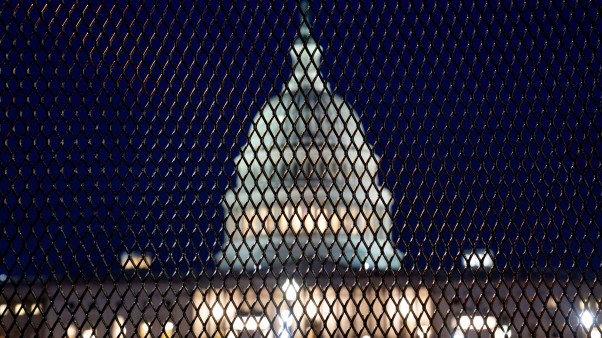
Americans' trust in government has hit an all-time low. But that lack of trust hasn't always been a part of the American experience. A chart published by the Pew Research Center shows the dramatic decline.
For example, in 1964, 77% of Americans said they trusted the government. Then the collapse began during the presidency of Lyndon B. Johnson, which overlapped with the Vietnam War. The 1970s—thanks to Vietnam and Watergate—sped up the loss of faith in the government (62%).
After a slight resurgence during the 1980s, the trend line for the past few decades is quite clear. With the exception of relatively brief spikes that overlap with the first Gulf War and the terrorist attacks of Sept. 11, 2001, the number of people who trust the government has been steadily declining.
By 2024, only 22% of people said they trusted by government.
The collapse of our collective trust in the government—and, by extension, its ability or willingness to help solve problems—has massive reverberations for politicians. They are considered less-than-honest brokers by large numbers of the American public, meaning that everything they say or do is viewed with suspicion. Sadly, this lack of trust is the new normal.
(1) God is the source of our help, hope, and trust. (2) Our need to pray for our government and to be salt and light in our community.
Editor’s Note: You can view all 66 years of the survey results here.
Source: Editor, "Public Trust in Government: 1958-2024," Pew Research (6-24-24)
For some governments, persecuting Christians is the default mode. Matthew Luxmoore reports that Evangelical churches are being targeted by Moscow in Russian-held cities in Ukraine. In occupied Ukraine, some evangelical churches continue to operate after pledging fealty to the Russian authorities.
Others, such as Melitopol’s Church of God’s Grace and parishes in the villages surrounding Melitopol, continue to meet in secret at followers’ houses, scrambling to hide their Bibles and their instruments as soon as they hear a dog bark or a gate creak open. One evangelical minister who now leads clandestine prayer services at his home said: “We have gone underground.”
Underground services have become a necessity because of incidents like this in Zaporizhzhia, Ukraine. Moments after the band struck up a song of praise at a Christian church in a Russian-held city, Russian soldiers stormed in wearing full tactical gear. One of them mounted the stage and told the congregation to prepare their documents for inspection.
Source: Matthew Luxmoore, “Russia Tries to Erase Evangelical Churches From Occupied Ukraine,” The Wall Street Journal, (6-16-24)
Four questions to help preachers decide whether or not to preach about politics.
In Iran, Anooshavan Avedian, an Iranian Armenian pastor, started the 10-year prison sentence he received last year for “propaganda contrary to and disturbing to the holy religion of Islam.”
Avedian was arrested while leading a worship service in a Tehran home in 2020. The Assemblies of God meeting place was shut down 10 years ago for holding services in Farsi. Iranian security forces have arrested thousands of Christians in the past few years.
Editor’s Note: Worldwide persecution of Christians is rising. In a 2024 listing of the top countries which persecute Christians, Iran is #9. The complete 2024 top 10 list is: North Korea (No. 1), Somalia (No. 2), Libya (No. 3), Eritrea (No. 4), Yemen (No. 5), Nigeria (No. 6), Pakistan (No. 7), Sudan (No. 8), Iran (No. 9), and Afghanistan (No. 10).
You can view the full report here.
Source: Editor, “Pentecostal Begins 10 Years in Prison,” CT magazine (December, 2023), p. 16
Almost 5,000 Christians were killed for their faith in 2023. Almost 4,000 were abducted. Nearly 15,000 churches were attacked or closed. And more than 295,000 Christians were forcibly displaced from their homes because of their faith.
The latest annual accounting from Open Doors ranks the top 50 countries where it is most dangerous and difficult to be a Christian. Nigeria joined China, India, Nicaragua, and Ethiopia as the countries driving the significant increase in attacks on churches.
Overall, 365 million Christians live in nations with high levels of persecution or discrimination. That’s 1 in 7 Christians worldwide, including 1 in 5 believers in Africa, 2 in 5 in Asia, and 1 in 16 in Latin America.
And for only the fourth time in three decades of tracking, all 50 nations scored high enough to register “very high” persecution levels. Syria and Saudi Arabia, meanwhile, entered the tier of “extreme” persecution.
When the list was first issued in 1993, only 40 countries scored sufficiently high to warrant tracking. This year, 78 countries qualified.
North Korea ranked No. 1, as it has every year except for 2022 when Afghanistan briefly displaced it. The rest of the top 10: Somalia (No. 2), Libya (No. 3), Eritrea (No. 4), Yemen (No. 5), Nigeria (No. 6), Pakistan (No. 7), Sudan (No. 8), Iran (No. 9), and Afghanistan (No. 10).
The deadliest country for Christians was Nigeria, with more than 4,100 Christians killed for their faith—82 percent of the global tally.
Editor’s Note: You can view the full report here.
Source: Jayson Casper, “The 50 Countries Where It’s Hardest to Follow Jesus in 2024,” CT magazine online (1-17-24)
Religious minorities, including Pentecostals, Anabaptists, and Armenian Orthodox Christians, were accused of spreading COVID-19 or secretly profiting from lockdowns in at least 45 countries in 2020.
Pew Research Center found that the accusations, often made with little or no evidence, led to physical violence on every continent except Antarctica. The most significant increase in harassment was against Jews, who faced intimidation and threats in more countries in 2020 than they had before the pandemic.
Change In the Number of Nations with Religious Harassment:
+6% Jews
+4% Folk (Traditional religions)
+1% Christian
-1% Muslims
Source: Editor, “Masking the Problem,” CT magazine (March, 2023), p. 22
When Americans go to the polls, they go to town halls, high school gyms, fire stations, and churches. There are more than 60,000 polling places in America, and roughly one out of every five is located in a church.
Conflicts over the correct relationship between religious communities and the state frequently grab headlines. But church polling places are rarely controversial. Here, governments rely on churches to be safe, trusted civic spaces. And 12,875 houses of worship extend hospitality to their neighbors, opening their doors for elections.
Top Six States in Percentage of Polling Places that Are Churches:
62% - Arkansas
58% - Oklahoma
38% - Florida
36% - Kansas
35% - Arizona
35% - Ohio
Source: Editor, “Where Churches Serve Democracy,” Christianity Today (October, 2022), p. 20
The December 20, 2020 issue of The New Yorker harshly criticized the numerous Christian churches that don’t take the pandemic seriously and refuse to follow basic safety precautions. No statistics are available on how many churches comply and how many defy lockdown protocols, but the magazine did say:
In 2020, many churches realized that the best way they could love their neighbors was to temporarily shut their doors. Early in the pandemic, the National Association of Evangelicals and Christianity Today issued a statement calling on churches to close “out of a deep sense of responsibility for others.”
The article went into detail into the history of Christian compassion during past deadly pandemics. They referenced Rodney Stark and his book The Rise of Christianity:
Rudimentary nursing, in the form of providing food and water, likely led to dramatically better survival rates among Christians and those they cared for, which would have seemed nothing short of miraculous amid so much suffering and death. Starks argues that differing mortality rates would lead to further conversion opportunities. He points out that “the Christian way appeared to work.”
However, the current behavior of the defiant churches will inevitably hurt the faith:
The pandemic in 2020 has held a mirror to Christianity, just as the epidemics of antiquity did, but today’s reflection carries the potential to repulse rather than attract. ... Churches will have to reckon … with how much their collective witness––the term Christians use to describe their ability to point to Jesus in their lives––may have been diminished.
There is an obvious tension between government regulation and freedom of religion, between loving our neighbors and the politicization of aspects of the pandemic. Every church is responsible before God to consider how best to worship God corporately, how to keep our vulnerable members protected, all the while being mindful of our appearance before a watching world.
Source: Michael Luo, “An Advent Lament in the Pandemic,” The New Yorker (12-20-20)
"The church must be reminded that it is not the master or the servant of the state but rather the conscience of the state. It must be the guide and the critic of the state and never its tool."
Source: Martin Luther King, Jr., Strength to Love (Fortress Press, 2010), page 59.
In his book Vanishing Grace, Phillip Yancey writes about a Muslim man who told Yancey, "I have read the entire Koran and can find in it no guidance on how Muslims should live as a minority in society. I have read the entire New Testament many times and can find in it no guidance on how Christians should live as a majority."
Yancey comments, "Christians best thrive as a minority, a counterculture. Historically, when [Christians] reach a majority they have yielded to the temptations of power in ways that are clearly anti-gospel."
Possible Preaching Angles: The body of Christ, followers of Christ—we can have a tremendous impact on society even if we have been marginalized and persecuted.
Source: Phillip Yancey, Vanishing Grace (Zondervan, 2014), page 258
Christ calls us respect, obey, and renew every form of human government.
In his 2010 memoir, A Journey: My Political Life, former British Prime Minister Tony Blair shares the following story:
A friend of mine whose parents were immigrants, Jews from Europe who came to America in search of safety, told me this story. His parents lived and worked in New York. They were not well off. His father died when he was young. His mother lived on, and in time my friend succeeded and became wealthy. He often used to offer his mother the chance to travel outside America. She never did. When eventually she died, they went back to recover the safety box where she kept her jewelry. They found there another box. There was no key. So they had to drill it open. They wondered what precious jewel must be in it. They lifted the lid. There was wrapping and more wrapping and finally an envelope. Intrigued, they opened it. In the envelope were her U.S. citizenship papers. Nothing more. That was the jewel, more precious to her than any other possession. That was what she treasured most.
Source: Tony Blair, A Journey: My Political Life (Knopf, 2010), p. xvi
In the opening chapters of his autobiographical classic The Seven Storey Mountain, Thomas Merton offers a unique look at the church's place in society. After his mother died, his father, an artist, traveled the world with Thomas often in tow. Religion had a more peripheral presence in young Thomas's life, but at one particular place of residence in France—the small town of St. Antonin—the church was suddenly front and center. Literally. The striking presence of the old, gray building in the center of the town made an impression on Merton—even more than he knew at the time. He writes:
Here, everywhere I went, I was forced, by the disposition of everything around me, to be always at least virtually conscious of the church. Every street pointed more or less inward to the center of the town, to the church. Every view of the town, from the exterior hills, centered upon the long grey building with its high spire…
The whole landscape, unified by the church and its heavenward spire, seemed to say: this is the meaning of all created things: we have been made for no other purpose than that men may use us in raising themselves to God, and in proclaiming the glory of God…
Oh, what a thing it is, to live in a place that is so constructed that you are forced, in spite of yourself, to be at least a virtual contemplative! Where all day long your eyes must turn, again and again, to the House that hides the Sacramental Christ!
In the midst of his reflection, Merton then turns his attention to whomever may be reading his words in The Seven Storey Mountain—most notably those who may be unbelievers just as he was at the time of his living in St. Atonin. He writes:
I did not even know who Christ was, that he was God… I thought churches were simply places where people got together and sang a few hymns. And yet now I tell you, you who are now what I once was, unbelievers, it is that Sacrament, and that alone, the Christ living in our midst…it is he alone who holds our world together, and keeps us all from being poured headlong and immediately into the pit of our eternal destruction.
Source: Thomas Merton, The Seven Storey Mountain (Harvest Book Harcourt, 1998), pp. 40-41
Many Christians, like most of the populace, believe the political structures can cure all our ills. The fact is, however, that government, by its very nature, is limited in what it can accomplish. What it does best is perpetuate its own power and bolster its own bureaucracies.
—Charles (Chuck) Colson, advisor to President Nixon, writer, and founder of Prison Fellowship
The film Amazing Grace chronicles the efforts of William Wilberforce (Ioan Gruffedd) to end the British Transatlantic slave trade in the 19th century. In this scene, Wilberforce attempts to awaken the consciousness of the public to the horrible practice of the slave trade by arranging for a ship carrying members of Parliament and their wives to stop alongside a slave ship.
As Wilberforce appears, one man asks, "What's he doing up there?"
"Ladies and gentlemen," Wilberforce greets them, "this is a slave ship—the Madagascar. It has just returned from the Indies, were it delivered 200 men, women, and children to Jamaica. When it left Africa, there were 600 on board. The rest died of disease and despair."
By now, some people are raising handkerchiefs to their noses to block the stench.
Wilberforce continues, "That smell is the smell of death—slow painful death." A few people begin to cry. "Breathe it in; breathe it deeply. Take those handkerchiefs away from your noses. There now, remember that smell. Remember the Madagascar. Remember that God made man equal."
Rated - PG
Elapsed time: Chapter 12; this scene begins at 00:55:42 and ends at 00:56:52
Source: Amazing Grace (Samuel Goldwyn Pictures, 2006); directed by: Michael Apted
When we come to Jesus with our own agendas, he asks us to lay them down and pick up the cross to follow him.
It is not uncommon for people to shake their fists at God in the midst of tragedy and suffering. The Bible includes the stories of righteous men who questioned God for what they considered poor management of creation.
But Nebraska State Senator Ernie Chambers has taken his complaints to court. In October 2007, Sen. Chambers sued God for "causing untold death and horror" in the form of "fearsome floods…horrendous hurricanes, [and] terrifying tornadoes." Furthermore, says the senator, God has wrought "widespread death [and] destruction" and terrorized "millions upon millions of the Earth's inhabitants."
Chambers filed the suit to make a statement about the American court system. Outraged by a recent lawsuit he considered frivolous, the senator intends to demonstrate that "anybody can file a lawsuit against anybody." His motion against God, then, is tongue in cheek; Chambers, who has a history of antagonism against Christians, has no vested interest in his suit against the Almighty.
Nevertheless, the case raises important questions about God's activity in this broken world. Is God to blame for poverty, warfare, and natural disaster? Chambers seems to think so. To him the facts are clear: there is suffering everywhere, and God is everywhere. Therefore, God must cause suffering. But God's not the only being who is everywhere. So are sinful human beings.
Source: "Neb. state senator sues God in protest" (Associated Press) USA Today (10-08-07)
Neutrality to religion guarantees neutrality to those very values that issue from religion. As justice William O. Douglas said, if "in every and all respects there shall be a separation of church and state," then "the state and religion would be aliens to each other--hostile, suspicious and even unfriendly."
We cannot deny in our public schools that our principals and the spirit of our institutions all come from the Judeo-Christian tradition. That tradition and the American tradition are wedded. When we have disdain for our religious tradition, we have disdain for ourselves.
Source: William J. Bennett, former secretary of education, in The De-Valuing of America. Christianity Today, Vol. 37, no. 2.
Supreme Court Justice Antonin Scalia said:
Church and state would not be such a difficult subject if religion were, as the Court apparently thinks it to be, some purely personal avocation that can be indulged entirely in secret, like pornography, in the privacy of one's room.
For most believers it is not that, and has never been. Religious men and women of almost all denominations have felt it necessary to acknowledge and beseech the blessing of God as a people, and not just as individuals, because they believe in the "protection of divine Providence," as the Declaration of Independence put it, not just for individuals but for societies.
Source: Justice Antonin Scalia in Lee v. Weisman. Christianity Today, Vol. 36, no. 14.