

Sorry, something went wrong. Please try again.
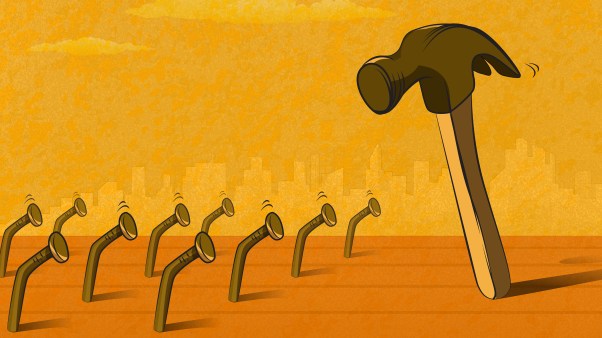
Longstanding workplace issues such as mistreatment, the normalization of toxic behavior, and a lack of accountability for workplace culture have fueled a growing trend known as revenge quitting.
This phenomenon, on the rise since the 2000s, sees employees leaving their jobs not just for better opportunities, but as a form of protest and self-preservation against unfair treatment.
When employees resign as a final act of protest against toxic workplace conditions, the impact on organizations can be significant. One of the most obvious consequences is financial loss. The abrupt departure of employees also sends a powerful message to remaining staff, potentially leading to decreased morale, trust, and engagement.
High-profile cases of revenge quitting can also damage an organization’s reputation, affecting customer relationships and investor confidence.
Finally, revenge quitting can have lasting consequences on workplace culture. If the toxic behavior that caused the resignation remains unaddressed, remaining employees may become disengaged, leading to a decline in work quality.
Research has found that when employees feel a genuine sense of belonging, they are more engaged and loyal, they produce more innovative solutions, and they are more reliable and productive.
1) Employees – Respect; Testimony - It is certainly permissible for a Christian to quit an incompatible job and look for other work. But let us be sure to leave an employer with a good testimony after giving proper notification of quitting (Rom. 12:18; Eph. 6:5-8; 1 Tim. 6:1-2); 2) Church ministry - Does any of this sound familiar in a church setting when people quit attending? Here are several biblical principles that might apply as antidotes: Respect and Integrity in Leadership - (Matt. 23:11; 1 Tim. 3:1-13); Accountability (Matt. 18:15-17; Acts 15:1-29); Promoting a Culture of Belonging, Harmony, and Unity (Psa. 133:1; Rom. 12:16; Eph. 4:3).
Source: Andrea Carter, ‘Revenge quitting’ on the rise: 5 things workplaces can do to avoid bitter breakups, Study Finds (2-10-25)
A Snapchat feature lets paying users see their position in their friends’ digital orbits. For some teens, whose friends are everything, it’s adding to their anxiety.
Snapchat+ subscribers can check where they rank with a particular friend based on how often that friend communicates with them. The result is automatically rendered in a solar-system metaphor: Are you Mercury, the planet closest to your friend? Great! Uranus? Bad sign.
“A lot of kids my age have trouble differentiating best friends on Snapchat from actual best friends in real life,” says 15-year-old Callie Schietinger. She said she had her own problems when a boyfriend noticed that he was Neptune in her solar system. He asked who held the Mercury position and when she told him it was a guy friend, he got mad.
More than 20 million U.S. teens use the app, though most don’t pay for Snapchat+. Young adults with those paid accounts have seen friendships splinter and young love wither due to the knowledge that someone else ranks higher on the app. Now, lawmakers, doctors, and parents are giving fuller attention to these apps and how they broadly affect kids’ mental health.
Callie and her boyfriend have since broken up, for other reasons. But that stress and the misunderstandings she has seen other friends experience have soured her on the feature. “It’s everyone’s biggest fear put onto an app,” Callie says. “Ranking is never good for anyone’s head.”
Source: Julie Jargon, “Snapchat’s Friend-Ranking Feature Adds to Teen Anxiety,” The Wall Street Journal (3-30-24)
According to Business Insider, a big turn off for Gen-Z workers is what workplace experts call “a double bind.” Jeanie Chang is an expert on mental health in the workplace, and she defines it as “giving two or more contradictory messages at the same time.”
For example, claiming to value work-life balance by insisting workers are off their computers by 6pm, while at the same time supervisors routinely send messages after hours. Or when a job advertises unlimited paid time off, but workers are routinely denied PTO requests. Chang says that many Gen-Z workers use another name to describe the practice: “corporate gaslighting.”
As a member of Generation X, Chang doesn’t exactly blame managers for their double-bind habits. She thinks that many of them had the same practices modeled for them in their younger years, and just assumed that’s how work has to be. “People my age and up didn’t talk about mental health,” said Chang. She said that many of her coworkers adopted a survivalist mindset in order to battle burnout and fatigue, but they didn’t understand what was happening since they didn’t have the same common language to describe it.
By contrast, many Gen-Z workers adopt what Chang calls “a thriving mindset.” If they perceive that the company is an impediment to their happiness, many of them will quit, even without a backup plan in place.
“At the end of the day, you can't blame those older folks because they don't know what that is. So, it's a learning curve, but all sides have to be open. No one generation is better than the next.”
Business; Church Staff; Volunteer Recruitment; Volunteers - Whether managing people in an office, or working with volunteers in a church, leadership must be clear about their expectations and open about the amount of time and effort that is expected and not take advantage of workers.
Source: Lindsay Dodgson, “The 'double bind' is a big mistake employers make that's turning off Gen Z staff,” Business Insider (7-23-24)
Roni Bandini is an artist and computer coder in Buenos Aires, Argentina. Like a great many Argentinians, he hears a lot of reggaeton music (a blend of reggae, hip-hop, and Latin rhythms). But not always voluntarily, that is.
In a post on Medium that has since gone viral, Bandini explained that the neighbor he shares a wall with plays loud reggaeton often and at odd hours of the day and night. But rather than pounding on the wall or leaving a note, Bandini decided to find a technical solution.
Bandini was inspired by a universal TV remote-control called “TV-B-Gone” that reduces unwanted noise in bars and restaurants from televisions that no one is watching anymore. So, he put together a contraption that could do the same thing with reggaeton music.
He used a small Raspberry Pi computer and AI that he trained to recognized reggaeton music. He then installed the device near the wall to monitor his neighbor’s music. Finally, he 3D-printed a name on his device: the “Reggaeton-Be-Gone.”
Any time it detects any reggaeton music, it will overwhelm his neighbor’s Bluetooth receiver with packet requests. He said, "I understand that jamming a neighbor’s speaker might be illegal, but on the other hand listening to reggaeton every day at 9 AM should definitely be illegal.”
There are three lessons here. First, if you want to be a good neighbor to someone who shares a wall with you, be mindful of when or how often you play loud music. Second, creativity and technical ingenuity can solve so many more problems than we think possible. But a third hidden lesson remains – so much hassle can be avoided if you simply take the initiative to communicate directly. Because who knows? Maybe Bandini’s neighbor might have turned the music down if he’d simply asked.
Many small problems can be kept from growing into large problems by diplomatically discussing it with the people involved (Matt. 18:15-17). So much hassle can be avoided if you simply take the initiative to communicate directly.
Source: Roberto Ferrer, “'Reggaeton Be Gone': This homemade machine silences neighbours' loud music using AI,” EuroNews (4-13-24)
Artist Wendy McNaughton was distraught about the incivility in the U.S. So, she started using a drawing technique, called “blind contour” or “look closely.”
It works like this. Two people who have never met before sit at a small table across from each other. Then they follow these rules. Rule number one: never lift your pen off the page. Use one continuous line. Rule number two: never look down at the paper you’re drawing on. Keep your eyes fixed on your partner’s face the whole time.
McNaughton encourages participants to go slow and pay attention. Draw what you see, not what you expect to see.
Nearly all the participants fretted over their artistic ability, but I insisted they just start drawing. And when they were finished, they looked down and inevitably cracked up. The drawings were always hilarious. Teeth on foreheads and scribbles where lips should be. ... But the point of this isn’t the final product. It’s the process. Seeing each other. Participants were stunned by the connection they felt with someone they hadn’t met before, even after just 60 seconds. These former strangers were now, kind of, friends.
McNaughton concludes: “Imagine what would happen in our communities, if we slow down to look at one another.”
Source: Wendy NcNaughton, “The Importance of Looking at What (and Who) You Don’t See,” The New York Times (10-13-23)
Set adrift into the vast expanse of amorality, where do people turn? Where within modern society can one find a moral compass that imbues life with meaning? For some, the overwhelming choice made is politics, which, like any idol, consumes everything it touches.
If you put people in a moral vacuum, they will seek to fill it with the closest thing at hand. Over the past several years, people have sought to fill the moral vacuum with politics and tribalism. American society has become hyper-politicized.
According to research by Ryan Streeter, at the American Enterprise Institute, lonely young people are seven times more likely to say they are active in politics than young people who aren’t lonely. For people who feel disrespected, unseen, and alone, politics is a seductive form of social therapy. It offers them a comprehensible moral landscape: The line between good and evil runs not down the middle of every human heart, but between groups. Life is a struggle between us, the forces of good, and them, the forces of evil.
If you are asking politics to be the reigning source of meaning in your life, you are asking more of politics than it can bear. Seeking to escape sadness, loneliness, and lawless disorder through politics serves only to drop you into a world marked by fear and rage, by a sadistic striving for domination. Sure, you’ve left the moral vacuum—but you’ve landed in the pulverizing destructiveness of moral war.
1) Church, conflict in; Disagreements; Could we retitle this illustration “How the Church Got Mean?” Have church members allowed taking political sides to divide their unity in Christ? Have we changed our cornerstone from Christ to a political leader we hope can set America right? 2) Arguments; Politics - When the moral anchor of biblical Christianity is abandoned then the tyranny of politics can take its place. People begin to fight political battles with outrage, exaggeration, and censorship. But life is far more than politics and perhaps the revolutionary message of Christianity can still be found by the walking wounded of the world.
Source: David Brooks, “How America Got Mean,” The Atlantic (September, 2023); Todd Brewer, “The Tyranny of the Political,” Mockingbird (8/18/23)
Will more money make your marriage better? Maybe or maybe not. Many couples discover that a financial windfall can rock their relationship just as much as any hardship. According to recent research, big changes in finances often shake the foundations of a relationship. But it isn’t just the loss of money that provides a test. Both gaining and losing money can hurt a marriage. But, surprisingly, competing visions for how to use a windfall can be more harmful than financial hardships.
A marriage counselor told journalists about working with a couple who came into a windfall from the husband’s splashy new job. However, working together to decide how to spend the money revealed enormous gaps in their communication. The counselor said, “All the joy and the excitement got wiped out, they were so focused on what the windfall will buy from a materialistic standpoint, and not focusing on the accomplishment. That really rocked their marriage.”
So, all the new research suggests big financial swings in either direction can shake couples much the same way. Both scenarios can expose fault lines in the marriage that had previously been withstood or ignored.
Source: Julia Carpenter, “Money Can Break a Marriage, Even Getting More of It,” The Wall Street Journal (4-2-23)
If you attend a service in the small Roman Catholic church Sankt Maria in Carinthia, Austria, you might find that the pastor has to pause the sermon for an unusual reason: A road runs through the middle of the church. While the pastor preaches his sermon in the sanctuary on the east side of a one-lane road, the churchgoers sit in a building on the opposite side of the road.
As early as 1443, a Marterl (a wayside shrine erected on roads and paths to encourage prayer) was built at this point on the former Roman road. At the time, the road was an important trade route from Venice to Salzburg, and the Marterl gave travelers a place to pray.
In 1754 the roadside shrine was replaced by a chapel. Since there was not much space between the road and the slope, a chapel was built with the sanctuary about six feet above the road, and worshipers gathered on the street in front of the church.
Eventually, a pastor felt sorry for the pilgrims who often stood in front of him in the rain, and had a two-story structure built on the opposite side of the road about 15 feet from the chapel. In this building, there are two rooms with chairs and benches. This building is also open on the side facing the road and the chapel, and the open side of both buildings have wrought-iron safety fences.
Services now took place in two buildings: the priest stood in one, and congregants in the other. If a vehicle came by, he had to interrupt his sermon. This happened more often up until 1905, because up until then the road had been a federal road. Then the bypass road, which still exists today, was built. Even today, local traffic still passes through the church.
You can see a picture of this unusual chapel here.
This church in Austria is unique because it is divided physically, but the sad fact is that many churches are divided spiritually. Even in the first century Paul wrote to the Corinthian church that he had heard “that there are divisions among you” (1 Cor. 11:18). Christ prayed “that they may all be one … so that the world may believe that you have sent me” (John 17:21).
Source: Editor, “Geteilte Kirch am Kreuzbichl (Divided Church),” Atlas Obscura (Accessed 5/3/22)
Rumors have been circulating that Mathew McConaughey might be considering a run for governor of Texas in 2022, and perhaps a higher office after that. In a recent interview in Men's Journal, Jesse Will cornered the Hollywood star on the topic. McConaughey, resisted confirming or denying his thoughts on the matter. But when pressed to give a hypothetical campaign slogan, he shared that his favorite suggestion has been, "Make America All Right, All Right, All Right, Again." Then he paused and said, "But for me . ..It’s ‘Meet Me in the Middle—I Dare You.'" He then explained:
When facing any crisis, I’ve found that a good plan is to first recognize the problem, then stabilize the situation, organize the response, then respond. You can’t have unity without confrontation. And to have confrontation, you have to at least validate the other’s position. We don’t even do that. So, I’d say, I’ll meet you in the middle. I dare you. It’s a challenge, a radical move. You come this way, I’ll come your way. That’s how democracy works.
In other words, to explain to another human why they are wrong (if in fact it is them and not us in error), we must listen to them. We must understand where they are coming from? Why do they make the choices they do? You must meet them in the middle.
Source: Jesse Will, "Just Keep Livin," Men's Journal, (February 2021), pp. 37-41
Fundamentally opposing views and values between Democrats and Republicans, conservatives and liberals, have never been as visceral as they are today. Fellow Americans who one disagrees with are immediately demonized and often “cancelled” in our now pervasive cancel culture.
A new 2021 program called “Bridging the Gap” has been initiated by several liberal and conservative colleges. The process and goal is “deep listening.” Authentic engagement in all humility and curiosity can tear down seemingly impenetrable walls. The program is based in part on the Bryan Stevenson book Just Mercy, whose premise is that people on death row are more than the worst thing they have ever done. An advocate writes:
And so, I would ask us for a moment to consider the application of that principle to these 75 million Americans who voted for Trump and the 81 million who voted for Biden. While many of us have been convinced by the wisdom that people on death row are better than their worst deed, we are still quick to condemn “those voters” as worse than their worst vote.
Genuine listening is challenging but fruitful:
Listening deeply means silencing that noise, listening not just with your ears but with every sense you’ve got, every cell in your body. It means listening to all that is said and unsaid, to the body language, the tone, the eye movement. It’s full-body listening. This type of listening builds trust, opens doors, and offers a path to deep discovery and a sacred connection that forms the basis for new understandings and otherwise unimaginable possibilities. Study after study shows in sector after sector—in medicine, marriage, real estate sales, and more—that true listening generates better results. And yet most of us go through our entire education without having learned how to do it.
Source: Simon Greer, “Can Deep Listening Heal Our Divisions?” Greater Good (1-19-21)
An article in Men’s Health spotlighted the unlikely friendship of Colin Allred and Van Taylor. Colin Allred and Van Taylor have a lot in common. In 2020 they were both freshman lawmakers in the US House of Representatives. They’re both from Texas. They’re both used to being part of a team: Allred spent four seasons in the NFL with the Tennessee Titans; Taylor was in the Marines for nine years.
But there’s one major difference: Allred is a Democrat and Taylor a Republican. At a time when our government is intensely polarized, you’d have every reason to believe these two aren’t friends and don’t get along. But they are, and they do.
Men’s Health asked how they managed to remain friends. Here is some of their advice:
Allred: You could spend all your time focused on where you disagree with someone. You could have a good argument every day if you wanted to, but you wouldn’t get much done. And anytime you don’t have a relationship with somebody, it’s gonna be easier to demonize them.
Taylor: You want to focus on what you can work on together. You have to accept the arguments on the other side as valid when they are. At least understand what they are so that you are able to converse. Because if you don’t know anything about what the other side is talking about, you’re not going to be able to understand their perspective.
Taylor: No two people agree with each other all the time. If you don’t believe me, ask your significant other.
Allred: And there are important differences! And that’s what our elections are about. That’s democracy. That’s healthy. What isn’t healthy is when you assume that the person who disagrees with you is also a bad person. Because if you can’t disagree without thinking someone else is bad or evil, then you start pulling apart the seams of our country, and we have to be very careful about that.
Source: Editors “The Right (and Left) Way to Disagree,” Men’s Health Magazine, (January-February, 2020), pp. 61-62.
At the end of their debate, two candidates for a Vermont state House seat asked the moderator for a few extra minutes—not to make last-second appeals for votes, but rather to make a little music. Lucy Rogers, the Democrat, grabbed her cello, while Zac Mayo, the Republican, picked up his guitar. They started performing "Society" by Eddie Vedder, much to the surprise of everyone in attendance. "It strikes a chord," Mayo told CBS News. "To say to the world that this is a better way."
Rogers and Mayo agreed early on while campaigning in Lamoille County that they were going to be civil and treat each other with respect throughout the race. When Rogers asked Mayo if he wanted to play a song with her, he thought it was a fantastic idea—as did the voters who attended the debate.
This is a powerful example of people who can disagree without being disagreeable. Church members who disagree should take note and also demonstrate this attitude to one another as the world is watching.
Source: Steve Hartman, “Political rivals stun voters with unexpected duet” CBS News: The Uplift (10-19-18)
"If you have assembled a piece of Ikea furniture with a partner, then you have probably argued with a partner about assembling a piece of Ikea furniture." Every step in the process of buying a piece of Ikea furniture leads to the ultimate argument of putting it together. The instructions are usually the biggest stressor because "Ikea's deceptively simple assembly manuals give users the (often incorrect) impression that the project can be accomplished without much time or effort." Yet, when we can't accomplish what the cartoon figure can "our expectations are dashed, and our egos take a hit." As Quartz so aptly describes, "The showroom made you feel inadequate, you're subconsciously battling your partner for power, and you're embarrassed that it's taken the better part of a Saturday for two educated adults to build a chest of drawers."
But how do you keep this from being a battle? Well the psychologists offer three great tips: assign responsibility (communication and feedback are key), take a break (step away from a charged situation), and just don't do it (As Scott Stanley, psychology professor at the University of Denver says, "There are some couples who have a fabulous life together who just recognize they should not be building things from Ikea together.").
Sometimes when it comes to conflict in a marriage or a church, here's the best advice: just don't do it—or at least try to avoid these nasty argument triggers.
Source: Corinne Purtill, “The psychology behind why couples always fight when assembling Ikea furniture,” Quartz (9-18-15)
Between two farms near Valleyview, Alberta, you can find two parallel fences, only two feet apart, running for a half mile. Why are there two fences when one would do? Two farmers, Paul and Oscar, had a disagreement that erupted into a feud. Paul wanted to build a fence between their land and split the cost, but Oscar was unwilling to contribute. Since he wanted to keep cattle on his land, Paul went ahead and built the fence anyway.
After the fence was completed, Oscar said to Paul, "I see we have a fence." "What do you mean 'we'?" Paul replied. "I got the property line surveyed and built the fence two feet into my land. That means some of my land is outside the fence. And if any of your cows sets foot on my land, I'll shoot it." Oscar knew Paul wasn't joking, so when he eventually decided to use the land adjoining Paul's for pasture, he was forced to build another fence, two feet away. Oscar and Paul are both gone now, but their double fence stands as a monument to the high price we pay for stubbornness.
Source: Daren Wride Valleyview, Alberta. Leadership, Vol. 16, no. 1.
Petty people are ugly people. They are people who have lost their vision. They are people who have turned their eyes away from what matters and focused, instead, on what doesn't matter. The result is that the rest of us are immobilized by their obsession with the insignificant.
It is time to rid the church of pettiness. It is time the church refused to be victimized by petty people. It is time the church stopped ignoring pettiness. It is time the church quit pretending that pettiness doesn't matter. ...
Pettiness has become a serious disease in the Church of Jesus Christ--a disease which continues to result in terminal cases of discord, disruption, and destruction. Petty people are dangerous people because they appear to be only a nuisance instead of what they really are--a health hazard.
Source: Mike Yaconelli in The Wittenburg Door (Dec. 1984/Jan. 1985). Christianity Today, Vol. 31, no. 12.
"Officially, the results of the vote are forty 'yes,' seven 'no,' and one 'over my dead body.' "
Source: Cartoonist Tim Liston in Leadership, Vol. 11, no. 3.
When I visit newcomers, I try to elicit the-church-did-this-to-me stories, because nearly everybody has one.
Source: Doug Self, Leadership, Vol. 11, no. 4.