Sorry, something went wrong. Please try again.
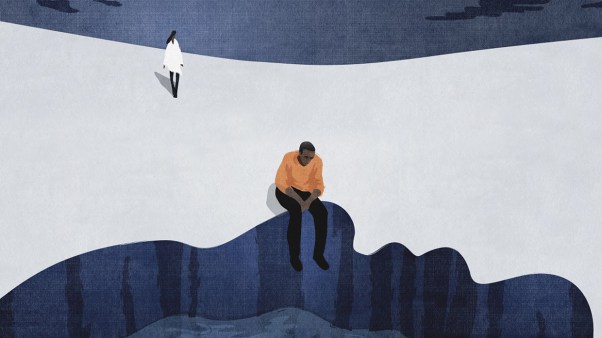
While on my way to dispose of a breakfast of which I only took three bites, I noticed something that has broken my heart: The sixteenth craft I made at preschool this week, stuffed into the garbage beneath a layer of yesterday’s trash as if I wouldn’t find it.
No, not the one with the blue crayon circles. Also, no, not the paint handprints that mysteriously had some other kid’s name spelled backward on it. I’m talking about the one with the eight star stickers, a singular macaroni noodle glued to the top, wrinkled from when I shoved it in my backpack. Yes, there’s a hole in the middle from where I pressed the marker down too hard, but that doesn’t give you an excuse to dispose of it without my permission.
I am aware the refrigerator already displays five similar drawings, and, yeah, you have four noodle necklaces hanging on the lamp by your desk. But when I came home excitedly holding this latest presentation of my blossoming creativity, I thought the look of pride you had on your face was sincere. Now, I’m not sure what to believe.
Do you not appreciate the six minutes of uninterrupted focus required for me to produce such masterpieces? Is there no true love for the wilting dandelions I harvest from our yard three times a week that I demand you find a new vase for every time? Does this prove you’re not planning on treasuring the rocks I collected for you in my pocket that I forgot to take out until it was too late, which were rattling around in the dryer during the third load of laundry you were doing today?
My future therapy bills are already increasing over the denial of genius presented through this unforgivable act of parental neglect.
But trauma creates great art, and with that, I’m prepared to unveil my greatest work yet: a rainbow mural of permanent markers all over the bathroom on every surface I could reach. The sink. The baseboards. The shower curtain. The mirror. The light switch. The door. The fancy tile you had installed during a remodel before I was born.
I’m hopeful the tears I see forming in your eyes represent how moved you are by my magnum opus. It feels great to finally have my work be respected the way it should.
Source: Stenton Toledo, “I Cannot Believe You Heartlessly Threw Away the Sixteenth Craft I Brought Home from Preschool This Week,” McSweeneys.Net (10/13/23)
I’ve noticed along the way of life that some people are much better at seeing people than others are. In any collection of humans, there are diminishers and there are illuminators.
Diminishers … make others feel insignificant. They stereotype and label. If they learn one thing about you, they proceed to make a series of assumptions about who you must be.
Illuminators, on the other hand, have a persistent curiosity about other people. They have been trained or have trained themselves in the craft of understanding others. They know how to ask the right questions at the right times—so that they can see things, at least a bit, from another’s point of view. They shine the brightness of their care on people and make them feel bigger, respected, lit up.
Illuminators are a joy to be around. A biographer of the novelist E.M. Forster wrote, “To speak with him [gave you] a sense of being listened to with such intensity that you had to be your most honest, sharpest, and best self.” Imagine how good it would be to offer people that kind of hospitality.
Source: David Brooks, "The Essential Skills for Being Human," The New York Times (10-19-23)
Admiral William H. McRaven writes about what he learned during Navy SEAL training that has helped him and could help anyone live a better life. Hope. He said:
Hope is the most powerful force in the universe. With hope you can inspire nations to greatness. With hope you can raise up the downtrodden. With hope you can ease the pain of unbearable loss. Sometimes all it takes is one person to make a difference.
We will all find ourselves neck dep in mud someday. That is the time to sing loudly, to smile broadly, to lift up those around you and give them hope that tomorrow will be a better day.
Hope truly is a powerful force and yet “living hope” goes beyond what is satisfying in life because it is based on the resurrection of Jesus. Our hope is living because Jesus is alive.
Source: Admiral William H. McRaven, Make Your Bed: Little Things That Can Change Your Life…and Maybe the World (Grand Central Publishing, 2017), pp. 93-94
The American dream—the proposition that anyone who works hard can get ahead, regardless of their background—has slipped out of reach in the minds of many Americans.
Only 36% of voters in a recent survey said the American dream still holds true. This is substantially fewer than the 53% who said so in 2012 and 48% in 2016 in similar surveys. When a Wall Street Journal poll last year asked whether people who work hard were likely to get ahead in this country, some 68% said yes—nearly twice the share as in the new poll.
The survey offers the latest evidence that Americans across the political spectrum are feeling economically fragile and uncertain that the ladder to higher living standards remains sturdy, even amid many signs of economic and social progress.
Source: Aaron Zitner, “Voters See American Dream Slipping Out of Reach, WSJ/NORC Poll Shows,” The Wall Street Journal (11-24-23)
A trio of Amazon delivery drivers are suing the e-commerce behemoth over poor working conditions. According to a 16-page suit in Denver District Court, the drivers allege that to keep pace with their expected delivery schedule they were required to urinate into bottles because the system gave them no time for adequate bathroom breaks. They claim the company is in violation of a Colorado law mandating employers provide paid rest breaks every four hours.
“Amazon operates this scheme through harsh work quotas and elaborate tracking and workplace surveillance technology,” reads the language of the suit. “[They] make it impossible for Amazon delivery drivers to fulfill basic human needs while on the job.”
Simone Griffin, a spokesperson for Amazon, offered a statement that appeared to contradict the claims in the lawsuit. Griffin said, “We want to make it clear that we encourage our Delivery Service Partners to support their drivers. That includes giving drivers the time they need for breaks in between stops, providing a list within the Amazon Delivery app of nearby restroom facilities and gas stations, and building in time on routes to use the restroom or take longer breaks.”
Ryan Schilling, one of the drivers behind the suit, said, “I fought for this country in Iraq, but I had an easier time going to the bathroom in a combat zone than I did while working for Amazon. I knew that if I tried to stop to go to a gas station, I'd get yelled at and maybe lose my job. What choice do Amazon drivers have?”
The workers are represented by Towards Justice and Public Justice and several other advocacy groups. On their behalf, Executive Director David Seligman said:
Workplace health and safety laws protect the right to reasonable bathroom access, but workers have suffered from underenforcement of those protections for decades. It's a moral abomination that in 2023, people working at one of the wealthiest and most powerful companies in the history of the world have to bring a change of clothes to work in case they pee themselves.
Scripture warns rich employers about predatory practices toward their workers. He will hold all such accountable for their actions.
Source: Editor, “Iraq War vet and two women among Colorado delivery drivers suing Amazon, saying they had to pee in bottles,” CBS News (5-29-23)
In the early days of World War II, the stress of the war began to take its toll on Winston Churchill, the Prime Minister of England. His wife Clementine grew alarmed. A member of Churchill’s inner circle told her that Churchill’s sarcastic and over-bearing manner was starting to discourage his inner circle of leaders. Clementine decided to speak the truth in love.
“My darling Winston,” she began in a letter, “I must confess that I have noticed a deterioration in your manner; and you are not so kind as you used to be.” She cautioned that in possessing the power to give orders and to sack anyone and everyone, “he was obliged to maintain a high standard of behavior—to combine kindness and if possible Olympic calm.” She reminded him that in the past he had been fond of quoting a French maximum, meaning, essentially, “one leads by calm.”
She continued: “I cannot bear that those who serve the country and yourself should not love you as well as admire and respect you.” But she warned, “You won’t get the best results by irascibility and rudeness. It will breed either dislike or a slave mentality.” She closed the letter with these words: “Please forgive your loving, devoted and watchful Clementine.”
Apparently, the letter got through to Winston. The next day people reported that he seemed remarkably at ease. He lay in bed, propped up by his bed rest as he gazed adoringly at his cat, Nelson, sprawled out peacefully at the foot of the bed.
Source: Eric Larson, The Splendid and the Vile (Crown, 2020), p. 107
William McRavenwas, commander of US Special Force Command, gave an oft-quoted speech at a university graduation in Texas in 2014. He spoke of his experiences in becoming a US Navy SEAL. SEAL training is regarded as being the toughest in the world. McRaven spoke about his Hell Week at Basic Underwater Demolition SEAL (BUD/S) training:
The ninth week of SEAL training is referred to as Hell Week. It is six days of no sleep, constant physical and mental harassment and one special day at the Mud Flats. The Mud Flats are an area between San Diego and Tijuana where the water runs off and creates the Tijuana sloughs—a swampy patch of terrain where the mud will engulf you. You paddle down to the mud flats and spend the next 15 hours trying to survive the freezing-cold mud, the howling wind and the incessant pressure from the instructors to quit.
As the sun began to set that Wednesday evening, my training class was ordered into the mud. The mud consumed each man till there was nothing visible but our heads. The instructors told us we could leave the mud if only five men would quit—just five men and we could get out of the oppressive cold.
Looking around the mud flat, it was apparent that some students were about to give up. It was still over eight hours till the sun came up—eight more hours of bone-chilling cold. The chattering teeth and shivering moans of the trainees were so loud it was hard to hear anything. And then, one voice began to echo through the night—one voice raised in song.
The song was terribly out of tune, but sung with great enthusiasm. One voice became two, and two became three, and before long everyone in the class was singing.
We knew that if one man could rise above the misery then others could as well. The instructors threatened us with more time in the mud if we kept up the singing—but the singing persisted. And somehow, the mud seemed a little warmer, the wind a little tamer and the dawn not so far away.
Source: Wes Brendenhof blog, “When You’re Up to Your Neck in Mud –Sing!” (8-9-22)
The late pastor and writer Eugene Peterson once told a story about walking in Yellowstone Park with his wife and three children. Peterson wrote:
As my family and I were walking in a mountain meadow in Yellowstone Park, there was a little boy of four or five about 30 yards out in the meadow picking exquisite alpine flowers. It is against the rules to pick flowers in national parks. I was outraged. I yelled at him, “Don’t pick the flowers.” He just stood wide-eyed, innocent and terrified. He dropped the flowers and started crying.
You can imagine what happened next. My wife and children, my children especially, were all over me. “Daddy, what you did was far worse than what he did! He was just picking a few flowers and you yelled, you scared him. You ruined him. He is probably going to have to go for counseling when he’s 40 years old.” My children were right. You cannot yell people into holiness. You cannot terrify people into the sacred. My yelling was a far worse violation of the holy place than his picking a few flowers. Later I had plenty of opportunity to reflect on this, reminded, as I frequently was, by my children.
I do that a lot, bluster and yell on behalf of God‘s holy presence, instead of taking off my shoes myself, kneeling on holy ground, and inviting whoever happens to be around to join with me.
He added, “If we begin by formulating a problem, by identifying a need, by tackling a necessary job, by launching a program, we reduce the reality that is before us to what we can do or get others to do.” Peterson concludes that everything we do in the Christian life must begin with adoration, with a sense of wonder, and with worship.
Source: Eugene Peterson, Subversive Spirituality, “Teach Us to Care, and not to Care,” (Eerdmans, 1997), pp. 154-169
A single mom was heartbroken after her teenaged daughter was sentenced to Juvenile Hall. What was the offense that warranted such a punishment? Failing to finish her homework. ProPublica reported that Charisse and her teenage daughter Grace were given a strict warning from Judge Mary Ellen Brennan of Oakland County after Grace was placed on probation following theft and assault charges.
Brennan said, “I told her she was on thin ice and I told her that I was going to hold her to the letter of the probation.” She required that Grace submit to GPS monitoring, counseling, visits from a case worker, restrictions on phone and internet access, and keep up with her schoolwork.
The problem arose after Grace’s school responded to the COVID-19 pandemic. According to Charisse, Grace’s mood disorder and ADHD required an individualized education plan that mandated extra teacher support to help keep her on track with assignments. Once classes went online, that support went away.
Nevertheless, new caseworker Rachel Giroux heard in a check-in that Grace had fallen asleep during class and failed to turn in an assignment. Giroux filed a violation of probation report on Grace, despite failing to check in with Grace’s teacher to verify her progress. After the violation was filed, Grace’s teacher told Giroux that she was “not out of alignment with most of my other students.” But that failed to change her mind. Giroux asked the judge to place Grace in detention because she “clearly doesn’t want to abide by the rules in the community.”
In our effort to train up our young people, our punitive actions should be guided by grace and mercy as acts of restoration, not retribution, lest we sentence punishments that make things worse in the long run.
Source: Jodi Cohen, “A Teenager Didn’t Do Her Online Schoolwork. So a Judge Sent Her to Juvenile Detention” Propublica.Org (7-14-20)
Fusco reminds us of the things that are unchanging when life seems to be so uncertain.
Malinda "Mindy" McCready (1975-2013) was a popular American country music singer. In an article entitled “The Tragic Life, Depression and Suicide of Mindy McCready," the details of her tragic suicide and her fight with depression were recorded:
More recently, in 2013, she entered a court-ordered rehabilitation center, (but) checked herself out one day later. Shortly thereafter, she shot herself in the mouth, on the porch of her home where her boyfriend, Wilson, had committed suicide.
After her death, CNN lamented that the lyrics to the hope-filled title track to her most recent album, I’m Still Here, seemed so triumphant at the time. "On a cold dark cloud, with nowhere to fall but down, like a single, naked, unrelenting tear ... I'm still here." Now, those words sound like a cry for help.
Source: Ray Comfort, The Final Curtain (New Leaf Press, 2018), p. 145
Did you know that cats can’t taste the flavor of sweetness? That’s right. Felines cannot taste sweet. It’s like their tongues are color blind to sugar. No wonder cats are so grumpy all the time! They can taste sour, bitter, saltiness, and meatiness, but not sweetness.
Are you a cat? Maybe you should get a dog in your life. Maybe when dogs are barking at cats, they’re just trying to cheer them up! If you’re a dog, use your bark to cheer up a cat. And if you’re a cat who struggles to taste the sweetness of life, find a dog to be your friend. I know dogs can be really annoying but they’re good for your soul.
A humorous way to encourage people who are down.
Source: David Bielle, “Strange but True: Cats Cannot Taste Sweets,” Scientific American (8-16-07)
A typical Holy Week is out of reach this year. That’s cause for lament—and celebration.
Three honest stories about its rewards and challenges.
Humans seek after hope like moths seek after light. It’s intrinsic to who we are. Neuroscientists Tali Sharot argues hope is so essential to our survival that it is hardwired into our brains, arguing it can be the difference between living a healthier life versus one trapped by despair.
It’s pretty clear: hope is powerfully catalytic, and why Dr. Shane Lopez, the psychologist who was regarded as the world’s leading researcher on hope, claimed that hope isn’t just an emotion but an essential life tool.
Source: Drake Baer, “What Good Is Hope?,” The Cut (12-27-16)
What you are doing matters, even when fruit appears to be scarce.
Men's Health portrayed the life of a man who believed his heart attack was caused primarily by grief. Acclaimed mountaineer Conrad Anker and his team trekked up Tibet's 26,335-foot Shisha Pangma for a specific mission—to retrieve the frozen body of his best friend, Alex Lowe, who had died in an avalanche. Anker had been with Lowe and had seen him being swept to his death. Once the body was found, Anker carried the body down the mountain, "a wrenching burden that weighed on his soul." Anker said, "Going back up there and seeing everything was super emotional. I was stressed, and I felt my heart.
The Men's Health writer went into detail:
"I felt my heart." What man hasn't at some point in his life? [You can also insert examples that apply to women.] When we go on a first date, take a knee to propose, approach the lectern to make a speech in public, or hear of a loved one's death, our hearts talk to us. And we talk back. This is why for centuries, before we even understood how it does its primary job of pumping blood, the heart has been a powerful symbol of many things: love, emotion, intuition, conviction ("I believe in my heart"), and truth ("the heart of the matter").
Recent studies show that our emotions can directly affect our heart health. That may be why, for example, more people seem to have heart attacks on Mondays than any other day of the week; cold Mondays are even more dangerous. People who have experienced a sudden, acute trauma, such as the death of someone close, can suffer a physical change in the heart. When Anker said his friend's death touched his heart, it probably did.
Source: Bill Gifford, "The Science Of How Your Heart Can Break," Men's Health (4-14-17)
In a powerful article titled "Dying of Despair," psychiatrist Aaron Kheriaty observes the startling rise in deaths from suicide and drug overdoses. He points to a number of long-term studies that have analyzed the difference between high-risk patients who survive and those who die by suicide. Here's his conclusion of this research:
Over a ten-year span, it turns out that the one factor most strongly predictive of suicide is not how sick the person is, nor how many symptoms he exhibits, nor how much physical pain he is suffering, nor whether he is rich or poor. The most dangerous factor is a person's sense of hopelessness. The man without hope is the likeliest candidate for suicide. … We cannot live without hope.
Source: Aaron Kheriaty, "Dying of Despair," First Things (August 2017)
Pastor Scott Sauls from Nashville spent five years working with Pastor Tim Keller at New York City's Redeemer Presbyterian Church. Sauls writes that there are many ways that he saw Keller model the gospel, but there is one thing that really stood out for him. Sauls writes:
Tim [Keller] is the best example I have ever seen of someone who consistently covers with the gospel.
Never once did I see Tim tearing another person down to their face, on the Internet, or through gossip. Instead, he seemed to assume the good in people. He talked about how being forgiven and affirmed by Jesus frees us for this—for "catching people doing good" instead of looking for things to criticize or be offended by. Even when someone had done wrong or been in error, Tim would respond with humble restraint and self-reflection instead of venting negativity and criticism. As the grace of God does, he covered people's flaws and sins. Sometimes he covered my flaws and sins. He did this because that's what grace does; it reminds us that in Jesus we are shielded and protected from the worst things about ourselves. Because Jesus shields us like this, we should of all people be zealous to restore reputations versus destroying reputations, to protect a good name versus calling someone a name, to shut down gossip versus feeding gossip, to restore broken relationships versus begrudging broken people.
Source: Scott Sauls, Befriend (Tyndale, 2016), page 48