Sorry, something went wrong. Please try again.
It’s not just God who is for us. We’re meant to be supported by a band of saints across dividing lines.
What if the relationships that sustain pastors also showed the world a better way?
A mallard duck was caught on a speed camera flying at 52 km/h (32 mph) in a 30 km/h zone, in the Swiss town of Köniz, near Bern. The event took place recently and has sparked a mix of amusement and fascination among locals and media alike.
What makes the story more intriguing is that a similar incident happened on the exact same date and location seven years prior, leading officials to jokingly suggest the duck might be a repeat offender. Officials from the local police department noted the odd coincidence: “The chance that the same bird would be flying at the exact same speed at the exact same spot seven years apart is remarkable.”
While no actual ticket was issued, the incident has sparked conversations about wildlife and human technology intersections. The story has since gained traction on social media, highlighting the lighter side of law enforcement and wildlife encounters. Residents of Köniz shared their amusement, with one saying, “It’s not every day you get to see a duck caught speeding!”
The story of the duck reminds us of the beauty and unpredictability of God’s creatures, and how even in a world full of human rules and technology, animals continue to live according to their own rhythms.
Source: Yang Tian, “Case quacked: Flying duck caught by Swiss speed camera is repeat offender,” BBC (5-13-25)
Garfield, Puss in Boots, Aristocats' Toulouse – cultural icons maybe, but most certainly orange. Scientists across two continents have made a breakthrough in understanding the genetics behind the distinctive orange coloration in cats. They discovered that orange cats are missing a section of their genetic code, which means the cells responsible for their skin, eye and fur tone produce lighter colors.
Male cats have an X and a Y chromosome, and if the gene for fur color on their single X chromosome codes for orange, they'll be fully orange. Female cats have two X chromosomes, so they need that orange gene on both X chromosomes to be fully orange; otherwise, they're more likely to have mixed colors.
This finding not only solves a genetic puzzle but also opens doors for further research into feline genetics and pigmentation. Dr. Lisa Smith from Stanford remarked, “Understanding the genetic basis of coat color can help us learn more about gene regulation and inheritance.”
This breakthrough not only enriches our understanding of cats, one of the world’s most beloved pets, but also underscores the intricate relationship between genetics and appearance in animals.
Uniqueness is woven into the very DNA of creation—evidence of God’s intention, diversity, and creativity.
Source: Esme Stallard, “Decades-long mystery of ginger cats revealed,” BBC (5-15-25)
In a remarkable fusion of art and science, researchers have unveiled Anauchen picasso, a newly discovered microsnail species from Southeast Asia, named in honor of the iconic artist Pablo Picasso. This tiny creature, measuring less than 5 millimeters, boasts a uniquely angular shell that evokes the geometric forms of Cubist art. The team described it as resembling "a cubist interpretation of other snails with 'normal' shell shapes."
This species is one of 46 newly documented microsnails found in Southeast Asia. One researcher wrote, “Although the shell sizes of these snails are less than 5 mm, they are real beauties! Their shells exhibit extraordinary complexity.”
The complexity is not merely aesthetic. The snail has an aperture lined with tooth-like barriers, likely serving as defense against predators. Even more unusually, some of the snails carry their shells with the opening turned either upward or downward—creating an “upside-down” orientation. These details, including the shape and orientation of the final shell whorl, were key to distinguishing between species.
Some of the species were found in recent fieldwork, while others had been overlooked in museum archives for decades, collected all the way in the 1980s. Tragically, many of the snail habitats may no longer exist due to widespread deforestation and limestone quarrying in the region—two major threats to these endemic creatures.
The naming of Anauchen picasso not only pays tribute to artistic innovation but also underscores the intricate beauty and diversity found in nature's smallest creations. This discovery highlights the intersection of art, science, and conservation, reminding us that even the tiniest organisms can inspire awe and appreciation.
When we pay close attention to God’s creation, we can rediscover wonder and joy. God is the master artist, and continually displays His glory through the details of His creation.
Source: Pensoft Publishers, “Tiny new species of snail named after Picasso,” Science Daily (4-24-25)
In the quiet fields of Jackson County, Michigan, something wild—and wildly unexpected—was caught on camera: a zedonk, the rare hybrid offspring of a zebra and a donkey. With the sturdy build of a donkey and the striking black-and-white stripes of a zebra only on its hindquarters and legs, this animal is turning heads and stirring up scientific curiosity.
The unusual creature first drew attention when local police received early morning calls about a donkey obstructing traffic. But when officers arrived at the scene, they realized it wasn’t just any donkey—it was a zedonk. Unlike a zonkey, which is the result of a zebra father and a donkey mother, a zedonk comes from a zebra mother and a donkey father. This distinction matters to biologists because the parentage can affect both appearance and behavior in hybrid offspring.
Officers found the animal had already wandered into a pasture just north of the reported location. It turned out the zedonk had escaped from a nearby farm known for breeding hybrid animals. Fortunately, authorities confirmed that there was no sign of mistreatment or neglect contributing to the escape.
"Occasional escapes are just part of livestock farming," Public Safety Director Darin McIntosh told local reporters.
The zedonk’s brief adventure was caught on film. A local resident’s home security camera recorded the hybrid calmly strolling near parked vehicles, giving locals and officials alike an up-close look at this striking anomaly of nature.
Police later confirmed that the zedonk was unharmed during its wanderings. The zedonk now stands as a living reminder that nature still has surprises in store—and sometimes, they come with stripes.
The appearance of a rare and unexpected zedonks reminds us that God’s creation can surprise us, and that He often uses the unusual to capture our attention and teach us. Creation, in its diversity, is meant to bring glory and praise to its Maker.
Source: Ben Hooper, “Zebra-donkey hybrid caught on camera after escape from Michigan farm,” UPI (4-23-25)
For years, Jalon Hall was touted as a bright spot for Google’s reputation for diversity. Hall is an African American deaf woman, and had been highlighted on the company’s official social media channels. On LinkedIn, Google praised Hall and said she was “helping expand opportunities for black deaf professionals,” and on Instagram she was hailed as “making life at Google more inclusive.”
But for Hall, those platitudes were only words, and were not backed up with actions. Hall recently filed a lawsuit against Google for failing to provide the accommodations they promised her, and for creating a hostile work environment by characterizing her complaints according to racialized stereotypes.
In an interview Hall said, “Google is using me to make them look inclusive for the deaf community and the overall disability community. In reality, they need to do better. I’m standing in the gap for those often pushed aside.”
Hall says when she was hired as a content moderator in 2020, the company promised to provide interpreters to help her review content as part of YouTube’s child safety regulations, but the company refused. And a manager in another division called her an “aggressive black deaf woman” and advised her to “keep her mouth shut and take a sales role.”
Hall says she filed three HR complaints before she sued, and wants to remain at Google to help promote a better work environment for others.
Source: Alyona Uvarova, “Black, deaf Google worker who was touted as diversity success story sues tech giant for discrimination,” New York Post (3-14-24)
According to Alyssa Mercante at video game site Kotaku, many gamers today lament what they perceive to be woke culture running amok. According to them, the multiethnic casting of central characters must be a result of diversity consultants forcing racial quotas on otherwise uninterested creators. If not for these overly aggressive interlopers, goes the thinking, the characters would hew more closely to their established norm (which just happens to be mostly male and/or white).
This is especially the case with Sweet Baby, Inc., a creative firm that works with game studios like Remedy Entertainment, publisher of titles like Control, Quantum Break, and Alan Wake 2. Mercante says that there’s a group on Steam, the main PC-gaming marketplace, with 100,000 members, dedicated to detecting which games that Sweet Baby has consulted on. Many such gamers think that Sweet Baby’s influence led to Remedy casting a black actress in one of protagonist roles.
“It’s absolutely not true,” said Kyle Rowley, Remedy game director for Alan Wake 2, when asked on X whether Sweet Baby mandated the casting. And when Mercante spoke to people at both Remedy and Sweet Baby, she found the opposite to be true.
Kim Belair, CEO of Sweet Baby, Inc., said, “Sweet Baby is, at its core, a narrative development company. That means anything from script writing to narrative design to narrative direction, to story reviews. One of the things that we do offer is cultural consultations or authenticity consultations … but the perspective is never that we’re coming in and injecting diversity. For the most part, it’s the reverse. It’s that a company has created a character, and they want to make that character more representative and more interesting.”
Sweet Baby co-founder David Bedard insists that the diversity of representation in video games is a byproduct of developers wanting to make the game better for all players. Blair said, “We are not censors. We have no interest in false diversity or in tokenization. We have an interest in making stories better, and making characters more interesting, and in developing a stronger language around narrative design…Those are the things that we are really passionate about.”
You don’t have to be politically liberal or woke or whatever to consider the needs of others as more important than your own. That’s the kind of life that Jesus modeled and that the Apostle Paul wrote about.
Source: Alyssa Mercante, “Sweet Baby Inc. Doesn’t Do What Some Gamers Think It Does,” Kotaku.com (3-6-24)
These days, Americans seem divided by almost everything. But you know what has proved successful at bringing Americans of different backgrounds together? Unlimited soup, salad, and breadsticks. Also, riblets, onion rings, chicken crispers, and other crowd-pleasers from affordable chain restaurants such as Olive Garden and Applebee’s.
Though sometimes banned by municipalities wanting to "preserve neighborhood character” or slow gentrification, these chains actually provide a hidden social service: They promote much more socioeconomic integration than do independently owned commercial businesses—or, for that matter, traditional public institutions.
That’s according to a provocative new paper from Maxim Massenkoff and Nathan Wilmers. The authors analyzed a massive trove of geolocation data to assess where Americans come into contact with people of different income classes than themselves—if they do at all.
Sadly, the paper also found that many public institutions we might associate with facilitating encounters across class lines instead reinforce seclusion. Parks, schools, libraries, and churches. There are exceptions, but on average, each of these establishments leads to less socioeconomic mixing, more within-income-group hobnobbing, and even more class isolation.
Source: Catherine Rampell, “Where do socioeconomic classes mix? Not church, but Chili’s,” The Washington Post (8-22-23)
In April 2023, a delegation of Black legislators echoed calls from the local NAACP chapter for the resignation of Martin D. Brown over remarks he made at a training session.
Brown, an African American Republican, was appointed by Gov. Glenn Youngkin as the state’s chief diversity officer. At a mandatory training on April 21st, he proclaimed that “DEI is dead,” referring to the common abbreviation for diversity, equity, and inclusion. Pursuing equity, according to Brown, means “you’re not pursuing merit or excellence or achievement.”
Virginia Senator Lamont Bagby (D-Richmond) called the remarks “appalling,” and said that all 19 members of Virginia Legislative Black Caucus are calling for him to step down from his position as director of the state’s office of diversity, equity, and inclusion.
Lawmakers say the remarks were especially infuriating because they were made at the Virginia Military Institute, the nation’s oldest military college. In 2021, a state-mandated investigation revealed “a racist and sexist culture” at the institution, and in early June, the college’s first chief diversity officer Jamaica Love resigned from her post.
Source: Ian Shapira, “Black Va. lawmakers, NAACP demand ouster of Youngkin’s diversity chief,” The Washington Post (4-29-23)
In the book The Faith of Elvis, Billy Stanley, half-brother of Elvis, shares poignantly of the ups and downs of Elvis’ walk with the Jesus. On a more humorous side he shared this encounter between Elvis and Sammy Davis Jr.:
It was a kind of a funny thing, and also serious in a way, but one time in Las Vegas, he was talking to Sammy Davis Jr. Sammy noticed Elvis wearing both a Star of David and a cross necklace—two things that don’t normally go together because they represent two distinct religions: Judaism and Christianity.
Sammy said, “Elvis, isn’t that kind of a contradiction?”
Elvis looked at him and said, “I don’t want to miss heaven on a technicality.”
Source: Billy Stanley, The Faith of Elvis, (Thomas Nelson, 2022), pp. 161-162
Suzanne Simard writes about ecosystems from the viewpoint of adaptation and evolution. But her comments pique the interest of those who love the diversity and interconnectedness of the Body of Christ. She writes:
We can think of an ecosystem of wolves, caribou, trees, and fungi creating biodiversity just as an orchestra of woodwind, brass, percussion, and string musicians assemble into a symphony. Or our brains, composed of neurons, axons, and neurotransmitters, produce thought and compassion. Or the way brothers and sisters join to overcome a trauma like illness or death, the whole greater than the sum of the parts.
The cohesion of biodiversity in a forest, the musicians in an orchestra, the members of a family growing through conversation and feedback, through memories and learning from the past. Through this cohesion, our systems develop into something whole and resilient.
Members of the body of Christ, with different personalities, gifts, and backgrounds are “being built together to become a dwelling in which God lives by his Spirit” (Eph. 2:19-22).
Source: Suzanne Simard, Finding the Mother Tree (Alfred A. Knopf, 2021), pp. 189-190
A new worship center in the former East Berlin represents the ultimate secular view of religion. It also reflects the kind of cultural future the American left envisions for the US.
The House of One, to be built on the foundation of a demolished church, will enable Christians, Jews, and Muslims to worship under one roof. Each faith will have its own sanctuary surrounding a central hall that will serve as a place of public encounter. Contractors will lay the foundation stone in May, 2021, and construction is expected to take four years.
Roland Stolte, a theologian involved in the project said, “East Berlin is a very secular place. Religious institutions have to find new language and ways to be relevant, and to make connections.” In other words, religion must conform to, not challenge, the secular ethos.
The House of One embodies the secular view of religion as secondary, if not destructive, to human identity and progress. The divinities being worshiped are not Yahweh, Jesus, or Allah but diversity, multiculturalism, and inclusion.
Maureen Mullarkey, writing from a Catholic perspective, believes the Holy See has fallen into that trap. “This is politics. It is not testimony to those matters of personal sin and redemption at the core of the Church’s reason for being. … The Church’s pope (Francis) would put a spiritual face on the aims of secular politics.”
Replacing transcendent values with political ones often brings despotism. Americans see that now in the left’s hypersensitive tyranny, embodied by cancel culture, and hostility toward conservative religious ethics. East Berliners saw it for 45 years under communist domination.
In Berlin today, the House of One also reflects capitulation to the postmodern zeitgeist (spirit of the time). As one theologian said, “This is not a club for monotheistic religions—we want others to join us.”
Source: Joseph D’Hippolito, “Berlin’s New Church of Nothing,” The Wall Street Journal (4-8-21)
How a cross-cultural experiment with a half-dozen church leaders offered me a fresh perspective.
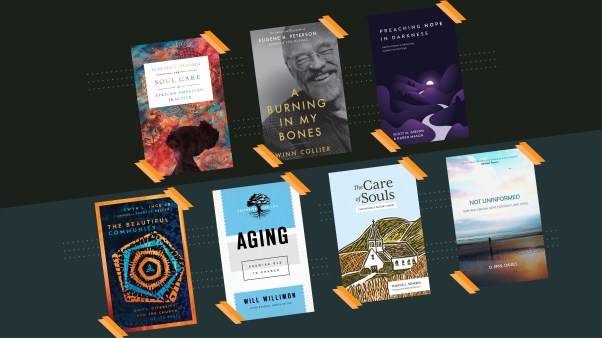
Must-have resources for multifaceted ministry.
Assembling your office team is like putting together a puzzle. To succeed, you need to find the proper combination of complementary talents. Hiring a bunch of go-getters is not the sole solution to creating a successful team. Big egos and arrogance can turn the office into a battlefield--a killer for a small company. Instead, strive for balance as you hire.
Here are the six personalities every startup needs:
1. The Dreamer: The dreamer is a motivating force in creating the company and a sustaining force every day after. The dreamer inspires, excites, and leads the company from a sky-high view.
2. The Manager: The manager takes a dream and makes it happen. They are pragmatic, reliable, and have the initiative to turn ideas into action items. It’s all about being approachable, trust-worthy, and forward thinking.
3. The Builder: The builder thinks like an architect and has a clear understanding of the company vision and knows how to create it. He or she is intuitive, bright, and inventive.
4. The Workhorse: The workhorse is happy to step up and do whatever it takes to make the company engine purr. You will never hear the words: “It’s not my job” come out of this person’s mouth. The workhorse gets things done behind the scenes.
5. The Penny Pincher: The penny pincher never commits to a cost without first considering the options. He or she is creative with budgets, doesn’t spend unnecessarily and understands the difference between need and want.
6. The Social Butterfly: The person has the ability to create connections among team members, laugh at themselves and others, and shift perspective at the right time. They are an essential ingredient to strong morale and a happy team.
This variety of personality types (with their biblical titles) is also essential for a healthy church. God supplies each church with a diversity of spiritual gifts to equip the local body to best serve the church and the community. For example, the “dreamer” has the spiritual gift of faith, the “manager” has the gift of administration, the “builder” has the gift of leadership, the “workhorse” has the gift of serving, the “penny pincher” may have the gift of giving, and the “social butterfly” the gift of encouragement or showing mercy.
Source: John Stein, “The 6 Personalities Every Startup Needs to Thrive,” Fast Company (7-27-12)
In Northern Ireland, there’s a city that’s so divided, part of the population calls it Londonderry and others calls it Derry. In this city Protestants live on the east bank and Catholics on the west bank. Many don’t like to mix; so, one of the solutions was to build a bridge. The 900-foot bridge curves like a snake and is for walkers, joggers, and cyclists. They named it “Peace Bridge.” That’s what they’re trying to do, build a bridge, build peace.
Be bridge builders in a world of walls. Work to bring social, economic, and multiethnic shalom to your community. Shalom is not just the absence of conflict, but the presence of wholeness and harmony, life as it should be.
Source: “Derry/Londonderry name dispute,” Wikipedia (Accessed 11/15/20); Mark Simpson, “New peace bridge is symbol of hope in 'stroke city'” BBC (6-24-11)
Kenneth Russell and Max Botner
The love of Jesus reaches beyond diversity to coexistence and true community.
The next 10 years will be challenging—but don’t believe the worrywarts.