Sorry, something went wrong. Please try again.
That old cell phone? Dead laptop? Gaming console from 14 years back? Britain’s Royal Mint is turning tech trash into treasure. A cellphone's motherboard, for example, contains gold, because it needs to conduct electricity well. Seventeen and a half cell phones yield enough gold to produce a wedding band.
Eshe Nelson writes in a NewYork Times article: "The mint expects to process about 4,500 tons of e-waste, which includes circuit boards from televisions, computers and medical equipment, each year." The process is arduous: "the gold is leached from the circuit boards in a patented solution, which oxidizes the gold to make it soluble. The solution, saturated with gold, goes through another chemical process to make the gold solid again. It looks surprisingly like ground coffee, but 100 grams is worth about $8,405. That powder is refined till it is 99.9 percent pure, formed into long rods, then heated and cooled to make it malleable. The result in the hands of an artist: a pair of 9-karat gold hoop earrings worth $1,000.
Possible Preaching Angle:
The intense work to refine gold is nothing compared to the refining process that God uses to refine the faith of believers.
Source: Eshe Nelson, "How an Old Laptop Is Transformed Into 9-Karat Gold Earrings," New York Times (1/1/25)
Bad days. We’ve all had them, and for many of us, it doesn’t take much to send a day spiraling into chaos before breakfast is even over.
According to a new survey, the average American knows their day is going to be bad by 8:36 a.m. Additionally, it’s not just a rare occurrence—four times a month, people expect the worst, adding up to an average of 48 bad days every year.
Mornings, it seems, are critical in setting the tone for the day. The survey highlights that common morning mishaps—such as waking up feeling sick (35%), suffering from poor sleep (31%), or starting the day with a headache (29%)—are among the top indicators of a bad day. Even seemingly minor inconveniences, like misplacing keys (26%) or leaving a phone at home (25%), can derail the entire day.
The impact of these morning disruptions is significant. Nearly half of those surveyed (48%) reported canceling plans or calling in sick after a challenging start to the day, opting to return to bed in hopes of salvaging what remains.
Possible Preaching Angle:
We have all been there, but a Christian doesn’t have to let pessimism or emotions rule their day. Beginning this new year, resolve instead, by faith, to put your day into God’s hands – “This is the day that the Lord has made, let us rejoice and be glad in it” (Psa. 118:24)
Source: Emily Brown, “Science Has Pinpointed the Exact Minute You’ll Know If Your Day Will Be Bad,” Relevant Magazine (8-20-24)
A writer admits that secularism still hasn’t found an alternative to belief in God. Lauren Jackson writes, “I knew the potency of believing, really believing, that I had a certain place in the cosmos. That I was eternally loved. That life made sense. Or that it would, one day, for sure. I had that, and I left it all.
I spent my 20s worshiping at the altar of work and, in my free time, testing secular ideas for how to live well. I built a community. I volunteered. I cared for my nieces and nephews. I pursued wellness. I paid for workout classes on Sunday mornings, practiced mindfulness, went to therapy, visited saunas and subscribed to meditation apps. I tried book clubs and running clubs. I cobbled together moral instruction from books on philosophy and whatever happened to move me on Instagram. Nothing has felt quite like [the religion of my childhood].
Jackson concludes:
But I don’t feel I can go back… I’ve been steeped in secularism for a decade, and I can no longer access the uncritical belief I once felt… [But] my spiritual longing persists — and it hasn’t been sated by secularism. I want a god… I still want it all to be true: miracles, souls, some sort of cosmic alchemy that makes sense of the chaos.
For years, I haven’t been able to say that publicly. But it feels like something is changing. That maybe the culture is shifting. That maybe we’re starting to recognize that it’s possible to be both believing and discerning after all.
Source: Lauren Jackson, Americans Haven’t Found a Satisfying Alternative to Religion, The New York Times (4-18-25)
Scripture’s take on human nature helps us cope with evil. It also gives us reason to believe.
Anxiety has become an unwelcome companion for many, creeping into everyday life with relentless persistence.
The most striking revelation is the pervasive nature of worry among younger Americans. An overwhelming 62% of Gen Z and millennial respondents report feeling constantly anxious, compared to 38% of older generations. On average, people spend two hours and 18 minutes each day caught in the grip of worrisome thoughts. This is a significant chunk of time that could otherwise fuel productivity, creativity, or personal growth.
The timing of these worry periods reveals interesting patterns. A third of respondents find themselves most anxious when alone. 30% are plagued by worries as they prepare to fall asleep. Another 17% are tormented by anxious thoughts upon waking. 12% experience peak worry while getting ready for bed.
When it comes to specific concerns:
53% of respondents cite money as their primary source of anxiety.
42% worry about their loved ones.
42% fret about pending tasks and to-do lists.
37% have health concerns
22% have sleep anxiety (22%),
19% are concerned by political uncertainties
For parents, the concerns extend far beyond personal anxieties. 77% express profound worry about the world their children are inheriting, with 34% specifically calling out climate change as a significant concern.
One parent’s raw emotion captures this generational anxiety: “Honestly, I worry that there won’t be a world for my child to grow up in.”
Possible Preaching Angle:
How many minutes a day do you spend worrying? Instead, turn your anxieties over to the Lord and pray as David did “Search me, God, and know my heart; test me and know my anxious thoughts…and lead me in the way everlasting.” (Psa. 139:23). Jesus knows your tendency to worry and he said, “Therefore I tell you, do not worry about your life… your heavenly Father knows what you need.” (Matt. 6:25-34)
Source: Staff, "Average American Spends 138 Minutes Mired in Worrisome Thoughts Every Day," Study Finds (3-31-25)
Preaching and pastoring in an age of skepticism.
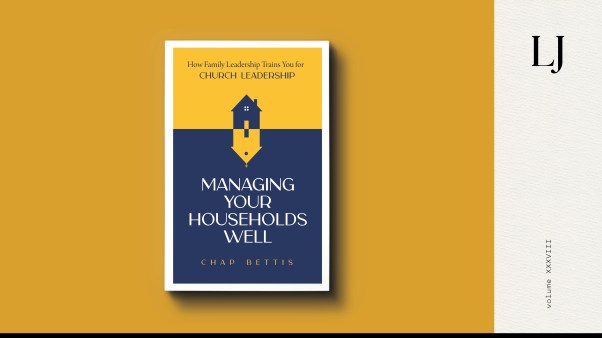
In Managing Your Household Well, Chap Bettis calls pastors to lead their families with the same intentionality they bring to their churches.
In a story that moved even seasoned doctors to tears, a young girl named Pari inspired what her neurologist calls a “sort of miracle” after her father suffered a devastating stroke. Shared by Dr. Sudhir Kumar of Apollo Hospitals in India, the story has touched hearts around the world.
When her father was hospitalized, paralyzed and unable to speak, Pari arrived with a cracked, faded pink piggy bank—her most treasured possession—and offered its contents to the doctors. “I have saved a lot of coins in this,” she said, her voice steady despite her tears. “You can use all of them to make Papa speak again.”
Moved by her love, the medical team enrolled her father in an intensive rehabilitation program that included Melodic Intonation Therapy (MIT), which uses music and melody to help restore language. Slowly, with the help of Kishore Kumar’s classic Hindi songs—favorites he once sang with his daughter—faint hums gave way to broken words.
Each day, Pari visited the hospital, sitting by his side, reminding him of their cherished game of antakshari, a common Indian parlor game where people sing with and to one another. One song in particular became their bridge through the silence: “Rona kabhi nahi rona, chahe toot jaye khilona” (“Never cry, even if your toy breaks”). Though he couldn’t yet converse, his hums were filled with affection and hope.
Then, three months later, the miracle arrived. Pari walked into the outpatient department—this time with her father beside her. He stood tall, smiling. And then, with clear words and joy in his voice, he said, “Pari, let’s play antakshari.”
It was a moment no one in the room would forget. A father reclaimed from silence. A daughter’s love, translated into healing. For these two, in this moment, their love was the most effective treatment.
God can use the smallest acts of love and faith to bring about mighty healing and restoration.
Source: Staff, “Even the doctor cried when she gave her piggy bank to save her dad. Sort of miracle happened 3 months later,” Economic Times (5-19-25)
While U.S. currency says “In God We Trust,” only half of U.S. adults have certainty about God’s existence.
When asked about their confidence in God’s existence, 50% say they know God exists and have no doubts, according to the latest General Social Survey (GSS). In 1993, 65% of Americans said they were certain God existed, and the percentage has been sliding down ever since.
Belief in God has particularly fallen among young adults. In 1993, 63% of 18- to 34-year-olds knew God existed with no doubts. Today, just 36% have the same confidence. Other age demographics have fallen, but not to the same extent. Belief in the divine among 35- to 49-year-olds is down to 49%. While the percentage of those 50 and older who have complete confidence in God’s existence remains higher than other age groups, it has dropped to 58%.
Belief in God among upper-class Americans has actually increased over the past two decades, from 49% to 53%. But it has declined in every other class designation. Middle-class belief is down from 62% in 1993 to 44%. Working-class belief has declined from 67% to 54%. And lower class belief has dropped from 75% to 57%.
Source: Aaron Earls, “Only Half of Americans Believe in God With No Doubts,” Lifeway Research (8-7-23)
Christianity is not [currently] declining in America. At the New York Times, journalist Lauren Jackson has been doing some searching, thorough reporting for a new series “Believing.” Apparently, 92 percent of Americans say “they hold a spiritual belief in a god, human souls or spirits, an afterlife, or something ‘beyond the natural world.’”
Jackson reasons that people haven’t found a satisfying alternative to religion. She reports that for the last few decades, much of the world has tried to go without God, a departure from most of recorded history. More than a billion people globally and about a third of Americans have tried to live without religion. Studies in recent years have offered insights into how that is going. The data doesn’t look good.
Actively religious people tend to report they are happier than people who don’t practice religion. Religious Americans are healthier, too. They are significantly less likely to be depressed or to die by suicide, alcoholism, cancer, cardiovascular illness, or other causes. In a long-term study, doctors at Harvard found that women who attended religious services once a week were 33 percent less likely to die prematurely than women who never attended. One researcher on the study said, that because “they had higher levels of social support, better health behaviors, and greater optimism about the future.”
Religiously affiliated Americans are more likely to feel gratitude (by 23 percentage points), spiritual peace (by 27 points), and “a deep sense of connection with humanity” (by 15 points) regularly than people without a religious affiliation.
Religion can’t just become another way to optimize your life. Some have tried. Jackson describes secular community gatherings with pop music, morality talks, free food — but “None of us became regulars.” Going for any reason other than faith itself leaves you with little reason to stick around.
Source: Christopher Green, “Another Week Ends,” Mockingbird (4-25-25); Lauren Jackson, “Americans Haven’t Found a Satisfying Alternative to Religion,” New York Times (4-18-25)
There was a small town that had been selected to be the site of a hydroelectric plant. The plan was to set up a dam across the river which would result in the submerging of the small town. The announcement of the plan was made with ample time to give all the residents there the opportunity to get their affairs in order and relocate.
In the intervening months, something strange took place. House upkeep stopped. Community improvement ceased. Infrastructure, basic lawn care, all came to an end. The town looked abandoned long before any of the residents had moved away.
One resident explained the phenomenon in these terms: “Where there is no hope for the future, there is no power in the present.”
That is a life lesson worth remembering. Hope for tomorrow produces strength for today. We have living hope because of the resurrection of Christ (1 Pet. 1:3) and the unshakeable promises of God (Heb. 6:18-19).
Source: H.B. Charles, “Hope to Face Any Situation,” Dallas Theological Seminary, 2024 Spiritual Life Conference (1-24-24)
Imagine the thrill of opening your mailbox and finding a crisp, white envelope waiting for you. The anticipation builds as you tear it open, as you discover a check nestled inside. It's more than just a piece of paper; it's a tangible promise that money is waiting you when you cash it. The check might be from an employer, a tax refund, or an unexpected birthday gift from a grandparent.
While writing checks may be less popular than it used to be, 54% of Americans still wrote a check in the past year. In fact, according to a recent survey by GOBankingRates, 17% of Americans are still writing checks on a monthly basis — and 23% of Gen X Americans are still sending checks on a monthly basis. In 2021 the Federal Reserve reported $27.23 trillion in checks were written.
Now suppose in the busyness of life you forgot about the check or misplaced it, only to find it months later. You begin to wonder, is this thing still any good? If grandma had sent cash, there would be no question, since cash is always valuable. But, how long is a check good for? The check was a promise of cash, but is the promise still any good?
Most old checks aren't valid forever. A personal check is generally good for at least six months. If you don't deposit a check right away, you may not receive the money even if your bank agrees to accept the check. That's because the account the check was drawn on may have been closed or not have insufficient funds to back the check.
The bottom line is that cashing a check promptly ensures that you can access the funds without issues, such as the check bouncing or having it go stale.
This would make a good introduction to a sermon on the enduring promises of God which never go out of date, or cannot be redeemed because of insufficient funds or the account being closed. God will never refuse to honor his promises (Rom. 9:6-8, 2 Cor. 1:20). But it is a good idea to claim God’s promises promptly to begin enjoying his gift to you.
Source: Adapted from Jacob Wade, “Many Still Regularly Write Checks,” Yahoo Finance (2-6-24); Epson, “Checks are Not Dead Yet,” Epson blog (4-9-24); Marcia Geffner, “How Long Is a Check Good for?” US News (2-22-24)
At the beginning of 2024 there was the launch of the world's largest cruise ship called The Icon of the Seas. CNBC called it the “Biggest, Baddest Ship on the Planet.” The cruise ship is five times the size of the Titanic and measures 1200 feet from the bow to the stern (That is more than three football fields) and weighs 250,800 metric tons!
The Icon of the Seas is a small floating city. There are a total of 20 decks, eight neighborhoods, seven swimming pools, six waterslides, forty bars and restaurants, an ice rink, and even a 55ft indoor waterfall!
How does a monster ship like the Icon stay afloat?
It has to do with weight distribution. “Cruise ships float because their mass is lower in relation to the volume of water they’re sailing on.” These differences in weight distribution keep these modern marvels buoyant.
Life can bring many challenges and we can feel like we are in danger of sinking. The big question is what or who is keeping you from sinking?
Source: Editor, “How Do Cruise Ships Float?” Cruise Nation (2-15-24); Sam Meredith, “Biggest, Baddest Ship on the Planet,” CNBC (1-29-24)
Most people believe that evolution provides an adequate account of human origins. But for substantial numbers around the world, that doesn’t preclude divine direction. A new survey spanning North America, South America, and Europe found that 13 to 29 percent of people believe in God-guided evolution.
People Who Say Humans Evolved in A Process Guided by God:
13% Germany
22% United Kingdom
25% Argentina
29% United States
Source: Editor, “Those Whom God Evolves,” CT magazine (April, 2024), p. 16
For years, Ben Affleck wrestled with alcohol addiction. A consequence, he says, of having an alcoholic father. But the actor shared that he was in a much better place now and doesn't think he will ever return to that way of life.
It is no secret that substance abuse is a pervasive problem in Hollywood. Tragic stories are common. So, how did Affleck escape this fate?
In an interview he credited his Christian faith. Affleck says his Christian faith in later life has allowed him to accept his flaws and imperfections as a man. He said:
The concept that God, through Jesus, embraces and pardons all of us - from those we admire to those we might judge or resent - is powerful. If God can show such boundless love, urging us to love, avoid judgement and offer forgiveness, it serves as a profound model of how we should strive to be.
What I truly appreciate, even as I still grapple with my faith and beliefs, as I think all people do at times, is the profound idea that we all have imperfections . . . It's our journey to seek redemption, embrace divine love, better ourselves, cherish others, refrain from judgement, and extend forgiveness.
Source: Bang Showbiz, "The Concept that God. . . Pardons All of Us Is Powerful," Contact Music (10-13-23)
Mountain-moving faith is a faith that accepts only God can resolve ‘this kind.’
Controversial activist Ayaan Hirsi Ali became well known when she published her 2007 memoir Infidel, which was an account of her life as a Muslim woman and her fight against radical Islam. She made headlines worldwide when she converted to atheism, receiving numerous death threats. In November 2023, she announced her conversion to Christianity. Her reasons address in part what is happening in the world today. She writes:
Atheists were wrong when they said rejection of God would usher in a new age of reason and intelligent humanism. But the 'God hole'—the void left by the retreat of the church—has merely been filled by a jumble of irrational, quasi-religious dogma. The result is a world where modern cults prey on the dislocated masses, offering them spurious reasons for being and action. This is mostly by engaging in virtue-signaling theater on behalf of a victimized minority or our supposedly doomed planet. The line often attributed to G.K. Chesterton has turned into a prophecy: 'When men choose not to believe in God, they do not thereafter believe in nothing, they then become capable of believing in anything.'
In this nihilistic vacuum, the challenge before us becomes civilizational. We can’t withstand China, Russia, and Iran if we can’t explain to our populations why it matters that we do. We can’t fight woke ideology if we can’t defend the civilization that it is determined to destroy. And we can’t counter Islamism with purely secular tools. To win the hearts and minds of Muslims here in the West, we have to offer them something more than videos on TikTok.
The lesson I learned from my years with the Muslim Brotherhood was the power of a unifying story, embedded in the foundational texts of Islam, to attract, engage, and mobilize the Muslim masses. Unless we offer something as meaningful, I fear the erosion of our civilization will continue. And fortunately, there is no need to look for some New Age concoction of medication and mindfulness. Christianity has it all.
Source: Ayaan Hirsi Ali, “Why I Am Now a Christian,” The Free Press (11-14-23)