

Sorry, something went wrong. Please try again.
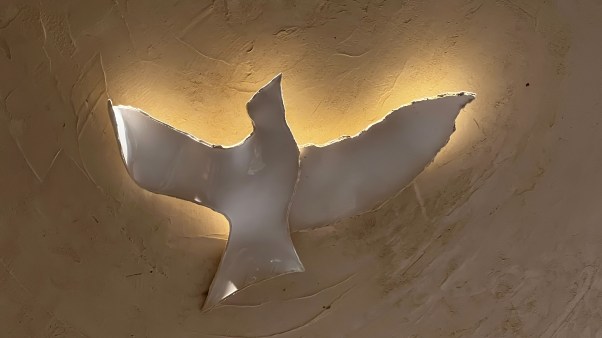
In an interview in Esquire magazine, actor Denzel Washington said, “The biggest moment of my life was when I was filled with the Holy Spirit. It happened in the West Angeles Church of God in Christ, Crenshaw Boulevard, Los Angeles.” He went on to describe what it’s like to follow Jesus today, especially in the ethos of Hollywood:
Things I said about God when I was a little boy, just reciting them in church along with everybody else, I know now. God is real. God is love. God is the only way. God is the true way. God blesses. It’s my job to lift God up, to give Him praise, to make sure that anyone and everyone I speak to the rest of my life understands that He is responsible for me. When you see me, you see the best I could do with what I’ve been given by my Lord and Savior. I’m unafraid. I don’t care what anyone thinks. See, talking about the fear part of it—you can’t talk like that and win Oscars. You can’t talk like that and party. You can’t say that in this town.
I’m free now. [Faith in Jesus] is not talked about in this town. It’s not talked about… It’s not fashionable. It’s not sexy… But my faith has always informed the roles I choose. Always… Even in the darkest stories, I’m looking for the light.
Source: As told to Ryan D'Agostino, “The Book of Denzel,” Esquire (11-19-24)
The late pastor and preacher Tim Keller truly lived out the teachings in his popular book, The Freedom of Self Forgetfulness: The Path to True Christian Joy. In other words, he demonstrated true humility and teachability.
For instance, in 2011, Pastor Tim Cox had accompanied Keller on a trip to South Korea. Cox reflected on the trip later and wrote:
I traveled with Tim to Seoul. Tim was speaking at a conference for pastors, and Tim kept saying ‘Look at what Jesus has done for you! If you see that, you will be changed!’ At one point I asked Tim if even that could be a legalistic thing. That I’m not looking hard enough at Jesus, so I just need to pull up my socks and try harder. When in reality, the Holy Spirit does that for me.
Tim told me, ‘Yes, of course, only the Holy Spirit can do that!’
That was the end of our conversation. The next day, Tim got to the part of his talk where he said ‘if you look at what Jesus did for you . . .’ and he looks straight at me, ‘then by the power of the Holy Spirit, you’ll change!’
Source: Michael Wear, “The Suprise of Tim Keller,” Comment, (5-22-23)
Giant redwoods are the most massive individual trees on earth. The redwood can grow to 270 feet tall and 25 feet in diameter. You might think that something that huge must have an incredible root system that goes down deep in order to stand that tall. This is not the case at all. The redwood tree has no tap root and remarkably shallow roots—only five or ten feet deep.
It seems to violate the laws of physics that they can stay upright for hundreds – even thousand – of years. That is, until you know one more fact: the redwoods grow in thick groves because their shallow roots are intertwined, and over time, fused together. They start out as individuals and become one with others as they mature and grow.
So, beneath the surface of these incredible statuesque trees are roots like an army of men who have their arms interlocked and supporting each other. They are preventing the adversaries of life from knocking each other down.
1) Holy Spirit, indwelling; Paraclete - Individual believers are supported and strengthened by the indwelling Holy Spirit who stabilizes us against temptation and the trials of life; 2) Body of Christ; Community; Support - The mutual support of our brothers and sisters in Christ can keep us upright when we otherwise might fall.
Source: Arthur C. Brooks, From Strength to Strength (Penguin, 2022), page 112; Staff, “What Kind of Root System Do You Have?” John Maxwell Team (Accessed 8/7/24)
Only a fifth of Americans have experienced “true comfort” in the past 24 hours, according to a new survey. The poll of 2,000 Americans reveals that true comfort—feeling completely relaxed or at ease—can be hard to come by, as just 21% say they’ve been able to reach this state.
The survey also finds that the average American only feels comfortable for a third of the day—roughly eight hours.
The survey reveals that more than anything else, taking a nap (47%) is the top way respondents find true comfort. This is followed by taking a walk outside (41%) and having a spa day (36%), rounding out the top three ways respondents prefer to find comfort in their day.
When temperatures drop, respondents say they also find true comfort in taking a hot bath (34%) and creating the perfect temperature at home (25%)—which is 72 degrees Fahrenheit.
The Christian does not look for unreliable temporary comfort in the things of this world but genuine and lasting comfort through our Father in heaven, who personally comforts us (2 Cor. 1:4), with eternal comfort (2 Thess. 2:16), through the Holy Spirit (Acts 9:31), through his promises (Ps. 119:50), and by means of his rod and his staff (Ps. 23:4)
Source: Patrisha Antonaros, “Only 21% Feel True Comfort Each Day, Survey Reveals,” StudyFinds (3-23-24)
Here's the most famous place you've never heard of. It's St. Peter's Church Hall in Liverpool, England. It looks like a typical church gym except for the heavily-timbered cathedral ceiling and missing basketball hoops.
St. Peter's was having a church social with a local music group performing. During a break in the music, Paul, a 15-year-old guest, played songs on the guitar and piano impressing the teen band leader, John. A few weeks later, John Lennon invited Paul McCartney to join the Quarrymen, later known as The Beatles. That first meeting was July 6, 1957 - a historic place and moment in music but nobody knew it.
The Liverpool Museum reflected, "That meeting didn't just change the lives of John and Paul, it was the spark that lit the creative (fuse) on a cultural revolution that would reverberate around the world."
St. Peter's Church Hall is a temple where two music greats met. The stage from the hall is almost an "altar" since it was moved to a museum in Liverpool.
1) Altar; Worship - Christians also worship at an altar, but it is exclusive to New Testament believers (Heb. 13:10); 2) Temple - The New Testament names three places as the Temple of the living God on earth: 1) The physical body of Christ (Jn. 2:19; Matt. 26:61; Mark 14:58); 2) The church, the body of Christ (1 Cor. 3:16-17); 3) The body of the individual believer (1 Cor. 6:19).
Source: Christopher Muther, "A New Hampshire Beatles Fan Bought George Harrison's Childhood Home,” The Boston Sunday Globe (9-4-22) pp. N1, N6.
Molly Lee was a passenger on a flight from Charlotte to New York when another passenger made it clear she was not comfortable. She said it was at that point the woman began crying. One of the flight attendants overheard the woman and immediately went to comfort her and help her overcome the anxiety she was experiencing.
Lee said, “He just was so reassuring, so calming and said, ‘You know what? I got you.’ 'I'm gonna be there for you, just anything you need to let me know.’ With every little noise, she'd be like, 'What's that?' He's like, 'That's okay. That's just the jet bridge pulling away' or whatever the case may be. And that really helped her. He didn't have to do that, you know, and to just see someone extend their heart in that way to a stranger was just beautiful to me, and I wanted to capture it.”
Lee said the flight attendant, Floyd Dean-Shannon, sat next to the woman for nearly 10-minutes just holding her hand and reassuring her that she was safe. She captured the moment in a photo and posted it to her Facebook. The post has since been shared more than 11,000 times.
1) Experiencing God; Presence of God – Jesus told us never to fear because the Father’s full attention is on us, even to numbering the hairs of our head (Matt. 10:29-30); 2) Comforter; Holy Spirit - The disciples were full of fear to hear that Jesus would be leaving them. But he reassured them by saying, “And I will ask the Father, and he will give you another Helper, to be with you forever” (John 14:16; John 16:7)
Source: Haley Yamada, “Flight attendant goes viral for helping a nervous passenger,” 6ABC.com (1-25-23)
When we think of strength in God’s creation, we might think of elephants but rarely would we think of an octopus. After all, an octopus doesn’t even have any bones, so how could it be very strong? Sy Montgomery writes in The Soul of an Octopus:
Here is an animal with venom like a snake, a beak like a parrot, and ink like an old-fashioned pen. It can weigh as much as a man and stretch as long as a car, yet it can pour its baggy, boneless body through an opening the size of an orange. It can change color and shape. It can taste with its skin.
Yet the octopus is strong, very strong. An octopus’s muscles have both radial and longitudinal fibers, thereby resembling our tongues more than our biceps, but they’re strong enough to turn their arms to rigid rods—or shorten them in length by 50 to 70 percent. An octopus’s arm muscles, by one calculation, can resist a pull one hundred times the octopus’s own weight.
Our creative, powerful God gives gifts of strength throughout his creation even in the most unlikely of places. So how surprising should it be that God gives us strength when we need it to serve him and to resist temptation?
Source: Sy Montgomery, The Soul of an Octopus: A Surprising Exploration into the Wonder of Consciousness (Simon & Schuster, 2015), pp. 40-42
Tesla’s latest Full Self-Driving software now lets you decide how much of a “jerk” you want to be on the road, says Yahoo. The Full Self-Driving (FSD) beta lets you choose from three driving “profiles” that dictate how the car will react to certain situations on the road. Each mode, “Chill,” “Average,” and “Assertive,” varies in terms of aggressiveness (and potentially safety).
An image posted to Twitter gives us a more detailed glimpse at what this actually means. In the description beneath the “Assertive” option, Tesla notes the vehicle will “have a smaller follow distance” and “perform more frequent speed lane changes.” The vehicle will also “not exit passing lanes” and “may perform rolling stops.” It’s not entirely clear whether this means cars won’t come to a full stop at stop signs.
In “Chill” mode, the vehicle will “have a larger follow distance and perform fewer speed lane changes,” while “Average” mode means the car “will have a medium follow distance and may perform rolling stops.”
It’s hard to tell just how much these FSD profiles change the way the vehicle drives, and if they push the limits of safety, especially when traveling in the rain or snow. If the descriptions of these profiles are accurate, this means that a Tesla in “Assertive” mode may follow behaviors that tend to be more dangerous no matter the car you’re in.
At birth we are pre-programmed for Assertive mode in life since we are programmed by the flesh. When we are given new life by the Holy Spirit, he begins implementing a new program of Chill mode through the fruits of the Spirit (Gal. 5:16-23).
Source: Emma Roth, “Tesla’s ‘Full Self-Driving’ beta has an ‘assertive’ driving mode that ‘may perform rolling stops’,” The Verge (1-9-22)
We all know that breathing is essential to life. Each of us takes about 20,000 breaths each day. What is amazing about breathing is that it is an involuntary action—we don’t even think about it. Our brains are programmed to instinctively monitor the balance between oxygen and carbon dioxide levels.
When we breathe deeply, our brains send a message to the rest of our bodies to calm down and relax. When we breathe, we can intentionally lower our heart rates and bring down our stress levels.
According to the Mayo Clinic, breathing "may help ease symptoms of stress-related disorders and mental health conditions such as anxiety, general stress, depression and post-traumatic stress disorder."
With all of this in mind, Apple has created a notification App for their watch called, Breathe. The App reminds users to be mindful and focus on what is important in the moment.
The problem with the Apple watch is that notifications can be turned off or simply ignored. We can do the same thing with the gift of the Holy Spirit, who is the very breath of God.
Source: Zac Hall, “Apple’s Breathe app on the Apple Watch has been confusing people for years,” 9to5 Mac (1-6-20); Dalvin Brown, “Here's why your Apple Watch tells you to breathe all the time,” Tech Explore (8-30-19)
My friends lost their home when a tornado carved through their neighborhood. There’s a lonely pine tree still standing in the side yard beside where the house used to be. The deep pit of dirt that was their basement is now laid bare, exposed under the Tennessee sky.
Workers have dug an outline around the edges of a new house that will soon rise where the old house once stood. Over the past few months, as my friends have gotten the architectural plans together, rogue clusters of wildflowers have grown up all around. Purple, white, and green shoots bursting from wind-blown seeds have taken up residence in the basement soil that had long been in darkness.
There’s comfort in seeing these wildflowers grow where a home has become a memory. New life still blooms amid uncertainty, even when we don’t fully understand what’s happening to us. Wildflowers do not apologize for our loss, nor do they diminish our grief. But their gentle sway reminds us that when our best plans seem formless and void, God’s Spirit is hovering near, calling something good to grow.
By the time these words are published, the wildflowers that grew in my friends’ dirt basement will be covered over by a new foundation. Inside that new foundation will be a new room with an improved tornado shelter. A new beginning in a stronger home will someday be a reality.
The Holy Spirit is steadily working toward this goal for all of us—a new home that cannot be touched by fire or storm. We will live in a brand-new world (Rev. 21:1) in brand new bodies (2 Cor. 5:1-5).
Source: Sandra McCracken, “Cultivating Chaos,” CT Magazine (November, 2020), p. 31
The American Sleep Apnea Association estimates that 22 million of us suffer from some form of sleep apnea. This is a potentially serious disorder in which we repeatedly stop breathing in our sleep. The long-term effects of sleep apnea include high blood pressure, stroke, heart attacks, and is a risk factor for dementia.
CPAP machines are the most widely used device for treating moderate and severe sleep apnea. Through a mask and tube the CPAP machine pumps a continuous stream of oxygenated air allowing you to breathe continuously while you sleep. When you first start using a CPAP machine, the pressure of the rushing air can feel suffocating, but you eventually get used to it.
Two of the most common words translated as "spirit" in the Bible can also be translated "air." In Ephesians 5:18 the present passive imperative verb translated "be filled" tells us that we are commanded to be continuously filled with the Holy Spirit. Unfortunately, Christians suffer from Spirit apnea, a serious disorder in which we repeatedly stop breathing in the life-giving Spirit of God. It's a congenital defect borne out of our spiritual depravity. Spirit apnea, like sleep apnea, can have a grave effect on our hearts, minds, and actions.
Spiritual disciplines are like CPAP machines. They supply us with a continuous flow of God's life-sustaining Spirit. Some of these disciplines include prayer, fasting, Bible reading/meditation, worship, giving, and evangelism. At first these disciplines can seem overwhelming. Over time though, you get used to them and begin to notice the effects.
Source: Staff, “Sleep apnea is a dangerous condition,” SleepApnea.org (Accessed 4/9/21)
Pastor David Hansen writes of our need to rely on the Holy Spirit:
I live near a river. Fish live in it, and the willowy river bottom is home to mice and mountain lions. From my kitchen window I watch bald eagles, ospreys, golden eagles, and hawks. These birds of prey ride the wind. It doesn't take much energy on their part. However, when geese fly, they must (expend energy by) flapping their wings, but birds of prey soar by catching currents.
Birds of prey seek thermals; columns of warm air that rise from the earth filled with energy. The birds glide on the heated currents of air. A good thermal can lift them high into the sky without so much as a single flap of their wings. From their higher place they can see more ground and can fly longer and farther, and when the time comes to dive on their prey, they can plummet with great speed.
As I watch these birds, I think of pastoral ministry. I too seek thermals. The Spirit lifts, gives vision, direction, and power. Ministry is riding on the free winds of the Spirit that lift us to heights we cannot climb on our own. We can't stay in the air very long on our own strength, but we can seek thermals. Our soul-wings are made large that we might catch the Spirit.
Although this passage is written to pastors, the illustration itself can easily be directed toward our church members encouraging them to seek the filling of the Holy Spirit through prayer.
Source: David J. Hansen, The Art of Pastoring: Ministry Without All the Answers, (IVP books, 2012), p. 51
Andrew Wilson writes in an article for Christianity Today:
When you’re sailing, is “being filled with the wind” an experience or a habit? Both. Catching the wind on a sailboat is clearly an experience. I vividly remember that first feeling of being seized and carried forward by a mighty power from elsewhere. But it is also a habit. If you don’t put the sails up, pull the mainsheet fast, or adjust the jib, you won’t go anywhere, even if the wind is blowing powerfully.
Sailing, in that sense, is the art of attentive responsiveness to an external power. You rely entirely on the external power to get you anywhere. Sailors never imagine themselves to be powering the boat by their own strength. But you also have to respond attentively to whatever the wind is doing, which comes through cultivating awareness, skill, and good habits.
Being filled with the Spirit involves the same both-and. We pursue the experience of the Holy Spirit - Paul uses the language of filling and drenching, drinking and pouring. We rely entirely on the Spirit’s immeasurable power, rather than our own strength, to get us anywhere. But we also develop habits. We respond attentively to what he is doing in and through us, a capacity that comes through awareness, skill, and practice. Paul mentions four such habits in subsequent verses: teaching one another, singing, giving thanks, and submitting to one another (Eph. 5:18–21).
Source: Andrew Wilson, “Paul Says to ‘Be Filled with the Spirit.’ How Do We Obey a Passive Verb?” ChristianityToday.com (7-21-19)
Some dads like to build soap box derby cars with their sons. But Sterling Backus and his eleven-year-old son Xander had something more ambitious in mind: a full-scale Lamborghini Aventador.
Xander says he got the idea from driving the car in an Xbox racing game. Backus is a physicist with extensive experience using 3-D printers. He is building the Italian supercar with 3D-printed parts made from specs from a replica toy. Backus said, “These were all individually printed and then glued together.” The Backus clan has been at it for nearly two years, with Xander’s sisters helping to pitch in. The process includes not only printing the pieces, but wrapping them in carbon fiber and coating them with epoxy.
An Aventador SVJ typically costs about $600,000. Their homegrown replica is likely to top out at $20,000, less than the cost of a brand-new full-size sedan. All it will need is a VIN to be street legal.
Backus expects to turn heads at the school drop-off line. But his real motivation is not jealousy, but inspiration--to spark more kids’ interest in math, science, and engineering. Xander said, “You may hate math or … science … and you may not like art, but it all comes together with this one project.”
Potential Preaching Angles: Just as Jesus participated with the Father during the holy act of creation, so we have a chance to participate with God in his activity throughout the world.
Source: Brian Hooper, “Colorado father and son make their own Lamborghini with 3D printer” UPI (10-4-19)
Once a man planted a garden and was delighted when shoots emerged. Every day he watered and weeded, and his garden grew until he was ecstatic to see plants bearing produce. However, a few days later, he went to his garden and was dismayed. Every plant showed evidence of hungry rodents and rabbits that had raided his crop. So he decided to erect a fence.
A few days later, the man again went to his garden and saw the same thing. So he put up another fence, another, and another. Every time he checked, he found vermin had raided the garden. Finally he realized critters could go over, through, or under each fence. So he built a brick wall with a deep concrete foundation.
Weeks later, he climbed the garden wall and was horrified to find it was choked with weeds. The ground was cracked, the plants wilted, and worst of all, his crop gone. Trusting in the wall’s protection, he had forgotten to tend the garden. He failed to realize the wall was blocking the sun’s rays. He also completely overlooked the greatest threat to his garden: the animals that had been inside all along.
How many Christian leaders trust in similar walls? Our carefully built boundaries erected to protect us from threats to our moral well-being, to our relationships, or simply to manage our time? Just relying on rigid systems won't work. They may even lead us right into the sin we’re hoping to avoid.
We already have boundaries in God’s law. God’s law is good but cannot save us. If those boundaries are not enough to transform us, why do we believe our own rules will be enough to decrease our desire to sin?
Possible Preaching Angles: Accountability; Legalism; Holy Spirit; Sanctification; Word of God – Boundaries can be of some help but they will not reform us or deal with sin. The most effective protections are walking in the power of the Holy Spirit, the daily intake of God’s Word, and open accountability with fellow Christians.
Source: Amy Simpson, “When Moral Boundaries Become Incubators for Sin,” CT Pastors (March, 2019)