Sorry, something went wrong. Please try again.
In 1989 [in Los Angeles], Mother Teresa visited some homeless Latino men living in a church-sponsored shelter program. Mother Teresa expressed the hope that people in Los Angeles would find housing, food, and work for these men.
Someone asked if she realized that it was against the law for American citizens to employ illegal aliens or offer them shelter. Mother Teresa replied, "Is it not breaking the law of God to keep them on the streets?"

Source: Marita Hernandez, “‘A Tender Love’: Mother Teresa Brings a Message of Hope to Homeless Latino Youths in Los Angeles,” LA Times (2-1-89)
Dilli Lumjel gave his life to Jesus on May 4, 2011, at 1:33 a.m. Earlier that day, he had performed a Hindu funeral service for his father-in-law in a refugee camp in eastern Nepal, where he lived with more than 12,000 other refugees.
As was the custom, Lumjel spent the night at his wife’s uncle’s house. Both of Lumjel’s parents-in-law had recently converted to Christianity. That night he had a vision: His mother-in-law approached him and shared the gospel, stating, “If you enter this house, you have to believe in Jesus.” Then he saw a flash of lightning from heaven and heard a voice saying, “What you are hearing is true; you have to believe.” In the dream, he knelt down crying and committed his life to Jesus.
When he woke up, his face was wet with tears. Lumjel called a local pastor and told him he had had a dream and was now a Christian. The news shocked his family of devout Hindus. He said, “Everybody—my relatives, my wife, sisters—they all woke up asking, ‘What happened to Dilli? Is he mental? He says he’s a Christian!’”
The next day, the pastor explained the gospel to Lumjel and his wife. The two committed their lives to Jesus. A day later, Lumjel began attending a monthlong Bible school in the refugee camp. Then church leaders sent Lumjel out to preach the gospel to other refugees. Several months later, he became a church deacon, then an elder.
One year later, Lumjel arrived in Columbus, Ohio, as part of a massive resettlement of about 96,000 ethnic Nepalis expelled from their home of Bhutan to the United States. There he joined Yusuf Kadariya in pastoring a group of about 35 Bhutanese Nepali families. As more Bhutanese Nepali refugees settled in Columbus and the group brought more people to Christ, the church continued to grow.
Today, Lumjel is a full-time pastor at Emmanuel Fellowship Church in Columbus. On a wintry Sunday morning in December, about 200 people streamed into the sanctuary, greeting one another with a slight bow and “Jai Masih,” meaning “Victory to Christ.”
God is bringing the nations to our neighborhoods here in America and is bringing many to faith in Christ. We can carry out the Great Commission in part by welcoming them with Christian love and sharing the gospel to those with hungry hearts.
Source: Angela Lu Fulton, “Refugee Revival,” CT magazine (April, 2023), pp. 46-55
Wayomi and Poornima Rathnayake are trying to shine a light onto negligence and corruption in the Japanese immigration system after their older sister Wishma died in a detention facility under mysterious circumstances.
In 2017, Wishma moved from her Sri Lanka hometown to a suburb of Tokyo, on a student visa. Her plan was to take language classes and eventually earn money as an English teacher. Her sister Wayomi said, "She never told us or gave us a sign that things weren't going well for her.” They first they learned of her sister’s trouble when the Sri Lankan embassy in Tokyo called to inform them of her death.
In shock and unsettled grief, the sisters traveled to Japan to find the answers behind their sister’s death. Wishma had been expelled from the language program and began working in a factory. Later that year, she applied for asylum, but her claim was denied, making her an illegal immigrant.
Eventually, she came to police and asked for help traveling to the immigration bureau in Nagoya, where she eventually met with officials. Her pleas for help were rebuffed, however, and Wishma spent the final seven months of her life in indefinite detention.
When the sisters tried to learn the details of her sister’s death, immigration officials initially tried to stonewall them, denying wrongdoing and refusing to show any video footage. But once the case was championed by activists advocating for reform in the Japanese immigration system, officials relented and released the footage. It showed Wishma sickly, begging for help from guards who refused her assistance.
Researchers say that the problem stems from a lack of accountability. In contrast to other countries, in Japan the immigration process is managed solely by the immigration agency--there is no court involvement. This lack of judicial review has resulted in a “black box” process, with no oversight.
Christians are called to show hospitality to foreigners. All people are made in God's image, and God is honored when God's people fight to preserve the inherent dignity and worth of everyone.
Source: Emiko Jozuka, “Her dream to teach English in Japan ended with a lesson for the country,” CNN (12-4-21)
In CT Magazine, Carlos Ferrer shares his journey from communist Cuba to faith in Christ:
From the earliest time I can remember, I had an intense longing for peace. Born in Havana, Cuba, in the early 1950s, I was aware from a young age that our country was in a constant state of violence. At night, it was common for our family to hear gunfire and bombs going off in the distance. These were the beginning years of Fidel Castro’s Cuban Revolution.
On January 8, 1959, Castro marched into the streets of Havana, and I thought peace had finally been achieved. It wasn’t long, however, before ordinary Cubans began to grasp the true nature of the new communist regime. The government started taking over farmland and businesses, which roused a movement dedicated to overthrowing Castro.
Seeing no future on the island, we decided to make our escape later that year, boarding a commercial ship headed for Veracruz, Mexico. We left in the middle of the night, taking nothing but the clothes we were wearing. My grandfather had some distant cousins living in Mexico City. After we landed in Mexico, they took us into their home for a few months.
In April of 1962, members of my immediate family received resident green cards, allowing us to enter the United States legally and we left for Miami. Then a breakthrough happened: A Baptist church in California answered my father’s application to relocate from Miami.
This church sponsored our family so that we could begin a new life in Santa Barbara. Its generous people found a job for my dad, rented us a house for six months, and supplied us with basic necessities. I couldn’t help but wonder what was motivating these acts of compassion. Why would these people display such love and generosity when we were all but strangers? The question lingered with me for years.
I decided to attend the University of Texas in Austin. As a student, I was confronting some of the biggest questions of life, questions about career, family, and faith. One day I heard a knock on my dorm room door. I opened it to find two students, who told me they were sharing their faith in God with others. They asked the question I most needed at that juncture: “Would you want to have a relationship with Christ, who wants to bring you inner peace and eternal salvation?”
I immediately said yes, and we prayed together. Soon thereafter, I thought back to the people of that Baptist church in California, and a light bulb came on in my brain. Why had they helped us? Now it made perfect sense: Because Jesus had loved them so abundantly, they wanted to share that love with others … through their generosity and kindness.
A few years later, the Home Mission Board of the Southern Baptist Convention (now the North American Mission Board) came calling, offering the position of financial controller. After taking the job, I heard that my new employer had been involved in helping resettle Cuban refugees in the 1960s. I asked if, by chance, the organization had worked with any churches in California.
The leader of the mission board’s refugee resettlement office called me over. He was holding a file folder. With tears in his eyes, he said, “Carlos, this is the church that sponsored your family. This is your file.” You can imagine my complete astonishment. What an amazing path the Lord had prepared for me years before I even considered inviting him into my life.
Nearly half a century has passed since my decision to follow Jesus, and I have no regrets. I am eternally thankful for the people God placed in my life to bring me the peace I always desired.
Source: Carlos Ferrer, “Fleeing Castro, Finding Christ,” CT Magazine (November, 2019), pp. 103-104
Laurie Fenby, was shopping at a garage sale in Rochester, New York and as she was leaving, she found a wallet on the ground. She looked inside and found a Jamaican driver’s license, some American cash, and some Jamaican cash. She tried all the usual ways to locate the man, whose name was George.
She couldn’t find him through Google or Facebook and so she asked for suggestions through Nextdoor, a community website. Laurie received a lot of ideas and responses. One lady suggested that she contact a little store that is known to have many Jamaican migrant workers as clients. Laurie called the store and found that yes, indeed, there was someone named George who lost his wallet. She suggested that the owner contact George and have him call her. When George contacted her, he was able to identify all the contents of the wallet and Laurie was able to return it.
But it didn’t stop there. Laurie asked George, “What do you and the migrant workers need?” He said they could use some warm clothes. Laurie immediately contacted the Nextdoor community and was able to organize a clothing drive. She received lots of T-shirts, sweatshirts, shoes, and other supplies.
Recently Laurie was able to meet George and the other migrant workers in Rochester, and she joined them to pick apples together. They’re so thankful to Laurie and her friends—and none of this community-building or friendship would have happened if the wallet had stayed in George’s pocket.
Source: Editors, “There Are Still Honest People in the World – And That Honesty Can Lead to ‘Miraculous’ Outcomes,” The Good News Network (10-2-21)
When Jessica Rocha set out to celebrate her graduation from the University of California San Diego, she took a photo. And like many Instagram influencers often do, Rocha was in a field. But instead of being in a cute outfit with stylish accessories, Rocha was in her graduation gown. And her parents were on hand for the occasion.
Central to the importance of the shot was its location, and the way that it demonstrated her family heritage. In the photo, Rocha and her parents stood in the same fields where all three of them had toiled as migrant workers, planting and harvesting, for years and years. According to Rocha, after her parents emigrated to the US from Mexico they required her to work in the fields as way to remind her about the value of getting an education. During her high school years, she often worked the overnight shift with her father. They would plant strawberries late through the evening and into the morning. Rocha barely got enough sleep to take the bus to school in the morning.
Rocha took the photo to honor her parents for the way they sacrificed so that she could pursue her education. She said, “Nobody thinks about nor sees what happens behind a vegetable you grab at the grocery store. But behind it is someone who breaks their backs every day working in the fields."
Even after she made it into college, Rocha still worked the fields on weekends and during school breaks. She credited her parents for the motivation. “Many times I wanted to give up, but my parents and their pieces of advice and support were the reason I kept going. If it wasn't for how my parents raised me I don't know who I would be today."
1) Honor your parents for the sacrifices they made in raising you and their lasting influence in your life; 2) It's a blessing to look back and see the places from which God has brought us; it's also necessary for us to remember God's power and continue to trust in God's provision.
Source: Christopher Brito, “College graduate honors her parents with photos in fields where they worked,” CBC News (6-16-21)
Recently, CBS Evening News anchor Norah O’Donnell traveled to Prairie Chapel Ranch to visit with former president George W. Bush and his wife Laura. The occasion? To celebrate the publication of a compilation of original portraits painted by the former president, and to spark a conversation around the subject of those portraits--immigrants to the United States.
When pressed upon the subject of immigration, Bush demurred, but eventually shared his thoughts:
I don't want to be prescriptive. I don't want to, you know, tell Congress how to do this or that. I do want to say to Congress, “Please put aside all the harsh rhetoric about immigration. Please put aside trying to score political points on either side.” I hope I can help set a tone that is more respectful about the immigrant, which may lead to reform of the system.
President Bush says he’s speaking out to help turn the temperature down on the debate:
The problem with the immigration debate is that one can create a lot of fear: They're comin' after you. But it's a nation that is willing to accept the refugee or the harmed or the frightened, that to me is a great nation. And we are a great nation.
Despite the hoopla over his book’s release, the former President is realistic about its prospects for potential policy proposals:
It doesn't [change policy]. But it's a part of hopefully creating a better understanding about the role of immigrants in our society. Mine is just a small voice in what I hope is a chorus of people saying, “Let's see if we can't solve the problem.”
Not only are each of us God's handiwork, but so are others who potentially come to us for help. We must be vigilant to guard against false images of people for the purpose of spreading fear. Instead, we honor God as we pursue avenues for peace and flourishing for all of God’s children.
Source: Staff, “George W. Bush on painting a new vision of immigrants,” CBS (4-18-21)
Throughout US history, the church has had a complicated relationship with the “homeless, tempest-tost” looking for a better life.
In his book The 9 of Arts Spiritual Conversation, John Crilly tells a story about building a relationship with five young Muslim men from a refugee camp outside Kenya:
We have very different life experiences and faith stories. I was raised in an Irish Catholic middle-class family of four outside of Chicago. They were Muslims raised in Kenyan refugee camps, fleeing tribal violence in their homeland. They boarded a plane in T-shirts and flip-flops and arrived in a new country in the dead of winter, carrying all their belongings in a bag. We had hardly anything in common. But because of God, our lives have been divinely woven together as our God of Love pursues each one of these young men.
As we were driving along [in my pickup truck], one of the boys mentioned something about prayer. Following a whisper from God and stirred by curiosity, I turned down the radio and asked, "How does a Muslim pray?" The relational dynamic changed as soon as I asked that question. I wasn't only these young men's tutor/mentor/adult friend in a position of status above them; I was also a person who was interested in learning from them. They were empowered to guide the conversation and share as much or as little as they wanted. They were in control of the discussion. They started the conversation by telling me about the five "salats" of each day, with each one chiming in as I listened intently. I was fascinated and asked follow-up questions to clarify my understanding and seek to know their lives better. Their experiences were utterly foreign to me. The discussion was rich, as I was able to demonstrate my love for them by hearing their story, learning about their religion, and exploring their world with them. Then an amazing thing happened.
As we arrived in my driveway, one of them asked me, "How does a Christian pray?"
Possible Preaching Angles: Evangelism; Witnessing—Crilly uses this as an example of "pre-evangelism"—the art of learning to listen and ask good questions in order to show love and build trusting relationships.
Source: Mary Schaller and John Crilly, The 9 Arts of Spiritual Conversation (Tyndale, 2016), pages 99-100
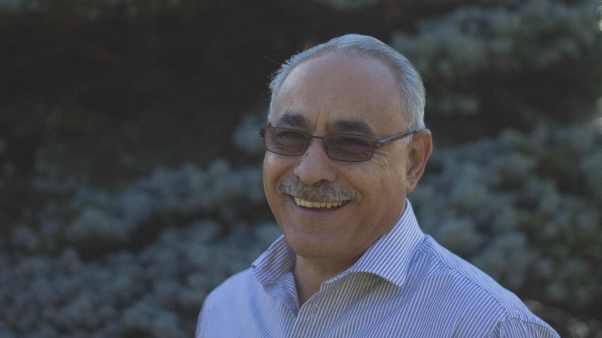
Meet the retiree-turned-pastor who’s creating a home for Portland’s Arabic Christians.
Global missions expert Paul Borthwick shared the following story to remind us how God's mission can be from anyone anywhere at any time:
A young man named Peter reminded me of a modern-day Philip. I stopped in to a McDonald's in Cambridge, Massachusetts, and I noticed Peter working the counter. I recognized him from our young adult ministry at church, and I knew he had just graduated from Harvard University with a master's degree. I greeted him and managed to get him to break free for coffee together.
"What are you doing here?" I asked, knowing that Harvard master's degree students don't usually aspire to work the counter at McDonald's. "Well," he explained, "I graduated in May but I went four months without finding a job, so I said to myself, 'I need some income to pay bills.' So this is where I've ended up—at least for now."
"Sorry to hear that. It must be hard," I replied, but Peter cut me off.
"No. Don't be sorry. God has me here. This place is giving me awesome opportunities to share my faith. I'm on a shift that includes a Buddhist guy from Sri Lanka, a Muslim fellow from Lebanon, a Hindu lady from India, and a fellow Christian from El Salvador. It's awesome. I get to be a global missionary to my coworkers while asking 'would you like fries with that?'"
He laughed and so did I. Like Philip, Peter found himself in a setting he never would have chosen as part of his long-term plan, but his mindset of living as a sent person shaped the way he looked at his circumstances and at the people around him.
Source: Paul Borthwick, Great Commission, Great Compassion (IVP Books, 2015), page 46
Global missions expert Paul Borthwick was invited to speak at a local church known for its hospitality to international students and its vision to adopt unreached people groups, including the Miao people from southern China. Borthwick tells what happened when he visited the church:
All over the church there were posters inviting people to "Pray for the Miao." The posters had statistics about the people group, population information, how many known Christians there are in the area, where the Miao are located and which missionaries are working with these people. Every member of the church was committed to pray for the Miao people.
As I was standing outside the banquet hall, a young man approached me and asked, "Excuse me, sir, are you from this church?" "No, I'm not from this church," I said. "This is my first time here."
"Me too," he replied. "This is my first time in any church. I am from the People's Republic of China. I heard there was food, so I came." I welcomed him to the United States and to the church, and he continued, "I need to ask another question. What is this sign?" He pointed to one of the signs that read, "Pray for the Miao."
I tried my best to explain: "Well, these people are followers of Jesus and they're trying to help other people know about the love of Jesus," I began. "So they've invited their church to pray for this ethnic minority group from south China."
"It is amazing!" he said.
"What is amazing?" I replied, a little confused.
"I am Miao!" he said earnestly. "These are my people."
"Well, this church has been praying for you," I answered. I introduced him to church leaders as the young man they had been praying for. God is at work.
Source: Paul Borthwick, Western Christians in Global Mission (InterVarsity Press, 2012), pp. 42-43
An article in the Chicago Tribune by Chris Erskine began: "By any measure, the Pacific Crest Trail is a beastly thing, an angry anaconda that slithers up the entire length of California and all the way to Canada, some 2,650 rugged miles. That's approximately 6 million steps—some of them glorious, many of them merciless." Sounds like life, doesn't it? Countless rugged miles. More steps than you can count. Some glorious. Many merciless.
The Tribune article focused on the people who take it upon themselves to help the hikers on that grueling trail. They open their homes for the weary travelers and provide meals, mail service, and help. They're called "trail angels." The article said, "But along the way, mercy is at hand." "Trail angels"—that would be a good description of Christians interacting with others in the world.
The article focused on Donna Saufley and her husband who "set up tents and a trailer to handle the spring crush." She calls their home, "Hiker Heaven." According to the article, "She talks fondly about the payoffs of being a trail angel: witnessing the hikers' emerging humanity, their grit, their brio, and the inevitable baring of souls. Traveling the trail 'is humbling,' she says. 'I compare it to the peeling of an onion. You see people for what they are.'" Like the church.
She and her husband will host 1200 people in 2015 in their ordinary home. They don't take any money. She says, "I always say that it's a river of life that washes up to my shore." The article concludes: "[Donna Saufley] loves it when her sanctuary is filled with hikers. [She says,] 'The sounds of conversations mingling with music and laughter is divine to my ear.'"
Source: Chris Erskine, "'Trail angels' help keep hikers on track," Chicago Tribune (1-15-15)
Caring for the poor and immigrants doesn’t earn salvation; it’s the evidence of our salvation.
In his book Strangers Next Door, J.D. Payne argues that through immigration God has been moving the nations of the world right into our neighborhoods. Payne says, "We must continue to go to the nations, but we must also remember that the nations have come to us." He tells the following story about how God is at work through the immigrants in his neighborhood:
My wife Linda and I lived in downtown Toronto in a condominium for three years. When Linda needed to find a hairdresser she started going to a hair salon run by a Filipino lady. As they started talking, Linda discovered that this vivacious woman was a genuine Christian. A few months later, Linda ended up getting her hair done by a Chinese lady at the shop. When Linda mentioned that her husband was pastoring the English-speaking congregation of a Chinese church in the city, the woman exclaimed, "That's great! I'm a Christian too. My boss [the Filipino woman] led me to faith in Christ."
One day, when Linda returned to the shop, a new hairdresser was at work, and since all the other operators were busy, Linda ended up with the new lady. Linda knew enough about features to discern that this beautiful woman was Somali. She asked, "Are you Somali?" Surprised, the woman blurted out, "Yes!" Knowing that Somalians are, for the most part, Muslim, Linda was well into a friendly conversation that would lead to an opportunity to share her faith. But the Somali lady declared, "Don't worry. I believe in Jesus too. That lady introduced me to the Savior," pointing to her Chinese colleague.
Source: Adapted from J.D. Payne, Strangers Next Door (IVP Books, 2012), pp. 155-156