

Sorry, something went wrong. Please try again.
In an interview in Esquire magazine, actor Denzel Washington said, “The biggest moment of my life was when I was filled with the Holy Spirit. It happened in the West Angeles Church of God in Christ, Crenshaw Boulevard, Los Angeles.” He went on to describe what it’s like to follow Jesus today, especially in the ethos of Hollywood:
Things I said about God when I was a little boy, just reciting them in church along with everybody else, I know now. God is real. God is love. God is the only way. God is the true way. God blesses. It’s my job to lift God up, to give Him praise, to make sure that anyone and everyone I speak to the rest of my life understands that He is responsible for me. When you see me, you see the best I could do with what I’ve been given by my Lord and Savior. I’m unafraid. I don’t care what anyone thinks. See, talking about the fear part of it—you can’t talk like that and win Oscars. You can’t talk like that and party. You can’t say that in this town.
I’m free now. [Faith in Jesus] is not talked about in this town. It’s not talked about… It’s not fashionable. It’s not sexy… But my faith has always informed the roles I choose. Always… Even in the darkest stories, I’m looking for the light.
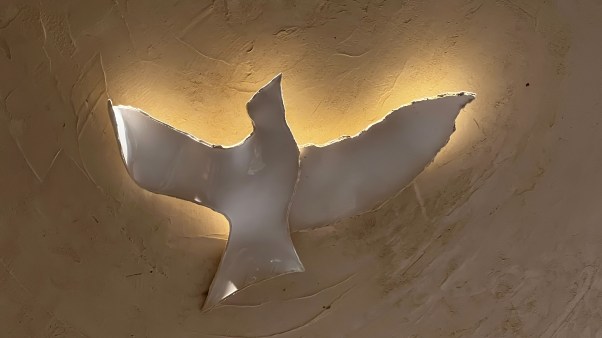
Source: As told to Ryan D'Agostino, “The Book of Denzel,” Esquire (11-19-24)
Watson Thornton was already serving as a missionary in Japan when he decided to join the Japan Evangelistic Band. He decided to travel to the town where the organization’s headquarters were located and to introduce himself to its leader. But just as he was about to get on the train, he felt a tug in his spirit that he took to be the leading of the Lord telling him to wait. He was puzzled but thought he should obey.
When the next train rolled into the station, Watson started to board but again felt he should wait. When the same thing happened with the third train, Watson began to feel foolish. Finally, the last train arrived, and once more Watson felt a check. “Don’t get on the train,” it seemed to say. Watson thought he had wasted most of the day for no apparent reason. Yet as he turned to go, he heard a voice call out his name. It was the mission leader he had intended to see. He came to ask whether Watson would consider joining the Japan Evangelistic Band. If Watson had ignored the impulse and boarded the train, he would have missed the meeting.
We can’t just live by our intuition, can we? We do see something like intuition at work in the lives of God’s people in the Bible. Paul tries to enter Asia and Bithynia but is “kept by the Holy Spirit” from doing so (Acts 16:6-7). We do not always get it right using either intuition or careful deliberation. God uses both to guide us. The art of being led by the Spirit is not a matter of waiting each moment for some mystical experience of divine direction. It is a matter of trusting God for the power to obey what he has already told you to do.
Source: John Koessler, “More Than A Feeling,” CT magazine (July/August, 2019), pp. 55-58
Heather Burke-Cody blogs:
I was thrift shopping for dorm stuff. The cashier appeared to be one of the most unhappy, maddest people ever. I was six people deep in the line, and it seemed like she got more and more exasperated with each passing customer.
She was especially incensed when one of my unmarked items needed a price check …. But as she rang up my items, I felt a ... soul nudge. I tried to bargain with Jesus and told him that the extra little bit of cash in the back side of my wallet was not meant for her. It surely should go to someone sweeter and kinder, more deserving, or at least appreciative maybe. Not someone downright mean and angry. But God did not budge.
The human heart is our very best compass. It rarely leads us astray. So, I paid my bill and reluctantly found the backside of my wallet. I slipped her some cash as she handed me my receipt.
She was caught off-guard by the gesture. She gripped the folded bill with one hand and paused. Then slid her mask down with the other hand. Her loud, stern voice got quiet when she whispered a single word: “Why?” To which I answered two words back: “Soul nudge.”
There was another pause. A brief reckoning of sorts. When she grabbed my hand and held on, I was the one caught off-guard. “Today’s my 75th birthday and ain’t nobody called me. Not my sister. Not none of my kids. None of these people here. Nobody. Nothing. I don’t think I can remember ever being so sad. Ain’t nobody even remembers it’s my birthday.”
Source: Heather Burke-Cody, “Soul Nudges and Heart Tingles,” The Everyday Good (8-12-22)
On Tuesday, May 10, 2022, a passenger with no flight experience called Air Traffic Control in Fort Pierce, Florida airport and said, “I’ve got a serious situation here. My pilot has gone incoherent. I have no idea how to fly the airplane.”
Around noon an air traffic controller named Robert Morgan was outside the tower reading a book on a break when his co-worker yelled, “There’s a passenger flying a plane that’s not a pilot and the pilot is incapacitated so they said you need to help them try and land the plane.”
Morgan was the man for the job. In addition to his 20 years in tower control, he is also a flight instructor with around 1,200 hours under his belt.
Morgan told reporters, “I knew the plane was flying, I just knew I had to keep him calm, point him to the runway and tell him how to reduce the power so he could descend to land.” Then Morgan proceeded to walk the first-time pilot step-by-step through the landing procedure for the Cessna Grand Caravan. Morgan even ran out to the tarmac and joyfully embraced his student.
Morgan said, “It felt really good to help somebody and he told me that he couldn’t wait to get home and hug his pregnant wife.”
1) Guidance; Mentoring - When disaster or crises arise, we need a wise mentor or guide to walk us through it. 2) Holy Spirit - The Holy Spirit is our flight controller who can guide us through the worst that life can throw at us (John 16:13; Rom. 8:14).
Source: James Freeman, “Untrained Passenger Lands Airplane,” The Wall Street Journal (5-11-22)
You know him as the smart, nerdy dude from Jurassic Park and Independence Day. But if things had turned out differently, Hollywood actor Jeff Goldblum might have added another role to his long list of credits: the voice of Siri.
Speaking on the Today Show in Australia, Goldblum revealed that Apple's late cofounder Steve Jobs once offered him the opportunity to do some voiceover work. Goldblum said, "Steve Jobs called me up a few decades ago to be the voice of Apple. That was early on, and I did not know it was Steve Jobs." Sadly, the collaboration never came to pass. A Georgia-based voiceover actress named Susan Bennett went on to become the first voice of Siri.
As a young boy, Samuel heard the voice of God in the night calling him. On the third hearing, he obeyed. Elijah heard the voice of God, not in the whirlwind earthquake or fire, but in a gentle whisper. Moses heard God’s voice in a burning bush. Are you careful to listen to the still small voice of God as he invites you to follow and obey?
Source: Angela Moscaritolo, “Steve Jobs Wanted Jeff Goldblum as 'The Voice of Apple',” PC Magazine UK (5-17-17)
Pastor David Hansen writes of our need to rely on the Holy Spirit:
I live near a river. Fish live in it, and the willowy river bottom is home to mice and mountain lions. From my kitchen window I watch bald eagles, ospreys, golden eagles, and hawks. These birds of prey ride the wind. It doesn't take much energy on their part. However, when geese fly, they must (expend energy by) flapping their wings, but birds of prey soar by catching currents.
Birds of prey seek thermals; columns of warm air that rise from the earth filled with energy. The birds glide on the heated currents of air. A good thermal can lift them high into the sky without so much as a single flap of their wings. From their higher place they can see more ground and can fly longer and farther, and when the time comes to dive on their prey, they can plummet with great speed.
As I watch these birds, I think of pastoral ministry. I too seek thermals. The Spirit lifts, gives vision, direction, and power. Ministry is riding on the free winds of the Spirit that lift us to heights we cannot climb on our own. We can't stay in the air very long on our own strength, but we can seek thermals. Our soul-wings are made large that we might catch the Spirit.
Although this passage is written to pastors, the illustration itself can easily be directed toward our church members encouraging them to seek the filling of the Holy Spirit through prayer.
Source: David J. Hansen, The Art of Pastoring: Ministry Without All the Answers, (IVP books, 2012), p. 51
Andrew Wilson writes in an article for Christianity Today:
When you’re sailing, is “being filled with the wind” an experience or a habit? Both. Catching the wind on a sailboat is clearly an experience. I vividly remember that first feeling of being seized and carried forward by a mighty power from elsewhere. But it is also a habit. If you don’t put the sails up, pull the mainsheet fast, or adjust the jib, you won’t go anywhere, even if the wind is blowing powerfully.
Sailing, in that sense, is the art of attentive responsiveness to an external power. You rely entirely on the external power to get you anywhere. Sailors never imagine themselves to be powering the boat by their own strength. But you also have to respond attentively to whatever the wind is doing, which comes through cultivating awareness, skill, and good habits.
Being filled with the Spirit involves the same both-and. We pursue the experience of the Holy Spirit - Paul uses the language of filling and drenching, drinking and pouring. We rely entirely on the Spirit’s immeasurable power, rather than our own strength, to get us anywhere. But we also develop habits. We respond attentively to what he is doing in and through us, a capacity that comes through awareness, skill, and practice. Paul mentions four such habits in subsequent verses: teaching one another, singing, giving thanks, and submitting to one another (Eph. 5:18–21).
Source: Andrew Wilson, “Paul Says to ‘Be Filled with the Spirit.’ How Do We Obey a Passive Verb?” ChristianityToday.com (7-21-19)
According to his mother Trinell, once Monte Scott sees a need, he usually tries to fix it himself. Which is why he decided to shovel dirt from his backyard into a pothole on a city street in front of his house. “I didn't want people messing up their cars like my mom did,” Scott said. “If somebody were to drive down the street and hit a pothole, and then would have to pay like $600-700 to get their car fixed, they would be mad."
Such selfless initiative is in short supply in the world, which explains why video of his exploits went viral on Facebook, being viewed over 52,000 times in just a few days. “I was at work, and I got a text message from my niece, and she'd seen the video on Facebook,” Trinell Scott said.
Unwilling to stop at one, Monte has since filled in 15 different potholes in the area around his home. “Now people see that we in Muskegon Heights, do produce good kids,” said Trinell Scott. “Everything is not bad out of Muskegon Heights.”
Potential Preaching Angles: You can’t serve everyone or everything that is in need, but sometimes paying attention to the Holy Spirit's nudge means using your ability to meet an unmet need without being invited.
Source: Kristine Solomon, “12-year-old boy filmed filling in giant potholes so people stop 'messing up their cars like my mom did',” Yahoo Lifestyle (4-2-19)
In his book, Life in the Presence of God, Kenneth Boa compares a soaring eagle to Christians learning to soar through the power of the Holy Spirit:
God seems to like eagles. Thirty-three Bible verses mention them! Eagles are true flying birds, meaning they get off the ground by flapping, but they soar by thermals. Eagles begin flight training around four months old. But even before that, at about two months, they stand up in the nest and spread their wings when they feel gusts of wind. They're training to know the thermals! Thermals are the columns of air formed as heat rises from the ground. Because heat rises, these air columns push up and up, displacing the cold air around them. By staying in the warmth of the thermal, the birds continue to soar. Eagles become experts in this.
In this magnificent aerodynamic action, gravity isn't deactivated—it's still at work—but the higher principle overcomes gravity. Eagles drop down when they step off a branch. Then, they start flapping like crazy. Once they're in the air, though, their wings don't have to work very hard, and while soaring, they use a small fraction of the effort required to rise. They're almost at rest and can just enjoy the pleasure of flight.
When we first begin following Christ (or practicing a spiritual discipline) we're like eagles spreading our wings. Once we start flapping, though, we lift up. Maybe after a few tries we're back down on the ground. But through repeated practice, we finally soar. Also, in Greek, the Holy Spirit is called pnuema, which means "current of air." Think about what this means for us! We flap and flap, but eventually we catch the current of air, and we soar. This is how the Holy Spirit works with our training. He's not only our coach; he's the power behind everything we do.
Source: Kenneth Boa, Life in the Presence of God (InterVarsity Press 2017), pages 129-130
Imagine that you've decided to go sailing. The problem is that you know next to nothing about sailing. So you to the store and you purchase several books to find out what's involved. You carefully read them and then you talk to a veteran sailor who answers questions for you. The next day, you rent a sailboat. You examine it closely to make certain that everything needed for a successful sailing experience is present and in good working order. Then, you take your boat out onto the lake. Your excitement is at a fever pitch, though you're also afraid. But you follow the instructions you've read and the counsel received from the experience sailor, and you launch your boat into the water. You carefully monitor each step and hoist the sail.
At that precise moment you learn a crucial lesson. You can study sailing. You might even be able to build a sailboat. You can seek from the wisest and most veteran of sailors. You can cast your boat onto the most beautiful of lakes under a bright and inviting sun. You can successfully hoist the sail. But—and this is a big "but"—only God can make the wind blow!
Possible Preaching Angles: Sam Storms adds, "You and I can study the Bible…. We can orchestrate a worship service according to biblical guidelines. We can do everything that lies in the power of a Christian man or woman. But only the Spirit can make the wind blow.
Source: Sam Storms, Practicing the Power (Zondervan, 2017), page 34 (Note: A version of this story originally appeared in When I Don't Desire God by John Piper)
Someone (J.D. Grear) has said that many of us think that the Holy Spirit is like our pituitary gland. You know it's there, you're glad you've got it, and you don't want to lose it, but you're not exactly sure what it does. Well, the Holy Spirit does a lot. For our purposes here, the Holy Spirit is our teacher, reminder, and enabler.
A number of years ago I suffered from a hip problem. For over a year I walked with a cane. Every time I leaned on one side, I felt an excruciating pain. As long as I was leaning on the other side, sitting, or in bed, there was no problem and no pain. But turn the wrong way and "Ouch!!" That pain was a teacher. I learned to be very careful about the way I walked, how I turned, and the steps I climbed. The pain was also a reminder: "Hey, be careful. Don't lean on that side." But when I did, there was always a kind soul who became my enabler, and would grab my arm and make sure I didn't fall.
The Holy Spirit is like that.
Source: Adapted from Steve Brown, Hidden Agendas (New Growth Press, 2016), page 81
Scientists published a study on a species of small African birds that has developed a "rare partnership" with humans. The birds, known as "honeyguides," respond to a certain trill made by human honey hunters and then lead them directly to hidden bee hives, sometimes high up in trees. Hunters have for thousands of years used and tracked animals in different ways to find food, but researchers say this case is a rarer instance.
"We've found it's a two-way communication," says lead author Claire Spottiswoode of Cambridge University. "Humans communicate back to honeyguides as well." The specific call given by hunters "signals to honeyguides that they are eager to follow," and the birds respond by leading them straight to the honey in 54% of instances.
Might our relationship with the Holy Spirit also be a "rare partnership"? We're eager to accomplish things with our own strength, but sometimes all it takes is a willing heart to be led right where we need to be.
Source: Alister Doyle, “African honeyguide birds aid hunters in rare, sweet partnership,” Yahoo (7-21-16)
You might not know the name Angelo Dundee, but you've undoubtedly heard of Muhammad Ali, probably the most famous professional boxer of all time. For more than two decades, Angelo Dundee was in Muhammad Ali's corner, literally. He was Ali's cornerman! He's the one who made Ali float like a butterfly and sting like a bee. He also trained fifteen other world boxing champions. Angelo Dundee described his job as a cornerman this way: "When you're working with a fighter, you're a surgeon, an engineer, and a psychologist."
As followers of Jesus Christ, we have something even better than a surgeon-engineer-psychologist in our corner—the Holy Spirit.
Source: Mark Batterson, If (Baker Books, 2015), page 249
No matter how hard we try we just can't seem to shed our need to live by law rather than grace. An article in The Wall Street Journal explored the new wave of gadgets that will remind, cajole, pressure, threaten, judge, and nag us about what we're supposed to do and how to punish ourselves when we fall short.
For instance, a new smart-utensil measures how fast you eat while it prods you to slow down and chew. A company offers a device that will chirp when a driver speeds, slams on the brakes, or does other things behind the wheel that your mother wouldn't like. You can buy a toothbrush that wirelessly tells a phone app how often and how long you brush your teeth. The phone app sends the user rewards and punishments based on brushing behavior. A webcam software program will catch you slouching, and another website will tally fines for undesirable behaviors like not flossing or staying up too late.
One device user said that the digital nagging can "kind of run your life." Another user said, "It's now possible to have a device in the background of your life recording everything you do."
Possible Preaching Angles: (1) Law; Legalism; Grace—Although these devices may be helpful, they also sound a lot like trying to live by "the law." These gadgets "change" our external behavior by relying on pressure and threats. God changes our hearts not through performance but through his grace. (2) Holy Spirit; Conviction—This isn't the way the Spirit convicts us. The Spirit leads us into true growth and change through love, not impersonal pressure.
Source: Geoffrey A. Fowler and Shira Ovide, "Sit Up Straight, and Other Advice From Big Mother," The Wall Street Journal (4-22-13)
In Palestine today, it is still possible to witness a scene that Jesus almost certainly saw two thousand years ago, that of Bedouin shepherds bringing their flocks home from the various pastures they have grazed during the day. Often those flocks will end up at the same watering hole around dusk, so that they get all mixed up together—eight or nine small flocks turning into a convention of thirsty sheep. Their shepherds do not worry about the mix-up, however. When it is time to go home, each one issues his or her own distinctive call—a special trill or whistle, or a particular tune on a particular reed pipe, and that shepherd's sheep withdraw from the crowd to follow their shepherd home. They know whom they belong to; they know their shepherd's voice, and it is the only one they will follow.
Source: Barbara Brown Taylor in The Preaching Life (Cowley, 1993), p. 147
Living in the power of the Spirit is 10,000 times better than religious legalism.
Perhaps you've heard the phrase "turn a blind eye," which means to ignore undesirable information. The saying comes from a 19th century British naval battle. On April 2, 1801, during the Battle of Copenhagen, the British fleet was attacking the combined navies of Denmark and Norway. Three British ships ran aground, so the admiral, Hyde Parker, decided that the fire of battle was "too hot for Nelson to oppose." So Parker sent an order, through signal flags, that the younger admiral Horatio Nelson should "Discontinue Action" and withdraw.
When Nelson heard his own signalman relay the order, he pretended not to hear him. Mesmerized by the thrill of battle, Nelson had no intention of obeying the order. He turned to his captain and said, "This day may be the last for us at any moment," even as a Danish cannonball struck his ship's mainmast, scattering splinters all around him. This was typical of Nelson's stubborn and aggressive approach to war. In fact, he'd already lost sight in his right eye in a previous battle. So when he pressed again to respond to Parker's order, Nelson told his flag captain Thomas Foley, "You know, Foley, I only have one eye—I have the right to be blind sometimes," and then Nelson held up his telescope to his right eye and said, "I really do not see the signal!"
Sometimes we are all like Nelson, with one good eye and one blind eye, and when an order comes through from God, we hold up the telescope to the blind eye. As a result, we willfully ignore the leading of the Holy Spirit.
Source: Christopher Hibbert, Nelson: A Personal History (Basic Books, 1994), pp. 260-261
In "Teaching Respect Within the Home," Dave Stone writes:
A number of years ago, our family was in the Dominican Republic on a mission trip. If you've ever driven in a developing country, you know how dangerous the traffic can be. Vehicles whiz past, coming within just a few feet of children playing close to the road. One night, my son Sam was playing a game in his own little world, in which he would zig and zag, back and forth from sidewalk onto the narrow street and back. It wasn't a heavily travelled road; but there was always loud music blaring, and it was pitch dark. From about 10 feet away, I suddenly shouted, "Samuel, don't move!"
Immediately he froze. About a second later a Moped zipped past him, going 30 mph with no lights on—right where Sam was about to step. My 6-year-old didn't ignore me, argue, or blatantly disobey. I said freeze, and he froze. That obedience probably saved his life.
Possible Preaching Angles: (1) Parenting—As parents, our goal is that our children would obey us the first time we ask, not the second, third, or fourth time we ask. (1) Obeying God—As followers of Jesus, when we hear our Father's voice, we should obey him the first time he speaks to us.
Source: Dave Stone, "Teaching Respect Within the Home," Preaching (July/August 2012)