Sorry, something went wrong. Please try again.
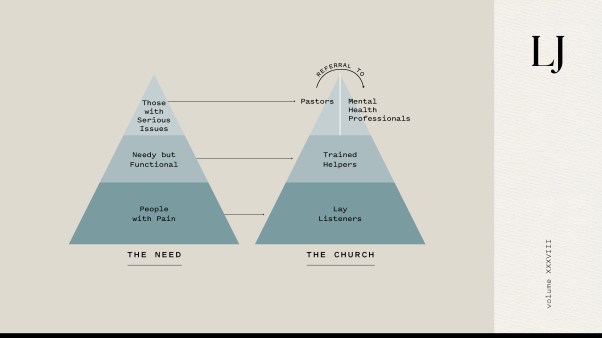
We have a holy opportunity to return to our roots—a chance to recover the kind of care that once marked every aspect of the early church.
A new study reveals the alarming impact of TikTok on young adults’ body image, showing that just 7 to 8 minutes of exposure to certain content can significantly damage one’s body image.
Researchers studied female TikTok users aged 18 to 28. Participants were split into two groups: one watched what the authors deemed “pro-anorexia” and “fitspiration” content, while the other viewed neutral videos like nature and cooking clips. Interestingly enough, both groups reported a decrease in their self-esteem after watching the videos. But those exposed to fitspiration content had the greatest decrease in body image satisfaction.
This isn’t an isolated finding. Other studies have shown that prolonged social media use is linked to increased anxiety, depression, and disordered eating behaviors.
One of the most concerning aspects is how widespread this content is. 64% of participants reported seeing disordered eating videos on their For You page without searching for it. Even seeking out positive content on TikTok can lead to inadvertent exposure to harmful material.
The study’s findings add to the ongoing discussion of the negative impact of social media on the mental and physical health of young adults. Earlier in 2024 at a U.S. Senate hearing that included TikTok CEO Shou Chew, senators made one thing clear: tech companies need to be held responsible for not protecting young users from harm.
“You have blood on your hands,” said Sen. Lindsey Graham in his opening remarks. “You have a product that’s killing people … You can’t be sued, you should be!”
The study shows that it only takes a few minutes on TikTok to cause serious damage. In order to protect one’s body image, it might be time for young adults to rethink how they use social media.
Source: Emily Brown, “Study: It Only Takes Seven Minutes on TikTok to Ruin Your Self-Esteem,” Relevant Magazine (8-12-24)
TikTok’s grip on our collective attention spans might be even more dangerous than we thought. According to the company’s own research, users may only need to watch 260 videos before developing addictive behaviors. The findings also link excessive use to a series of mental health issues, including impaired memory, loss of analytical skills, diminished empathy, and heightened anxiety.
Lawsuits have filed against TikTok, accusing the platform of falsely advertising its algorithm and putting children at risk. The lawsuits claim that the company prioritized user engagement over the well-being of its younger audience.
The unredacted documents suggest that TikTok struggled to balance safety with its desire to keep users engaged. While the platform implemented features like screen time alerts and usage limits, its own data shows these measures had little effect. In fact, the screen time limit feature reduced usage by only 1.5 minutes per day, raising concerns that such interventions were more about optics than actual safety.
The platform’s effect on body image also emerged as a significant issue. The documents allege that TikTok’s algorithm has a bias toward promoting content from conventionally attractive users. Meanwhile, harmful content—such as videos related to eating disorders and suicidal ideation—often slipped through moderation and became part of algorithm-driven “bubbles” that young users were frequently exposed to.
In a statement to NPR, a TikTok spokesperson responded to the allegations, saying, “We have robust safeguards in place, which include proactively removing suspected underage users, and we have voluntarily launched safety features like default screen time limits, family pairing, and privacy settings for minors under 16.”
Source: Annie Eisner, “Science: Seriously, Do Not Watch More Than 260 TikTok Videos,” Relevant Magazine (10-14-24)
In a New York Times piece “Gen Z Has Regrets,” Jonathan Haidt and co-writer Will Johnson ask if young people wish social media had never existed. Between a third and a half say they do!
Nearly all American teenagers use social media regularly, and they spend an average of nearly five hours a day just on these platforms. 52 percent say social media has benefited their lives, and 29 percent say it has hurt them personally. We have found this pattern…in a wide array of surveys.
We’re not just talking about sad feelings from FOMO or social comparison. We’re talking about a range of documented risks that affect heavy users, including sleep deprivation, body image distortion, depression, anxiety, exposure to content promoting suicide and eating disorders, sexual predation and sextortion, and “problematic use,” which is the term used to describe compulsive overuse that interferes with success in other areas of life.
If any other consumer product was causing serious harm to more than one out of every 10 of its young users, there would be a tidal wave of state and federal legislation to ban or regulate it. In 2020 Sarah Condon said, “We are in the 1920s of cigarettes when it comes to social media.” In 2024, the prognosis seems clear!
Gen Z does not heavily regret the basic communication, storytelling, and information-seeking functions of the internet. If smartphones merely let people text each other, watch movies and search for helpful information, or interesting videos (without algorithms intended to hook users), there would be far less regret and resentment.
Respondents wished these products had never been invented:
Instagram (34 percent)
Facebook (37 percent)
Snapchat (43 percent)
TikTok (47 percent)
X/Twitter (50 percent)
Source: C.J. Green “Gen Z’s Social Media Lament,” MBird (9-20-24); Jonathan Haidt, “Gen Z Has Regrets,” New York Times (9-17-24)
Laying down our everyday and holy anxieties at the feet of Jesus.
In his book The Anxious Generation: How the Great Rewiring of Childhood Is Causing An Epidemic of Mental Illness, Jonathan Haidt tells the story of what happened to Gen Z (born 1995). They became “the first generation in history to go through puberty with a portal in their pockets that called them away from the people nearby and into an alternative universe that was exciting, addictive, unstable and . . . unsuitable for children and adolescents.”
In 2011, 23% of teens had a smartphone. By 2016, 79% of teens owned a smartphone, as did 28% of children eight to 12. Soon teens were reporting they spent an average of almost seven hours a day on screens. “One out of every four teens said that they were online ‘almost constantly,’” Mr. Haidt writes.
Girls moved their social lives onto social media. Boys burrowed into immersive video games, Reddit, YouTube, and pornography.
Suddenly children “spent far less time playing with, talking to, touching, or even making eye contact with their friends and families.” They withdrew from “embodied social behaviors” essential for successful human development. It left them not noticing the world.
Signs of a mental-health crisis quickly emerged. Rates of mental illness among the young went up dramatically in many Western countries between 2010 and 2015. Between 2010 and 2024 major depression among teens went up 145% among girls, 161% among boys. There was a rise in disorders related to anxiety as well. Mr. Haidt looked at changes that weren’t self-reported—studies charting emergency psychiatric care and admissions. They too were up. “The rate of self-harm for . . . young adolescent girls nearly tripled from 2010 to 2020.”
Source: Peggy Noonan, “Can We Save Our Children from Smartphones?” The Wall Street Journal (4-4-24)
3 ways to help our preaching provide more meaningful, tangible support for people who experience anxiety.
In May of 2023, over 5,000 Americans were asked “Do you currently have or are you currently being treated for depression?" The study showed that around 24% of women in the U.S. reported currently having or being treated for depression, compared to 11% of men.
These numbers have increased from a similar study in 2017, when 17.6% of women reported currently having or being treated for depression, compared to 9% of men. In six years, the total number of men and women having or being treated for depression increased from 13.5% (2017) to 17.8% (2023).
Editor’s Note: You can view many more mental health statistics here and here.
Source: Preeti Vankar, “Percentage of adults in the United States who currently had or were being treated for depression in 2017 and 2023, by gender,” Statista.com (11-29-23); Staff, “Mental Health Statistics,” The Zebra (3-13-24)
Finding healing in the midst of crises (mental, physical, and spiritual).
Help our listeners take the next step in both their walk with Christ and with their addiction and mental health issues has the potential to help them heal and move forward.
The world began a weekly group therapy session with Frazier Crane thirty years ago. This spin-off character from Cheers played by Kelsey Grammer, emerged as an iconic counselor who masterfully blended humor and wisdom. While Grammer is an actor by trade, his years playing a therapist has given him lasting insights into the human psyche.
In an interview with The Guardian, Grammer was asked how he felt attitudes towards therapy has changed evolved over the last 30 years. After wrestling with the question for a few moments, he concluded with this:
God is probably the best therapist, without wanting to get on too big of a preachy soapbox. I just think if you have faith, you’re probably one step ahead of the storm of everyday life today. There is insanity everywhere. It’s a global phenomenon. It seems to be cooked into our governments. It’s a difficult road to navigate on your own.
Source: Catherine Shoard, "‘I cast a long shadow’: Kelsey Grammer on Frasier, fame and why God is the best therapist," The Guardian (12-1-23)
A Gen Z journalist named Rikki Schlott wrote an essay to explain her generation to parents of Gen Z children. She called the essay “her best shot to explain the malaise of my generation.”
Gen Z has inherited a post-hope world, stripped of what matters. Instead, we have been offered a smorgasbord of easy and unsatisfying substitutes. All the things that have traditionally made life worth living — love, community, country, faith, work, and family — have been “debunked.”
“These are the sentiments I hear often from peers”:
Everything that matters has been devalued for Zoomers, leaving behind a generation with gaping holes where the foundations of a meaningful life should be. They’re desperately grasping for alternative purpose-making systems, all of which fall short.
I’m not saying all Zoomers should become church-going office drones who churn out babies and never question their country. But our dismal mental health records and the scars on our wrists seem to indicate that becoming faithless digital vagabonds is just not working out for us.
Source: Rikki Schlott, “Do you know where your kids go everyday?” After Babel Substack blog (11-6-23)
Controversies abound regarding social media in general and TikTok in particular. And there’s nothing new or novel about older people expressing consternation about the slang terms embraced by younger generations. But there’s a particular convergence of those two trends that have experts especially concerned.
Mental health experts have expressed concerns about the rise of slang terms related to mental health among Gen-Z users on TikTok. Terms like “menty b” (short for mental breakdown) and “grippy sock vacation” (a euphemism for a mental-health-related inpatient hospital stay) are becoming more and more common as more users on the video sharing platform talk more openly about their mental health struggles.
These terms are examples of “algo-speak,” a lexicon of euphemistic terms related to controversial topics that TikTok producers use to prevent automated content moderation systems from downranking their content. In this sense, some mental health professionals applaud the rise of “menty b” and similar variants because speaking more openly on these topics helps to mitigate the stigmas against mental health disclosure. "Saying 'I had a menty b' takes control of the narrative," says therapist Michael Dzwil.
On the other hand, there are some that feel that terms like “menty b” can serve to trivialize serious mental health struggles and prevent people from seeking professional help, opting instead to self-diagnose and seek remedies from other TikTok users.
In Dixon’s conclusion, she recommends users find a balance between pursuing community and finding accurate information. “Wit can't resolve clinical cases alone; treatment necessitates accurate diagnoses and responsive modalities. Pithy phrases make struggles digestible, yet downplay their gravity when inappropriately applied.”
God made us for community so we ought to share our struggles with each other.
Source: Natasha Dixon, “When does mental health slang go too far? The line is blurry,” Los Angeles Post (1-23-24)
In an article in The Atlantic, Derek Thompson explores “How Anxiety Became Content.” He reveals that this new “genre” on social media is surging. The TikTok hashtag #Trauma has more than six billion views and over 5,500 podcasts have the word “trauma” in their title. Thompson suggests that our consumption of such material may be backfiring. He writes:
Darby Saxbe, a clinical psychologist at the University of Southern California, said that for many young people, claiming an anxiety crisis or post-traumatic stress disorder has become like a status symbol. Saxbe said, “I worry that for some people, it’s become an identity marker that makes people feel special and unique. That’s a big problem because this modern idea that anxiety is an identity gives people a fixed mindset, telling them this is who they are and will be in the future.”
On the contrary, she said, therapy works best when patients come into sessions believing that they can get better. That means believing that anxiety is treatable, modifiable, and malleable—all the things a fixed identity is not.
She went on to say, “I’m very pro-therapy. ... But we may have overcorrected from an era when mental health was shameful to talk about to an era when some vulnerable people surround themselves with conversations and media about anxiety and depression. This makes them more vigilant about symptoms and problems, which makes them more likely to problematize normal daily stress. In turn this makes them move toward a (mindset) where they think there is always something wrong with them that needs their attention, which causes them to pull back from social engagement, which causes even more distress and anxiety.”
Source: David Zahl, “Anxiety Content,” Mockingbird Week in Review (12-15-23); Derek Thompson, “How Anxiety Became Content,” the Atlantic (12-13-23)
With Christmas and New Year celebrations behind us, the cold, dark days of January can really get us down. January 16th has been dubbed by experts as the “most depressing day of the year.” But where does the term come from, and what can you do to combat the blues?
The term Blue Monday was coined by psychologist Dr. Cliff Arnall, who worked out a formula to show how the third Monday in January is especially bad. It takes into account factors including the average time for New Year's resolutions to fail, the bad weather, debt, the time since Christmas, and motivational levels.
On average, 1 in 15 people become depressed in winter and suffer from Seasonal Affective Disorder (SAD). It is believed that the problem is related to the way that the body responds to light. The main theory suggests that a lack of sunlight may stop a part of the brain called the hypothalamus from working properly. This could impact the production of the hormone melatonin, which makes you feel sleepy. People with SAD produce it in higher levels than normal. The production of serotonin could also be affected, further impacting mood, appetite, sleep, and feelings of depression.
What can you do to feel better? Dr. Arnall said that people should embrace the opportunity to turn over a new leaf. “Whether it's embarking on a new career, meeting new friends, taking up a new hobby or booking a new adventure, January is a great time to make those big decisions.”
Source: Harry Howard, “What is Blue Monday and why is it the 'most depressing day of the year?'” Daily Mail (1-15-23)
A woman in Sunderland, England nearly leapt to her death from in 2018 from Wearmouth Bridge, very well known as a place where people come to end their lives. She now returns to that site regularly to post messages encouraging others who are having a rough time to get help.
Paige Hunter, now 21, says that when she was a teenager suffering from post-traumatic stress disorder, she found herself standing at the edge of the bridge, thinking about ending it all. That’s when a pair of Good Samaritans approached Hunter, telling her “You are worth so much more than this.”
That not only stopped her from jumping, but changed her life. The next day, Hunter wrote those eight words that were told to her on several pieces of paper and posted them all over the bridge where she had her epiphany. That’s where her campaign, Notes of Hope, began.
Since then, Hunter said she’s left over 1,000 laminated, handwritten messages on the Wearmouth Bridge encouraging others struggling with mental health issues to seek help. She’s received lots of feedback and thinks she’s saved dozens of lives through her efforts—and even improved her own. Hunter said, “It’s definitely therapeutic for me to write these messages.”
25-year-old Callum Doggrell said his life was saved by Hunter’s efforts. “I was going through a really rough patch, and I was at a point in my life where I didn’t want to be here anymore,” he said. That was in early 2019. He thought about his one-year-old son and other loved ones and decided to push past his trouble and carry on. He and Hunter are now in contact.
Source: Brian Niemietz, “Woman who nearly jumped from bridge now posts signs there to help others in England,” New York Daily News (6-4-21)
Teen marijuana use has been soaring, and is up nearly 250% just since 2017. The common argument is that unlike “hard drugs,” marijuana is relatively harmless, certainly no worse than alcohol. But just because some people can get away with smoking it doesn’t mean everyone can. And the pot today’s teenagers are smoking is not the same as the pot their parents smoked back in college. The concentrations of THC, its psychoactive chemical, in today’s marijuana are much higher today than in the past. Many teens also consume refined products, which can have THC levels of 90% or more.
According to a new study from Columbia University researchers, recreational pot use in teens is associated with increased depression and increased suicidal thoughts. It’s also associated with higher levels of truancy and fighting, as well as lower grade point averages.
A new Danish study estimates that nearly a third of cases of schizophrenia in men in their 20s could be a result of pot use. The Washington Post recently ran a major story featuring stories of parents whose children started experiencing severe psychotic episodes as a result of pot, sometimes leading to suicide. The Post notes, “That sense of disbelief—pot wouldn’t do this—is prevalent among parents who have watched their teenagers become gripped by addiction.” And as Politico noted earlier this year, scientists are only beginning to do serious research on the health effects of pot.
Source: Aaron M. Renn, “The Price of Pot,” IFStudies.org (5-22-23)