Sorry, something went wrong. Please try again.
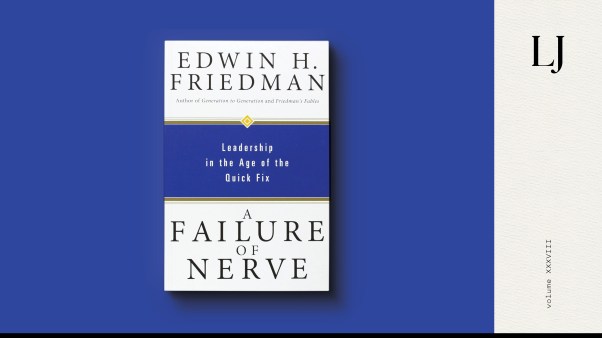
Friedman’s classic The Failure of Nerve reveals how self-differentiated leaders resist the pull of anxiety and lead with clarity.
How can faithful pastors lead when trust is broken, power is abused, and cynicism is everywhere?
Out of the ground once shaken by the collapse of Mars Hill Church, something steady is growing.
Founder Billy Graham’s vision for pastoral leadership finds new life in an age of institutional distrust.
Is it morally wrong to be “filthy rich”? Researchers at the University of Southern California and the University of Massachusetts Amherst examined how people across 20 countries judge excessive wealth. People in wealthier, more equal societies are actually more likely to view having too much money as morally wrong compared to those living in poorer, more unequal countries.
The research involved over 4,300 participants from nations as diverse as Belgium, Nigeria, Switzerland, and Peru. While you might expect people in struggling economies to resent the ultra-rich more, the opposite appears to be true.
The study found that people do not find excessive wealth very immoral across all countries. But more equal and wealthy societies like Belgium and Switzerland consider having too much money more wrong than less equal societies.
This suggests that when basic needs are met and inequality is lower, people become more sensitive to the potential harm caused by concentrated extreme wealth. Meanwhile, in developing nations where billionaires might represent hope for economic advancement, excessive wealth is viewed more favorably.
The researchers reference a 2023 statement by Elon Musk, currently the world’s richest person, who said it’s morally wrong to use the word “billionaire” as an insult if the individual uses their wealth to create products making millions of people happy. This perspective aligns with Western thinking that prioritizes happiness maximization as a moral good.
The luxury of moral criticism of excess may be more affordable for wealthier communities. Meanwhile, in developing nations, billionaires might represent aspiration rather than moral failure.
Possible Preaching Angle: Money; Money, love of; Wealth – The Bible does not condemn wealth, as such, since Abraham, Job, and Solomon, among others, were very wealthy individuals. The Bible does warn about the love of money (1 Tim. 6:10), the oppression of the poor, and making money ones security (Matt. 6:19)

Source: Staff, “Is Being ‘Filthy Rich’ Immoral? Why Society Views Extreme Wealth As Wrong,” Study Finds (6-24-25)
On Sept. 29, 1916, newspapers across the country announced a wealth milestone once thought to be unreachable: the world’s first billionaire. “Standard (Oil) at $2,014 makes its head a billionaire,” blared The New York Times headline, adding that Standard Oil’s soaring share price “makes John D. Rockefeller, founder and largest shareholder, almost certainly a billionaire.”
Now more than a century after the first U.S. billionaire, the question of who will be first to reach the trillionaire mark continues to fascinate. According to a new report from Informa Connect Academy, Tesla CEO Elon Musk will likely be the first trillionaire sometime in 2027, assuming that his wealth continues to grow at an annual average rate of 110%.
The second person projected to reach trillionaire status will be India’s Gautam Adani, founder of the Adani Group conglomerate, in 2028. Jensen Huang, CEO of Nvidia, who has seen his wealth skyrocket from $3 billion to more than $90 billion in five years, would become a trillionaire by 2028. Fourth on the list is Indonesia’s Prajogo Pangestu, founder of the Indonesian energy and mining conglomerate Barito Pacific, who could reach trillionaire status by 2028.
Tied for fifth would be LVMH CEO Bernard Arnault and Meta CEO Mark Zuckerberg who are forecast to become trillionaires sometime in 2030. Some top billionaires who seem like strong candidates to quickly reach the four-comma club don’t make the top 10. Jeff Bezos, the Amazon founder, and Larry Page and Sergey Brin, the Google founders, are all slated to wait 12 years to become trillionaires.
So, more than 100 years after the first billionaire, the first trillionaire could well be crowned in the next decade.
The Bible does not condemn wealth, as such, since Abraham, Job, and Solomon, among others, were very wealthy individuals. What the Bible does warn about is the love of money being the root of all kinds of evil (1 Tim. 6:10), the oppression of the poor by the rich (Jam. 5:1-6), and placing faith in the earthly “security” of wealth, rather than in God (Prov. 18:10-11, Matt. 6:19-21). The warnings are intended to encourage a balanced approach to wealth and possessions, recognizing that true fulfillment comes from a relationship with God and serving others.
Source: Robert Frank, “Top 10 people most likely to reach trillionaire status,” CNBC (11-6-24)
Leadership can kill you. At least leadership in high stakes positions.
Nineteen chief executives died in office in 2023, the most since 2010, according to Challenger, Gray & Christmas, which tracks turnover at U.S. companies. The outplacement firm tallied a record 1,914 CEO exits in 2023, which Senior Vice President Andy Challenger partly attributes to the post-pandemic burnout that many execs feel. In a January survey of 600 C-suite executives by the professional network Chief, 37% said avoiding burnout would be a personal challenge this year.
A candid help-wanted ad might go something like this: Company seeks visionary leader to take business to the next level. Incumbent will be paid handsomely but may have fewer years to enjoy earnings because the stress of the role can reduce life expectancy.
Ivan Menezes was a few weeks shy of retiring as CEO when he died last June at age 63. The company said he was hospitalized for stomach ulcers and died after a brief illness. Notable CEOs who suffered fatal heart attacks on the job in the past 20 years include Jim Cantalupo of McDonald’s, Samuel “Skip” Ackerman of Panacos Pharmaceuticals, Jerald Fishman of Analog Devices, and Carolyn Reidy of Simon & Schuster. They ranged in age from 58 to 71.
Source: Callum Borchers, “How to Survive Being a 24/7 Boss,” The Wall Street Journal (2-1-24)
William Muir, a researcher at Purdue University, studies the productivity of chickens. He wants to know how to breed chickens that lay lots of eggs and create environments that foster greater productivity. To research how to make super chickens, he did an experiment.
Muir put chickens into two groups. One group contained normal, healthy chickens. He left them alone for six generations of a chicken’s life. Another, separate group included all the super chickens, those who are proven high producing egg layers. Muir also left them alone for six generations. He provided food, water, and a clean environment, but did nothing to influence the chickens egg laying.
At the end of the experiment, Muir discovered that the group of normal chickens were flourishing: they were laying more eggs per chicken than when the experiment started. In the group of super chickens, only three were left. They had pecked the others to death. The super chickens had laid more eggs through a strategy of suppressing other chickens’ productivity, by killing, or intimidating them, so they were unable to lay eggs.
Competition; Leadership; Success - Leadership can fall into the same trap. We believe that if we find the right super chickens we will have success. We look for superstars. In our culture, and in our churches, we often create super chickens, because we desperately want success. We think it can come through one superstar leader.
Source: MaryKate Morse, Lifelong Leadership, Nav Press, 2020, page 9
Are our sermons filled with majesty and power or superficial and thin?
Five subtle ways our preaching may be hurting our listeners.
When we think of strength in God’s creation, we might think of elephants but rarely would we think of an octopus. After all, an octopus doesn’t even have any bones, so how could it be very strong? Sy Montgomery writes in The Soul of an Octopus:
Here is an animal with venom like a snake, a beak like a parrot, and ink like an old-fashioned pen. It can weigh as much as a man and stretch as long as a car, yet it can pour its baggy, boneless body through an opening the size of an orange. It can change color and shape. It can taste with its skin.
Yet the octopus is strong, very strong. An octopus’s muscles have both radial and longitudinal fibers, thereby resembling our tongues more than our biceps, but they’re strong enough to turn their arms to rigid rods—or shorten them in length by 50 to 70 percent. An octopus’s arm muscles, by one calculation, can resist a pull one hundred times the octopus’s own weight.
Our creative, powerful God gives gifts of strength throughout his creation even in the most unlikely of places. So how surprising should it be that God gives us strength when we need it to serve him and to resist temptation?
Source: Sy Montgomery, The Soul of an Octopus: A Surprising Exploration into the Wonder of Consciousness (Simon & Schuster, 2015), pp. 40-42
In late May of 2023, U.S. Attorney Rachael Rollins formally resigned her position after two federal oversight agencies launched wide-ranging investigations into her behavior. Those investigations concluded that she both lied to investigators and used her position to influence a local election.
Investigators say Rollins leaked information to the media for a story intended to sabotage Kevin Hayden, who was campaigning to replace her as U.S. attorney. The story contained the false accusation that Hayden was under federal investigation himself.
The initial investigations into Rollins’ behavior were sparked after she was seen at a fundraiser for the Democratic National Committee. This was a significant departure from the agenda of Rollins’ boss, Attorney General Merrick Garland, who repeatedly ensured that his agency’s top priority would be maintaining political independence. After Rollins was seen at the fundraiser, Garland barred any political appointees from attending fundraisers or other campaign events.
Rollins’ behavior was said to have violated the Hatch Act, a law that curtails political actions by government employees. Violations included an instance where she solicited 30 free tickets to a Boston Celtics game for youth basketball players, including a pair for herself.
According to the inspector general’s office in the Justice Department, Rollins’ behavior was among the “most egregious” in the history of the agency.
God cares about the delivery of justice, and doesn't look kindly on people who abuse their positions of power for personal gain.
Source: Associated Press, “Massachusetts US attorney resigns after ethics investigations,” Oregon Live (5-21-23)
On August 27, 1883, a blast in Indonesia sent sound waves that ripped across the face of the earth. A volcanic explosion, 10,000 times more powerful than the atomic bomb, tore apart the Indonesian island of Krakatoa. People heard the sound as far away as Bangkok, Manila, and Australia (2,000 miles distant). As the sky turned red and rained rock, church goers on nearby islands shuddered, fearing it was the end of days.
The blast killed over 36,000 people, destroying more than 3/4 of the island. The entire planet experienced a raft of environmental effects. Dramatic sunsets and strange phenomena in the sky took place for months. Fire brigades were called as far away as North America. The sky itself looked as if it was on fire.
As news of the explosion ricocheted across the planet, the global public was fascinated. The world was in the grip of the industrial revolution and the rapid growth of technology had elevated belief in human power and potential. For the first time in history, it felt as if nature was tamed. However, the scale of the eruption of Krakatoa awed the world. The modern age again became frightened, reminded of the limits of human ability and the terrifying potency of nature. In an instant, the island of Krakatoa was changed.
For many of us, that is what the world feels like now. The pandemic, cultural change, political polarization, and technological disruption have rapidly altered the world we live in at a breakneck speed. The sheer weight of change has left many of us disoriented. We, too, have realized that we are not as in control as we thought.
Source: Mark Sayers, A Non-Anxious Presence, (Moody publishers, 2022), pages 19-20
Explain, prove, and apply the power of Palm Sunday.
At one point in time, you couldn’t walk 30 feet on a New York City block without encountering a pay phone. In the early 2000s, there were around 30,000 public street pay phones registered with the city. But in May of 2022, a curious crowd gathered in Times Square as a power saw cut through the base of a pay phone on the corner of Seventh Avenue and 50th Street. That was the final New York City public pay telephone.
In the age of the smartphone, it may be hard to recall the importance of pay phones in the daily life of New Yorkers. New York is a dense, pedestrian city. It wasn’t until the 1940s that even half of Americans had a phone. If you need to make a call on the go, the pay phone was really necessary.
“I hate to use the word nostalgia,” said Mark Thomas, who has been documenting pay phones in New York City. “But I think people miss a period of time when a call meant something. When you planned it and you thought about it, and you took a deep breath and you put your quarter in.”
New York City’s chief technology officer explained the need for the change: “Just like we transitioned from the horse and buggy to the automobile, and from the automobile to the airplane to the digital evolution has progressed from pay phones to high-speed Wi-Fi kiosks to meet the demands of our rapidly changing daily communications needs.”
(1) Communication—No matter how much the forms of communication change, human beings (friends, spouses, parents, church members) will always have a need to communicate. And God will always have a way to communicate with us. (2) Change—Shows that not all change is bad. Some changes are inevitable, even when they come with losses.
Source: Ann Chen and Aaron Reiss, “The Only Living Pay Phone in New York,” The New York Times (5-27-22)
Tim Keller used this story to illustrate the “conversion of the heart.”
Many years ago, when I was in college, I was part of a Christian fellowship, and there was a young man who joined up. And it shocked us all. This young man was famous on the campus for being incredibly sexually active, and he had the looks to go with it. He was handsome and charismatic. And then, to our surprise he came into the fellowship where he declared that “He’s a Christian now … and he foreswears his sexual past … and he going to live a chaste, pure life.”
He threw himself into the Christian activities. Everyone said, “Wow! This is a real change.” However, it wasn’t long before we came to realize that this young man, in every group, any committee, any Bible study, whether he was the leader or not, he had to be the leader. He always sought control. There was power struggle after power struggle, and after a while it became clear that when he was sexually active it really wasn’t about sex; it was about power. He would go after some girl until she fell for him, and then he lost all interest. It wasn’t about sex. It was about power.
When he came into the church, he suddenly adopted all the Christian beliefs, the Statements of Faith, and Christian practices. He stopped living in sexual promiscuity. But deep down inside, he still wanted power. Power in relationships.
Keller points out that we all have the need for deeper conversion in our heart. He says, “Deep down inside, every one of our hearts is saying, ‘If I have money, if I have approval, if I have power, if I have comfort, if I have control, if I have romance ….’ Every one of our hearts needs that deeper conversion from our idols to the Living God.”
You can read a free PDF copy of the book here.
Source: Timothy J. Keller, A Vision for a Gospel-Centered Life, (Apple Books, 2022), n.p.
In your eagerness for the New Kingdom of God, do not rush past the Cross. Look where Jesus looks.
Jeremiah relied on God’s purpose, power, and presence.