

Sorry, something went wrong. Please try again.
Theft—or "shrinkage" as the retail industry calls it—is a big problem for stores that use self-checkout kiosks. The machines have created a new kind of "partial shrink" where someone pays for most of their stuff, but skips a few items.
One study revealed that about 6.7% of orders had some items that went unscanned (including accidentally)—far higher than the typical 0.3% shrink rate for a fully-staffed checkout. It might not surprise you that in a survey of 5,000 shoppers, the majority admitted to accidentally bagging an item that didn't scan at the kiosk.
But something the survey revealed that might be surprising? Wealthier people were most likely of all to intentionally steal, they told surveyors. Of people who admitted to stealing, the biggest group was among the 18% of people with household incomes of more than $100,000. (When considering people with household incomes under $35,000, 14% said they'd purposely taken an item without scanning it.)
Terrence Schulman a lawyer of the Schulman Center for Compulsive Theft, Shopping and Hoarding said, “I want to admit that I don't know what the truth is, but I'll give you a few theories”:
I think that a lot of people who are higher-income and more well-to-do probably aren't quite as delighted to have all this self-service kind of stuff, like checkout or having to pump your own gas. I'm generalizing, but maybe for wealthier people, it's just another hassle — or it's kind of beneath them. So that's one possibility: that it's kind of like a silent protest. Like, why do I have to do this?
Another thought is that scanning a $10 item for a wealthy person, that's like a penny to them. So, there's already a different kind of attitude about money.
There might be even a subconscious kind of thought of: “Hey, if I got caught, if I ever did get in trouble, I have the resources — I could hire an attorney, or I could call somebody. I know how to make something happen.”
Having wealth often leads a person to an attitude of superiority, privilege, and a sense of being “above the law.” But all of us need to guard against making excuses for unlawful or immoral behavior as though we deserve it.
Source: Katie Notopoulos, “Rich people are more likely to steal from self-checkout. Why?” Business Insider (12-26-23)
In 2023 the ad agency Design Army created an entire campaign using only generative AI. In it, a world of impossible buildings, floating hats, and gigantic eyeballs announces the opening of a high-end eyewear retailer.
As Design Army cofounder Pum Lefebure explained, “in a typical project like this, we would hire models, makeup artists, and wardrobe specialists, scout and secure shoot locations, and ultimately it would take at least three months to execute.” But the budget was tight and time was short, so they turned to AI. Though there’s a touch of uncanny valley in the resulting imagery, the visuals are impressive.
Always aiming for faster output and grander scale, leaders across industries are excited about the potential for this new tech. But AI technology raises real concerns for the creatives whose original work could be replaced or copied by these tools.
Creativity is an essential part of who we are as human beings. In the creation narrative, when the first human is tasked with cultivating the Garden (Gen. 2:5–8, 15), we see that making is a God-given privilege and responsibility. It’s a calling generative AI threatens to undermine. We are robbing ourselves of this gift of toil—the creative process of ideating, developing, and producing—when we take too many shortcuts or automate our work.
As the opening lines of Genesis make clear, right after God completes the aspects of creation that he alone is capable of, he invites humankind to pick up where he left off. For example, God doesn’t create all of humanity in an instant; he makes only two humans and then tasks them with making more of themselves through bearing children and forming families.
To accomplish these tasks, God didn’t give humans his unique power to generate new things simply by speaking them into existence. He gave humans the purpose of joining in the ongoing work of creation. We see this again and again throughout the biblical story line. He tasks humankind with making things themselves (Ex. 31:1-11; 1 Sam. 16:16–18). It is in God’s generosity that we are handed the paintbrush and invited to join the process.
God uses the trials, tedium, mistakes, victories, and lessons of life to refine us into the image of Christ. It is not done in an instant, however much we want to rush to the final result. It is through an often-lengthy process that we become who God intended us to be and our work becomes what God ordained.
Source: Jared Boggess, “How AI Short-Circuits Art,” CT magazine (December, 2023), pp. 26-27
Beauty has its privileges. Studies reliably show that the most physically attractive among us tend to get more attention from parents, better grades in school, more money at work, and more satisfaction from life. A study published in the Journal of Economics and Business found that good-looking banking CEOs take in over $1 million more in total compensation, on average, than their lesser-looking peers. “Good looks pay off,” the authors write.
New research from Shanghai Advanced Institute of Finance similarly finds that comely managers of mutual funds lure more investments and enjoy more promotions than their counterparts, even though their funds don’t perform as well. The researchers suggest this performance gap may be because handsome managers approach risk with arrogant levels of confidence.
Scientists attribute the human tendency to give attractive people better treatment to something called the halo effect. Basically, we tend to assume that good looks are a sign of intelligence, trustworthiness, and good character and that ugliness is similarly more than skin deep. This may help explain why attractive people are less likely to be arrested or convicted, even after controlling for criminal involvement, according to a 2019 study published in the journal Psychiatry, Psychology and Law.
The gospel works by grace not by beauty—God saves us in Christ not because we are beautiful and worthy. He saves us despite our lack of spiritual and moral beauty. But he saves us to make us truly beautiful in him.
Source: Emily Bobrow, “The Moral Hazards of Being Beautiful,” The Wall Street Journal (6-10-23)
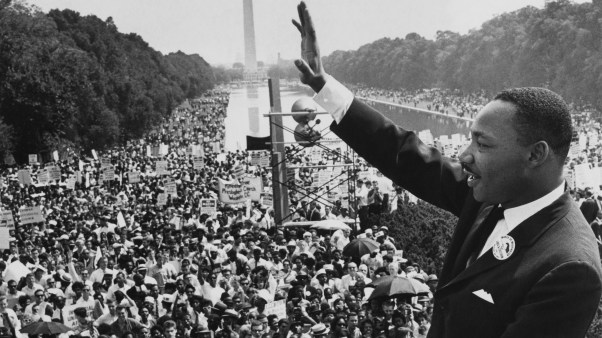
Three mandates for ministry that we can learn from Martin Luther King Jr.
Jesus is the treasure that is worth sacrificing everything else for.