
Sorry, something went wrong. Please try again.
In Raymond Arsenault’s biography of John Lewis, he recounts Lewis’s mentors and their shared vision of “the Beloved Community.” Howard Thurman, Martin Luther King Jr., and John Lewis often spoke of “the Beloved Community,” which was “a philosophical theory and a call to service.”
At the successful conclusion of the yearlong boycott in December 1956, King quoted the Book of Matthew and urged the boycotters to “inject a new dimension of love into the veins of our civilization.” “Love your enemies,” he recited, “bless them that curse you, pray for them who despitefully use you, that you may be the children of your Father which is in Heaven.” “We must remember,” King continued, “… that a boycott is not an end within itself; it is merely a means to awaken a sense of shame within the oppressor and challenge his false sense of superiority. But the end is reconciliation; the end is redemption; the end is the creation of the beloved community.”
Placing the goals of nonviolent direct action on such a high moral plane could be inspiring, drawing Lewis and many people of faith into the movement. But as the historian Mills Thornton has noted, King’s frequent allusions to the “beloved community” as a reachable promised land sometimes had the opposite effect, prompting more practical listeners to “dismiss it as a pipe dream.”
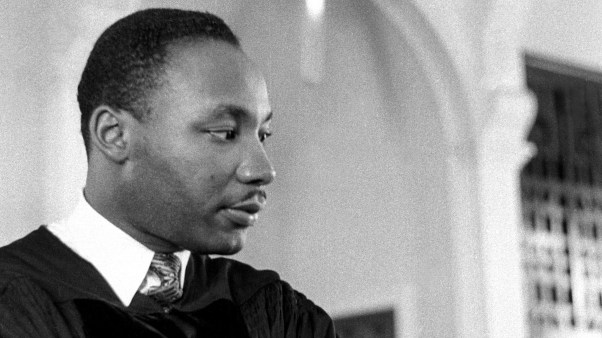
Source: Raymond Arsenault, John Lewis: In Search of the Beloved Community, (Yale University Press, 2024), pp. 4-5
Life for a 19th-century sailor was hard: Months at sea were accompanied by constant danger and deprivation. To make matters worse, mariners saw the same few people all day, every day, in a radically confined space where they were expected to get along and look after one another. On a long voyage, one obnoxious person could make life utterly miserable for everyone.
So, sailors used a tried technique to deal with an offender: the silent treatment. They would ignore him completely for weeks on end. That might sound like an innocuous action to you, but in truth, it was far from it. According to author Otis Ferguson (1944), the silent treatment was “a process so effective in the monotony of ship’s life as to make strong men weep.”
Of course, the silent treatment is a technique used not only by sailors. It can be encountered anytime, anywhere, from home to work. You have almost certainly experienced some form of it. Long-married couples will go for days without speaking. A person will give their oldest friend the cold shoulder. A father who refused to speak with his daughter for 30 years.
Silent-treatment inflictors do it because, as the sailors discovered, it was devastatingly effective in imposing pain on the recipient. So much pain, in fact, that it can leave a person scarred and a relationship in ruins.
Given how destructive the silent treatment is, like physical abuse, it can wreck relationships. According to the Gottman Institute, which conducts research on the success and failure of marriages, the act of cutting off your partner by stonewalling can be a contributory factor to divorce.
You have probably inflicted the silent treatment on someone—two-thirds of us have done so. We use it for two main reasons: The most common one is to punish someone for something they said or did. The next most common is conflict avoidance; you might go silent to avoid a major blow-up. But this is not how God intends for his children to relate to others. God intends for us to humble ourselves, take the first step to reconciliation, and begin a conversation without defensiveness or blaming. “Don’t let the sun go down on your anger” (Eph. 4:26).
Source: Arthur C. Brooks, “Whatever You Do, Don’t Do the Silent Treatment,” The Atlantic (3-21-24)
Marvin Gaye, one of the most legendary soul singers of the 20th century, produced a series of hit recordings before his untimely death in 1984 from gun violence. But now, 40 years later, the world may experience a new set of never-heard recordings from the singer. “We can open a time capsule here and share the music of Marvin with the world," says Belgian lawyer Alex Trappeniers.
Assuming, of course, that ongoing legal proceedings can resolve their legal ownership. Trappeniers is the attorney for the family of Charles Dumolin, with whom Gaye once lived. Gaye moved to Belgium in 1981, to escape a cocaine habit he’d picked up living in London. While living with Dumolin, Gaye regained his health, and returned to recording. Some of the recordings he made during that time have never been released, and their potential value has only skyrocketed in the decades since his death.
And since Gaye gave them to the family, Trappeniers says, they should remain the family’s estate. He said, “They belong to [the family] because they were left in Belgium 42 years ago. Marvin gave it to them and said, 'Do whatever you want with it' and he never came back.”
The problem is, the Belgian law that would support the family’s custodianship of the physical tapes does not necessarily apply to intellectual property contained therein. If the heirs of the Gaye estate lay a claim to his music, the family could possess the recordings without a legal right to release them commercially. The Gaye family could legally own the music, but have no access to the tapes that contain them. Without a resolution, a legal stalemate would result.
Trappeniers says some kind of compromise and collaboration is necessary to bring Gaye’s new music to life. “I think we both benefit, the family of Marvin and the collection in the hands of [Dumolin's heirs]. If we put our hands together and find the right people in the world, the Mark Ronsons, or the Bruno Mars. ... Let's listen to this and let's make the next album.”
Cooperation; Partnership; Teamwork; Unity – Much can be accomplished in any area of society where there is collaboration instead of competitiveness. This is what Paul told the Corinthian church, “I appeal to you, brothers, in the name of our Lord Jesus Christ, that all of you agree together, so that there may be no divisions among you and that you may be united in mind and conviction” (1 Cor. 1:10-17).
Source: Kevin Connolly, et al., “Marvin Gaye: Never-before heard music surfaces in Belgium,” BBC (3-29-24)
For Uwe Holmer, a German pastor, the question wasn’t simple. But it was clear.
The one-time East German dictator Erich Honecker was asking for his help. Honecker had long been an enemy of the church, who had also personally harried and harassed Holmer’s own family for years.
But now the Communist leader had been pushed from power, driven from his home, turned out of a hospital onto the street—and he was asking the Lutheran church to take him in. At one point, Holmer found himself praying for Erich Honecker. He knew how much power the Communist leader had, how he was praised everywhere he went, and how bad that must be for his soul.
Holmer had to decide what he believed. He knew what the answer was.
“Jesus says to love your enemies,” he explained to his neighbors at the time. “When we pray, forgive us our sins as we forgive those who sin against us—“we must take these commands seriously.”
The evangelical minister accepted the deposed dictator into his home in January 1990 and cared for him and his wife Margot for two and a half months. The action shocked Germans, East and West. The 40-year division of the country had just collapsed, and as the Cold War came to a surprising end, the German people didn’t know how they should treat those on the other side.
The until-then unknown pastor offered one bold answer: forgiveness and hospitality. Bitterness, Holmer said, is “not a good starting point for a new beginning among our people.”
Protestors arrived to yell at the minister and demand punishment for Honecker. “No grace for Honecker!” one sign said. Holmer reminded his neighbors of a statue of Jesus in town with Matthew 11:28: “Come to me, all you who are weary … and I will give you rest.” He reminded them of the Lord’s Prayer, asking God to forgive them as they forgave others.
Source: Daniel Silliman, "Died: Uwe Holmer, Pastor Who Forgave a Communist Dictator," Christianity Today (10-2-23)
Daniel Skeel serves on the faculty of UPenn Law School, specializing in bankruptcy law. In recent years he has been increasingly bold in bringing his faith to bear on his scholarship. Much of that witness can be traced to what he sees as the New Testament’s inescapable—and inescapably radical—understanding of debt (and debtors).
Skeel reflects,
There came a point, where I realized that the story of the Gospel, and the idea of the fresh start with bankruptcy, are very closely parallel. The idea is that you’re indebted beyond your ability ever to escape that indebtedness (and) you can’t get out on your own. It’s almost exactly the same trajectory as the idea of who Jesus is from an evangelical perspective. (It) emphasizes that reconciliation with God can come only by embracing Christ as the Savior, not through a believer’s good works.
This sort of language might cause some hearers to balk (how simplistic!), but its pastoral traction cannot be denied. Not among those carrying student loans, not among those with mortgages, to say nothing of those asked to repay a “debt” to society. Debts weigh on people, and the prospect of the clean slate has a gut-level allure and immediacy, whatever your financial situation.
In other words, it’s not an accident that Jesus used so much debt language. It’s not something to be minimized. And not just because it’s timeless, but because it’s profound. What other type of imagery could make the burden of sin—and sin’s forgiveness—more concrete?
Source: Adapted from David Zahl, “Bankrupt Grace,” Mockingbird (2-17-23); Trey Popp, “The Law, The Gospel, and David Skeel,” The Pennsylvania Gazette (6-23-22)
Amber Guyger is a former Dallas police officer who has been found guilty of murdering Botham Jean. The case became a national story because of the circumstances surrounding the crime, which included allegations of racism. Guyger is white and was a police officer; Botham Jean was an African American. Guyger shot and killed him in his own home—alleging that she had mistakenly entered the wrong apartment and thought he was a burglar.
Guyger has been sentenced to 10 years imprisonment. Many people outside the courtroom have decried the sentence, insisting that it is far too lenient. Inside the courtroom, another voice was heard, Brandt, the brother of Botham Jean. Brandt gave a statement in which he forgave Amber Guyger and explained that he did not wish her any harm. He instead encouraged her to look to Christ. Brandt looked at Guyger and told her that he loved her. He then asked the Judge if he could approach Guyger and give her a hug.
It is worth taking 4 minutes to watch and listen to Brandt Jean’s words. The weeping in the courtroom is palpable, with even the Judge wiping tears from her eyes. According to CNN, shortly afterwards the Judge, Tammy Kemp, handed Guyger a Bible to take with her, saying, “You can have mine. I have three or four more at home. This is the one I use every day. This is your job for the next month. This is where you start, John 3:16 “For God so loved the world …”
You can watch the 4-minute video here.
We are also guilty for crimes against God. But in his grace and mercy, “when you were dead in your sins and in the uncircumcision of your flesh, God made you alive with Christ. He forgave us all our sins …” (Col 2:13).
Source: Murray Campbell, “The Power of Forgiveness,” The Gospel Coalition (3-10-19); Eliott McLaughlin, “Amber Guyger gets 10-year murder sentence for fatally shooting Botham Jean,” CNN (10-3-19)
God’s desire is that we fulfill his plan for us in his way and timing.
Tucked away in the church grounds of Biertan, a quiet village in Romania, there is a small cottage known as the “matrimonial prison.” It was here that couples whose marriages were on the rocks were once sent, to sort out their problems while being locked away for up to two weeks. The method was said to be so effective that records show that there has only been one divorce in the area for the past 300 years.
In Biertan, the most important structure was the church and within the grounds is a small building with a room inside barely larger than a pantry. Couples who approached the local bishop to seek a divorce were sent to this matrimonial prison for a maximum of two weeks—six weeks according to some—to iron out their issues. The room was sparsely furnished with a table and chair, a storage chest, and a traditional Saxon bed. The couple attempting to repair their marriages had to share everything inside this tiny dwelling, from a single pillow and blanket to a single plate and spoon.
According to Lutheranism, the religion of the area, divorce was allowed under certain circumstances, such as adultery. But it was preferred that couples attempt to save their union.
Ulf Ziegler, Biertan’s current priest said, “The reason to remain together was probably not love. The reason was to work and to survive. If a couple was locked inside for six weeks, it was very hard for them to (grow) enough food the following year, so there was pressure to get out and to continue to work together.”
The small, dark room is currently a museum, yet Ziegler reveals that even today he receives requests from couples who look forward to using the prison to repair their own struggling marriages.
Divorce is far too easy in our culture. Although we cannot recommend this method, the idea of a couple being “encouraged” to seriously talk through their issues before simply rushing into divorce is sound.
Source: Kaushik Patowary, “Biertan’s Matrimonial Prison,” Amusing Planet (11-22-22)
Louie Anderson had a career that included a slew of small but memorable roles in seminal 1980’s films, such as Flashdance, Quicksilver, Ferris Bueller’s Day Off, and Coming to America. Anderson was always open about his upbringing--a childhood that was marred by his father's alcoholism. He once shared: "One time my dad goes, ‘I hate that guy.’ I go, ‘You don’t even know him.’ He goes, ‘I don’t need to know someone to hate them, Louie.'”
His childhood left him embittered towards his dad, until he learned about his father's life struggles. Louie grew up in a St. Paul housing project as one of 11 children. He said: “My dad had a 10 times harder life than mine." Anderson went on to reveal that when his father was around 10 years old, he and his sister were taken out of their home and placed for adoption. He said “[They were] split up and never saw each other for 50 years. Because ‘put up for adoption’ meant that you were put up in front of a church congregation and families picked you and took you. Imagine being with your sister and having her go one place and you go another.”
This helped Louie understand why his father acted the way he did: "So, I go, I’m sorry, Dad.' Forgiveness was easy for me when I found that out."
Instead of dwelling on what "they" did to you, maybe we should spend time understanding what life struggles led them to act the way they did. Scripture teaches us that living apart from Christ is difficult. We should never be surprised when an unsaved person acts unsaved. Pause and just imagine being in their shoes, going through what they are enduring apart from Christ. Afterwards, we may just find that forgiveness will come.
Source: Aurelie Corinthios, “Louie Anderson on Forgiving His Alcoholic Father,” People (3-21-18)
The old adage tells us to “forgive and forget,” but does that line up with the church’s understanding of forgiveness? Does showing mercy really require that we no longer remember the wrongdoing?
Pastors are half as likely as their congregations to say that real forgiveness requires forgetting. Pastors are also more likely than those in the pews to say it’s about “restoring a relationship but not forgetting.” Either way, forgiveness can be difficult for us to extend—around a quarter of practicing Christians know someone they can’t or don’t want to forgive.
Percent of practicing Christians who identify with each experience:
Received unconditional forgiveness from someone – 55%
Have not received unconditional forgiveness – 38%
Know someone they don’t want to forgive – 27%
Know someone they can’t forgive – 23%
Have not offered unconditional forgiveness – 15%
Source: Barna Group, “Forgetting What Lies Behind?” CT Magazine (July, 2019), p. 17
On October 16th, 2021, a notorious Haitian gang abducted 17 missionaries from a US-based organization. Five children were believed to be among those kidnapped, including a two-year-old. The 400 Mawozo gang was also blamed for kidnapping five priests and two nuns earlier this year in Haiti. The gang routinely carries out kidnappings, carjackings, and extortion of business owners.
The mission organization, Christian Aid Ministries (CAM), ministers in scores of countries. In Haiti, its long-term work involves providing school supplies for children, medicines for clinics, and food for the elderly, as well as distributing Bibles and Christian literature. The hostages had been visiting an orphanage supported by CAM. And yet, family members of the captors have been united in their desire to pray for, bless, and forgive the gang members.
Here are some of the public statements from CAM family members:
Though this time was difficult, the families are united in their desire to follow Jesus’ teaching of forgiveness.
Source: Donald B. Kraybill and Steven M. Holt, “In Plain Prayer: Why Missionary Families Are Showing Love to Haiti Kidnappers,” Christianity Today (10-29-21)
Stephen Olford tells the story of Peter Miller, a Baptist pastor during the American Revolution. Miller, lived in Ephrata, Pennsylvania, and one of his dearest friends was General George Washington. In the town of Ephrata there also lived a spiteful troublemaker named Michael Wittman who did all he could to oppose and humiliate Miller.
One day, Wittman was arrested for treason and sentenced to death. When he heard the news, Miller set out to Philadelphia to plead for the life of his enemy. After walking seventy miles—on foot—Miller petitioned his friend, General Washington, to spare Wittman’s life.
“No, Peter,” General Washington said. “I cannot grant you the life of your friend.”
“My friend?” exclaimed the old preacher. “He’s not my friend. In fact, he is the bitterest enemy I have.”
“What?” cried Washington. “You’ve walked seventy miles to save the life of an enemy? That puts the matter in different light. I’ll grant your pardon.” And he did.
That day, Miller and Wittman walked back home to Ephrata together. When they arrived home, they were no longer enemies. They were friends.
Source: Keith Giles, Jesus Untangled: Crucifying Our Politics to Pledge Allegiance to the Lamb, (Quoir, 2017), p. 85
Thomas Tarrants shares his testimony of being a former hate-filled Klansman who was saved by God’s grace:
I came of age in the early 1960s in Mobile, Alabama, which had been segregated since its founding. In 1963, reacting to the federally mandated desegregation of Alabama’s public schools, Gov. George Wallace uttered his infamous pledge of “Segregation now, segregation tomorrow, segregation forever.”
I read some white supremacist, anti-Semitic, anti-Communist literature that was circulating within my high school. Then I met the people who were advocating these ideas. The civil rights movement, they said, was part of a Communist plot, and the US government had been infiltrated by Communist agents.
All these warnings made me anxious about America’s survival, and my fears soon turned into hatred—toward those I perceived as America’s enemies. So it was only a short step to getting involved with Mississippi’s dreaded White Knights of the Ku Klux Klan, the most violent right-wing terrorist organization in the United States at the time.
One summer night, as my accomplice and I attempted to plant a bomb at the home of a Jewish businessman, we were ambushed in a police stakeout. My partner was killed at the scene. Four blasts of shotgun fire at close range left me critically wounded. Doctors told me it would be a miracle if I lived another 45 minutes. Yet God spared my life—to the astonishment of the doctors and the dismay of the police. If anyone deserved to die, it was certainly me.
At the end of a two-day trial, I was convicted and sentenced to 30 years in the Mississippi State Penitentiary. About six months after arriving in prison, I escaped with two other inmates. But a couple of days later, we were apprehended after a blazing gun-battle with the authorities, during which one of the other inmates was killed. Had this man not relieved me from standing watch about half an hour early that day, I would have been the one killed. God had shown me mercy once more.
Back in prison, I was confined to a six-by-nine-foot cell in the maximum security unit. To keep from going crazy, I read continuously. This eventually led to the New Testament, specifically the Gospels. But as I read the Gospels in my prison cell, my eyes were opened in a way that went beyond simply understanding the words on the page.
My sins came to mind, one after another. Conviction grew, and with it tears of repentance. I needed God’s forgiveness. And I knew it came only through trusting Jesus, who had given his life to pay for my sins. One night I knelt on the concrete floor of my cell and prayed a simple prayer, confessing my sins and asking Jesus to forgive me, take over my life, and do whatever he wanted to with it.
As I read the Bible daily, a whole new world opened up to me, and I couldn’t get enough! Early on, God delivered me from hate, and I began to grow in love for others. Friendships developed with black inmates and others who were very different from me.
After serving eight years in prison, an extraordinary turn of events resulted in a parole grant to attend university. That set in motion a series of developments which, over the next 40 years, led me first into campus ministry, then pastoral ministry in a racially mixed church, and finally to a long ministry of teaching and writing at the C.S. Lewis Institute.
As I look back over the nearly 50 years since God saved me, I can only thank and praise him that he didn’t give me what I deserved. But because he is full of grace and mercy, he gave me exactly what I needed. He “is patient with [us], not wanting anyone to perish, but everyone to come to repentance” (2 Pet. 3:9).
Source: Thomas Tarrants, “God’s Mercy to a Klansman,” CT magazine (September, 2020), pp. 79-80
In her attempts to end the legal conservatorship that prevents her from controlling her own legal or fiscal affairs, former pop star and embattled single mom Britney Spears has been gaining support from plenty of notable celebrities. But for one entertainment journalist, his support was not received among Spears’ fanbase with open arms.
One Twitter user responded, “If you’re really sorry, put your money where your mouth is. Donate all of the *considerable* wealth you got through misogynistic bullying.”
That tweet was aimed at veteran entertainment blogger Mario Lavandeira, who uses the nom de plume Perez Hilton. Britney Spears supporters have been taking Hilton to task for his decade-long history of disrespectful behavior toward the pop star. His behavior helped to generate income on his gossip blog and establish his career as a go-to purveyor of celebrity sleaze.
Because of this considerable blowback, Hilton has been on an apology tour, trying to atone for his history of media misbehavior. Hilton appeared on British TV show Sky News and said, “I know I did not express myself as well as I could have. I didn’t lead with empathy and compassion, which thankfully seems like most people now are understanding the severity of Britney’s situation. I absolutely apologize and carry deep shame and regret.”
In response to the Twitter exchange, Hilton decided not to contribute to Spears’ legal fight, citing his need to support his children and mother, all of whom are under his care. Still, it seems like the best apology in this case would be changed behavior. Time will tell whether or not Perez Hilton is truly capable of that kind of apology.
When we do wrong, it's our Christian duty not only to recognize the wrongdoing and make restitution for it. If our sin was committed publicly, then a public confession can serve as an example to others.
Source: Danielle Broadway, “Perez Hilton regrets how he treated Britney Spears. Fans say he’s not that innocent,” Los Angeles Times (6-24-21)
A.W. Tozer wrote:
Has it ever occurred to you that one hundred pianos all tuned to the same fork are automatically tuned to each other? They are of one accord by being tuned, not to each other, but to another standard to which each one must individually bow. So, one hundred worshipers met together, each one looking away to Christ, are in heart nearer to each other than they could possibly be, were they to become “unity” conscious and turn their eyes away from God to strive for closer fellowship.
Source: A. W. Tozer, The Pursuit of God (Simon & Brown, reprint 2018), p. 63
Back in 1912, Willa and Charles Bruce were one of the first African-American landowners in Los Angeles County after purchasing a plot of oceanside property and opening one of the only non-racially-segregated resorts in the area.
Despite the grateful patronage of Black visitors, “Bruce’s Beach” eventually became a target of racist attacks from a local chapter of the Ku Klux Klan. Family historian Duane Shephard said, “They started harassing my family around 1920. They burned a cross. They threw burning mattresses under the porch of one of the buildings.”
By 1924, the city used the process of eminent domain as a pretext to seize the property from the Bruce family and turn it into a public park. L.A. County Supervisor Janice Hahn said, “These people were terrorized and kicked out of a community where they were trying to live peacefully. Here were some Black lives, and they didn't matter 100 years ago. But I think they matter now.” Hahn made those comments in a news conference announcing the decision from the local city council to return that land to the descendants of Willa and Charles Bruce.
Local resident Malissia Clinton wonders what her community would look like had that injustice not taken place: “This community might be teeming with Black folks if we had not destroyed that family. It changed the trajectory, not only of their lives and their offspring but of this community.”
The county plans to give the property back to the Bruce family descendants, then lease the property from them, in order to keep it accessible to the community while providing income for the family. It also authorized $350,000 to spend on public art commemorating the family.
When asked what the original couple would’ve thought of this gesture, Shepard was emphatic. "Oh, they would have loved it. I'm sure they're proud of us right now for fighting to get that back.”
Even as the righteous pursue justice, let them not lose hope that injustices can be made right again, for with God all things are possible.
Source: Staff, “Manhattan Beach property seized from Black family more than a century ago may be returned,” CBS (4-9-21)
To participate in the work of justice, we pastors need to grow and change.
In Delia Owens best-selling book, Where the Crawdads Sing, readers are introduced to a young girl named Kya, living in Barkley Cove, NC. Known to locals as "Marsh Girl,” she had lived a hard, lonely life, abandoned and forgotten by virtually everybody. As her story unfolds, one of those characters return to the marshes of North Carolina. Tate was her first love and had become the only family she knew. He had left the swamp for success elsewhere, promising to return for her. But Tate never returned, and he never wrote to explain why.
One night Tate came up to her front door. Kya is enraged at the sight of him as he attempts to apologize:
Kya, leaving you was not only wrong, it was the worst thing I have done or ever will do in my life. I have regretted it for years and will always regret it. I think of you every day. For the rest of my life, I’ll be sorry I left you. I truly thought that you wouldn’t be able to leave the marsh and live in the other world, so I didn’t see how we could stay together. But that was wrong.
Finishing his plea, Tate watched her until she asked, “What do you want now, Tate?”
He responded, “If only you could, some way, forgive me.”
As Kya looked at her toes, she thought to herself "Why should the injured, the still bleeding, bear the onus of forgiveness?”
Kya asked a good question. One with which we should wrestle when thinking about the work of Christ on the Cross.
Source: Delia Owens, Where the Crawdads Sing (G.P. Putnam's Sons, 2018), p. 198