Sorry, something went wrong. Please try again.
Carrie McKean writes in an article on Christianity Today online:
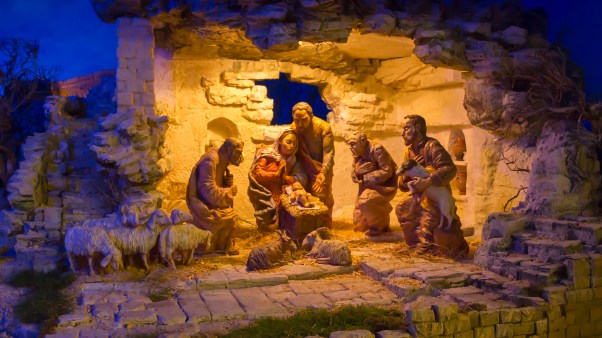
When I think about the night of Jesus’ birth, the first picture that comes to mind is straight from my childhood. It’s like I’m peering into a snow globe manger scene. Snow falls softly, blanketing the hillside in a carpet of quiet. All is calm. All is bright. Give it a good shake, the snow gently swirls, then settles over the pristine couple and silent baby once again.
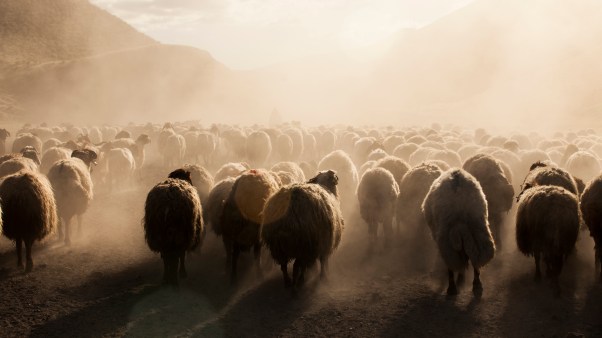
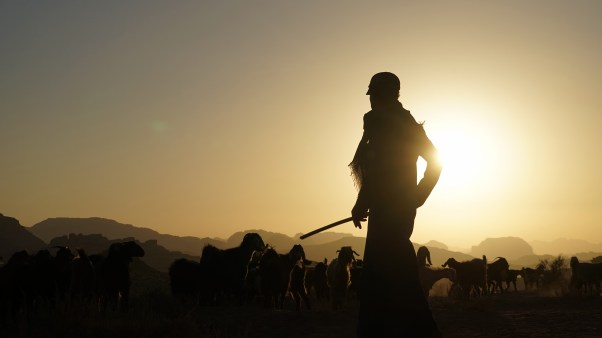
But that image is quickly crowded by another. 15 years ago, my husband and I lived in a dusty Chinese village on the outskirts of Beijing. We volunteered for four years at New Day Foster Home, a private, Christian nonprofit organization. In those days…they helped fund surgeries and provided long-term foster care for medically fragile orphans. We lived in an apartment complex about a mile from the organization’s campus, and most mornings we walked behind a flock of sheep and their shepherd on our way to work.
You could smell that shepherd’s stable before you saw it. Fetid and filthy, the sheep crowded in at the end of a day. In the summer, flies buzzed. In the winter, sludge froze solid. I would pass the sheep and their shepherd, pitying him a little. Around Christmas, I pictured my Savior born amid fresh, sweet hay in an inexplicably warm and comforting stable. The snow globe in my mind was just how I wanted to imagine Jesus’ entrance into the world. But the stable I walked past told the truth: Stables smell like dirty sheep.
I wanted to throw a snow globe against a brick wall. That clean Nativity was plastic, fraudulent, and fake. I felt angry at myself for all the ways I’d cheapened and tamed the gospel. My own faith felt fake and plastic too.
The world I saw outside my window needed a God-become-flesh in circumstances far messier than those perfect little snow globes. And here was this shepherd and his sheep, upending my picture of the Incarnation and revealing that the lack was in my seeing, not in Christ’s coming.
There’s no way around the fact that incarnation means coming to a filthy and fetid world, just like that stable in China…. It’s a world with disease and mental illness. A fallen creation groans with earthquakes, floods, and fires. Sorrow, unending sorrow. It is all too dirty, and yet he came near.
Jesus is God-made-flesh who doesn’t ask us to clean up the mess before he comes. He enters into our messes, always, always with us. He put on human skin…willingly emptying himself (Phil. 2:5-8), becoming a shepherd for you and me, a bunch of dirty sheep (John 10:11). He didn’t leave us in our squalor but led us to green pastures—to healing, rescue, and restoration of our souls (Ps. 23). I love a God who sees dirty sheep and tends them himself.
Source: Carrie McKean, “Filthy Night, Fetid Night,” Christianity Today Online (12-19-23) December 19, 2023
A sermon series idea on those who encounter the amazing revelation of the birth of the Savior.
During an office hiking retreat in Colorado’s San Isabel National Forest, an unnamed worker was rescued after being abandoned by his colleagues on Mt. Shavano, a 14,230 feet mountain. The incident occurred after a group of 15 hikers split into two teams: one headed to the summit while the other ascended to a saddle area before turning back.
While 14 of the hikers descended safely, the unnamed person continued to the summit, reaching it around 11:30 a.m. However, he became disoriented on his descent. His colleagues, already on their way down, inadvertently collected markers that were left to help guide the descent. This confusion left the man struggling to navigate the steep boulder field on the northeast slopes of the mountain.
Using his cellphone, the hiker pinned his location and sent it to his team, who advised him to return to the summit to find the correct trail. Shortly after receiving this advice, a severe storm with freezing rain and high winds struck, disorienting him further and losing cellphone signal in the process.
When he failed to check in, his colleagues reported him missing at 9 p.m., approximately eight-and-a-half hours after he started his descent. A search was immediately initiated but was hindered by harsh weather conditions that affected both ground searches and aerial drone operations.
The following morning, the missing hiker managed to regain some cellphone service and called 911. Rescue teams, who had been searching through the night, were then able to locate him in a gully near a drainage creek. He was airlifted to a hospital, where he was found to be in stable condition.
The hiker reported falling at least 20 times and expressed his gratitude for being able to call for help despite his dire situation. Rescue officials noted that his recovery was fortunate given the challenging circumstances.
No matter what mistakes we’ve made or how we’ve been mistreated by others, God will never leave us or forsake us. Even when God chooses not to deliver immediately, he will walk with us and enable us to endure our moments of trial.
Source: Bill Hutchinson, “Office retreat gone awry: Worker rescued after allegedly left stranded on Colorado mountain by colleagues,” ABC News (8-28-24)
Britain's so-called "loneliest sheep," which was stuck at the foot of a remote cliff in Scotland for at least two years, has been rescued. Cammy Wilson, who led the rescue mission, said it was a risky one. That's why, despite past attempts by others, the sheep had been stuck for so long.
The sheep was first discovered in 2021, on the shore of the cliff in Brora by kayaker Jillian Turner. Photos show the sheep at the base of the cliff surrounded by steep rock on one side and water on the other.
In October of 2023 Turner said she has spotted the sheep several times since and the sheep hasn't been able to move off her spot on the base of the cliff. Turner said, “It is heart-rending. We honestly thought she might make her way back up that first year.”
Wilson, runs a Facebook page called "The Sheep Game" that chronicles his life as a farmer. After another farmer brought the sheep to his attention, he named the sheep Fiona and continued to give updates about her on Facebook.
Wilson then had an exciting update for followers. He and four others used a winch, a mechanical device that can act like a pulley, to get to Fiona. One person stayed at the top of the cliff, while the others traveled about 820 feet down the cliff to get to her.
In a statement, the Scottish SPCA said the group was notified of the rescue. Scottish SPCA said, "Our Inspector checked over the sheep and found her to be in good bodily condition, although needing sheared. The ownership of the sheep then was handed over to Dalscone Farm, a tourist attraction in Edinburgh with activities for children.
You can view pictures of the sheep and the cliff here.
Source: Caitlin O'Kane, “Britain's "loneliest sheep" rescued by group of farmers after being stuck on foot of cliff for at least 2 years,” CBC News (11-6-23)
‘We lead the people of God through the preaching of the Word of God.’
When officers from the Michigan State Police (MSP) were asked to provide traffic control for a recent incident, they didn’t know they were signing up for snarky posts with viral video clips.
But that’s exactly what happened when police cordoned off a section of Interstate 75 on a recent Sunday afternoon to help animal control officers wrangle an errant steer named Lester who’d been seen roaming the nearby countryside. “It was pretty wild — cars were still flying by when I went after him,” said Ricky Littlejohn, a local wrangler hired to retrieve the errant bovine whose heroism prompted the road closure.
The original post on MSP’s social media read, “We know that if there are no pictures or video it didn’t happen.” The post was accompanied by a clip of dashcam footage featuring the steer trotting down the freeway as cowboy-hat-clad wranglers rode horseback, twirling ropes in hot pursuit.
The traffic control initiative likely saved Lester’s life, either by preventing a motorist from crashing into the errant cattle, or from an intervention by law enforcement resulting in lethal force, like what happened a month prior in a nearby area.
God cares enough about us to go to great lengths to rescue us from harm and correct wayward behavior that can lead to destruction.
Source: Frank Witsil, “Steer wandering near I-75 in Oakland County rescued by wranglers,” Detroit Free Press (5-22-23)
A sheep named Baarack received a much-needed shearing after rescuers in Australia found the abandoned animal with more than 75 pounds of wool weighing it down. A video of his transformation on TikTok has more than 18.5 million views. After rescuing Baarack, sanctuary staff gave him the long-overdue shearing and found the fleece clocked in at about 78 pounds.
According to Kelly Dinham with Edgar’s Mission Farm Sanctuary, sheep need at least yearly shearing to keep their coats light enough for the animals, otherwise it will continue to grow. Despite his heavy fleece, Baarack was actually underweight after being sheared. The wool around his face impaired his vision, too. Dinham said they found grit and debris "pooling in the gap between his cornea and the lid." And a grass seed stuck in there had caused an ulcer.
If a sheep goes for an extended period of time without adequate care, the overgrown wool can lead to build up of manure and urine that then could lead to infection, according to a North Dakota State University fact sheet on sheep shearing.
This illustration easily applies to the Chief Shepherd and his sheep (and the undershepherd and their flock). As the sheep of his pasture, we need to be under the care of our Shepherd, otherwise we can wander off (Luke 15:4) or be attacked (Acts 20:29). We need those peaceful streams and quiet pastures, and his loving care (John 10:1-18; Psalm 23:1-6).
Source: Ryan W. Miller, “Baarack, a sheep rescued in Australia with over 75 pounds of wool, is 'getting more confident every day,’” USA Today (2-24-21)
The message of Christmas changes our lives and we ought to tell others.
Almost five years to the day after he returned home the first time, the prodigal son emptied his bank account, packed a few changes of clothes, and snuck off for the faraway country. Again.
The first year back he was just glad to be home.
The second year was toughest; he still couldn’t get (rid of) … the shame that chewed away at his soul.
The third year, things leveled out a little. He started feeling more at home, back in synch with his former life.
The fourth year, certain things began to irk him. His old itches longed to be scratched.
And the fifth year, it happened. All the former allurements came knocking, rapping their knuckles on his heart’s front door.
And so the prodigal relapsed. Re-sinned. Re-destroyed his life.
You know him—or her. Maybe it’s your best friend. Maybe it's your child. Or maybe it’s you. That thing you swore you’d never do again, you did it last night. You left the straight and narrow. Prodigals have a way of finding themselves right back in the pigsty.
In that moment … heaven and hell contend within you. Hell shouts, “Now you’ve gone and done it. You stupid piece of garbage. You’re a lost, lonely, hopeless cause. You’re a pig. And that’s all you’ll ever be.”
But there is another voice. It’s the voice of heaven, the familiar lilt of a Dad’s voice, echoing down the long hallways of hope … down to the deepest, darkest caverns of your pain. He doesn’t accuse. He doesn’t berate. He only mouths two simple words … of heaven’s redemptive love: “Come Home.”
The second time, the third time, the thousandth time, he will sprint … to meet you down the street, throw his arms around you, kiss you, and command that the fattened calf be barbecued. The Father is standing on the porch, his hand shading the sun from his eyes, scanning the horizon for the familiar image of the one who will ever remain, his precious, beloved child. “Come home.”
Source: Chad Bird, “When the Prodigal Son Relapses,” 1517.org (5-22-22); David Zahl, “When the Prodigal Son Relapses,” Mockingbird (3-25-22)
A farmer's sheep and pig had escaped. Together they had found a weak rail in the fence and had pressed upon it until it broke under their weight. Seeing their opportunity, they quickly bolted from the field and began to explore their new and unfamiliar surroundings.
It did not take long for the farmer to notice that two of his animals were missing and to set out to find them. But the animals had wandered far and had not left much of a trail behind them. Day soon turned to night and after resting fitfully, he resumed his search in the morning. The animals had now been gone for more than 24 hours and he began to wonder what could possibly have happened to them.
It was in the afternoon of the second day that he began to hear a distant bleating, the sound of his sheep crying out. He then began to follow the sound as it led toward a nearby bog. And it was there that he found his missing sheep and his missing pig. Both had fallen into a deep ditch, both had become coated in muck, both were unable to scramble out. But where the pig had been content to wallow in the mud, the sheep had known to bleat pathetically until the farmer had come to rescue it, to lift it out, and to cleanse it.
Then, said the farmer,
If you are ever deceived into a sin and overtaken by a weakness, don’t lose heart. Go at once to your compassionate Savior. Tell Him in the simplest words the story of your fall and the sorrow you feel. Ask Him to wash you at once and to restore your soul. For if a sheep and a sow fall into a ditch, the sow wallows in it, but the sheep bleats pathetically until she is cleansed by her master. Be the sheep, my friend, and not the pig.
Source: Tim Challies, “The Tale of the Pig and the Sheep,” Challies blog (9-29-21)
Gary Burge, as a New Testament scholar, tells us what he would like to hear in a Christmas sermon.
In the film Greyhound, actor Tom Hanks plays the captain of a US destroyer that is commanding the escorts of a 37-ship convoy. They are crossing the Atlantic in 1942, at the height of the “Battle of the Atlantic.” The story focuses on the three-days that the convoy is in the “Mid-Atlantic Gap,” where they do not enjoy the benefits of air-cover. The convoy is subjected to relentless attack by a U-boat “wolf pack.” The U-boats sink seven ships from the convoy and one of the accompanying escorts. The escorts in turn sink a number of the U-boats. The majority of the convoy makes it through, delivering essential troops and supplies.
The intensity of the combat is unrelenting. Hanks is on the bridge of his ship throughout. A running motif of the film is that he never gets to eat. His stewards keep preparing him food, and bringing it to him, but when it arrives there is yet another attack and the food almost invariably crashes to the deck. In a poignant scene towards the end, he changes his boots for slippers because his feet are bloodied by standing for such a long period.
The film is based on the book The Good Shepherd by C. S. Forester, and the title indicates the spiritual symbolism of the story. Hanks’ character is clearly a committed Christian, who is shown praying at his bedside, and he has a prominent sticker of Hebrews 13:8 in his cabin.
C. S. Forester must have realized convoy escort duty is a good parallel for the work of Christian ministry. Pastors and leaders are called to protect their flock from the attacks of the enemy and ensure that they reach their destination safely.
Source: John Stevens blog, “Tom Hanks Film Greyhound Reminds Us That Church Leadership Is A Relentless Battle To Protect God’s People From False Teachers” John-Stevens.com (8-6-20); C. S. Forester, The Good Shepherd (Penguin Books, Reissue Ed, 2018)
You remember Scrooge’s story, I’m sure. In one night, the old miser Scrooge is completely transformed by the visit of the ghosts of Christmas past, present, and future. When he realizes he didn’t die, he’s a transformed man. At first he didn’t know how much time has passed.
Running to the window, he opened it, and put out his head:
“What's to-day?'' cried Scrooge, calling downward to a boy in Sunday clothes, who perhaps had loitered to look about him.
“To-day?'' replied the boy. “Why, Christmas Day.''
“It's Christmas Day!'' said Scrooge to himself. “I haven't missed it.”
At the very end, Dickens wrote,
“Ever afterwards; and it was always said of him, that he knew how to keep Christmas well, if any man alive possessed the knowledge. May that be truly said of us, and all of us! And so, as Tiny Tim observed, ‘God Bless Us, Every One!’”
Possible Preaching Angle: We know another story like The Christmas Carol, only with shepherds and angel visitors instead of ghosts. The transformed Scrooge glorified and praised Christmas. And over a 150 years later, we’re still following his lead. Unbelievers can’t find enough ways to glorify and praise Christmas. But as believers we take our cues, not from Scrooge, but from the shepherds who returned glorifying and praising God for all they had seen and heard .
Source: Charles Dickens, A Christmas Carol (Bantam Classics, 1986)
As believers we must understand that the gospel reaches all people.
God’s invitation for us is to hear his voice, trust him in the valley, see his beauty, and receive his love.
In his essay "Sinsick," theologian Stanley Hauerwas explores the notion of authority using a medical analogy. If a medical student told his advisor, "I'm not into anatomy this year, I'm into relating" and asked to skip anatomy class to focus on people, the medical school would reply, "Who in the [heck] do you think you are, kid? … You're going to take anatomy. If you don't like it, that's tough." Hauerwas delivers his crucial point by saying: "Now what that shows is that people believe incompetent physicians can hurt them. Therefore people expect medical schools to hold their students responsible for the kind of training that is necessary to be competent physicians. On the other hand, few people believe an incompetent minister can damage their salvation."
The church has said for millennia that bad teaching is more deadly than bad surgery. … The need for formal structures of training, hierarchy, and accountability in medical schools and medical boards is obvious because we don't want our doctors to simply be popular or relatable; we want them to practice medicine correctly and truthfully, participate in a medical tradition broader than themselves, and serve under the authority and oversight of others. We need to be as discerning in whom we trust with care of souls as we are with care of our bodies.
Source: Trish Harrison Warren, "Who's in Charge of the Christian Blogosphere?" Christianity Today (April 2017)
The Telegraph, a British newspaper reported that a flock of over 1,300 sheep "had to be rounded up by police in the Spanish city of Huesca after their shepherd fell asleep." The article continued:
According to city authorities, the police were alerted to the presence of the extremely large flock attempting to negotiate the streets in the center of Huesca at around 4.30am on Tuesday when a local resident dialed Spain's 112 emergency number.
The dozing shepherd was meant to be keeping the animals in check outside the environs of the city while he waited for the clock to strike 7am, when he was due to guide the sheep northwards through Huesca towards Pyrenean uplands where his flock will graze during the hot summer months.
The police eventually found the herder, who was still peacefully slumbering. Together the embarrassed shepherd and police officers were eventually able to extract the sheep from the city and return them to their pastures.
Source: James Badcock, "Sheep run loose in Spanish town after shepherd falls asleep," The Telegraph (6-8-16)