Sorry, something went wrong. Please try again.
People are speaking about 3,000 fewer words each day compared to less than two decades ago. Between 2005 and 2018, researchers found the average number of daily spoken words dropped from 16,000 to around 13,000 — a decline that appears linked to our increasing reliance on digital communication tools like texting and social media. Co-lead author Valeria Pfeifer noted, “We did a full analysis looking at what year the data were collected and found that, indeed, 300 spoken words on average per year go missing.”
Another researcher added, “There is a strong cross-cultural assumption that women talk a lot more than men. We wanted to see whether or not this assumption holds when empirically tested.”
The numbers show that women do speak slightly more on average — about 13,349 words per day compared to men’s 11,950. This modest difference of 1,073 words is small compared to the vast individual variation in daily speech, which ranges from fewer than 100 to over 120,000 words per day.
Senior author Matthias Mehl said, “I’m fascinated by the idea that we know how much we need to sleep, we know how much we need to exercise, and people are wearing Fitbits all the time. But we have no idea how much we’re supposed to socialize. The evidence is very strong that socializing is linked to health, at least to the same extent as physical activity and sleep are. It’s just another health behavior.”
Source: Staff, “Daily talk time plummets 3,000 words since 2005 as texting takes over,” Study Finds (2-4-25)
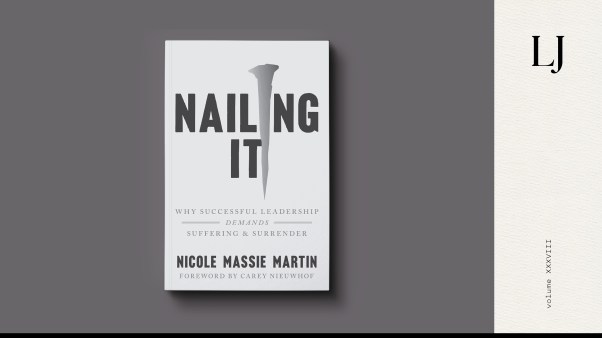
In Nailing It, Nicole Massie Martin offers personal, poetic reflections that invite pastors to embrace their wounds—and the God who heals through them.
Richard Foster discusses healthy pastoral leadership, his daily routine, and how to practice solitude in an age of distraction.
Ken Boa’s Conformed to His Image lays out twelve distinct pathways toward holistic discipleship rooted in God’s character.
With pastoral warmth, Paul E. Miller’s A Praying Life helps leaders bring their messy lives to a Father who listens, understands, and stays.
Living in Hollywood is a challenge. Growing up as a child actor almost guarantees a life of dysfunction. Without a strong father, Ron Howard could have taken the path of least resistance. But his father was there from the beginning, protecting, loving, guiding.
There was a time when Dennis the Menace was a hit as a troublemaking, mop-headed boy. “Leave It to Beaver” featured boys who rubbed adults the wrong way. The wisecracking, annoying trope was all the rage. It’s also how the character of Opie was originally written.
After the first reading, Rance Howard, Ron’s father, sat down with Andy Griffith and gently encouraged him to make Opie’s relationship with his TV dad a little more tender and innocent, a little more real, like his relationship with his own boys. Andy listened and took the suggestion to heart. When shooting started, Opie emerged as a new kind of television boy, a kid who had a special relationship with his father, who helped his son through life’s challenges.
Seeing a boy own up to his mistakes and a father own up to his — traits influenced by Rance and Ron — created an honest relationship that families still look to today. Ron Howard says of his father, “He stood for something that people could recognize as integrity. And we benefited from that.”
Looking up to your father is a powerful force. We need wise fathers as role models in life. Fathers who love us and help us learn from our mishaps.
Source: The Foundation for a Better Life, “Ron Howard’s father made a few suggestions to Andy Griffith. The result is an endearing father-and-son relationship that millions still watch today,” Gazette.com (9-3-24)
Spiritual formation shouldn’t be an attempt to control ministry outcomes—it’s about cultivating space for God to work.
In today’s digital age, entertainment is always at our fingertips. Whether it’s the endless scroll on TikTok or jumping from one YouTube video to another, the way we consume media has drastically changed in recent years. But is this content stream of entertainment really entertaining us? A new study finds that scrolling through videos online to cure your boredom can actually make you even more bored!
Researchers from the University of Toronto delved into the curious phenomenon where our attempts to avoid boredom by rapidly swiping through digital content might actually be making things worse. The findings reveal a counterintuitive outcome: the very behavior meant to stave off boredom — quickly moving through entertaining videos — ends up intensifying it.
Digital platforms like YouTube, TikTok, and Netflix have revolutionized how we consume media. With just a swipe or a click, we can skip over content that doesn’t immediately capture our interest. This behavior, known as “digital switching,” is when users switch between different videos or fast-forward through parts of a video in search of something more stimulating. At first glance, this seems like an efficient way to maximize enjoyment and avoid dull moments. However, research suggests that this behavior might be doing the opposite of what we intend.
You might wonder why switching between content would make you more bored. After all, if you’re skipping the “boring” parts, shouldn’t that make the overall experience better?
When you engage deeply with a video, your attention is focused, and you’re more likely to find the content meaningful. However, when you constantly switch, your attention is fragmented. This fragmented attention doesn’t allow you to become fully absorbed in what you’re watching, leading to a feedback loop where you’re constantly seeking something better but never fully satisfied and therefore more bored.
Not only does endlessly swiping from one video to another lead to wasting time and boredom, it can also open the door to the temptation to view inappropriate content for an emotional high.
Source: Chris Melore, “Swiping through videos won’t cure your boredom — It’s making it worse,” StudlyFinds (8-19-24)
Disney is trying to be as addictive as Netflix, and they want to grab and keep your attention. Disney spent years trying to attract new subscribers to its Disney+, Hulu, and ESPN+ streaming services. Now it is trying to make sure those customers spend more time glued to the screen. The entertainment giant is developing a host of new features aimed at lengthening the amount of time subscribers spend viewing its shows and movies. The goal is to mitigate customer defections and generate more revenue from advertising sales.
A metric known as “hours per subscriber”—a measure of user engagement—has taken on increased importance at Disney in recent months, current and former streaming employees say. Netflix, famous for enabling binge-watching with batch releases of episodes, has also given priority to improving user engagement and return visits in recent years.
New features in the works at Disney include a more-personalized algorithm to power content recommendations, customized promotional art for new shows based on subscriber’s tastes and usage history, and emails sent to viewers who stop watching in the middle of a series reminding them to finish.
The bottom line is this: many organizations are vying to capture your attention. What will you choose to set your mind on?
Source: Robbie Whelan, “How Disney Is Trying to Be as Addictive as Netflix,” The Wall Street Journal (7-16-24)
A man from Scotland noticed positive changes in his lifestyle after he decided to stop watching television in the evening. 41-year-old Stephen Clarke said, “Now I spend my time creating the reality I want rather than numbing myself from the one I have.”
Mr. Clarke grew up watching television at home as it seemed like a normal thing for him to do. After completing work, he would watch movies or DVDs. Since he already followed a healthy lifestyle, he didn’t experience any glaring negative effects from watching television, but it was the “not-so-obvious side effects” that he eventually became aware of.
Mr. Clarke noticed, “I could feel the energy I was taking on board from the movies and shows I was watching. The drama, the violence, the stress, not to mention the blue light from screens late at night activating and heightening my nervous system and exaggerating all of this.”
Describing television as a “hypnosis machine,” Mr. Clarke said the blue light along with the flashing images that constantly change at a fast pace makes the narrative a part of your subconscious. “The news is constantly giving us reason to be scared, why we’re different from one another, and why we all need to shield and protect ourselves.”
He also felt that while watching television, he wasn’t processing his own thoughts, but rather numbing them, his emotions, and his energy. Instead of working through them, he began blurring his clarity and vision for life. “I experienced big transitions in my life, and I was numbing the feelings of that with screens in the evening, rather than doing what I should have been doing.”
Knowing this, he was keen on making a change.
The father of three began to learn new things such as wood carving, playing a musical instrument, and more. Additionally, he was able to spend more time reading books, cooking, and going on adventures.
He said, “Every month that passes without constant TV exposure gives me more clarity on what I’m doing and how I choose to live my life. My relationships are transforming as well as my working life.”
Mr. Clarke hasn’t cut television out of his life completely, but when he does watch it, he tries to bring value to what he is watching.
Source: Deborah George, “Man Calls Television a ‘Hypnosis Machine’ Stops Watching It in the Evening—Notices Positive Changes,” The Epoch Times (6-22-24)
Going to the doctor can seem tedious as a child and even as a teen, but it might surprise you to find out how long it really takes people to actually start taking their health seriously. According to a survey of 2,000 adults in the United Kingdom, people don’t start seriously monitoring their health until the age of 38—and often only after some sort of health scare.
The study found that starting to experience new aches and pains or reaching a milestone birthday were also among the triggers that encouraged them to take better care of themselves. Others were prompted to take action after a loved one passed away or experienced a health issue.
Celebrities also play a part in making people take notice of their health. Around one in 30 admitted that a famous person suffering a medical problem shocked them into taking things more seriously.
Following the announcement that King Charles is undergoing treatment for an enlarged prostate, the U.K. National Health Service’s webpage about the condition received 11 times more visits than the previous day—resulting in one person visiting the site every five seconds.
Dr. Elizabeth Rogers says, “It can be very easy to disregard your health – particularly when you are young or you feel that everything is OK. Sometimes it can take a bit of a wake-up call before you start taking your health more seriously, whether that is falling ill yourself or seeing a loved one or even a well-known person experience an issue.”
The study also found that nearly half (45%) of adults didn’t take much notice at a younger age as they felt broadly fine and 25% felt that nothing bad would happen to them. In hindsight, 84% feel they took their health for granted when they were younger, and 39% regret not taking more care of their health before they reached their mid-twenties.
Dr. Rogers adds, “Making even small changes to your exercise regime or diet can make a real difference to both your physical and mental health, as well as helping to prevent future conditions developing.”
At the beginning of the New Year people begin to give attention to their physical health. We might also take this occasion to ask Christians, “When did you start to take your spiritual health seriously?” When you are young it is easy to feel that it really isn’t necessary and that you have plenty of time, but later in life you will certainly regret not developing healthy spiritual habits of Bible reading, prayer, and church attendance.
Source: Editor, “When do people finally take their health seriously? Survey finds it’s age 38,” StudyFinds (1-25-24)
Jesus said the gates of hell will not prevail against his church, but sleet and hail will keep many churchgoers out of the pew on a Sunday. In fact, some may even skip to get a little extra sleep or watch their favorite team.
Respondents were asked how often they would skip a weekly worship service for six different scenarios—to avoid severe weather, to enjoy an outdoor activity in good weather, to get extra sleep, to meet friends, to avoid traveling when it’s raining, or to watch sports.
Scott McConnell, executive director of Lifeway Research said, “Churchgoers are not on autopilot. Each week they are faced with a choice of whether to attend church, and there is more than one tradeoff when it comes to this decision.”
Most regular churchgoers say they would miss a weekly worship service at least once a year:
To avoid traveling in severe weather (77%)
To enjoy an outdoor activity (55%)
To get some extra sleep (54%)
To meet a friend or group of friends (50%)
To not have to travel when it was raining (43%)
To watch a sporting event or their favorite team (42%)
One in 10 Protestant churchgoers (11%) say they would never skip for any of these reasons. Twice as many (22%) say they would never skip due to the five options besides severe weather situations.
Additionally, the oldest group of churchgoers (65+) and those of other ethnicities (not white, Hispanic, or African American) are among the least likely to say they’d miss for those reasons.
Source: Aaron Earls, “Reasons Bedside Baptist and Church of the Holy Comforter Are So Popular,” CT magazine (7-17-23)
In a southern Illinois town, an unfortunate incident resulted in a public park complex being indefinitely closed to the public. Unlike in many other areas in the United States, the crisis was not a brutal heat wave, but something more immediately dangerous: a giant 100-foot sinkhole that swallowed a good chunk of the soccer field.
Authorities said the initial investigation indicated the sinkhole at Gordon Moore Park happened as a result of an active limestone mine deep underground. Alton Mayor David Goins said, “No one was on the field at the time, and no one was hurt, and that’s the most important thing.”
The next step in remediation is a stage of investigative drilling. Mayor Goins said, "Ensuring the safety of our residents and restoring Gordon Moore Park to its full capacity are my top priorities. We will continue to work diligently with all involved parties to achieve this goal."
Sinkholes remind us of three things: 1) Something can look good on the outside, when underneath major problems have been going on for years, and disaster’s about to happen. 2) Our lives are affected by little choices, which have cumulative effects that can result in either moral strength or moral disaster. 3) As Jesus taught, a life needs to be built on a solid foundation (Matt 7:24-27). Many people have deep voids in their lives caused by ignoring what type of foundation they are building their lives on. But when the foundations are shaken, only believers will be secure (Ps 46:1-2).
Source: Staff, “Giant sinkhole swallows the center of a soccer field built on top of a limestone mine,” AP News (6-27-24)
Mary Jones was about eight-years-old when she became a Christian. Having learned to read, she wanted to own a Bible in her native Welsh language. But in 1800, Bibles were expensive and hard to come by in Wales. A Bible owned by a relative of Mary's, who lived several miles from her home, was her only access.
So, she saved for six years until she had enough money to buy one of her own. When she sought out the Bible, she was told that a Mr. Charles was her best hope. The only problem was that he lived some 20 miles from Mary's home.
Undeterred, she walked the entire way, barefoot, to find Mr. Charles and fulfill her dream of owning her own Bible. Mary’s story lives on today at a visitor center in Wales dedicated to her memory.
The story of Mary Jones's Bible does not end with her. In 1802, at a meeting with church leaders in London, Mr. Charles recounted her dedication to owning her own Bible. He was there to urge a solution to the lack of affordable Bibles in Wales.
A pastor there named Joseph Hughes asked if a new society could be formed. But he went further, asking, “If for Wales, why not for the United Kingdom? And if for the Kingdom, why not for the world?”
That question was eventually answered, with the help of William Wilberforce and other members of the famous Clapham sect, by the formation of the British Foreign Bible Society. Today, it works with an international network of other Bible societies to produce and distribute millions of Bibles in hundreds of languages around the world. All of this stems from one girl's determination to own her own Bible.
Source: John D. Meade & Peter J. Gurry, Scribes & Scriptures (Crossway, 2023), pp. 17, 23
With a love for cultivating an “old-fashioned” life and returning to what truly matters, a mom of three encouraged her kids to adopt a “TV fast” for three months. Jill Winger lives on a 67-acre family homestead in Wyoming with her husband, Christian Winger, and their three kids: Mesa(13), Bridger (10), and Sage (7).
We didn’t really watch a ton of TV, we just had Netflix and Hulu. My kids would watch shows an hour and a half in the afternoons. Then because we have long winters in Wyoming, our family would kind of default to the TV in the evenings after supper.
Mrs. Winger began asking herself, “What other activities is the TV displacing?” She posed the question to her husband and kids, and together they made a decision: They would go on a TV fast. “Three months, from December 1, 2022, to March 1, 2023, we would not watch any TV. We just said, ‘Let’s experiment with what happens.’”
Shockingly, I expected more pushback; the kids were not super upset. I think they knew that they were turning on the TV kind of mindlessly, without really enjoying it. So, when we told them our plan, they were kind of like, “OK, we’ll try it!”
Together, the family discussed what to do with the time freed up by quitting TV. One of the first ideas to emerge was reading books together. Another impulse that emerged was to learn new hobbies. The three kids together taught themselves chess, started cooking more, and became more engaged in homesteading activities.
When the family reached the end of their TV fast on March 1, they sat down to discuss the experience and came to a surprising conclusion: They wanted to continue. They decided to set aside special time once or twice a month to watch a movie as a family and preserve their newfound free time for hobbies and creative pursuits. She insists that it’s not crucial to live on a homestead; even in the city, there are free resources, such as outdoor play, board games, and local libraries.
A TV “fast,” by definition, is finite. “It could be a week, it could be a month ... pick your time,” Mrs. Winger said. “Then I think it’s really important to have a conversation with the whole family, to get everybody on board and help them understand why you’re doing this.”
While we all may not live on a 67-acre homestead or have three children, we can learn a lot from this family. Whether we are adults or youth, we all spend too much time on our screens and waste many hours that could be put to better use, whether learning a new skill or hobby, in fellowship with others, or in serving the Lord.
Source: Louise Chambers, “Mom of 3 Puts Her Kids on ‘TV Fast’ for Months and Is Blown Away by the Results,” The Epoch Times (12-29-23)
In his newsletter, blogger Aaron Renn reflects on the crucial role of mentors:
One of the core functions of mentors is to [tell you the things] people are already thinking and saying about you behind your back - and helping you overcome them. A Financial Times profile of American Express CEO Steve Squeri shows how a mentor did this for him.
Squeri is the grandson of Italian and Irish immigrants and the son of an accountant who worked nights and weekends at Bloomingdale’s department store to make ends meet. During his studies at Manhattan College, Squeri lived at home. He had never been on an aircraft until he joined a training program at what is now the consulting group Accenture.
Four years later he moved to Amex. There, his Queens accent and cheap suits stuck out so badly that an executive took him aside. He said, “You have a really sharp mind, but the rest of you needs a lot of work. [Senior managers] tend to use all the letters of the alphabet when they talk.”
The mentor took Squeri shopping, arranged for [speaking] lessons and even organized sessions with a cultural anthropologist so the younger manager would feel comfortable when he was sent to the group’s overseas offices. Squeri says, “I’m an example of how anybody can get to the top with a lot of hard work and having people that run the company that … are looking at individuals broadly and not judging books by their cover.”
Renn comments: “This mentor saw a diamond in the rough guy and made it his business to polish him up. This sort of thing is worth its weight in gold. [But notice how] good mentorship gets uncomfortable.”
Source: Aaron M. Renn, Aaron Renn Substack “Weekly Digest: Real Mentorship in Action” (10-6-23)
When researchers for the American Bible Society’s annual State of the Bible report saw 2022’s survey statistics, they found it hard to believe the results. The data said roughly 26 million people had mostly or completely stopped reading the Bible in the last year.
“We reviewed our calculations. We double-checked our math and ran the numbers again … and again,” John Plake, lead researcher for the American Bible Society, wrote in the 2022 report. “What we discovered was startling, disheartening, and disruptive.”
In 2021, about 50 percent of Americans said they read the Bible on their own at least three or four times per year. That percentage had stayed more or less steady since 2011.
But in 2022, it dropped 11 points. Now only 39 percent say they read the Bible multiple times per year or more. It is the steepest, sharpest decline on record.
According to the 12th annual State of the Bible report, it wasn’t just the occasional Scripture readers who didn’t pick up their Bibles as much in 2022 either. More than 13 million of the most engaged Bible readers—measured by frequency, feelings of connection to God, and impact on day-to-day decisions—said they read God’s Word less.
Currently, only 10 percent of Americans report daily Bible reading.
Source: Adam MacInnis, “Report: 26 Million Americans Stopped Reading the Bible Regularly During COVID-19,” Christianity Today Online (4-20-22)
At 6 PM every day televisions in Britain would go blank. The next one hour would be frantic. Parents would scoop their kids off the living room couch, get them to brush their teeth, take a bath, change into pajamas, and get into the bed, just in time for the evening programs to begin at 7 PM. This one-hour break in BBC’s television scheduling was known as “Toddler’s Truce.” The idea was that with nothing on TV, it would be easier for parents to peel their kids from the screen and put them to bed.
But why would a broadcaster care whether moms can drag their children away from the TV? Because the BBC, which was the only broadcaster, prided itself on its social responsibilities. The BBC produced a handful of programs for children, “each designed to aid a child's development within the harmonious environment of the family home.”
Toddler’s Truce began around the same time BBC resumed television broadcast after the end of WW2, in 1946. At first, the policy didn’t cause much issue. Viewers were not used to 24 hours of TV programming. The BBC broadcasted for only a limited number of hours every day, and they didn’t broadcast overnight. So, an extra hour of no TV in the evening was no problem. The BBC’s revenue came from TV license and not from advertising, so the one hour of dead air did not impact their revenues.
But a problem arose in 1955 with the launch of the first commercial television channel in the UK, called ITV. Because ITV was funded through advertising, an hour’s shutdown meant the loss of an hour's worth of ad revenue. Supporters of ITV pressurized the government to lift the Toddlers' Truce.
On Saturday, February 16, 1957, the truce ended with a musical program from 6 to 7 PM. However, it continued to cease broadcasts between 6:15pm and 7:00pm on Sundays at the time of evening church services.
It is difficult to imagine this simpler time: There was no Internet, no 24/7 broadcast TV, no smartphones, no social media, and no streaming services with on-demand programming. This story might be used to encourage parents with young children to establish some sensible media viewing habits, with time out for family togetherness, and a nightly bedtime routine that emphasizes personal interaction—at least we can hope.
Source: Kaushik Patowary, “Toddler’s Truce: Why The British Could Not Watch TV at 6PM,” Amusing Planet (11-30-21); Chris Carter, “16 February 1957: The ‘Toddlers’ Truce’ comes to an end,” Money Week (2-16-21)
While many Americans report that they attend church at least occasionally, that number could be slowly shrinking. Recently, people were asked in an online forum, “If you used to go to church and don’t anymore … Why not?” and the answers were interesting and insightful.
1. There Are Too Many Judgmental People - Yes, there are many, many kind, loving Christians. But there are plenty of not-so-kind ones too.
2. They Were Hurt at Church - Unfortunately, church hurt is a very real issue that way too many Christians have had to endure.
3. The Service Is Too Loud - Many former church members reported that they didn’t appreciate how loud and showy the services can be these days.
4. There Were Too Many False Teachings – Some churches have turned aside from their original purpose and turned the sermons into self-help seminars with the Word of God only occasionally sprinkled in.
5. The Church Split - Church splits are incredibly painful for those involved, and can easily lead to some walking out of church altogether.
6. Their Schedule Is Too Busy - People are busier than ever. This can mean church attendance takes a back seat to other matters.
7. They Stopped Attending During the Pandemic - Multiple people mentioned the recent pandemic as a reason, whether this was due to ongoing health concerns or simply a change in routine.
8. The Church Focused On Religion Over Relationship – The church should focus on building a good relationship with God and others, not simply following rules or measuring up to an impossible standard.
9. The Church Became Too Focused on Money - Too much emphasis on money and giving simply isn’t healthy. This is problematic if church members are treated differently due to their differences in giving.
10. They Have Social Anxiety - Anxiety is a common mental health condition, so this prevents some from regularly attending and enjoying time at church.
Editor’s Note: The original survey was conducted by Equipping Godly Women on Reddit. You can read the original survey and comments here.
Source: Adapted from Cassie LeBrun, “10 Reasons People Don’t Want to Go to Church Anymore,” Equipping Godly Women (7/21/23)
Do you ever find yourself reminiscing over your favorite childhood toys or memories? A new survey reveals that four in five Americans may be “kidults”—still looking up their childhood favorites for nostalgia.
The poll of 2,000 American Gen Zers and Millennials found that, if given the opportunity, 67 percent would try to buy a replica of something from their childhood and 76 percent feel a sense of nostalgia in the process. This comes as two in three (65%) adults realize they can now buy things for themselves that their parents would never let them have or couldn’t buy for them as a kid.
Commissioned by MGA’s Miniverse, the study found 59 percent of people consider themselves kidults—adults who hold onto their childhood spirit through consumer products like video games, toys, books, movies, fashion, and so on.
Isaac Larian at MGA Entertainment said,
Embracing nostalgia is a big part of being a ‘kidult.’ That feeling gives us the ability to hold onto the imagination and creativity we often associate with childhood. In many ways, holding onto toys and collectibles from our past is both liberating and entertaining, and miniature versions of them makes this experience more accessible. ... (Having) mini toys on display is a constant reminder of being a kid at heart.
It can be enjoyable to relive childish memories and even collect childhood toys. But it can also become a snare for some who never grow to maturity, especially spiritually. Some are content to remain a spiritual babe and never grow to adulthood in their faith (1 Cor. 3:1-3; Heb. 5:12-14).
Source: Sophia Naughton, “Are you a kidult? Half of young adults buy nostalgic toys to relive their childhoods,” Study Finds (8/9/23)