Sorry, something went wrong. Please try again.
Since ChatGPT appeared the impact of artificial intelligence (AI) technologies on learning has been widely debated. Are they handy tools or gateways to academic dishonesty?
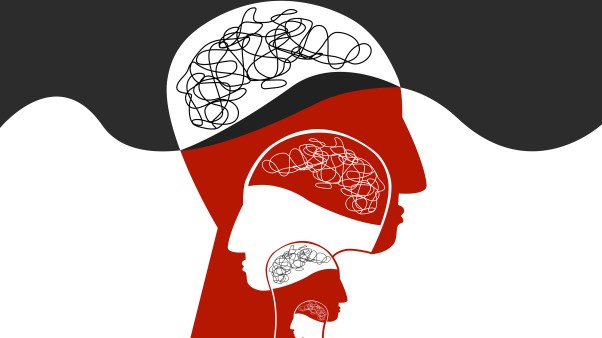
Most importantly, there has been concern that using AI will lead to a widespread “dumbing down,” or decline in the ability to think critically. If students use AI tools too early, the argument goes, they may not develop basic skills for critical thinking and problem-solving.
Is that really the case? According to a recent study by scientists from MIT, it appears so. Using ChatGPT to help write essays, the researchers say, can lead to “cognitive debt” and a “likely decrease in learning skills.”
The MIT team asked 54 adults to write a series of three essays using either AI (ChatGPT), a search engine, or their own brains (“brain-only” group). Analysis showed that the cognitive engagement of those who used AI was significantly lower than the other two groups. This group also had a harder time recalling quotes from their essays and felt a lower sense of ownership over them.
The authors claim this demonstrates how prolonged use of AI led to participants accumulating “cognitive debt.” When they finally had the opportunity to use their brains, they were unable to replicate the engagement or perform as well as the other two groups.
To understand the current situation with AI, we can look back to what happened when calculators first became available.
When calculators arrived in the 1970s, educators raised the difficulty of exams. This ensured that students continued to engage deeply with the material. In contrast, with the use of AI, educators often maintain the same standards as before AI became widely accessible. As a result, students risk offloading critical thinking to AI, leading to “metacognitive laziness.”
Possible Preaching Angle: Just as students should use AI as a tool to enhance—not replace—their thinking, so the Bible calls believers to seek wisdom actively without shortcuts.
Source: Nataliya Kosmyna, “Your Brain on ChatGPT: Accumulation of Cognitive Debt when Using an AI Assistant for Essay Writing Task,” ArcXiv Cornell University (6-10-25); Staff, “MIT Study Says ChatGPT Can Rot Your Brain. The Truth Is A Bit More Complicated,” Study Finds (6-23-25)
3 ways to help our preaching provide more meaningful, tangible support for people who experience anxiety.
If you’re on the operating table, you don’t want your surgeon to say to a nurse, “Hand me one of them sharp thingamajigs.” You want him to have a specific name for a specific tool to perform a specific job.
Words matter. The medical field has distinctive terminology by which it carefully defines diseases, medicines, instruments, and the like. When it comes to our bodies, we have very high expectations of our doctors. They better know what they’re talking about.
We should expect no less—indeed, far more—when it comes to pastors, priests, and teachers of the Word of God. They handle the word of truth. They minister to body, soul, and mind. They better know what they’re talking about. We don’t want to hear from them, “Now that divine power is doing some religious stuff in you.” Precision in language is necessary. We want God’s Word unapologetically, lovingly, and carefully proclaimed to us.
Source: Chad Bird, “What is Sanctification? Revisiting the Old Testament for the Answer” 1517 blog (2-28-21)
Brian Grazer, Hollywood producer of such movies as Apollo 13, Splash, and A Beautiful Mind, writes:
More than intelligence, or persistence or connections, curiosity has allowed me to live the life I wanted. And yet for all the value that curiosity has brought to my life and work, when I look around, I don’t see people talking about it, writing about it, encouraging it, and using it nearly as widely as they could.
Curiosity seems so simple. Innocent even. Labrador retrievers are charmingly curious. Porpoises are playfully, mischievously curious. A two-year-old going through the kitchen cabinets is exuberantly curious—and delighted at the noisy entertainment value of her curiosity. Every person who types a query into Google’s search engine and presses ENTER is curious about something—and that happens 6 million times a minute, every minute of every day.
Brian Grazer writes about curiosity in a way that might remind us of how Jesus habitually piqued curiosity in others, whether it was the woman at the well or the disciples imagining a camel squeezing through the eye of a needle. Curiosity can be what enables the searcher to find the life they are looking for in Jesus Christ.
Source: Brian Grazer with Charles Fishman, A Curious Mind: The Secret to a Bigger Life, (Simon and Schuster, 2015,) pp. xii, 6-7
7 suggestions for integrating Artificial Intelligence into the preacher’s study.
Are our sermons filled with majesty and power or superficial and thin?
To an outsider, the name Sam Bankman-Fried might seem like a pseudonym, too on-the-nose to be real. The 30-year-old entrepreneur and philanthropist, known by his initials SBF, became one of the youngest billionaires in the world after founding the cryptocurrency exchange FTX. In the 90s hip-hop parlance, one could say he made “bank, man.” But after FTX collapsed amidst solvency concerns and he lost approximately $16 billion in net worth, SBF now appears, rather appropriately, “fried.”
As proof of his lack of business savvy, Washington Post columnist Molly Roberts recently mentioned the fact that SBF once spurned the practice of reading books. Not certain books, but books, period. He said, “I would never read a book. I don’t want to say no book is ever worth reading, but I actually do believe something pretty close to that. ... If you wrote a book, you (failed), it should have been a six-paragraph blog post.”
Roberts says that such impatience is characteristic of his overall approach, a philosophy he identifies as “effective altruism.” This is defined as making as much money as possible, as quickly as possible, in order to give it all away. According to Roberts, SBF’s unwillingness to hoard the money is laudable, but he used it to justify a series of high-risk speculative bets that eventually proved to be his economic undoing.
Roberts explained:
SBF was also immersed in a type of effective altruism known as longtermism, where that ultimate outcome you’re seeking is hundreds of thousands or even millions of years away. So, instead of buying bed nets for children dying of malaria today, you’re trying to prevent the hypothetical next pandemic or the overheating of the earth. ... (This way of thinking is an) obsession with the future [that] disconnects you from the present.
Roberts concludes her analysis this way: “Why not scam a few bucks today to save a few billion lives in the 23rd century? That’s not just skipping to the end of the book—it’s skipping to the end of the entire series.”
Those who spurn instruction and consideration in favor of efficiency and haste, cut themselves off from needed wisdom and hasten their own destruction.
Source: Molly Roberts, “Sam Bankman-Fried doesn’t read. That tells us everything.” The Washington Post (11-29-22)
The journey from exegetical idea to homiletical idea.
Speaking to human beings about the living God and speaking to God about human beings.
In standardized math tests, Japanese children consistently score higher than their American counterparts. Researchers have found that it has more to do with effort than ability. In a study involving first graders, students were given a difficult puzzle to solve. The researchers weren't interested in whether the children could solve the puzzle. They wanted to see how long they would try before giving up.
The American children lasted, on average, 9.47 minutes. The Japanese children lasted 13.93 minutes. In other words, the Japanese children tried 47 percent longer. Is it any wonder that they score higher on standardized math exams? Researchers concluded that the difference in math scores has less to do with intelligence quotient and more to do with persistence quotient. The Japanese first graders tried harder by trying longer.
That study does more than explain the difference in standardized math scores. It doesn't matter whether it's athletics or academics, music or math. There are no shortcuts. There are no cheat codes. If at first you don't succeed, try, try again.
Source: Excerpted from Win the Day: 7 Daily Habits to Help You Stress Less & Accomplish More Copyright © 2020 by Mark Batterson, page 96. Used by permission of Multnomah, an imprint of Penguin Random House LLC.
The son of a scientist and a doctor, Jad Abumrad, is co-host of Radiolab one of public radio’s most popular shows today. In a TED talk in 2020, Abumrad talked about his approach:
From 2002 to 2010, I did hundreds of science-y, neuroscience-y, very heady, brainy stories that would always resolve into that feeling of wonder. And I began to see that as my job, to lead people to moments of wonder. Now, I love science, don't get me wrong. But there was something about that simple movement from science to wonder that just started to feel wrong to me. Like, is that the only path a story can take?
Around 2012, I ran into a bunch of different stories that made me think, No. One story in particular, where we interviewed a guy who described chemical weapons being used against him and his fellow villagers in Laos. Western scientists went there, (tested) for chemical weapons, (but) didn't find any. We interviewed the man about this. He said the scientists were wrong. We said, “But they tested.” He said, “I don't care, I know what happened to me.” And we went back and forth and back and forth, and make a long story short, the interview ended in tears.
I felt horrible. Like, hammering at a scientific truth, when someone has suffered. That wasn't going to heal anything. And maybe I was relying too much on science to find the truth.
This same misplaced reliance happens in the arena of faith and science. Some trust so heavily in man’s scientific wisdom, which can soon become outdated, that they fail to see God’s eternal truth. As Romans says, “professing themselves to be wise, they became fools (Rom. 1:19)
Source: Jad Abumrad, “How Dolly Parton led me to an epiphany,” TED Talk (6-25-20)
Matt Snowden and David A. Smith
How to overcome ambivalence and keep our hearers attention in our preaching.
In his book, Heath Adamson describes the process of correctly diagnosing a problem:
Horst Schulze, the former COO of Ritz-Carlton Hotels, told the story of one manager's discovery of a problem that seemed to confuse almost everyone. Numerous complaints came in to management because room service was repeatedly delayed. The eggs were cold, the toast was hard, and guests were inconvenienced. Mr. Schulze described a typical response as being something along the lines of scolding the supervisor for being incompetent. As one could expect, the discouraged supervisor would then gather their staff around and do the same to them. Blame would cascade down from one person to the next. But this isn't what happened at the Ritz-Carlton.
The Ritz-Carlton manager assembled the team, and they studied the problem. The kitchen staff prepared the food on time. The staff quickly took the trays to the elevator for delivery. They discovered that the issue had nothing to do with the kitchen staff but rather the service elevators were not always available. This delayed delivery. Then, they continued to study the situation by using a stopwatch to time the elevators for an entire morning.
The reason the food was delayed and arriving to the rooms cold had nothing to do with irresponsible kitchen staff or faulty elevators. A decision by management to reduce the number of bedsheets on each floor was causing the housekeepers to use the elevators more frequently, thus tying them up more. Trying to save money by reducing the number of bedsheets purchased, stored, and washed actually created more challenges in the long run and resulted in angry customers and poor room service. Misdiagnosing a problem never results in solving it.
Source: Heath Adamson, The Sacred Chase (Baker Books, 2020), pp. 174-175.
The rewarding art of crafting our words for our hearers.
For more than forty years a lighthouse stood on a large peninsula jutting into the Tasman Sea in southern Australia. It stood at a place where it shouldn’t have, luring ignorant ships into the very rocks they were trying to avoid.
The cliffs around Cape St George just south of Jervis Bay were notorious for shipwrecks. So it was decided that a lighthouse was needed for the safe navigation of coastal shipping. In 1857, the Colonial Architect Alexander Dawson began looking for a site suitable for a lighthouse on Cape St George. Unfortunately, Dawson was more interested in the ease of construction rather than providing an efficient navigation aid.
When the Pilots Board went to verify the location Dawson chose they found that the site was not visible from the required approaches. They also found Dawson’s map suffered from “discrepancies so grave that it is impossible to decide whether position(s) marked on the map really exist.” The board also suspected that Dawson chose the site solely because it was situated closer to a quarry he planned to obtain stones from.
Despite the glaring deficiencies and disagreement by a majority of the board, for reasons not known, the chairman of board authorized the construction of the lighthouse. For the next four decades the ill-sited lighthouse was responsible for some two dozen shipwrecks. Eventually in 1899, the lighthouse was replaced by the Point Perpendicular Lighthouse in a much more suitable location on this part of the coast.
Even after decommissioning, the lighthouse continued to cause navigational problems especially on moonlit nights when the golden sandstone tower glowed in the dark. So near the turn of the century, the tower was reduced to rubble to prevent any further disaster.
1) Carelessness; Effort; Laziness; Motives – When there is a lack of diligence in studying of God’s Word many can be misled (2 Timothy 2:15); 2) False doctrine; False Teachers; Pharisees; Hypocrites – Scripture warns that in the last days there will be false teachers who will mislead many people into tragedy. All teaching must be carefully checked against Scripture to discern true from false.
Source: Kaushik, “The Lighthouse That Wrecked More Ships Than it Saved,” AmusingPlanet.Com (10-16-18)
Episode 16 | 11 min
Preachers need to be more like filmmakers when crafting their sermons.
The role of historical and literary context in preaching.
The human brain weighs three pounds. It is the size of a softball, and yet with it we have the capacity to learn something new every second of every minute of every hour of every day for the next three hundred million years. God has created us with an unlimited capacity to learn. What that tells me is that we ought to keep learning until the day we die.
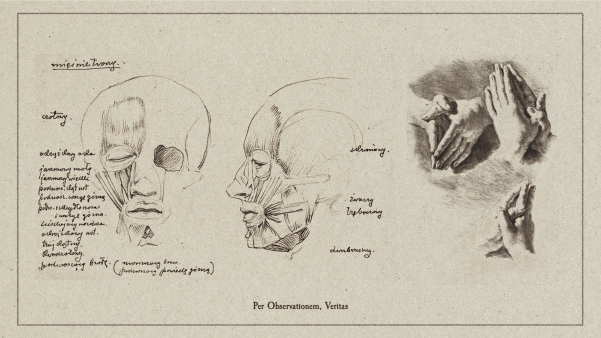
Leonardo da Vinci once observed that the average human "looks without seeing, listens without hearing, touches without feeling, eats without tasting, inhales without awareness of odor or fragrance, and talks without thinking." But not da Vinci. The quintessential Renaissance man called the five senses the ministers of the soul. Perhaps no one in history stewarded them better than he did. Famous for his paintings The Last Supper and Mona Lisa, da Vinci trained himself in curiosity. He never went anywhere without his notebooks, in which he recorded ideas and observations in mirror-image cursive. His journals contain the genesis of some of his most ingenious ideas—a helicopter-like contraption he called an orinthopter, a diving suit, and a robotic knight. While on his own deathbed, he meticulously noted his own symptoms in his journal. That's devotion to learning. Seven thousand pages of da Vinci's journals have been preserved. Bill Gates purchased eighteen pages for $30.8 million a few decades ago.
Source: Adapted from Mark Batterson, A Trip Around the Sun (Baker Books, 2015), pages 142-143