Sorry, something went wrong. Please try again.
A theology professor makes the case that ETS—a gathering often viewed as just for scholars—offers surprising value for pastors seeking to grow, stay sharp, and shepherd wisely.
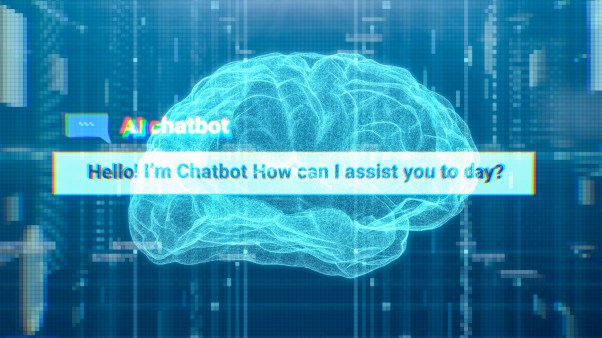
Almost half of Americans (48%) believe that the rise of artificial intelligence has made them less “scam-savvy” than ever before. With AI working its way into education, finance, and even science, a new survey finds people admitting they can’t tell what’s real anymore.
The poll of U.S. adults revealed that only 18% feel “very confident” in their ability to identify a scam before falling victim to it. As the United States enters a new era of tech, AI is continuing to blur the line between reality and an artificial world.
One in three even admits that it would be difficult for them to identify a potential scam if the scammer was trying to impersonate someone they personally know. Between creating fake news, robo-callers with realistic voices, and sending texts from familiar phone numbers, the possibility and probability of falling victim to a scam may cause anxiety for many Americans.
This may be because 34% of respondents have fallen victim to a scam in one way or another over the years. For others, the sting is still fresh. According to the results, 40% of people have been impacted within the last year — with 8% indicating it was as recent as last month.
BOSS Revolution VP Jessica Poverene said in a statement, “As AI technology advances, so do the tactics of scammers who exploit it. It’s crucial for consumers to stay vigilant.”
The question “Can You Spot an AI Scam?” can apply to Christians with a slight change. The question becomes, “Can You Spot a Doctrinal Scam?” In this age of deception, there are many false doctrines being spread by false teachers and it is important to be informed and vigilant. “But evil people and impostors will flourish. They will deceive others and will themselves be deceived.” (2 Tim. 3:13)
Source: Staff, “Unstoppable AI scams. Americans admit they can’t tell what’s real anymore,” StudyFinds (7-19-24)
A new survey reveals that more Americans are trusting social media and health-related websites for medical advice over an actual healthcare professional. The poll of 2,000 adults finds many will turn to the web for “accurate” information regarding their health before asking their physician. In fact, significantly more people consult healthcare websites (53%) and social media (46%) than a real-life doctor (44%). 73% believe they have a better understanding of their health than their own doctor does.
Further showcasing their point, two in three Americans say they’ve looked up their symptoms on an internet search engine like Google or a website like WebMD. Respondents say they would rather consult the internet or ChatGPT instead of their doctor because they’re embarrassed by what they’re experiencing (51%) or because they want a second opinion (45%).
Of course, much of the trust people have for technology doesn’t stop with AI. Many would also trust major tech companies with their personal health data, including Google, Apple, Fitbit, and Amazon. Overall, 78% state they’re “confident” that AI and tech companies would protect their health information.
Researcher Lija Hogan said, “This means that we have to figure out the right guardrails to ensure people are getting high-quality advice in the right contexts and how to connect patients to providers.”
In a similar way, many congregants are fact checking their pastor during the sermon and may put trust in strangers on social media and the internet over their pastor’s teaching, relying on dubious information or incorrect theology.
Source: Staff, “More Americans trust AI and social media over their doctor’s opinion,” StudyFinds (12-11-23)
7 suggestions for integrating Artificial Intelligence into the preacher’s study.
French atheist Guillaume Bignon grew up in a loving family in France. He did well in school and landed a job as a computer scientist in finance. He also excelled in sports, growing to be six feet four inches, and played volleyball in a national league, traveling the country every weekend for the games. All in all, he was happy with his life. The chances of ever hearing the gospel—let alone believing it—were incredibly slim.
While vacationing in the Caribbean he met an attractive young woman. She mentioned that she believed in God and believed that sex belonged in marriage. This was a problem to him, so his new goal in life was to disabuse his girlfriend of her beliefs which were standing in the way of sex. He started thinking: “What good reason was there to think God exists? But, if I was going to refute Christianity, I first needed to know what it claimed. So, I picked up a Bible.” He also prayed, “If there is a God, then here I am. Why don’t you go ahead and reveal yourself to me? I’m open.”
A week or two after his unbelieving prayer, one of his shoulders started to fail, without any evident injury. The doctor couldn’t see anything wrong, but he was told that he needed to rest his shoulder and to stop playing volleyball for a couple of weeks.
Against my will, I was now off the courts. With my Sundays available, I decided I would go to a church to see what Christians do when they get together. I drove to an evangelical congregation in Paris, visiting it as I would a zoo: to see exotic animals that I had read about in books but had never seen in real life.
After the service he hurried to the exit door to avoid all contact with people and the pastor. But as he reached the door a chilling blast went up from his stomach to his throat. He heard himself saying: “This is ridiculous. I have to figure this out.” So, he closed the door, and went straight to the pastor. Bignon said, “So, you believe in God?” “Yes,” the pastor said, smiling. “So how does that work out?” I asked. “We can talk about it,” he said.
After most of the people left, they went to his office and spoke for hours. Bignon bombarded the pastor with questions, who patiently and intelligently explained his worldview. Bignon writes, “My unbelieving prayers shifted to, ‘God, if you are real, you need to make it clear so I can jump in and not make a fool of myself.’”
But instead of a light from heaven, God reactivated his conscience. He remembered a particularly sinister misdeed and God brought it back to his mind in full force. Bignon writes:
I was struck with an intense guilt, and disgusted at the thought of what I had done and the lies I had covered it with. All of a sudden, the quarter dropped. That is why Jesus had to die: Me. He took upon himself the penalty that I deserved, so that in God’s justice, my sins would be forgiven—by grace as a gift, rather than by my righteous deeds or religious rituals. He died so that I may live. I placed my trust in Jesus, and asked him to forgive me. This, in short, is how God takes a French atheist and makes a Christian theologian out of him.
Editor’s Note: Guillaume Bignon went on to obtain a master’s in New Testament studies. In the process, he met a wonderful woman, got married, had two children, and attained a PhD in philosophical theology.
Source: Guillaume Bignon, “My Own French Revolution,” CT magazine (November, 2014), pp. 95-96
Gregory Goswell and Andreas Köstenberger
Discovering the themes, ethics, and storyline of Scripture.
Discover how to deliver impactful sermons during these challenging times.
American evangelicals’ grasp on theology is slipping, and more than half affirmed heretical views of God in the 2022 State of Theology survey, released by Ligonier Ministries and Lifeway Research.
Overall, adults in the U.S. are moving away from orthodox understandings of God and his Word year after year. More than half of the country (53%) now believes Scripture “is not literally true,” up from 41 percent when the biannual survey began in 2014.
Researchers called the rejection of the divine authorship of the Bible the “clearest and most consistent trend” over the eight years of data. Researchers wrote, “This view makes it easy for individuals to accept biblical teaching that they resonate with while simultaneously rejecting any biblical teaching that is out of step with their own personal views or broader cultural values.”
Here are five of the most common mistaken beliefs held by evangelicals:
1. Jesus isn’t the only way to God. 56 percent of evangelical respondents affirmed that “God accepts the worship of all religions.” This answer indicates a bent toward universalism—believing there are ways to bypass Jesus in our approach to and acceptance by God.
2. Jesus was created by God. 73 percent agreed with the statement that “Jesus is the first and greatest being created by God.” This is a form of Arianism, a popular heresy that arose in the early fourth century.
3. Jesus is not God. 43 percent affirmed that “Jesus was a great teacher, but he was not God,” which is another form of Arian heresy.
4. The Holy Spirit is not a personal being. 60 percent of the evangelical survey respondents believe that “The Holy Spirit is a force but is not a personal being.”
5. Humans aren’t sinful by nature. 57 percent also agreed to the statement that “Everyone sins a little, but most people are good by nature.” In other words, humans might be capable of committing individual sins, but we do not have sinful natures. This denies the doctrine of original sin.
Source: Stefani McDade, “Top 5 Heresies Among American Evangelicals,” CT magazine online (9-19-22)
Who is Jesus? Few questions could be more relevant at Christmas. Yet a new Lifeway Research study shows nearly half of Americans believe a Christological heresy. Only 41 percent of Americans believe the “Son of God existed before Jesus was born in Bethlehem.” That means 59 percent either do not believe or are unsure whether they believe that the Son of God existed prior to the Nativity.
As pastors prepare their Christmas sermons this year, they might want to keep this fact in mind. Many who will walk through their doors on Sunday morning—some Christians, some not—hold to a heretical understanding of the Trinity. They’ll listen to the sermons and sing the songs, but their view of God is not orthodox. To be blunt, their view of God is not Christian.
(So), rather than a narrow focus on what Christ did, expand your vision to who Christ is. John’s Gospel is exemplary: “In the beginning was the Word, and the Word was with God, and the Word was God. He was with God in the beginning. Through him all things were made; without him nothing was made that has been made” (John 1:1–3).
The Apostle is eager to introduce the saving work of Christ, but before he does so, he lifts us outside the confines of history to contemplate who this Son is from eternity: the Word who was not only with God but also was God.
But unless our Savior this Christmas is the “great God” himself, the One who descends into our darkness out of the glory of his everlasting light, we will never enjoy the blessedness and bliss of that (radiant) vision.
Source: Adapted from Matthew Barrett, “Taking the Trinitarian Christ out of Christmas,” CT magazine (7-14-21)
Jesus has defeated the serpent and will one day vanquish him forever.
Our churches need to hear the message and theology of this book.
LifeWay Research and Ligonier Ministries have once again examined the theological awareness, or lack thereof, of American evangelicals. This time, instead of defining “evangelical” by whether participants identify as such, they used a definition endorsed by the National Association of Evangelicals. Below are the areas where believers have most gone astray in their theology:
People have the ability to turn to God on their own initiative. 82% Agree
Individuals must contribute to their own salvation. 74% Agree
Jesus is the first and greatest being created by God. 71% Agree
God knows all that happens, but doesn’t determine all that happens. 65% Agree
The Holy Spirit is a force, not a personal being. 56% Agree
God accepts the worship of all religions, including Christianity, Judaism, and Islam. 48% Agree
My good deeds help to earn my place in heaven. 39% Agree
God will always reward faith with material blessings. 37% Agree
Source: Editor, “Our Favorite Heresies,” CT magazine (November, 2016), p. 19
Our theology impacts our convictions, sermon preparation, and preaching.
A survey by Pew Research Center shows that American Protestants believe that:
46% Faith in God alone is needed to get into heaven
52% Both good deeds and faith in God are needed to get into heaven
46% The Bible provides all the religious guidance that Christians need
52% In addition to the Bible, Christians need guidance from church teachings and traditions
Source: Editor, “500 Years After Luther,” CT magazine (December, 2017), p. 18
J. Dudley Woodberry, senior professor of Islamic studies at Fuller Theological Seminary, said, “More Muslims have become Christians in the last 35 years than in all previous centuries since the foundation of Islam. But they do not have a Christian background to support their newfound faith. Many of these converts have come to faith through such means as satellite TV or the Bible passed along via cell phones. So, a greater depth of understanding (of doctrine) is needed.”
Source: Griffin Paul Jackson & Jayson Casper, “Calvin of Arabia,” CT magazine (December, 2017), p. 21
Author Sinclair Ferguson provides a helpful illustration to explain how theology works:
There is a program on BBC television I enjoy. It is called The Regular Shop. Ordinary people bring their damaged, decayed, distorted, and well-nigh destroyed heirlooms for repair. They often tell profoundly moving stories--of why the article (which may be of little value in itself) is so important to them because of its connection to a loved one.
We then watch the extraordinary skills of craftsmen and women. Experts in woodwork and metalwork, mechanical work, furniture work, and musical instruments, working what seems to be magic. Whereas people like me patch up and hope for the best, they first deconstruct and only then reconstruct and restore the long-lost glory to the precious objects.
Then the wonderful (unveiling): we witness the various owners overwhelming gratitude, their praise, and often their joy as they are moved to tears as the restored object is revealed in all its furnished glory--usually from underneath a very ordinary blanket (how suggestive of a greater restoration).
Theology is the gospel repair shop. Its various topics (God, creation, fall, providence, redemption, glorification) are, as it were, so many departments of experts that first deconstruct our personal damage and then reconstruct us until the original vision in our creation is realized.
Source: Sinclair Ferguson, “What is Our Theology?” TABLETALK (August, 2021), p. 9
The Trinity almost never comes up in the songs sung by American Christians, according to a new study from Southern Wesleyan University. In worship songs churches mostly sing about Jesus (68%), with only occasional references to the Father (7%), and few (if any) mentions of the Holy Spirit (5%).
The relationships within the Godhead only rarely make an appearance in the 30 most popular hymns or the 30 most popular worship songs. Michael Tapper, professor of religion at Southern Wesleyan says, “In the music we sing, it seems like we’re not as Trinitarian as we think we are.”
Source: Editor, “Leave Room For The Holy Spirit,” CT magazine (July/August, 2020), p. 21
Theological insights on the nature of human emotion and how to interpret it.
Help for creating your sermon series on Ezekiel, tackling the theological issues in the book, and applying the book to your hearers.