

Sorry, something went wrong. Please try again.
While many Americans report that they attend church at least occasionally, that number could be slowly shrinking. Recently, people were asked in an online forum, “If you used to go to church and don’t anymore … Why not?” and the answers were interesting and insightful.
1. There Are Too Many Judgmental People - Yes, there are many, many kind, loving Christians. But there are plenty of not-so-kind ones too.
2. They Were Hurt at Church - Unfortunately, church hurt is a very real issue that way too many Christians have had to endure.
3. The Service Is Too Loud - Many former church members reported that they didn’t appreciate how loud and showy the services can be these days.
4. There Were Too Many False Teachings – Some churches have turned aside from their original purpose and turned the sermons into self-help seminars with the Word of God only occasionally sprinkled in.
5. The Church Split - Church splits are incredibly painful for those involved, and can easily lead to some walking out of church altogether.
6. Their Schedule Is Too Busy - People are busier than ever. This can mean church attendance takes a back seat to other matters.
7. They Stopped Attending During the Pandemic - Multiple people mentioned the recent pandemic as a reason, whether this was due to ongoing health concerns or simply a change in routine.
8. The Church Focused On Religion Over Relationship – The church should focus on building a good relationship with God and others, not simply following rules or measuring up to an impossible standard.
9. The Church Became Too Focused on Money - Too much emphasis on money and giving simply isn’t healthy. This is problematic if church members are treated differently due to their differences in giving.
10. They Have Social Anxiety - Anxiety is a common mental health condition, so this prevents some from regularly attending and enjoying time at church.
Editor’s Note: The original survey was conducted by Equipping Godly Women on Reddit. You can read the original survey and comments here.
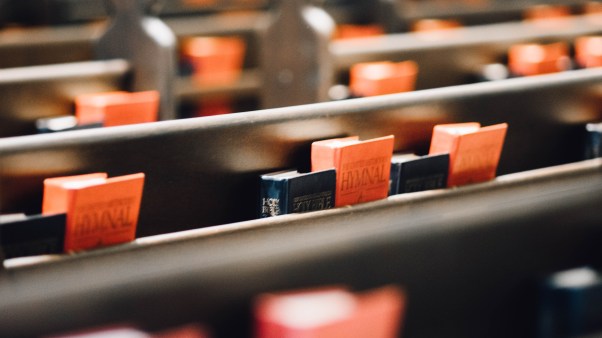
Source: Adapted from Cassie LeBrun, “10 Reasons People Don’t Want to Go to Church Anymore,” Equipping Godly Women (7/21/23)
More millennials attend church weekly now than before the start of the pandemic. According to a Barna Group survey of 13,000 adults, roughly 16 percent of regular churchgoers have not returned to services at all in 2022, but weekly attendance among those born between 1981 and 1996 has risen from 21 percent to 39 percent this year.
The trend can be partly explained by life stage. Across age cohorts, church attendance is highest when people have young children, drops off for “empty nesters,” and then increases again when friends start to pass away. The oldest millennials are 40 and 41
Source: Editor, “The Turn of the Millennial,” Christianity Today (October, 2022), p. 19
The term “deaths of despair” was coined in 2015 by Princeton economists Anne Case and Angus Deaton. The researchers were seeking to find what was causing the decline in U.S. life expectancies in the later part of the 20th century. They discovered the dramatic increase in death rates for middle-aged, white non-Hispanic men and women was coming from three causes: drug overdoses, suicide, and alcoholic liver disease. Deaths from these causes have increased between 56 percent and 387 percent and average 70,000 per year.
The researchers said, “The pillars that once helped give life meaning—a good job, a stable home life, a voice in the community—have all eroded.” Those pillars are certainly important, but another factor may have an even more detrimental effect.
Research suggests a potential cause of deaths of despair could be the decline in religious participation that began in the late 1980s. The researchers found “there is a strong negative relationship between religiosity and mortality due to deaths of despair.”
In 2010, country singer Jason Aldean released a song called “Church Pew or Bar Stool” in which he complains about how he’s stuck in a “church pew or bar stool kind of town.” He sings, “There’s only two means of salvation around here that seem to work / Whiskey or the Bible, a shot glass or revival.” That’s a crude dichotomy, but it appears to increasingly be the choice many Americans face. They’ll either find hope from a community of faith or the lonely despair that leads them to self-medicate with alcohol and drugs.
Source: Joe Carter, “Why Falling Religious Attendance Could Be Increasing Deaths of Despair,” The Gospel Coalition (2-4-23)
Fender Musical Instruments Corporation sold a record number of guitars in 2020, driven in part by people forced to stay at home during the pandemic. The company calculates that nearly a third of those new musical instruments were purchased by people who play in praise and worship bands.
No one knows the first person to bring a guitar into church, but it became common in charismatic congregations in Southern California in the 1970s. Folk, rock, and folk-rock went to church with the hippies who converted during the Jesus People movement. Guitars became staples of the Calvary Chapel and Vineyard church style before spreading to other evangelical churches.
Guitars also had some practical advantages. They were portable. When a new church started in a school, or someone’s house, or even on the beach, no one had to haul over an organ. Guitars are also easier to learn to play than the pianos and organs traditionally used in church music.
Duke Divinity School’s Adam Perez says, “People joke about how simple it is—three chords or four chords—but that was a strength, not a weakness. You could have a beginner guitar player who learned to play to lead their small group, their cell group, or even a new church. You’re democratizing access to the sacred.”
According to Ultimate Guitar, an estimated one million guitar players are “gigging” at churches every weekend, and more people play praise and worship music than any other genre in the US.
Source: Daniel Silliman, “1 out of 3 New Guitars Are Purchased for Worship Music,” Christianity Today (September, 2021), p. 17
Ligonier Ministries asked Americans a practical question about worship. “Must churches provide entertaining worship services if they want to be effective?”
Frequent attendees of evangelical churches (monthly or more):
Strongly agree: 9%
Somewhat agree: 25%
Somewhat disagree: 25%
Strongly disagree: 39%
Infrequent attendees of evangelical churches (holidays only/rarely/never):
Strongly agree: 8%
Somewhat agree: 32%
Somewhat disagree: 27%
Strongly disagree: 29%
Millennial attendees of evangelical churches (ages 18 to 34)
Strongly agree: 11%
Somewhat agree: 29%
Somewhat disagree: 22%
Strongly disagree: 37%
Boomer attendees of evangelical churches (ages 50 to 64)
Strongly agree: 7%
Somewhat agree: 31%
Somewhat disagree: 22%
Strongly disagree: 37%
Source: Staff, “Come, Now Is the Time to Entertain,” CT magazine (Jan/Feb, 2019), p. 17
Wise gospel love teaches and warns through preaching and singing.
In a poll of 2,000 Britons the 'Perfect Sunday' involved: waking at 8:30 a.m. to the smell of breakfast cooking, a cuddle, and three hours of television. A quarter of Brits thought an ideal weekend morning starts with a full English breakfast in bed and a third wanted to start their Sunday morning with a cup of tea or coffee, before pottering around the house for an hour.
The perfect roast is said to be best served at 3:15 p.m. with, ideally, four people. Other activities Brits enjoy doing on Sunday include reading a book, listening to music, and doing some gardening. Nearly one in 10 said they spend their Sunday afternoon at the pub, while one in seven think Sundays are made for doing food shopping to keep the cupboards stocked for the rest of the week.
Attending church did not appear in the poll. Graham Nicholls from Affinity, a network of evangelical churches, said:
I suppose I was sad that attending a gathering of God's people, in a church, wasn't kind of anywhere on the majority of people's lists. … It means that they're not hearing the gospel, they're not coming to an encounter with God … It's also that churches are great places for taking our families, for making friendships and for learning who we are and why we're here.
Source: Cara Bentley, “The ‘Perfect Sunday’ Doesn’t Include Church,” Premier.Org (2-17-18)
Applause is like a wet puppy--once let in the house it is difficult to control. Some aspects of vitality are not appropriate in a worship service. Also, vitality has a short shelf life: applause can become as perfunctory as any other ritual. ... Church should provide opportunities for participation that are less directly tied to encouraging performance. Congregations are not audiences, and leaders of worship are not performers. The role of the liturgist (and of the choir, organist, and ushers) is to enable the congregation to participate, not to win people's approval.
Source: Laurence A. Wagley in The Christian Century (Dec. 3, 1986). Christianity Today, Vol. 31, no. 7.
"We have a special gift for a lady that hasn't missed a service in forty-five years. Eleanor Smith! Where is Eleanor sitting? Eleanor? Eleanor ..."
Source: Cartoonist Rob Portlock in Leadership, Vol. 13, no. 3.
I believe a very large majority of churchgoers are merely unthinking, slumbering worshipers of an unknown God.
Source: Charles H. Spurgeon in Metropolitan Tabernacle Pulpit, Vol. 11. Christianity Today, Vol. 40, no. 1.