Podcast

Quick To Listen

zanskar / Getty Images

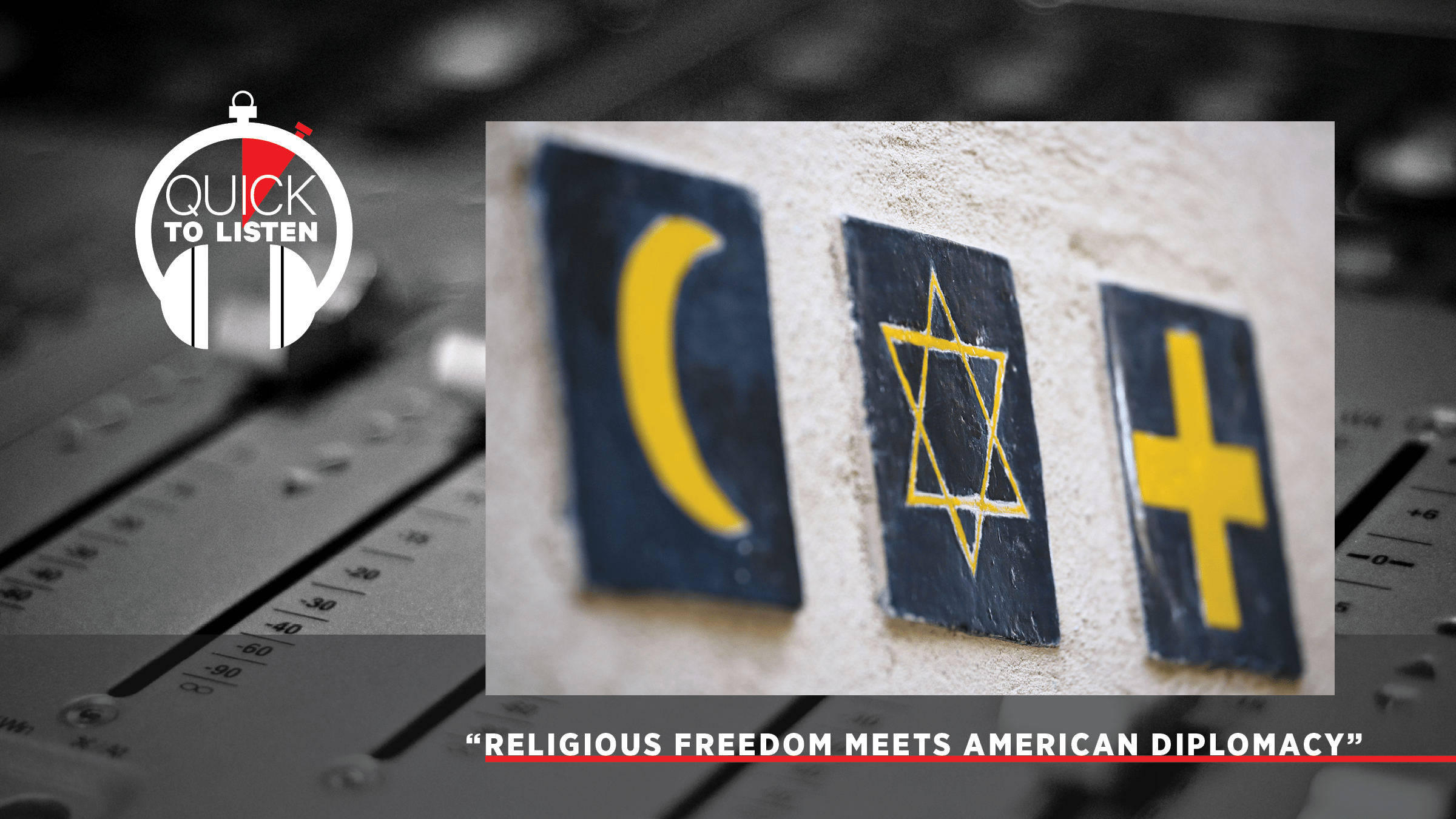
Why the US Believes Global Religious Freedom Is Good Foreign Policy

And just how successful America has been on promoting this value overseas.

Last week, the US Senate confirmed Sam Brownback as America’s next ambassador-at-large for international religious freedom. The appointment came six months after President Trump had nominated the former Kansas Republican governor.

Brown’s position is part of the Office of International Religious Freedom (IRF), a State Department office which monitors persecution and discrimination on a global scale. Created during the Clinton administration in 1998, the IRF exists as part of a larger American foreign policy strategy of promoting international religious freedom.

“It’s not only the right thing to do, it’s the smart thing to do,” said Melissa Rogers, who previously served as the executive director of the White House Office of Faith-Based and Neighborhood Partnerships in the Obama administration. “We find that when societies embrace religious liberty for all, they reap all kinds of benefits like building a more peaceful, just, stable, and more productive society. It makes the world a more peaceful and productive place.”

Rogers joined associate digital media producer Morgan Lee and editor in chief Mark Galli to discuss the US strategies for advocating for religious freedom, why Western Christians’ speaking up for religious minorities in their own nation helps the persecuted church overseas, and if this office is just another way America imposes its values on other countries.

What is “Quick to Listen”? Read more

Subscribe to “Quick to Listen” on Apple Podcasts

Follow the podcast on Twitter

Follow our hosts on Twitter: Morgan Lee and Mark Galli

Follow our guest on Twitter: Melissa Rogers

Subscribe to Mark’s newsletter: The Galli Report

Quick to Listen is produced by Morgan Lee, Richard Clark, and Cray Allred
Our Latest

News

Died: John M. Perkins, Who Lived and Preached Racial Reconciliation

The civil rights leader believed in a gospel bigger than race or self-interest.

The Year of the Evangelical

America prepared for a bicentennial, and religious identity dominated the presidential campaign.

Review

Decoding the Supreme Court

Three books to read this month on politics and public life.

The Bulletin

Cost of Iran War, Quiet Southern Border, and Anglican Church Split

Mike Cosper, Clarissa Moll, Russell Moore

The financial and moral toll of war, immigration slows but ministry continues, and why denominations split.

Review

‘The Secret Agent’ Explores Memory and Authoritarianism in Brazil

Mariana Albuquerque

The Oscar-nominated film reminds viewers to learn from the past—and to share our stories with the next generation.

Q&A: Eric Mason on Ministering to Men and Witnessing in Politics

Interview by Benjamin Watson

The Philadelphia-based pastor discusses how the church can engage Black men and have a biblical approach to government.

Jan Karon Looks Back on 89 Years of God’s Faithfulness

The author of the Mitford Years series married at 14, protested segregation, and wrote her first book at 57.

The Just Life with Benjamin Watson

Michel Lusakueno: Why the World Can’t Ignore Congo

Exploring the sobering connection between modern convenience and human suffering.

Apple PodcastsDown ArrowDown ArrowDown Arrowarrow_left_altLeft ArrowLeft ArrowRight ArrowRight ArrowRight Arrowarrow_up_altUp ArrowUp ArrowAvailable at Amazoncaret-downCloseCloseEmailEmailExpandExpandExternalExternalFacebookfacebook-squareGiftGiftGooglegoogleGoogle KeephamburgerInstagraminstagram-squareLinkLinklinkedin-squareListenListenListenChristianity TodayCT Creative Studio Logologo_orgMegaphoneMenuMenupausePinterestPlayPlayPocketPodcastprintRSSRSSSaveSaveSaveSearchSearchsearchSpotifyStitcherTelegramTable of ContentsTable of Contentstwitter-squareWhatsAppXYouTubeYouTube