Christian History Home > 1990 > Issue 28
From the Editor: Welcome to this Special Issue Important information before you begin KEVIN A. MILLER
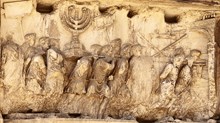
A.D. 70 Titus Destroys Jerusalem When the Roman general sacked the temple, the Jews were forced into a new era—and so were the Christians.
313 The Edict of Milan The agreement shifted Christianity from being an illicit, persecuted sect to being a welcome—and soon dominant—religion of the Roman Empire. David F. Wright is dean of the faculty of divinity at the University of Edinburgh and a member of the advisory board of Christian History.
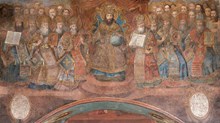
325 The First Council of Nicea At stake in the church's first general council was the simplest, yet most profound, question: Who is Jesus Christ? Dr. Bruce L. Shelley is professor of church history at Denver Seminary and a member of the advisory board of Christian History
367 Athanasius Defines the New Testament His letter is the earliest authoritative statement to fix the New Testament as we know it today. Dr. Carsten Peter Thiede is president of Reinhold-Schneider-Gesellschaft e. V. in West Germany and a member of the advisory board of Christian History.
386 Augustine Converts to Christianity A brilliant, profligate professor of rhetoric became the church's leading theologian for centuries to come.
405 Jerome Completes the Vulgate This Latin translation stood as the preeminent Bible text for centuries—and set the standard for future translators.
461 The Council of Chalcedon If Jesus was truly God, how could he be truly human as well? Leo the Great helped guide a critical council to a clear answer. Tony Lane is lecturer in historical theology at London Bible College and a member of the advisory board of Christian History
540 Benedict Writes His Monastic Rule His flexible, compassionate guidelines for Christian community forever shaped monastic life—and influenced Western society. Dr. Bennett D. Hill is professor of history at Georgetown University in Washington, D.C.
988 Vladimir Adopts Christianity The pagan prince of Kievan Rus' embraced a new faith, leading to the Christianization of the Ukrainian, Russian, and Byelorussian peoples.
1054 The East-West Schism Long-standing differences between Western and Eastern Christians finally caused a definitive break, and Roman Catholics and Eastern Orthodox still remain separate. Dr. George T. Dennis is professor of history at Catholic University of America in Washington. D.C., and author of several books on the Byzantine Empire.
1095 Pope Urban II Launches the First Crusade Waves of pilgrims and soldiers embarked for the Holy Land, beginning an era of exploration, conquest, defeat, and folly.
1272 Thomas Aquinas Concludes His Word on Summa Theologiae The massive treatise set forth a theological system so influential it has been declared eternally valid.
1378 The Great Papal Schism When two popes, and later three popes, vied for supremacy, the medieval church entered a dramatic, forty-year crisis of authority. Dr. Francis Oakley is president of Williams College in Williamstown, Massachusetts.
1456 Gutenberg Produces the First Printed Bible Using his revolutionary invention—printing from movable type—he made the Scriptures potentially accessible to every person.
The History of the Church: Recommended Resources —The Editors
Important Events in Church History: Christian History Timeline
Important Events in Church History A selective chronological listing
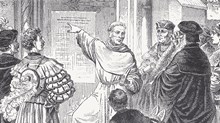
1517 Luther Posts the 95 Theses An obscure monk invited debate on a pressing church issue—and touched off a history-shattering reform movement. Dr. Eric W. Gritsch
1521 The Diet of Worms Was the wayward Luther free to dissent? A German council rendered a judgment. ERIC W. GRITSCH Dr. Eric W. Gritsch is Maryland Synod Professor of Church History and director of the Institute for Luther Studies at Gettysburg Lutheran Seminary, Gettysburg, Pennsylvania.
1525 The Anabaptist Movement Begins Hated by Protestants and Catholics alike, these "radical reformers" wanted to not merely reform the church but restore it.
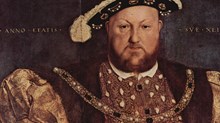
1534 The Act of Supremacy Breaking from Rome, the English Parliament declared King Henry VIII "the only supreme head on earth of the Church of England."
1536 John Calvin Publishes Institutes of the Christian Religion Either adored or abhorred, the reformer and his teachings live on in his monumental work.
1545 The Council of Trent Begins Responding to the Reformation, the council charted the Catholic church's course for the next 400 years.
1611 Publication of the King James Bible A team of scholars produced an English Bible translation unsurpassed in linguistic beauty and longevity.
1738 John & Charles Wesley Experience Conversions They were ordained ministers and missionaries. Then their hearts were "strangely warmed," and their changed lives gave rise to a worldwide movement. Dr. Roger J. Green is professor and chair of biblical and theological studies at Gordon College in Wenham, Massachusetts.
1740 The Great Awakening Peaks A mighty wave of revival washed across North America, forever altering the religious landscape. Dr. Mark A. Noll is professor of history at Wheaton College in Wheaton, Illinois, and a member of the advisory board of Christian History.
1962 The Second Vatican Council In an epochal council, the Catholic Church undertook its most searching self-examination ever and renewed itself for a modern world. Dr. Joseph A. Komonchak is professor of theology in the Department of Religion and Religious Education, The Catholic University of America, Washington, D.C.
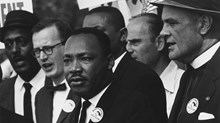
1963 Martin Luther King, Jr. Leads the March on Washington A Baptist preacher had a dream that guided one of the most profound social movements of our times. Dr. Wesley A. Roberts is pastor of Peoples Baptist Church of Boston and a member of the advisory board of Christian History.
75 Other Important Events in Church History A brief listing of significant dates that also earn a place in the "Christian History 100"
Browse More ChristianHistory.net Home | Browse by Topic | Browse by Period | The Past in the Present | Books & Resources
|  |
 |