C.S. Lewis: Did You Know?


A Jack of all genres
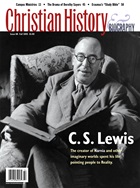
C. S. Lewis is probably the most well known, widely read, and often quoted Christian author of modern times. Between 1931 and 1962 he published 34 books. Posthumous collections added many more volumes, and the secondary studies of Lewis reach into the hundreds. The range of his talents included such varied categories as poetry (Dymer), allegorical novel (The Pilgrim's Regress), popular theology (Mere Christianity), educational philosophy (The Abolition of Man), space-travel fiction (The Ransom Trilogy), children's fairy tale (The Chronicles of Narnia), retold myth (Till We Have Faces), literary criticism (The Discarded Image), correspondence (Letters to Malcolm), and autobiography (Surprised by Joy). In spite of the variety of genres, Lewis's distinctive "voice" and continuity of thought permeated everything he wrote.
The Inklings
From the mid 1930s to the late 1940s, Lewis met with a group of literary friends every Tuesday and Thursday to share beer and conversation and to critique each other's work. "The Inklings," as they called themselves, included J. R. R. Tolkien, Charles Williams, and Lewis's brother, Warnie. Warnie wrote in his diary, "We were no mutual admiration society. … To read to the Inklings was a formidable ordeal." Among the works-in-progress forged in the heat of friendly criticism were The Screwtape Letters, the Narnia books, and The Hobbit. "But for the encouragement of CSL," Tolkien told Clyde Kilby in 1965, "I do not think that I should ever have completed or offered for publication The Lord of the Rings." (See Issue 78: J. R. R. Tolkien.)
A mind set on higher things
Lewis's close friend Owen Barfield, to whom he dedicated his book The Allegory of Love, was also his lawyer. Lewis asked Barfield to establish a charitable trust ("The Agape Fund") with his book earnings. It is estimated that 90 percent of Lewis's income went to charity. This generosity occurred despite the fact that, according to George Sayer, Lewis inherited his father's "fear of being bankrupt" and both father and son were "inept in the investment of money."
Lewis's gardener, Fred Paxford (who was his model for the character Puddleglum in The Silver Chair), discovered during the reading of Lewis's will that he was bequeathed only 100 pounds. Paxford remarked, "Werl, it won't take me far, wull it?" Then he graciously added, "Mr. Jack, 'e never 'ad no idea of money. 'Is mind was always set on 'igher things."
No celebrity tell-all
Lewis wrote Surprised by Joy (1955) partly to explain the influences of his childhood on his writings and conversion. His personal physician and fellow Inkling Robert E. Havard said the book should have been called "Suppressed by Jack" because of all the things Lewis did not discuss about his life.
Just call me Smallpigiebotham
Lewis had a fondness for nicknames. He and his brother, Warnie, called each other "Smallpigiebotham" (SPB) and "Archpigiebotham" (APB), inspired by their childhood nurse's threat to smack their "piggybottoms." Even after Lewis's death, Warnie still referred to him as "my beloved SPB." They called their father Albert "Pudaitabird" because of his Irish pronunciation of "potato." Tolkien was "Tollers," Mrs. Moore was "Minto," and Lewis's physician Robert E. Havard was usually "Humphrey" but occasionally "the Useless Quack" or "U. Q." Lewis dubbed his walking companion A. C. Harwood "the Lord of the Walks."
The budding novelist
As children growing up in Belfast, Ireland, Lewis and Warnie spent frequent rainy days indoors making up stories. "Jacks" or "Jack," as he named himself at age three, drew pictures to illustrate his stories about talking animals, which borrowed ideas from Beatrix Potter, Kenneth Graham, and stories of heroic knights. His stories became a part of his brother's larger imaginary world of "Boxen." The characters' dialogue often reflected the adult conversations Jack and Warnie overheard—usually about politics.
Lewis wrote comparing his childhood stories to his later Narnia books: "Animal land had nothing to do with Narnia except the anthropomorphic beasts. Animal land, by its whole quality, excluded the least hint of wonder." However, he also commented that "in mapping and chronicling Animal-Land I was training myself to be a novelist."
Drawing Narnia
Lewis actually considered doing the illustrations for the Narnia books himself but decided he had neither the ability nor the time. Instead, he chose a young artist, Pauline Baynes, who had illustrated J. R. R. Tolkien's story Farmer Giles of Ham in 1948. He was never fully satisfied with Baynes's drawings of children and animals, though in his remarks to her he was full of praise where praise was due. "She can't draw lions," he told George Sayer, "but she is so good and beautiful and sensitive that I can't tell her this." When The Last Battle won the Carnegie Medal for the best children's book of 1956, Baynes wrote to Lewis to congratulate him. He wrote back, "Is it not rather our Medal?"
Lewis at the movies
In 1933, Lewis wrote to his friend Arthur Greeves: "You will be surprised to hear that I have been to the cinema again! Don't be alarmed, it will not become a habit." Despite his protestation, he did occasionally go to the movies. The film King Kong evoked mixed reactions: "I thought parts of 'King Kong' (especially where the natives make a stand after he's broken the gate) magnificent," he commented to a fellow author, "but the New York parts contemptible."
The apologist and the evangelist
In 1955, C. S. Lewis was invited to meet Billy Graham, who was leading a mission sponsored by the Cambridge
Inter-Collegiate Christian Union. Graham remembers the encounter this way: "I found him to be not only intelligent and witty but also gentle and gracious; he seemed genuinely interested in our [mission] meetings. 'You know,' he said as we parted, 'you have many critics, but I have never met one of your critics who knows you personally.'"
Mutual fans
When Lewis sent his book The Allegory of Love to Oxford's Clarendon Press, it was given to Charles Williams to review. At that time Williams and Lewis did not know one another, but Lewis had just read Williams's novel The Place of the Lion. Williams was writing a letter to Lewis when he received a letter from Lewis praising his novel. Williams's letter to Lewis said that Allegory of Love was "practically the only one I have ever come across since Dante that showed the slightest understanding of what this peculiar identity of love and religion means."
Spanning the great divide
Many people who read Lewis's first book after his conversion, The Pilgrim's Regress, assumed he was a Catholic, and, in fact, the second edition was published by a Catholic publisher. Lewis marveled in 1940 that "the two people whose conversion had something to do with me became Papists!" (Dom Bede Griffiths and George Sayer). This popularity among and influence on Catholics continued throughout Lewis's life and to the present day. Pope John Paul II spoke of The Four Loves as one of his favorite books.
The bard of Oxford
Until his 30s, Lewis had aspirations to be a poet. Against the tide of modernist poets such as T. S. Elliot, Lewis preferred to craft poems with a fixed meter. His retelling of the Cupid and Psyche myth in Till We Have Faces began as a poem before finding its final expression as a novel.
Not allegory but "what if?
"Tolkien disliked the Narnia stories partly because he felt the Christian meaning was too obvious, but Lewis insisted he was not writing allegory in the strict sense of the word. In a letter to a fifth-grade class, Lewis explained that Aslan is not meant simply to "represent" Jesus: "Let us suppose that there were a land like Narnia and that the Son of God, as He became a Man in our world, became a Lion there, and then imagine what would happen."
For more factoids on the life of C.S. Lewis, check out part one of this series, from Issue 7 of Christian History magazine.
Copyright © by the author or Christianity Today/Christian History & Biography magazine.
Click here for reprint information on Christian History & Biography.

Support Our Work
Subscribe to CT for less than $4.25/month