"America's Hour Has Struck"


In April 7, 1942, Harold John Ockenga stood to address the 150 delegates who had assembled at the Hotel Coronado in St. Louis, Missouri, to launch the National Association of Evangelicals for United Action (NAE). "Gentlemen," observed the dashing young pastor from Park Street Church in Boston, "we are gathered here today to consider momentous questions" and perhaps to even "arrive at decisions" that "will affect the whole future course of evangelical Christianity in America."
"Evangelical Christianity has suffered nothing but a series of defeats for decades," Ockenga lamented. The "terrible octopus of liberalism" had "spread itself throughout our Protestant Church, dominating innumerable organizations, pulpits, and publications, as well as seminaries and other schools." The "poison" of "materialism" is "spoiling the testimony and message of the majority of our young preachers today." The "floods of iniquity" are pouring over America "in a tidal wave of drunkenness, immorality, corruption, dishonesty, and utter atheism."
Look around you, Ockenga suggested to the delegates. What you will see are Christians who are "defeated, reticent, retiring and seemingly in despair." If ever evangelicals needed "some organ to speak for the evangelical interests, to represent men who, like myself, are 'lone wolves' in the church," it is certainly today. But such defeat and despair, he assured the delegates, were no longer necessary. "Can such an organization" as they had been discussing "be launched here which will be the vanguard of the movement? I answer unqualifiedly, it can."
"Are we in earnest?" he asked. "Are we teachable? … Are we clean? … Are we willing to dissolve any organizational connection which we may have in order that we, as a group, may adequately represent evangelical Christianity to this nation? If we are," he concluded, then "the day has dawned and the hour has struck inaugurating a new era in evangelical Christianity."
A giant among giants
For many of the weary warriors of the bitter fundamentalist-modernist battles, Ockenga's challenge must have come as a breath of fresh air. Rather than a continuation of the fundamentalists' strategy of withdrawal, here was a challenge to reengage the culture and its institutions. Instead of retreat, here was a call to advance the gospel throughout the world. In place of discouragement and fear, here was a new hope for spiritual power and refreshment. Rather than endless argumentation and division, here at last was the possibility of united evangelical action.
Ockenga's stirring address became a kind of manifesto for the resurgent evangelicalism that came to dominate much of 20th-century religious life. Rooted in the rich soil of the 18th-century evangelical awakenings, this "New Evangelicalism," as Ockenga later called it, sought to join together Christians of many denominations in the spread of biblical Christianity throughout the world. United by a shared authority (the Bible), a shared experience (conversion), a shared conviction (that salvation is to be found only in the atoning work of Christ), and a shared mission (worldwide evangelization), these New Evangelicals set out to recapture the culture for Christ.
By the time Ockenga's address at the Hotel Coronado had ended, it was apparent to virtually everyone in the room that the evangelical movement had found a new leader. His election as the first president of the NAE thrust him almost immediately into national prominence. During the 13 months between the St. Louis Convention in April 1942 and the Chicago Constitutional Convention in May 1943, Ockenga traveled thousands of miles, crisscrossed the country, and carried on an extensive correspondence on behalf of the fledgling organization. He remained until his death in 1985 one of the most recognized leaders of a burgeoning and increasingly worldwide movement.
"He was a giant among giants," observed Billy Graham in describing his old friend. "Nobody outside of my family influenced me more than he did."
Called to preach
Few would have imagined that the son born to Herman and Angie Ockenga during the summer of 1905 would grow up to be "a giant among giants." Yet Harold John (as he was known during those early years in Chicago) and his four sisters were blessed with a loving family and especially a godly and praying mother. Angie Ockenga became the dominant influence in his spiritual development.
At age 11, Harold John gave his life to Christ at an old-fashioned Methodist camp meeting. But he continued to struggle spiritually throughout the next six years. Sensing his inner turmoil, Alice Pfafman, a Methodist youth leader, invited Harold to attend a youth conference in Galesburg, Illinois. There, following a sermon that challenged listeners to "pour out our lives" as an act of worship to God, three important events in Harold John's life took place: He received assurance of his own salvation. He experienced what Wesleyans call the "second blessing—an experience of sanctification. And he was called by God to be a preacher of the Word.
Since he had long dreamed of becoming a trial lawyer, he decided to tell no one about his intention to enter the ministry until after his graduation from university. By late February, however, he could stand it no longer. "It was a warm day," he later recalled, "and taking golf clubs to have an afternoon in the park I stopped by [Alice Pfafman's] house just long enough to say, 'Mrs. Pfafman—you are right. God is calling me to the ministry and I have decided to respond.' With some expression of joy which I do not recall she thanked the Lord and I left for the best game of golf I have ever played in winter or summer."
Alice immediately telephoned Angie Ockenga to pass along the news. "Thank God," his mother responded, "I dedicated him to the ministry before he was born."
The gifted orator from Illinois
Ockenga entered Taylor University in 1923 and soon established himself as an outstanding student and a recognized campus leader. Where he shone most brightly, however, was in front of an audience. His remarkable oratorical skills impressed faculty and students alike and won him numerous awards as well as the nickname "the gifted orator from Illinois." But his deepest satisfaction came from the proclamation of God's Word. "I have a fire in my bones to preach," he wrote in a letter to a friend. As part of Taylor's "Gospel Teams," he preached over 400 times in churches across America by the time he graduated.
Upon graduation from Taylor, Harold traveled east to begin his theological training at Princeton Theological Seminary. He loved Princeton's beautiful campus and was challenged by the brilliance of its faculty. Professor J. Gresham Machen became especially important in shaping Harold's thinking. Although Ockenga already "knew the Bible from A to Z," as his mother phrased it, he discovered in Machen a mature and gifted scholar who stretched his mind and expanded his intellectual world.
Ockenga would have liked to complete his studies at Princeton, but the wrenching battles of the fundamentalist-modernist controversy had caused deep divisions within its faculty and student body. By 1929, at the start of his senior year, it had become apparent that he had no choice but to withdraw from Princeton and join Dr. Machen and other evangelical faculty and students in the newly established Westminster Theological Seminary in Philadelphia.
After completing his theological studies at Westminster in 1930, he began full-time work as a pastor, first at the Presbyterian Church in Pittsburgh and then at the 950-member Point Breeze Presbyterian Church. Then, in 1936, he received a call to historic Park Street Church in Boston, a ministry that was to continue for 33 years. Under his leadership, Park Street not only flourished and grew, but its ministry spread literally around the globe. "This single congregation of 2200," Ockenga wrote in 1959, "is building a greater church, one composed of people who are black and yellow and brown and white in skin and drawn from 50 nations on five continents and the islands of the sea through the preaching of its 120 missionaries on whose labors the sun never sets."
The New Evangelicalism
The lessons Harold John Ockenga learned from his mother, throughout his student years, and in his early ministry helped to shape both the priorities and direction of his own life and those of the New Evangelical movement itself. His deep Wesleyan roots, for example, not only gave him a lifelong passion for justice, holiness, humanitarian aid, revival, and world missions, but they also provided a bridge whereby thousands of Pentecostal, charismatic, and holiness believers could become part of the NAE.
His years of academic study taught him the central importance of education and helped to give the "life of the mind" an honored place within the movement. His years of pastoral ministry not only convinced him of the importance of preaching the Word and building the church, but they also placed the renewal of the church and the training of pastoral leadership squarely at the center of the evangelical agenda. His teachers and mentors not only planted in him a deep love for the Bible, for Christian history, and for the historic creeds and confessions of the church, but they also persuaded him that evangelicalism must give itself to the recovery, defense, and proclamation of historic orthodoxy.
"Do not be content," J. Gresham Machen had charged Ockenga at his ordination service, "with a superficial study of this Holy Book," but always "keep your contact with the grand central tradition of the church of Jesus Christ."
What came to be known as the New Evangelicalism was, at its core, an effort to reestablish biblical Christianity in response to what many believed to be the growing influence of "modernism" and "neo-orthodoxy" on the left, and the increasing militancy and anti-intellectualism of "fundamentalism" on the right. Of special concern was fundamentalism's cultural withdrawal. Consequently, the New Evangelicals committed themselves to reengage the very institutions that so many within the old fundamentalist movement had felt compelled to abandon.
"There is not a square inch in the whole domain of our human existence," the Dutch theologian and statesman Abraham Kuyper had once declared, "over which Christ, who is Sovereign over all, does not cry: 'Mine!'" Echoing precisely the same sentiment, Ockenga and a growing circle of New Evangelical friends called upon their followers to penetrate every arena of human existence with the transformative power of God's truth.
"We have a need of new life from Christ in our nation," Ockenga declared in his presidential address to the NAE in 1943, and "that need first of all is intellectual." Unless "the Church can produce some thinkers who will lead us in positive channels our spiral of degradation will continue downward."
Furthermore, Ockenga continued, "there is great need in the field of statesmanship." Where are the political leaders "in high places of our nation," he asked, with "a knowledge of and regard to the principles of the Word of God?" The need is "even more evident in the business world," he continued, where models of Christian integrity have become such a rarity.
Most of all, he concluded, "there must be a new power in personal life. Unless the message of salvation which we hold to be the cardinal center of our Christian faith really does save individuals from sin, from sinful habits, from dishonesty, impurity and avarice, unless it keeps them in the midst of temptation, what good is it?" What the church needs most at the present time and in the future "is saints, great Christians—Christ-loving men and women."
Heaven-sent revival
Before such a vision could become reality, Ockenga was convinced, there had to be a great revival—"I am talking now about a heaven-sent, Holy Ghost revival," he said, "given in the sovereignty of God with no human explanation for it whatsoever." Since his arrival in Boston in 1936, Ockenga had been praying and working for such a revival. He had preached revival services on a regular basis and brought well-known evangelists to Park Street each year. He had even helped to plan an anniversary celebration of George Whitefield's remarkable ministry in New England in the mid-18th century. Yet none of these efforts had produced the results he longed for.
Encouraged by Allan Emery Jr. a business leader and a member of Park Street, Ockenga invited a 31-year-old preacher named Billy Graham to speak at a New Year's Eve youth rally in Boston's 6000-seat Mechanics Hall. Addressing the crowd to announce the dawn of 1950, Ockenga told the audience they were standing at a crucial "turning point" in Christian history. In the face of enormous national and international problems, "millions of Americans believe an old-fashioned spiritual revival could preserve our God-given freedoms and way of life." America must therefore fall upon its knees in repentance and prayer.
The overwhelming response to the New Year's service made the event front-page news. New England, reported the Boston Herald, was "on the verge of a great sweeping revival such as it has not seen since the days of Jonathan Edwards." Indeed, in the next few years, there were reports of revivals throughout Boston, across America, and around the globe. "I believe that 1950 will go down into history as the year of the heaven-sent revival," Ockenga later reflected. "America's hour has struck."
The Boston Revival cemented a lifelong friendship between Ockenga and Graham. It also marked the beginning of a powerful new coalition of movements, regions, and networks of friends that would literally reshape the religious landscape in America and throughout the world.
Brother against brother
The grand vision that Ockenga presented to the NAE delegates at the Hotel Coronado in 1942 was never fully realized. The bitter battles between fundamentalism and modernism that had dominated much of American religious life during the early decades of the 20th century had separated much of the evangelical community from its rich heritage. Many of Ockenga's contemporaries were ready to join hands with likeminded believers, but fragmentation and distrust threatened to thwart any attempt at united evangelical action.
While Ockenga remained firmly committed to theological purity, he remained equally passionate about the need for evangelical unity. "Cooperation without compromise," became a byword for the NAE. But many of Ockenga's fundamentalist colleagues remained convinced that the New Evangelicals were abandoning purity in their quest for unity. A college friend wrote, "How it grieves me, Harold, to see you giving way here a little and there a little to policies that will be the ruination of our country. … Combination is weakness! Separatism is Power! in the sight of God."
Perhaps the most pointed criticisms of Ockenga and the NAE were voiced by Carl McIntire, his old friend, Westminster classmate, and founder in 1941 of the rival American Council of Christian Churches. Practicing a stricter form of separatism than the NAE, the ACCC restricted membership to those who agreed to separate completely from the "modernist" mainline denominations. The rift with McIntire was never fully repaired, and it deeply grieved Ockenga throughout his lifetime.
Consequently, the movement that had been launched with such optimism and hope in the "golden age" of the 1940s and early '50s became increasingly marred by deepening rifts within the family. Evangelist Merv Rosell sadly recalled "the gradual, insidious division (for one cause or another) which set 'brother against brother' until I found in each city two opposing camps of my own friends."
In addition to the widening divide between the New Evangelicals and the fundamentalists, weaknesses within the movement were becoming more and more apparent. Few evangelicals seemed ready to "roll up their sleeves" and do the hard work necessary to achieve the goal of reclaiming the culture for Christ.
Instead of pouring their considerable energies and resources into reenergizing mainline denominations, universities, halls of government, and the like, many evangelicals chose rather to strengthen or construct organizations within their own subculture. Even as it prospered and spread, evangelicalism continued to be plagued, as Ken Kantzer lamented in a 1983 Christianity Today editorial, by "cultural conformity," a profound "suspicion of social action," an unwillingness "to carry our faith to the marketplace," and an appalling "doctrinal and ethical ignorance."
Despite its obvious shortcomings and divisions, however, 20th-century evangelicalism continued to thrive not only in America but throughout the world. "The Christian vision of the future now seems increasingly to belong to evangelicalism," wrote theologian Alister McGrath in 1995. Yet McGrath warned that the movement should never take its successes for granted. Expressing sentiments that Ockenga would have endorsed completely, he concluded, "Evangelicalism stands under the judgment of God, as a movement to which much has been given and from which much is demanded."
The passing of a giant
Early in 1985, knowing that he was dying of cancer, Harold John Ockenga requested the elders of Park Street to gather at his home, pray for him, and anoint him with oil.
The elders began to express their deep personal affection and gratitude for the ministry God had given him. "Just think of all the things that God has done through you," they reminded him. God had allowed him to minister to millions of people, to be president of Fuller Theological Seminary and Gordon-Conwell Theological Seminary, to be one of the founders of the NAE and the whole evangelical movement, and to be one of the people who helped to give Billy Graham his start.
Although Ockenga was too weak to respond, none of the comments seemed to be bringing him the peace and comfort the elders hoped they might be able to convey. Then one of the elders leaned forward and quietly commented, "Well, Harold, I suggest that when you see the Master, just say, 'God be merciful to me a sinner.'" Tears began to flow down Ockenga's cheeks.
At the end of his autobiography, Just As I Am, Billy Graham wrote the words that were so central to the Protestant Reformation of the 16th century: Soli Deo Gloria—'To God Alone be the Glory." "Those are my words as well," concluded Graham. His old friend, Harold John Ockenga, would have understood perfectly.
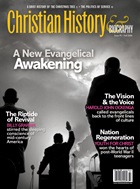
Garth M. Rosell is professor of church history at Gordon-Conwell Theological Seminary. The article is taken in part from the author's recently completed study, The Surprising Work of God: How America's 20th-Century Spiritual Awakening Became a Worldwide Christian Movement.
Drawing the line
What Ockenga believed was wrong with each of these theological movements:Modernism (or Liberalism) was a "defection from creedal orthodoxy." It repudiated much of the content of historic Christianity as reflected in Scripture, the Nicene Creed, and the Apostles Creed and substituted a new anti-supernatural content in its place.
Neo-Orthodoxy, a German theological movement (introduced into the U.S. by Reinhold Niebuhr in the 1930s) that criticized liberalism but did not hold strictly to biblical inerrancy, was "a subtle perversion" of true Christianity, according to Ockenga. It abandoned the church's historic commitment to the Bible as objective revelation in favor of a more subjective or existential understanding of the Scriptures.
Fundamentalism was essentially correct in its commitment to sound doctrine, but its militancy, anti-intellectualism, and cultural withdrawal needed to be replaced by Christian charity, commitment to the life of the mind, and active engagement with the culture.
Copyright © 2006 by the author or Christianity Today/Christian History & Biography magazine.
Click here for reprint information on Christian History & Biography.

Support Our Work
Subscribe to CT for less than $4.25/month