



Courting the Catholic Voter


If the polls are relatively accurate, this year's presidential election looks to be another razor-thin race. So it's no wonder our political parties are anxious to avoid a repeat of 2000. But ensuring voters make it to the booths on November 2—and actually vote for the candidate they thought they were voting for—may not be the biggest story of 2004. According to journalists like Reuter's Ellen Wulfhorst, the story we should really be paying attention to is what the American Catholic voter is thinking.
Senator John Kerry has made no apologies for running as a Catholic—even when American Catholic archbishops like John J. Myers of Newark warned the faithful that their obligation to oppose abortion outweighed any other issue. For months now, Republicans have been hoping to capitalize on Catholics disenchanted with secular liberals in the Democratic party.
But Kerry's conflict with his own church reveals a shift that goes beyond just the battle over abortion. John F. Kennedy's 1960 presidential campaign created significant Protestant angst over a Catholic occupying the White House. And while Catholics voted overwhelmingly for Kennedy (70 percent), a majority of Protestants voted against him. To understand how much has really changed over the past 40 years, let's go back to the nation's early history for a peek at just what Protestants and Catholics thought of each other.
No Room in the Colonies for Catholics
George J. Marlin's The American Catholic Voter (St. Augustine's Press, 2004) is a reliable guide told from his Catholic perspective. Marlin's book takes his readers on a time trip to the British colonies, where American colonists had little love for Catholics. John Adams, for example, complimented Puritan founders who curbed "the power of Monarch and Priest lest government become the man of sin, the whore of Babylon, the mystery of Iniquity." When Britain's parliament gave Catholics in conquered Quebec religious freedom in 1774, the American colonies vociferously condemned the "hellish" plan, believing it endangered the security of Protestant Americans.
Why all the hysteria? Until 1789, France was a solidly Catholic nation, and a sworn enemy of Protestant Britain. And the animosity sparked by Catholic-Protestant wars in Europe after the Reformation continued to smolder in the New World. Even Maryland, the only colony promising Catholics freedom of religion, reneged when Protestants stormed the City of St. Mary's in 1690 and repealed the original charter, enacting laws that severely limited Catholic liberties. In 1704, the Maryland Assembly passed a law fining and imprisoning priests attempting to convert children to Catholicism, and in 1715 the assembly declared that any Catholic wishing to run for office must sign a declaration condemning the pope.
But when America declared her independence from Britain, the fledging republic had a decision to make. With Philadelphia located so close to Maryland's Catholic population, military strategy trumped other factors. If Congress did not win Catholics to the cause, they might side with Britain, and open the republic to its deathblow. Moreover, Congress needed the support of Catholic France or Spain to fend off the vastly superior British navy.
So George Washington courted Maryland's most prominent Catholic, George Carroll, promising Catholics greater religious freedom in exchange for his service. Carroll, in turn, signed the Declaration of Independence, and threw his considerable weight and wealth behind the revolution. And when Britain admitted defeat at Yorktown, Carroll's aspirations were rewarded. Washington assured Catholic leaders, "Your fellow citizens will not forget the patriotic part which you took in the accomplishment of their Revolution …. nor the important assistance which they received from a nation in which the Roman Catholic religion is professed."
Catholics Choose Their Party—and Suffer a Backlash
Assistance or no, many if not most Protestants were not willing to give Catholics the red carpet. And the newly emerging Federalist party, with its roots in Puritan New England, particularly found new Catholic immigrants arriving from Ireland and Germany repellant—as one Federalist put it, Catholics "were different in race, religion, and political tradition, … uncouth, unclean, ignorant, unskilled and frequently immoral." Federalist congressman Harrison Gray stirred up fears even more: "If some means are not adopted to prevent the indiscriminate admission of wild Irishman and others to the right of suffrage, there will soon be an end to liberty and property." Catholics increased from 35,000 in 1790 to 663,000 in 1840, though Gray's fears of extinguished liberties did not materialize..
Thus the Federalist passage of the 1798 Alien and Sedition Act, which among other onerous laws, required aliens be residents for 14 years rather than 5 before they became eligible for U.S. citizenship. Catholics felt they were being targeted. The Federalists' arch-rival, Thomas Jefferson, capitalized on their anger by promising to repeal the Act if only they elected him as president. Catholics swung squarely into the Republican-Democratic party (later the Democratic party) in 1800, which gave Jefferson the boost he needed to capture key states. The new president didn't forget his promise.
Jefferson's coalition of western and southern agrarians with Catholic urban voters effectively destroyed the Federalist party. Yet the early 19th century continued to see the rise and fall of fledgling opposition parties (Anti-Masons, Whigs, Know-Nothings), who steadily pounded the drum of anti-Catholic rhetoric. These "nativists" particularly opposed Catholic schemes to divert public money to parochial schools—Catholics objected to Protestant biases among public educators and to the use of the King James Bible in public schools, and argued they needed their own educational system. Nativist politicians fought bitterly over public funding for Catholic schools in local and state elections while Democrats courted this significant block of voters. Catholics continued to vote solidly for Democratic candidates, and Jefferson's party held power for decades.
New Issue, New Party, New Allegiances?
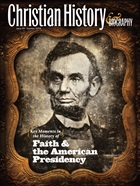
Nativists soon discovered they could not build a party around anti-Catholicism. Slavery instead served that function. Ironically, the birth of the Republican party in the 1850s gave Catholics their first solid alternative to the Democratic party. For though nativists flocked to the new party, their most promising candidate, Abraham Lincoln, would have nothing to do with anti-Catholic sentiment. In an 1855 letter to a friend, Lincoln wrote, "I am not a Know-Nothing. This is certain. How could I be? How can anyone who abhors the oppression of negroes be in favor of degrading classes of white people …. As a nation, we began by declaring that 'all men are created equal.' …. When the Know-Nothings get control, it will read 'all men are created equal, except negroes, and foreigners, and catholics.'"
Republicans did their best to court German Catholics in the upper Midwest especially, promising to seek prompt naturalization for new immigrants. But when the ballots were counted in the 1860 election, Lincoln failed to win the Catholic vote. Why? The Catholic church failed to take a strong position on slavery. Pope Gregory XVI concluded that although slavery was a social evil, it was not a moral one; and American archbishops urged their flock to stay out of the fray. Many Catholics did indeed abhor slavery, but they were not about to bolt from the Democratic party (which had done so well by them) to join the abolitionists.
Consequently, Lincoln won by the narrowest margins in states like New York and Illinois that had significant Catholic populations. And the Civil War did little to endear Catholics to Republicans. Many Catholics—with some justification—argued that the Union was drafting Catholics into the military more aggressively than it was Protestants. And they feared the influx of freed slaves competing for their jobs in northern cities. In July 1863, Catholics rioted in New York City, destroying draft offices, residences, hotels, saloons, and restaurants. It took the direct appeal of New York's Catholic archbishop John Hughes to quiet the mob and urge everyone to go home.
In the end, Catholics fought for the Republican-run North not because they were fired up about slavery, but because they wanted to see the Union preserved. When the war was over, they continued for the most part to vote for the party that originally welcomed them.
Meanwhile, "nativist" sentiment continued to boil against the rising power of the Catholic voting block. In 1884, Republican candidate James Blaine tried to court Catholics, but a "nativist" preacher within the party declared, "We are Republicans and don't propose to leave our Party and identify with the party whose antecedents have been Rum, Romanism and Rebellion." Needless to say, Blaine lost the election thanks to a massive Catholic voter turnout.
So What Has Changed?
Marlin's book covers this history in detail. But his focus on the role Catholics played in swinging votes for the Democratic party somewhat obscures the most startling bend in this long story. American Catholicism underwent significant changes with Vatican II in the 1960s, dropping the Latin Mass, encouraging Bible study, and tacitly approving charismatic worship. But the biggest story was the role abortion played in cooling Protestant-Catholic animosity and forging an unprecedented alliance.
When the Supreme Court issued its decision in Roe v. Wade, Catholic hierarchy was quick to oppose it. The president of the National Conference of Catholic Bishops, John Cardinal Krol, denounced the decision as "bad logic and bad law." Yet Democrats continued to steam ahead on a new radical social agenda inspired by secularist elites within the party, with abortion on demand now a central plank of their platform. As Irish, German, and Italian Catholics became increasingly American and middle class, their strong attachment to the Democratic Party weakened. Republicans heeded Catholic dismay over abortion, and in 1980 Ronald Reagan took his pro-life plank to Catholic conservatives and Protestant evangelicals alike. Enough Catholics responded to tip the election in his favor.
Catholics have not changed parties altogether. Democrats still score better on social welfare with Catholics—which may be why Al Gore captured 50 percent of the Catholic vote in 2000, compared to George W. Bush's 46%. And Catholics have become less observant over the decades—in 1960, 75 percent of America's 40 million Catholics attended Mass weekly; by 1980, that number had diminished to 25 million. Significant numbers of Catholics oppose or ignore their church's teachings on abortion, birth control, and homosexuality.
But in a strange twist of history, observant Catholics are now joining evangelical Protestants in unprecedented numbers in supporting the Republican ticket. And, as Marlin points out, we are now a long way from the anti-Catholic railings of John Adams and his fellow colonists. He argues that the current political landscape pits not Protestant against Catholic, but "practicing" Catholics against "cafeteria" Catholics who pick and choose what teachings they will accept from their church.
Marlin might be right about Catholics being the deciding influence on past elections. But in this new era of Protestant-Catholic cooperation, Catholics aren't voting uniformly. Democrats won't find them as loyal as they used to be. Can John Kerry swing enough of them to capture the presidency? The outcome will be fodder for Marlin's next chapter.
Copyright © 2004 Christianity Today.Click for reprint information.

Support Our Work
Subscribe to CT for less than $4.25/month