I believe Yeshua ha-Notzree, Jesus of Nazareth, is the Messiah. Despite my two Jewish parents (one deceased) and having passed through a bris as well as a bar mitzvah, many Jews won't consider me part of the mispocha, the extended family of Judaism, because of that simple declaration.
At the same time, more than a few Christians would, frankly, prefer that I not be a Jew, at least not too much of one. Forget the Sabbath, the holy days, the dietary laws—they're all abrogated. Israel? Just another nation. God's favor rests on the church now. Indeed, Jews like me, who believe in Jesus, are encouraged simply to assimilate into the church—not too far, perhaps, from Woody Allen's legendary portrayal of a Jew-turned-Christian in Hannah and Her Sisters. Unpacking a grocery bag, the convert, played by Allen, removes a loaf of Wonder Bread, a jar of mayonnaise, and, finally, a crucifix.
What's a Jew (who believes in Jesus) to do? For that matter, what's the rest of the church to do with us?
Bracing Challenge
At a time of fervent interest in the Jewish roots of Christianity, the question of interactions between the church and Jews, let alone Judaism, remains a troubling one, as a recent book highlights.
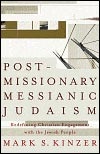
Mark S. Kinzer, an adjunct professor at Fuller Theological Seminary, tries to steer Christianity back to its Jewish roots. Kinzer aims at the heart of the matter: Are Jews rejected and replaced? His answer is no. He wants Jews to believe in Jesus, or Yeshua, but says Jesus needs to be brought to Jews carefully and deliberately, and in a historical context, he argues, that Christians have often ignored.
Kinzer explores passages from the Gospels of Mark and Luke that seem to reject Old Testament observance. He says, "It could be interpreted in this manner, however, only by ignoring the Acts of the Apostles."
Acts affirms Jewish observance for Jewish believers in Jesus. Kinzer notes, "This is true not only at the beginning of the book, but also at the end. This is true not only for Peter and James, but also for Paul! … In Acts, Luke presents the Sabbath and holidays as unquestioned components of the Jewish way of life." Such components were not urged on Gentile believers, but they remained vital for Jewish believers.
Kinzer's stand against what might be viewed as capricious antinomianism is a welcome relief. It's past time, Kinzer declares, for reconciliation. Jewish practice enhances Christian faith. It's also time, he says, for Jews to take a fresher look at Christianity as an extension of their historic faith.
Make no mistake: Kinzer is a Messianic believer whose ultimate goal is seeing Jewish people come to faith in Yeshua. But he says the best way to make this happen is for Jews to embrace their heritage in Yeshua, not to forsake it for Christian observance.
In answering "replacement theology" (or "supersessionism," the belief that the church has replaced the Jews as God's chosen people), Kinzer's book poses a bracing challenge to a broad spectrum of Protestantism, both evangelical and mainline. Wheaton College's Mark Noll says that supersessionism is now "in play among evangelicals in the way that it was in mainline Protestantism and Catholicism—but wasn't among evangelicals—30 or 40 years ago," as he told The Washington Post on January 8, 2006.
Yet Kinzer's ecclesiology has raised concerns among many Messianic evangelicals. The book, after all, discusses what Kinzer calls a "post-missionary" approach to Messianic Judaism: Jews who believe in Yeshua should live a life of Jewish observance as much as possible, within a Messianic community, presumably drawing souls by their lifestyle.
Jews for Jesus' Rich Robinson, in his own review of Kinzer, identifies a key problem: Kinzer's declaration that "the Jewish people remain in covenant with God, with their own distinct calling and way of life intact, despite their apparent communal reject[ion] of Yeshua's divine mediation" is an affront to Paul's clear teaching that Jews need to be evangelized.
These qualms are enough to trouble many in the Messianic community. They bother me, too. But Kinzer's strong stands on supersessionism and antinomianism are worth serious consideration by Jewish and Gentile believers alike. Both can learn something from him, even as one hopes Kinzer's thinking on other matters will evolve.
Mark A. Kellner is a writer and editor who lives in Rockville, Maryland.
CT Classic: Do Jews Really Need Jesus? | What evangelicals believe about evangelization of the Jews—and whether the Holocaust makes a difference in that task. (Aug. 16, 2002)
The Return of the Jewish Church | In 1967, there were no Messianic Jewish congregations in the world. Today there are 350. Who are these believers? (Sept. 7, 1998)
Have something to add about this? See something we missed? Share your feedback here.
Our digital archives are a work in progress. Let us know if corrections need to be made.















 While we pray for peace, we need moral clarity about this war.
 Church movements need magnetic leaders. But the best leaders need more than charm.
 After this week’s UMC votes on LGBTQ issues, African Methodists should join American conservatives in the new Global Methodist denomination.