Recently, my eight-year-old son left Sunday school frowning. It seems a couple of his classmates had been making fun of me. (I have moderate cerebral palsy, a birth condition that causes my erratic gait.) That afternoon, I sat down with him over clear plastic cups, each filled with two scoops of Reese’s ice cream, and asked if he was embarrassed. No, he was angry. I took a deep breath. At me? At God? No, at them.
“What did you say to them?” I asked. “‘If you do it again,'” he repeated, “‘I’ll tell your dads!'”
The innate cruelty of children needs no documentation. And their loud questions, stares, and snickering are almost to be expected when they see me wobble across a room. Little materialists, they cannot grasp how God might be working in and through me. My son, however, probably taught his two fellow Sunday schoolers something of the fierce but unseen love of a boy for his father.
Would I be happier without this physical disability? That’s like asking a kid if he would like to ride a bike, play Little League baseball, or be on the swim team—all activities that I was denied while growing up in an otherwise active family. The answer is obvious. But there’s a deeper question that our happiness-pursuing society too often overlooks: Would I be better off?
It used to be that children with handicaps were hidden away or left to die; in some parts of the world, they still are. Perfection was the ideal. Then, as we became more enlightened, we accepted them, as Joni Eareckson Tada says, as normal parts of an abnormal, fallen world. With this awareness came wheelchair ramps, reserved, extra-wide parking spaces, and federal laws designed to “level the playing field.” However, having a disabled child still entailed sacrifice, most of which was bequeathed to parents. Well before the Americans with Disabilities Act, my mother was going toe-to-toe with school officials, advocating for my welfare.
I’d like to think that the disabled soften the sharp edges of society, teach us kindness and humility, force us to look upward, and pull us away—if only temporarily—from our besetting narcissism. I believe my kids are learning tolerance and mercy, not because of anything I say or do, but merely through my unsteady presence.
But just when we think we have reached the pinnacle of compassion, the old urge for physical perfection rears its well-coiffed head. And with the bright, shiny tools of science, we now possess the means to pursue it. Amniocentesis allows mothers to know whether the children they carry have Down syndrome. Those who choose to bring their less-than-perfect sons and daughters into the world—stamped though they might be with God’s image—are looked upon as oddballs or, worse, irresponsible religious fanatics.
The recent case of the late Emilio Gonzalez—a 19-month-old deaf, blind, and terminally ill child in Texas, whose parents had to fight to keep the hospital from pulling the plug because caring for him was deemed “medically futile”—should remind us how quickly society can turn on the weak and defenseless. Why allow all that suffering? And why inconvenience the rest of us?
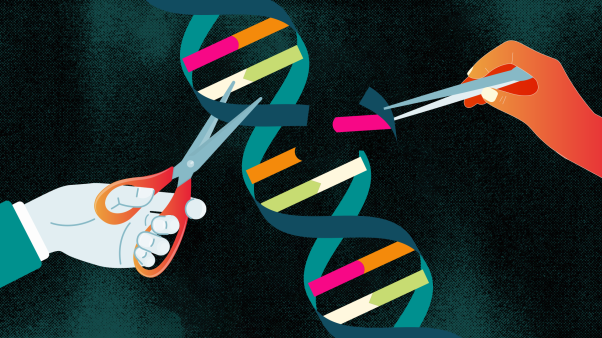
With pre-implantation genetic testing, human embryo banks, and cloning, soon there will be no need to struggle or suffer.
I worry about our society’s desire to engineer trials out of existence. Sometimes, even we who decry the health-and-wealth gospel forget that the Christian life was never meant to be a cakewalk, that discipleship requires suffering, and that spiritual victory presupposes struggle. Jesus, perfect man though he was, understood disability through bitter experience. Carrying the burdensome cross on the way to his execution, Jesus publicly stumbled and fell—a humiliation many of us “differently abled” are all too familiar with.
Yet we continue to shrink from disability. Chicago Sun-Times film critic Roger Ebert has been battling cancer in his right jaw, along with advice from friends who say he should not attend his own film festival because of the way people would react to his gauze neck bandage and drooping jaw. Ebert will have none of it, noting, “We spend too much time hiding illness.”
No, disability is not good in itself. Jesus never celebrated affliction (though he did tell us to rejoice when we suffer persecution for being his disciples). Defeating the ugly shadows of life with the light of his coming kingdom, Jesus healed the lame, gave sight to the blind, and preached Good News to the poor. As Christians seek to be like him, we must not abhor those who suffer nor fear the trials that inevitably come our way. They are, to borrow an old phrase, means of grace.
Only through suffering, disappointment, and death—and the rude remarks of children—are we weaned from the love of this world. There’s more to life than happiness.
Copyright © 2007 Christianity Today. Click for reprint information.
Related Elsewhere:
Stan Guthrie’s other columns are available on our site.
Don’t Cede the High Ground | Our abortion views don’t rest on sociological data. (April 25, 2007)
Living with the Darwin Fish | Why the discovery of yet another ‘missing link’ doesn’t destroy my faith. (March 13, 2007)
The Scandal of Forgiveness | Want to shock your neighbors? Try forgiving them. (December 28, 2006)
Worth Protecting | It’s hard to see the humanity of tiny embryos if we live by blind faith. (November 9, 2006)
Sit Down, Sit Down for Jesus? | Contrary to rumor, the culture wars aren’t over. Nor should they be. (September 1, 2006)
Guthrie keeps a blog at StanGuthrie.com.