It is not uncommon to walk into a United Methodist church and hear the congregation singing "My Country 'Tis of Thee" during a traditional worship service. All four verses of it.
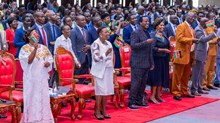
But while the church's 8 million members make the United Methodist Church (UMC) the country's second-largest Protestant denomination, another 3.5 million United Methodists worship overseas, and their numbers are growing as the American body shrinks. The denomination of George W. Bush and Hillary Clinton is also the denomination of Liberian president Ellen Johnson-Sirleaf and former Philippines president Fidel Ramos.
The Methodist leadership overseas tends to be more conservative than its American counterpart, and as the UMC gathers for its 10-day quadrennial general conference to debate sexual ethics, divestment from Israel, and other perennial hot topics, the relationship between the UMC's American and international churches will be the subject of its own debate.
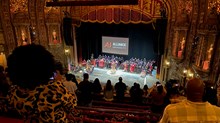
During the conference, which starts tomorrow, April 23, in Fort Worth, Texas, delegates will vote on constitutional revisions aimed at significantly restructuring the denomination, putting American churches into their own national body. About 29 percent of those delegates are from outside the U.S.
The changes would create a more efficient and equitable relationship with churches outside the U.S., said Bishop Scott Jones of Kansas, who recommended the move. The current system, he said, gives more power to American churches.
"We are currently structured as a United States church," he said, noting that some overseas church leaders have complained that the general conference too often deals with matters irrelevant to churches abroad. About 80 percent of general conference resolutions are exclusively related to the United States, Jones said.
The constitution changes, which require a two-thirds majority and ratification by annual conferences (local governing entities), would pull the five U.S. jurisdictional conferences under one large umbrella conference. This U.S. Central Conference would be equivalent to the UMC's seven international Central Conferences: three in Africa, three in Europe, and one in the Philippines.
But some conservatives warn that the change would allow the American UMC body to take liberal actions that overseas delegates would oppose.
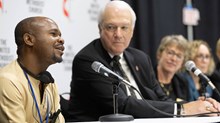
"So many in the American church think this is simply a ploy to get around the input of central conferences overseas on the vote on human sexuality," said James Heidinger, president and publisher of Good News, a conservative United Methodist magazine. Heidinger said he doesn't believe this was Jones's original intent in suggesting the move. "But every single person who hears about it, believes that is the ultimate goal and purpose."
One of those particularly skeptical is Mark Tooley, director of United Methodist committee of the Institute on Religion & Democracy. "The only hope for the liberal side of the church is to separate the U.S. church from the international," he said. "Otherwise the votes are not there for them. The overseas church is theologically conservative."
Supporters of the separation say the general conference would still set policies on doctrine and many social issues addressed in the church's Social Principles document. The denomination's Book of Resolutions, however, would be divided so that some positions apply to the entire church, and others apply only to the regional Central Conferences. Abortion and homosexuality are addressed in both documents.
"People from the Congo, Zimbabwe, Russia, Germany, and Kansas will all be part of the conversation," Jones said.
The vote before the UMC general conference this week is whether to continue to study the matter and to take steps for a possible constitutional change as early as the next conference, in 2012.
While Heidinger opposes the move, he agrees that the denomination needs to take steps to reflect the UMC's global identity, and to empower United Methodists from outside the U.S. He agrees that the general conference's resolutions too narrowly reflect U.S. concerns.
He notes that when the general conference last met four years ago, "there were 180 overseas delegates. This year there will be 285."
Copyright © 2008 Christianity Today. Click for reprint information.
Related Elsewhere:
United Methodist News Service has run several articles on the proposed changes, including:
United Methodists explore church's global structure (Feb. 6, 2008)
Plan would pave way for U.S. regional conference (May 10, 2007)
Global nature task force proposes a U.S. central conference (Nov. 13, 2006)
United Methodist News Service, the Institute on Religion & Democracy, Good News, the Confessing Movement, and United Methodist Reporter will be covering the general conference.
See today's related story from Religion News Service, "United Methodists to Debate Transgender Clergy."







Support Our Work
Subscribe to CT for less than $4.25/month