Several American pastors and leaders have condemned proposed legislation in Uganda that, if it passed in its proposed version, would punish homosexual sex with the death penalty or life imprisonment.
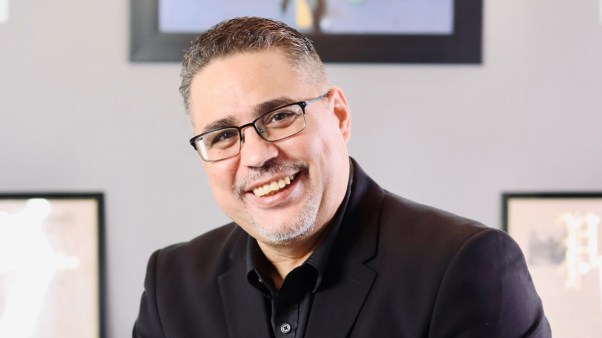
Rt. Rev. Dr. David Zac Niringiye, assistant bishop of Kampala in the Church of Uganda, says that public pronouncements on the legislation from Christians outside of Uganda fuel the debate. “Ambassadors or religious leaders serve us best by not going public, by simply relating to their individual relationships,” Niringiye says. “If they have none, they have no legitimacy to speak. They should just be silent.” The Church of Uganda has yet to make a statement on the bill and expects to give its official position by January 20. Christianity Today spoke on the phone with Niringiye about the cultural context of the bill and how he thinks American Christians should respond.
How are Ugandan Christians generally responding to this legislation?
This is not just a Christian response. I can certainly say the objectives of the bill have the total support of most of Uganda, not just Christians, but also Muslims and Roman Catholics. It would not be right to talk about how Christians feel. They’re all agreed on the objectives. There will be a difference of opinion on the details of the bill.
The second thing I need to say is that it is important to understand that the section on the death penalty seeks consistency in the law. The law on rape in this country (and I am not stating a position, I’m stating a fact) has a maximum sentence of death, particularly if it is rape of a minor. Therefore, there is the idea that the law that is proposed needs to be [consistent] with other laws on the books.
The second thing to say about the contents of the bill is the argument that in the current law, the definition of sex is a male-and-female relationship. The reason why they are including homosexual rape as sexual assault is because in the current law, sexual assault is defined as male and female, either male assaulting female or female assaulting male. That background of the law is very important to understand.
This law needs to be in put in context of the wider constitutional and legal framework that already exists in the laws of Uganda. The background of the law is that there is increasing reporting of homosexual practice. There is definitely a sense that the international homosexual lobby is pushing for homosexual practice to be accepted as normal. Therefore, use the idea of human rights for the protection of minorities. They say that these minorities have a right to this moral choice. It’s important to realize that within the culture, homosexuality is not acceptable.
Do you know how Christians are responding to the penalties in this bill?
The point I’m making is that Christians in the country, including other people in the culture, really support the objectives of the bill. When it comes to the issue of the death penalty, there is as much debate over the death penalty as there are different Christian persuasions. The discussion on the death penalty [in this bill] needs to be separated from, Is the death penalty [ever] an acceptable sentence? I am sure there are American Christians or others in the world who will say the death penalty is an acceptable sentence. There will be Christians in Uganda who will say the death penalty is an acceptable sentence. There will be Christians in Uganda who will say no, the death penalty is not an acceptable sentence for any offense.
The Church in Uganda has never given an official position on the death penalty. My considered reading of Scripture and my considered understanding of today’s culture is that the application of the Scripture, the application of the spirit of the Scripture in today’s time would seem to disallow death as a legitimate penalty for any offense. We will not deny that the Scriptures seem to allow the death penalty. In the culture in which the Scriptures were written it seems that there was an allowance. I would say that in applying the same Scripture today, it seems that the culture is so different from then that we would say [we need] the application of the principle of grace. My view is that the death penalty is not a legitimate sentence for any offense, including murder and so on. But there is no Christian consensus on the legitimacy of the death penalty.
Is criminalizing homosexuality acceptable?
Adultery is a crime in our law books. If you talk about the consistency of the laws, in our laws in Uganda, it’s very much an issue of culture. Western society and culture has lost some of its moral foundations. In Western society, homosexuality is accepted as one of the ways of expressing human sexuality. It is very important that you understand the context. I would debate Western societies which are putting judgments on our laws to first and foremost critique your own cultures. In my own view, Western society has lost its moral fiber.
Would you make a statement on whether you personally support the bill?
I can’t say that. There are aspects of the bill that I don’t support and there are aspects of the bill I do support. I can definitely say this about many Christians in the country. For me, the greater issue for Western societies, Ugandan societies, and African societies is to ask the question about cultures. To what extent do cultures decay and cease to reflect the will of God? You must go beyond laws. Laws simply reflect where societies are at. For me, this is the debate. It is not right that Western societies should impose cultural norms and values upon us. The issue of acceptance of homosexuality has a lot to do with the loss of moral and ethical values.
Are you familiar with American Christians’ response to the bill, such as Rick Warren’s statement?
Yes, and to be honest, to all—whether they are American Christians, whether they are liberals, whoever they are—I think you’ve got to trust the leadership in this country, both the Christians and our legislating processes. The international community is behaving like they can’t trust Ugandans to come up with a law that is fair. No! No! That is not fair! When the Western governments or Western churches or Christians speak loudly about the legitimacy or illegitimacy of this bill, you actually begin to fuel the idea that homosexuality is the product of Western culture.
Western homosexual groups are seeking to make homosexuality an acceptable practice here. In these attempts by churches or Christian leaders to speak in favor or against, they seem to indicate we don’t know what we want for our own society. I would plead with governments and the Rick Warrens of this world, Don’t make any public pronouncements about this bill. Allow Ugandan society to be able to pronounce itself on what Ugandans feel would be good. None of the American evangelicals have ever spoken first about the fact that rape is punishable by death in this country. Suddenly, because of homosexuality, the issue has arisen. Why? The homosexual lobby is very very active in making the homosexual issue a human rights issue. How long shall we keep speaking about human rights? When shall we speak about human wrongs?
When Western Christians talk about Ugandan legislation, does that create tension?
I would say to Western Christian leaders, Don’t make public pronouncements about legislation in Uganda. If you have relationships, speak to those relationships. Talk to them privately. Ask them, what do you understand this to mean? Do not make any public pronouncements. Any time a Westerner makes a pronouncement in Africa, it seems to imply we don’t know what we want. Trust us, engage with us. Don’t begin to preach at us. I engage with you, I talk with you, and I leave it to you.
Do you think American evangelicals understand Ugandan politics?
I don’t fully understand American politics. If I want to engage in an American context, I must talk to my brother and seek to enrich each other and in that way, he can take my conversation to him to the public square. I simply say to Rick Warren or anybody, let’s be biblical. God has called Christians in Uganda to be witnesses for Christ in Uganda. We need the support of brothers and sisters all over the world. This is what the Incarnation is about. It is witness that is embodied in culture. It is important to build meaningful relationships with Christians. If I don’t have a relationship with Christian leaders in America, I have absolutely no credibility to speak about anything American. I believe there is a Body of Christ in America, and my primary responsibility is to be in fellowship with those believers. With them, we can engage in what is being faithful to God in a missions context.
When American Christians speak out on this, do they have an impact on the bill?
They fuel the debate in either direction. On the one hand, if an American Christian speaks publicly in support of the bill, then the liberals say, “Do you see? This is being sponsored by American Christians in Uganda.” If a liberal American speaks against the bill, the Christians in Uganda will say, “Do you see? This is an agenda of gays and lesbians in Europe, America and so on.” It does not help either way.
There’s some talk that American Christians have encouraged this bill’s introduction. Do you know if that’s true?
On the one hand, I have no respect for such innuendos because they are suggesting that Christians in Uganda are puppets and so forth. Are there American influences in Uganda? Yes. There is no question that there is a strong homosexual lobby supported by Western groups. That is one of the reasons for the bill. We have influences from the Muslim world. Let’s not give too much credit to the West. This is a global environment. The influences are on either side.
There is a genuine Ugandan call of distaste that seeks to say, “Our culture is under assault.” There are Ugandans who say we need to stand against a moral tide that seeks to change our ethical, moral values. The decay in Western culture is reflected in its sexual ethics. For me, I would like to act here in our culture. We must deal with corruption in our culture as you do in Western culture. They are not the same magnitude, but they still reflect the decay in culture. For us in Uganda, we have to ask, “How do we act in a way that protects our culture from the decay in sexual ethics that has happened in the West?” That is the challenge for Christian mission in our context. We have a serious responsibility to nurture younger generations. We have a lot of work in our churches to fight the media wars. Media is one huge influence in the cultural decay.
Did you hear about the statement from Rowan Williams?
Ambassadors or religious leaders serve us best by not going public, by simply relating to their individual relationships. If they have none, they have no legitimacy to speak. They should just be silent. People have freedom to talk. Someone has a right to speak to me because he’s my friend. That principle of fellowship is critical. If I have no fellowship with a brother, the Scriptures are clear. You do not have a right to speak because you do not know that they are your brothers.
I don’t want us to confuse the church for the kingdom of God. The church is not always a manifestation of the kingdom of God. Sometimes the church is a sign of the kingdom of God. Other times, the church is a cultural sign, pointing away from the kingdom of God. It does not mean every time someone is speaking in the name of Christ, they may even invoke the name of Christ; it’s not always the case. For Christians, find ways you can encourage us, engage with us, in being witnesses to the kingdom of God in our culture. Is your culture in decay? Yes. Are there aspects of our culture that are in decay? Yes.
Copyright © 2009 Christianity Today. Click for reprint information.
Related Elsewhere:
For more Ugandan Christian response to the American Christian reaction to Uganda’s anti-homosexuality bill, see today’s related article, “Anti-Homosexuality Bill Divides Ugandan and American Christians.”
Christianity Todayinterviewed Niringiye in 2006 on how North Americans can be more countercultural and gospel-centered.
Niringiye gave the Wheaton College commencement addresses in 2006 and spoke in the chapel there in October 2009.
There is a Facebook fan page for Niringiye.