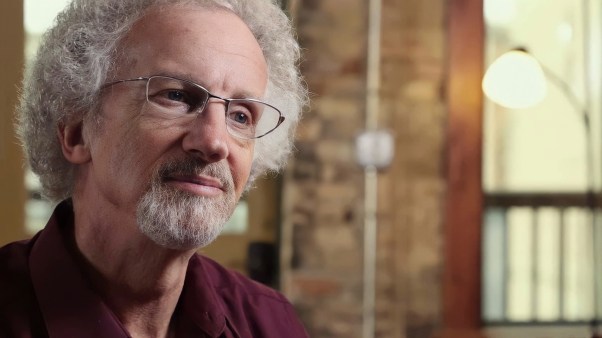
After an overnight flight from Denver, Christian singer Don Francisco arrived at London’s Heathrow Airport intending to perform in an Easter music program in the English port town of Poole.
Instead, the 63-year-old American said, he was photographed, fingerprinted, and taken to a small detention room with a seatless toilet bolted to the wall.
Hours later, Francisco said, armed guards led him to a van parked on the tarmac, where he was ordered inside a cage and driven to a British Airways jet.
“They escorted me on board, where they handed the stewardess an envelope containing my passport, boarding passes, and other paperwork,” he said.
Just like that, Francisco was sent back home. His crime: listing his occupation as “gospel singer” and failing to obtain a religious worker visa—something he had never needed on previous visits to the country.
Over the last year, the United Kingdom has phased in a points-based immigration system designed to regulate the labor market and help prevent terrorism.
However, the new system has thrown Christian workers and organizations into confusion because the U.K. Border Agency has not taken into account the complexity of religious activities, the Evangelical Alliance said.
The London-based advocacy group for the nation’s estimated two million evangelicals cites a number of cases in which groups or individuals were refused entry after traveling to the U.K. to speak or volunteer.
Alliance leaders have drawn up guidelines to help Christians navigate the system and posted them online (eauk.org).
“Some of the problems we have seen are due to churches not being fully aware of their new responsibilities, while on other occasions, immigration officials have wrongly banned people from the country because they haven’t understood their own rules,” said Daniel Webster, parliamentary officer for the Evangelical Alliance.
Amid fears of terrorism, religious worker visas have come under heightened scrutiny in the United States as well.
“I can’t say that the government is particularly easy on any occupation,” said Peter Cramer, an immigration attorney in Boston. “However, in the last few years, religious workers have come under increased scrutiny because of a fraud audit … which found one-third of the cases to be tainted by fraud.”
U.S. Citizenship and Immigration Services implemented new anti-fraud measures last November, including on-site visits and investigations of religious organizations before a U.S. consulate overseas can grant a religious worker visa.
“It has been my experience that religious organizations, in an effort to assist the ‘needy,’ sometimes view it as a greater good to help someone and stretch the truth about what the immigrant will do for the organization,” said Elaine Witty, an immigration attorney in Memphis, Tennessee.
To that extent, Witty said, “It is arguable that this ‘crackdown’ is something that religious organizations brought on themselves.”
On the other hand, she said, government attempts to root out fraud in the religious arena raise First Amendment questions. Daughter of an Orthodox Jewish rabbi, Witty cited a case in which the U.S. government determined that one of her clients, wanting to do religious work in America, could not be a Christian because he was born in India.
“In fact, his family’s ties to Christianity dated back to Thomas the Apostle!” she wrote in an e-mail. “I won on appeal, but it was a costly and unnecessary litigation.”
A longstanding government policy makes it tougher for foreign religious workers (compared with those of other occupations) to remain in the United States. However, in a class-action case in March, a federal judge in Seattle struck down that policy.
If upheld, the decision means religious workers—like those in aerospace and technology—could file for permanent residency before, not after, their employer’s visa petition was approved.
Francisco described his experience in the United Kingdom as “surreal” and “bizarre.”
The singer tried to convince agents that he had traveled all over England for 30 years. But since he had a new passport, he could not prove that.
“My main concern is that this … will result in my being unable to return to the U.K. in the future,” Francisco said. “One question that is always asked at a border is, ‘Have you ever been denied entry into this country?’ Unless this present situation is reversed, my truthful reply would probably result in yet another denial of entry.”
Copyright © 2009 Christianity Today. Click for reprint information.
Related Elsewhere:
Other reports related to new visa rules include:
US judge strikes down policy on religious visas | A federal judge has struck down a long-standing government policy that made it tougher for religious workers from other countries to remain in the United States. (Associated Press)
Immigration rules throw churches into confusion | The UK Border Agency has not taken into account the complexity of religious activities, the Evangelical Alliance has said. (Evangelical Alliance)
Christianity Today also has more articles on missions & ministry.