Modern-day pilgrimage made world headlines this fall when Saudi Arabia deported more than 1,000 Nigerian Muslim women for attending the annual Hajj without male chaperones.
Nigeria has sponsored its citizens to undertake the religious ritual—required once in a lifetime by Islam if health and money allow—since its independence in 1960. This year, it sent nearly 90,000 pilgrims. But overshadowed is the fact that the oil-rich West African country also sponsors Christian citizens on their own pilgrimages.
An estimated 30,000 Christians visited Israel, Rome, Greece, and Egypt between October and December. (While the government sponsored many of the trips, churches and nonprofits backed others.) Thanks to increased awareness and funding, this number has skyrocketed in recent years—tripling since 2010 and up from 2,000 a decade ago. Until last year, the government had only sponsored Christians' trips to Jerusalem; the city is still the preferred destination for 80 percent of the travelers.
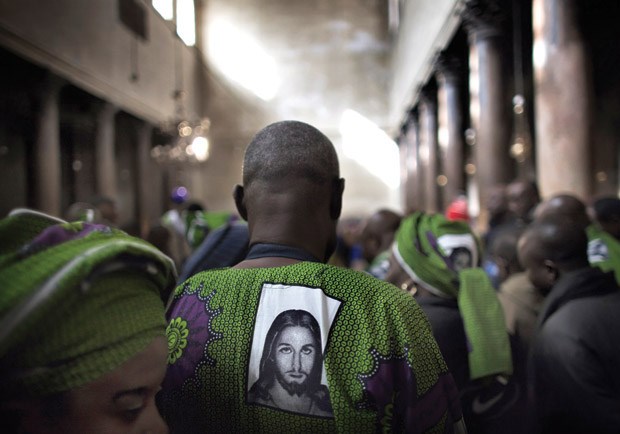
Many Christians in Africa's most populous nation take huge pride in being pilgrims, adding the title Jerusalem Pilgrim, or the initials JP, to their names.
The Nigerian government sponsors pilgrims on the premise that they experience spiritual re-births and return better Christians and better citizens, said John Opara, executive secretary of the governmental Nigerian Christian Pilgrim Commission (NCPC). "Pilgrimage is serious business, and not a travel jaunt as envisaged in some quarters."
But now church and government officials are working to assess whether pilgrimage actually delivers on this promised return on investment. To answer the question, the commission will subject pilgrims to a series of tests and gather testimonials to measure improvements in character and spirituality, Opara said.
"There will also be postpilgrimage forums where they can relate life-changing experiences and encounters as well as how they have become better as citizens," he said.
Opara hopes the results of this assessment will encourage the government to continue its sponsorships.
But church leaders are themselves divided on the effect of such pilgrimages.
"The fact that someone has attended does not make him a better Christian than someone who has not been there," said Toyin Kehinde, pastor of Lagos's Agape Generation International Church. "There is no specific Holy Land with the advent of Jesus. Wherever two or three are gathered is a holy land."
Dennis Inyang, senior pastor of Sure Word Assembly Lagos, agrees. "It will make you a more informed Christian—deepening your understanding of the Bible—but never a better Christian," he said.
But Magnus Atilade, president of the Gospel Baptist Conference of Nigeria and Overseas, argues pilgrims never return the same.
"[Pilgrimage] strengthens one's faith and enriches one's encounter with God," he said. "You cannot but emerge from the experience completely awed and transformed."
Asoliye Douglas-West, parish priest of Lagos's St. Peter's Anglican Church, agrees. "You leave feeling reinvigorated and more committed to God, having seen the physical sites where Jesus operated," he said. "It could mark a turning point in one's … walk with God."
For many Nigerians in the past, such trips have been life-changing in another way: They've skipped the flight home and illegally emigrated. The NCPC has successfully curtailed much of such activity by enacting age thresholds (30 years old for Israel, 50 years for Rome) and strict economic and personal checks.
Have something to add about this? See something we missed? Share your feedback here.
















 While we pray for peace, we need moral clarity about this war.
 As my doubts about his teachings grew, so did a secret fascination with Jesus.
 How groups like Hillsong learned to let go of the literal in favor of creative collaboration.españolPortuguês






