From the opening credits of Rescue Dawn—a mesmerizing overture of haunting music and archival footage of napalm bombing—one can sense that this is not going to be a traditional war film. Anyone familiar with legendary writer/director Werner Herzog (Grizzly Man) will also know as much. But even as this film is being proclaimed as Herzog's "most mainstream" and "most accessible" film yet (which it probably is), there are still some serious layers of beauty and depth here that go beyond most any film you'll see this year.
In some ways, Rescue Dawn is less an action/adventure war film than it is a deeply complex character portrait of Dieter Dengler, the curious German-American pilot who was the first—and only—American POW to successfully escape from a Laotian prison camp during the Vietnam conflict. The film follows Dengler (Christian Bale) as he crashes his plane into the menacing, Vietcong-occupied jungles of Laos during a classified mission in 1966. He is soon captured by enemy troops, tortured, and held in captivity in a remote prison camp, where he joins several other American and Thai POWs. As the prisoners become aware of their captors' intentions to eventually kill them, they plan a desperate escape. The second half of the film is the harrowing account of Dengler and his cohorts as they flee the enemy on foot in search of rescue, facing the ruthless brutality of both nature and man along the way.
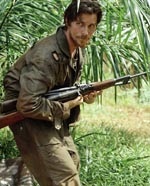
Christian Bale as pilot Dieter Dengler
The reason Dawn feels more like a character study of Dengler than it does a white-knuckle adventure story (which it is) is likely due to Bale's remarkable performance. Sporting an accent that is as complex as his character (a German-born, American-bred Wally Cleaver of sorts), Bale resists pinning down Dengler's psyche. Instead, he plays Dengler as a man alternatively softspoken and manic, sensitive and primeval—somewhere between MacGyver and The Crocodile Hunter.
Herzog is obviously fascinated with Dengler. In 1997, he made the acclaimed Little Dieter Needs to Fly, the documentary take on Dengler's POW tale, and a line of narration from that film illuminates Herzog's peculiar interest in this character: "From the air, Vietnam didn't seem real at all," Herzog narrates. "For Dengler it was like a grid on a map. He had suddenly found himself not only a pilot, but a soldier caught up in a real war. But even though it was all very real, everything down there seemed to be so alien and so abstract. It all looked strange, like a distant barbaric dream."
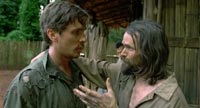
Dengler and Duane Martin (Steve Zahn) at the prison camp
Reality and surreality are Herzog trademarks; his non-traditional "documentary" style often mixes fact and fiction, real footage and dramatized setups. He loves using "found" footage of various things (nature, for example), and re-purposing it in ways that make it feel both familiar and frighteningly abstract. Herzog views nature, for example, as both beautiful and impenetrable in its complexity and foreignness. In 2005's hit documentary, Grizzly Man, for example, nature is a terrible, cruel force that nevertheless draws us in by its beauty. As Herzog narrates over Timothy Treadwell's "found footage" of bears in the gorgeous landscapes of Alaska: "I discover no kinship, no understanding, no mercy. I see only the overwhelming indifference of nature."
Like Grizzly Man, Dawn focuses on man's attraction to nature, adventure, and his survival therein. Dieter Dengler is a man who, like Timothy Treadwell, is intensely ambitious, self-confident, free-spirited, and excited at the prospect of living on the edge and surviving in the wild. As a boy growing up in post-war Germany, Dengler was so hell-bent on becoming a fighter pilot that he immigrated to the U.S. to join the armed forces and eventually become a pilot in a real-life combat situation. When Dengler does encounter "real" war, however, it is with a detached perspective—a sort of immersive videogame experience.
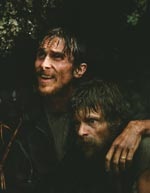
The prisoners look for a way to escape
From the moment of his crash and capture to his 23-day escape trek through the Laotian jungle, Dengler is both experiencing war at its most horrific and playing at it. He is the consummate boy scout, thrilled that his survival know-how (everything from starting a fire to picking handcuff locks) is now paying off. Throughout his brutal torture and treacherous evasion of captors, you can almost see a smile on Dengler's face—or at least a heightened sense of the tension and thrill of life on the edge.
Dengler's unique G.I. Joe self-fulfilling mythology can be seen ever more clearly when you compare him with his fellow American POWs. Eugene (Jeremy Davies, looking eerily like Charles Manson) is an emaciated weakling who would rather wait for release than risk death to escape. And Duane (Steve Zahn, in an Oscar-worthy supporting performance), though brave and devoted to Dengler, is all but helpless due to his malaria-weakened body. Bale and Zahn play the buddy dynamic well, and their chemistry breeds an emotional resonance that is painfully snatched away as the film reaches its harsh—if superficially happy—conclusion.
Article continues below
I won't go into what happens in the end, but suffice it to say that what appears to be a "Hollywood ending" is merely Herzog playing at surreal, emotional detachment, just as his main character plays his way through unspeakable realities. The most brutal moment in the film—and it really blindsides you—is treated with the cavalier detachment and indifference of nature that Herzog speaks of in Grizzly Man. This is a Darwinian story about the survival of the fittest, with man just one among many things in nature vying for endurance and life.
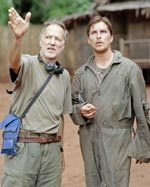
Director Herzog with Bale on the set
One especially unsettling scene occurs when a starving Dengler grabs a live snake from a murky river and then proceeds to bite into its scaly flesh while it is still wriggling around in his hands. This image—of a stoically animalistic Dengler exerting his dominion over a fellow creature in the wild—typifies the Edenic horror and beauty of Herzog's vision of man and nature: equals in a precarious relationship subject to becoming predator-prey at any moment. The film reminded me at times of The Thin Red Line (with the ubiquitous imagery of a fallen Eden yearning for wholeness) and Apocalypto (with man struggling against both fellow man and nature's brutal indifference).
But while Dawn viscerally exposes these stunning and horrific truths about fallen nature and man, it regards them rather mundanely. Dengler floats freely between the refined, civilized world and the primal, uncivilized world, almost like one who turns on and off a videogame or some other simulation of reality. In this way the film feels more relevant than ever. In our world of hyper-reality, simulacra, and role playing, what one is and does—indeed, what counts as "real" or not—seems increasingly subject to what one wants it to be. The question Dawn raises, ultimately, is not how Dengler managed to survive what he did, but whether having survived, if anything could ever be quite as exciting again.
Talk About It
Discussion starters
Why do you think the filmmakers chose to end the film the way they did—with a mood so different than what had been portrayed in most of the rest of the film?
What do you think Duane meant when he told Dieter that "the jungle is the real prison"? And how does this relate to the film's overall portrayal of nature in the film?
From what you could glean of Dengler's character, do you think that—in retrospect—he would have wanted to become a Vietnam fighter pilot?
Article continues below
Does anyone in this film demonstrate Christ-like love or mercy? Who and under what circumstances are these virtues displayed?
The Family Corner
For parents to consider
Rescue Dawn is rated PG-13 for some intense sequences of violence/torture and some language. The main character (Dengler) is subjected to intense torture, such as being suspended upside-down with a beehive tied around his face, submerged in a sewage well, and dragged by a live animal. Another main character is attacked with a machete and beheaded (though the beheading is swift and isn't shown gratuitously). There are numerous scenes of eating bugs, worms, and a live snake, and the overall lack of food/water/comfort for the protagonists might unnerve some viewers. Though parents should use caution, the film is cleaner than the average PG-13 film, and contains a positive message of companionship, freedom, and survival.
The plan would organize UMC churches in four global regions, with each given more leeway around same-sex marriage and other theological issues.
Yonat Shimron – Religion News Service
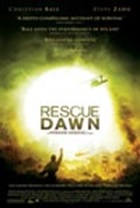
Rescue Dawn
1 of 4
Christian Bale as pilot Dieter DenglerDengler and Duane Martin (Steve Zahn) at the prison campThe prisoners look for a way to escapeDirector Herzog with Bale on the set













 While we pray for peace, we need moral clarity about this war.
 As my doubts about his teachings grew, so did a secret fascination with Jesus.
 The plan would organize UMC churches in four global regions, with each given more leeway around same-sex marriage and other theological issues.